
Sponsored
How Should FSD behave? Godfather of Self-Driving Cars (Sebastian Thrun) on “Polite” Self-Driving.
 Traditionally I sport the Windows XP shutdown

Crissa
Well-known member
- First Name
- Crissa
- Joined
- Jul 8, 2020
- Threads
- 138
- Messages
- 19,571
- Reaction score
- 31,477
- Location
- Santa Cruz
- Vehicles
- 2014 Zero S, 2013 Mazda 3

Behind the semi, you'll be in dirty air and drafting and going slower, using less energy than sitting in the passing lane. You'll also have more control over the space in front of you, so you can remain safer and do less speed adjustmenting.I am not convinced that slowing down to 65 mph behind the semi and waiting for 'who knows how long' and then suddenly accelerating to the speed of the surrounding traffic is necessarily more efficient. It is certainly frustrating.
I agree it is more frustrating, though.
-Crissa

hemiarch
Well-known member
- First Name
- Ace
- Joined
- Jan 22, 2025
- Threads
- 121
- Messages
- 8,614
- Reaction score
- 9,959
- Location
- Arizona
- Vehicles
- 2024 foundation AWD, 2024 model x
- Occupation
- Trauma Surgeon
Don’t you have to be stupid close to the semi for the drafting to be significant?Behind the semi, you'll be in dirty air and drafting and going slower, using less energy than sitting in the passing lane. You'll also have more control over the space in front of you, so you can remain safer and do less speed adjustmenting.
I agree it is more frustrating, though.
-Crissa
Crissa
Well-known member
- First Name
- Crissa
- Joined
- Jul 8, 2020
- Threads
- 138
- Messages
- 19,571
- Reaction score
- 31,477
- Location
- Santa Cruz
- Vehicles
- 2014 Zero S, 2013 Mazda 3
It's all relative and really depends upon the weather conditions, the size of your vehicle, speed, how long you're there... It tapers off pretty quick with follow distance, but at highway speeds and over several miles even a small difference does add up.Don’t you have to be stupid close to the semi for the drafting to be significant?
-Crissa

Jhodgesatmb
Well-known member
- First Name
- Jack
- Joined
- Dec 1, 2019
- Threads
- 90
- Messages
- 6,512
- Reaction score
- 9,057
- Location
- San Francisco Bay area
- Website
- www.arbor-studios.com
- Vehicles
- Tesla Cybertruck FS AWD, Tesla Model Y LR
- Occupation
- Retired AI researcher
How close do you really need to be to get drafting efficiency? I have never been comfortable getting right behind a semi on the highway. In fact, if there is even a cargo van blocking my view ahead I usually pass it. This said, I defer to your comment about efficiency.Behind the semi, you'll be in dirty air and drafting and going slower, using less energy than sitting in the passing lane. You'll also have more control over the space in front of you, so you can remain safer and do less speed adjustmenting.
I agree it is more frustrating, though.
-Crissa
Crissa
Well-known member
- First Name
- Crissa
- Joined
- Jul 8, 2020
- Threads
- 138
- Messages
- 19,571
- Reaction score
- 31,477
- Location
- Santa Cruz
- Vehicles
- 2014 Zero S, 2013 Mazda 3
Depends on temperature, wind, speed. The closer you war, the more you save per mile, the further, the lessHow close do you really need to be to get drafting efficiency? I have never been comfortable getting right behind a semi on the highway. In fact, if there is even a cargo van blocking my view ahead I usually pass it. This said, I defer to your comment about efficiency.
I don't know why you'd focus on one part of the statement. It's just easier to pace semis because their speed changes are very predictable; they want to have the most stable speed they can. And they can't slow down very quickly!
You're using less energy to pace behind at Semi at 60 than you would be sitting in the fast lane behind a smaller vehicle going 61; even without counting the drafting. And you get to choose your following distance, because no one is going to cut in front of you to tuck behind a semi... Well, not usually.
-Crissa
Jhodgesatmb
Well-known member
- First Name
- Jack
- Joined
- Dec 1, 2019
- Threads
- 90
- Messages
- 6,512
- Reaction score
- 9,057
- Location
- San Francisco Bay area
- Website
- www.arbor-studios.com
- Vehicles
- Tesla Cybertruck FS AWD, Tesla Model Y LR
- Occupation
- Retired AI researcher
My original comment wasn't about drafting but about driving up behind a semi and then cutting back into the line. Just like people that cut in any line - because they can not because they should.Depends on temperature, wind, speed. The closer you war, the more you save per mile, the further, the less
I don't know why you'd focus on one part of the statement. It's just easier to pace semis because their speed changes are very predictable; they want to have the most stable speed they can. And they can't slow down very quickly!
You're using less energy to pace behind at Semi at 60 than you would be sitting in the fast lane behind a smaller vehicle going 61; even without counting the drafting. And you get to choose your following distance, because no one is going to cut in front of you to tuck behind a semi... Well, not usually.
-Crissa

Fugue
Well-known member
- Joined
- Nov 28, 2022
- Threads
- 4
- Messages
- 429
- Reaction score
- 1,122
- Location
- Kentucky
- Vehicles
- Cybertruck AWD FSD, Model Y LR FSD
- Occupation
- Tech Industry Grunt
I'm interested to see how this changes when autonomous vehicles are the majority.I think traffic works in a certain way and you have to adjust to the way traffic works. When you go to Manhattan, you have to adjust even more. Obviously, if you go to Bangalore, you have to adjust because of different traffic.
Crissa
Well-known member
- First Name
- Crissa
- Joined
- Jul 8, 2020
- Threads
- 138
- Messages
- 19,571
- Reaction score
- 31,477
- Location
- Santa Cruz
- Vehicles
- 2014 Zero S, 2013 Mazda 3
There's no reason to wait to pass, in the fast lane, tho.My original comment wasn't about drafting but about driving up behind a semi and then cutting back into the line. Just like people that cut in any line - because they can not because they should.
-Crissa
Darmie
Well-known member
- First Name
- Darmie
- Joined
- Jul 29, 2024
- Threads
- 0
- Messages
- 84
- Reaction score
- 72
- Location
- Santa Fe Texas
- Vehicles
- 2018 Model 3 LRRWD / 2024 CT
- Occupation
- Buyer
You should instead roll up on the right, sit there and wait your turn, using less fuel while waiting for the others to pass. Once you've passed, if there's room on the right, you should return to the right lane.
Actually no, if everyone drove that way then traffic would move more optimally and zipper because the right lane would have cars in it. So it would never do that.
I had this instance where there was a merge on the highway on I-5, and instead of using both lanes, all the cars piled into the left lane, leaving the right lane empty for more than a mile!
That doesn't speed up traffic, it makes it slower. So many times in my 700 mile trip the right lane was completely empty when cars were going different speeds.
Go towards the end, a few hundreds meters out, pace a space in the other lane, at the end: zipper in. When you get past the obstacle and a more right lane opens up? Fill it.
Plodding around - especially in the passing lane - only makes things slower. Same for yielding when it's not your turn.
-Crissa
PS, I kinda like Oregon's 'Keep Right Except When Passing' and they call the right lane the 'Slow Lane'. All three coastal states have laws against not yielding to faster traffic behind you. Those laws don't care if you're going the speed limit or not.

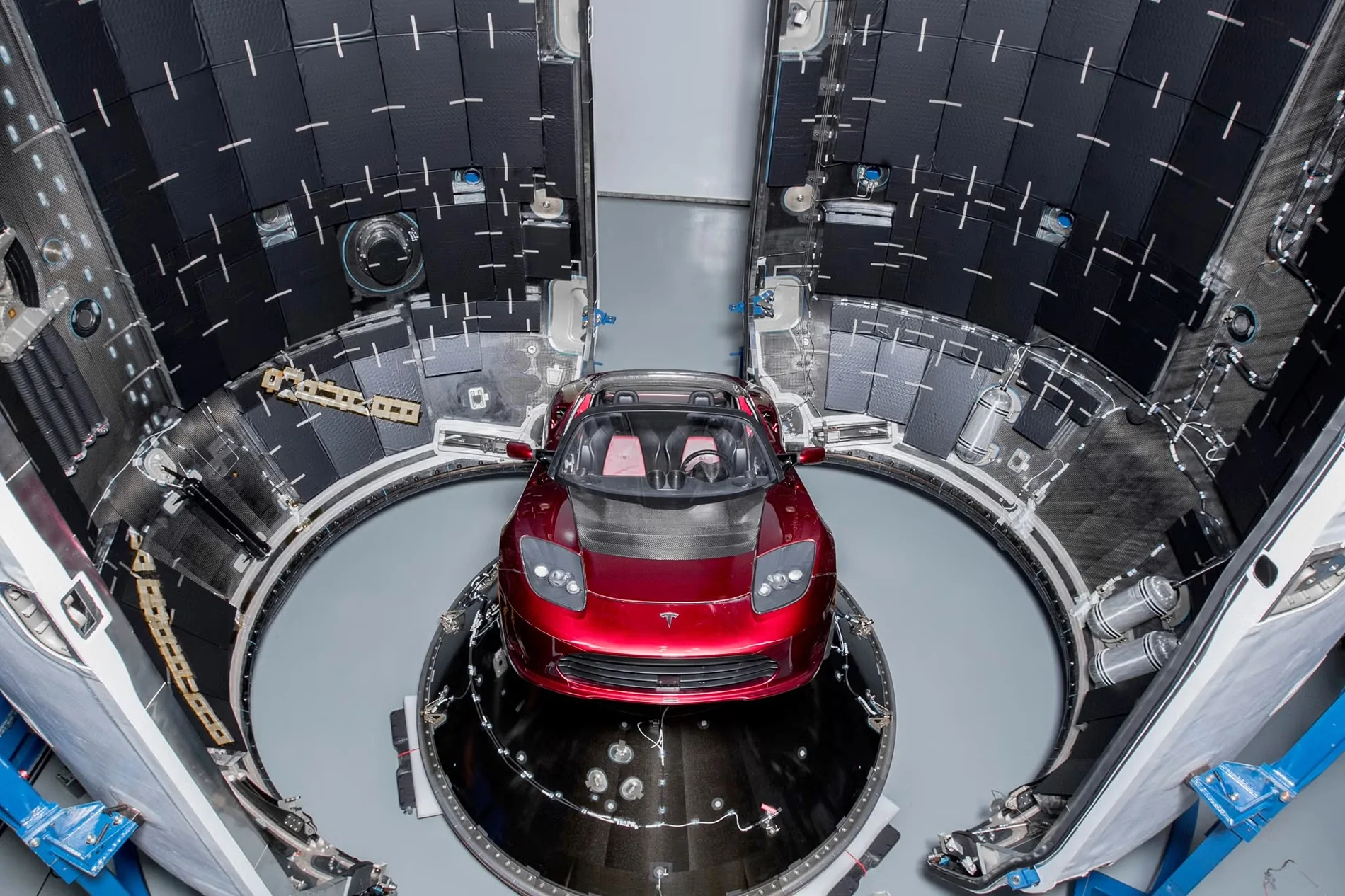
Where is that flying roadster when you need it.
Fugue
Well-known member
- Joined
- Nov 28, 2022
- Threads
- 4
- Messages
- 429
- Reaction score
- 1,122
- Location
- Kentucky
- Vehicles
- Cybertruck AWD FSD, Model Y LR FSD
- Occupation
- Tech Industry Grunt
No flying Roadster yet, but we did get some underground Cybertrucks in Vegas.
Where is that flying roadster when you need it.
hemiarch
Well-known member
- First Name
- Ace
- Joined
- Jan 22, 2025
- Threads
- 121
- Messages
- 8,614
- Reaction score
- 9,959
- Location
- Arizona
- Vehicles
- 2024 foundation AWD, 2024 model x
- Occupation
- Trauma Surgeon
No flying roadster? Say what?!No flying Roadster yet, but we did get some underground Cybertrucks in Vegas.

Similar threads


- Replies
- 103
- Views
- 12,620


