Sponsored

Steer by wire confirmed?

Jhodgesatmb

Well-known member
First Name
Jack
Joined
Dec 1, 2019
Threads
89
Messages
6,487
Reaction score
9,025
Location
San Francisco Bay area
Website
www.arbor-studios.com
Vehicles
Tesla Cybertruck FS AWD, Tesla Model Y LR
Occupation
Retired AI researcher
Country flag
U.S. NASA invented digital fly-by-wire for some of its aircraft in 1972.

The Tesla patent is important but in the U.S. the patent probably does not change the main roadblock, archaic auto regulation.

In U.S. regulation, a human driveable car can have steering wheel connected to steer-by-wire (SbW) system but it must still have a backup mechanical linkage from steering wheel to front wheels.

If the car maker still needs to put in a backup mechanical linkage, the extra cost of the backup mechanical linkage cancels a significant part of cost reduction possible using SwB, cancels some of front crash safety advantages of SwB, and prevents easy right-hand/left-hand drive models manufacturing cost/complexity reduction of SwB.
Example: Being allowed to do SbW without backup mechanical linkage will probably be critical to whether Cybertruck is ever officially delivered to Australia and other right-hand drive countries.

New U.S. regulation for 100% fully autonomous (no steering wheel & other controls for a driver) vehicles (shuttles and robotaxis ) say these vehicles can use SbW and do NOT need to have a backup mechanical linkage.

If SbW without backup mechanical linkage is safe enough for 100% fully autonomous vehicles then it should be safe enough for drivers too.

This U.S. issue is similar to situation where Cybertruck still has to ship with exterior mirrors even though Tesla camera system is better.

All modern airliners that have several hundreds of passengers at a time and even when landing can still be traveling at speeds in excess of 100mph, have SwB system with NO backup mechanical linkage.

Some classes (F1) of race cars that regularly travel 150-200mph for 24/48 hour races use steer-by-wire (SbW) and brake-by wire (BbW) systems.

Formula One and some sports cars such as the Audi R8 LMS GT3, BMW M6 GT3, and Mercedes-AMG GT3, Infiniti Q60, Lexus RZ450e, Toyota BZ4X EV, and soon might be a model from Nio (Chinese EV).

Vehicles driven by some extra challenged drivers use SbW since the driver is NOT physically able to use standard steering wheel and maybe other standard controls. Some use joystick for steering.

--------------------------

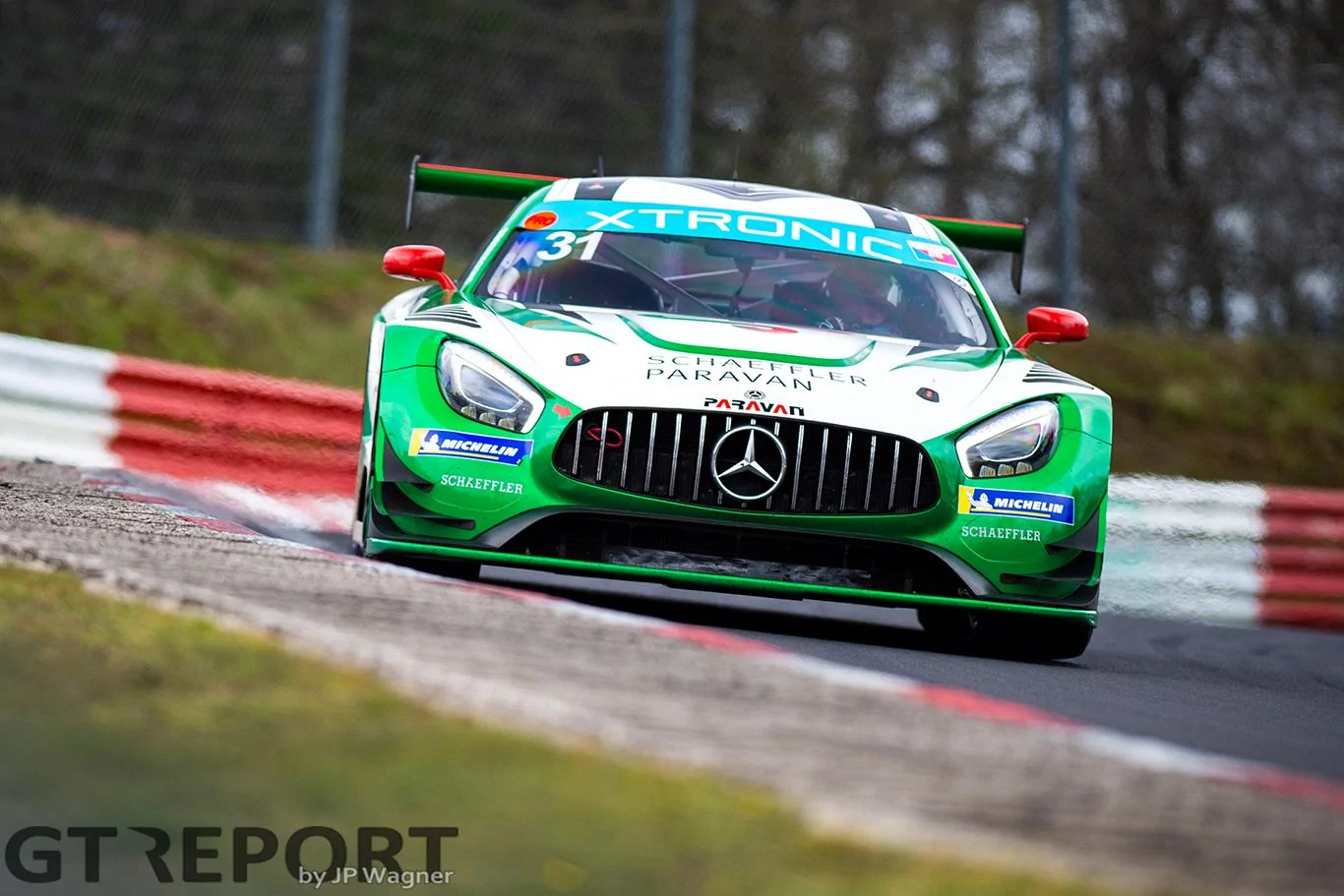
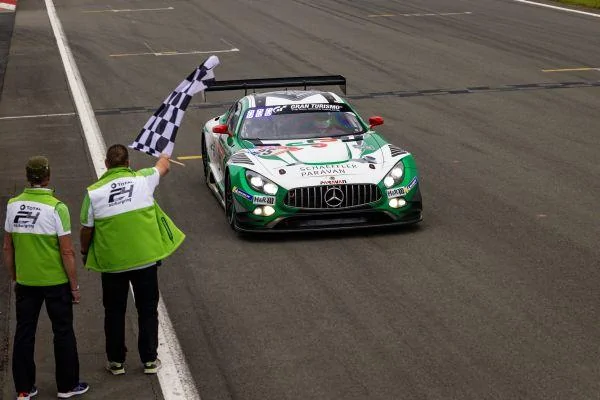
Steer By Wire At the N24, The First 24 Hour Race In A Mercedes GT3
Schaeffler Paravan brings steer-by-wire system to GT3 with Mercedes-AMG entry in NĂĽrburgring 24 Hours
Posted by Miguel Bosch
6 May 2021

.....
The German Motor Sports Federation (DMSB) has approved steer-by-wire technology since 2019 and it is part of the GTC Race regulations and being introduced in the DTM as well this year with Rowe Racing having already committed to running the Schaeffler Paravan steer-by-wire Space Drive system for the #16 BMW M6 GT3 of Timo Glock and MĂĽcke Motorsport for the #15 Mercedes-AMG GT3 Evo for Gary Paffett.


JPW_8206ngt.jpg

--------------------------

With steer-by-wire through the green hell
For the first time in the history of the ADAC Total 24 Hours NĂĽrburgring, a Mercedes-AMG GT3 completes the toughest race in the world without a mechanical connection between the steering unit and steering gear.
2021May07
https://www.automobilsport.com/race...steer-by-wire-through-the-green-hell,news.htm

24hNbr21_127905TU_BU.jpg


--------------------------

Schaeffler establishes steer-by-wire in DTM racing series
June 22, 2021
By Christoph Hammerschmidt
Technology News
https://www.eenewseurope.com/en/schaeffler-establishes-steer-by-wire-in-dtm-racing-series/

--------------------------

Bosch brings steer-by-wire to series production
June 12, 2023
By Christoph Hammerschmidt
https://www.eenewseurope.com/en/bosch-brings-steer-by-wire-to-series-production/

--------------------------

ZF Says Has Volume Contracts for Steer by Wire The deals will put it firmly among the leaders in the technology, the supplier says, adding it “expects a significant share of the steer-by-wire market by 2030.”
By David Zoia
Jul 19, 2022
https://www.wardsauto.com/vehicles/zf-says-has-volume-contracts-steer-wire

steer-by-wire is ready to be unleashed in the market, with German Tier 1 ZF moving to a front-of-the-grid position among key suppliers.

--------------------------


ZF to supply steer-by-wire system to Nio
ZF Friedrichshafen signed a deal this week to supply Nio with steer-by-wire technology, making the major Chinese electric-vehicle maker the ....
20 oct 2022
https://europe.autonews.com › zf-...

--------------------------
This is a wonderful set of data and it is clear what your position is. If all of these manufacturers, vehicles, and situations can use SbW w/o mechanical linkage why is it that everyone can’t? Isn’t this a Rule of Law country where everyone has the same rights and responsibilities?
 

firsttruck

Well-known member
Joined
Sep 25, 2020
Threads
205
Messages
2,761
Reaction score
4,441
Location
mx
Vehicles
none
Country flag
.....
New U.S. regulation for 100% fully autonomous (no steering wheel & other controls for a driver) vehicles (shuttles and robotaxis ) say these vehicles can use SbW and do NOT need to have a backup mechanical linkage.

If SbW without backup mechanical linkage is safe enough for 100% fully autonomous vehicles then it should be safe enough for drivers too.
If U.S government agency deems SbW without backup mechanical linkage is safe enough for 100% fully autonomous vehicles with 2 or more passengers then it should be safe enough for vehicles with drivers to use too.

What is irrational about thinking that?
 

firsttruck

Well-known member
Joined
Sep 25, 2020
Threads
205
Messages
2,761
Reaction score
4,441
Location
mx
Vehicles
none
Country flag
.....
New U.S. regulation for 100% fully autonomous (no steering wheel & other controls for a driver) vehicles (shuttles and robotaxis ) say these vehicles can use SbW and do NOT need to have a backup mechanical linkage.

If SbW without backup mechanical linkage is safe enough for 100% fully autonomous vehicles then it should be safe enough for drivers too.


This is a wonderful set of data and it is clear what your position is. If all of these manufacturers, vehicles, and situations can use SbW w/o mechanical linkage why is it that everyone can’t? Isn’t this a Rule of Law country where everyone has the same rights and responsibilities?
If U.S government agency RULE deems SbW without backup mechanical linkage is safe enough for 100% fully autonomous vehicles with 2 or more passengers then it should be safe enough for vehicles with drivers to use too.

What is irrational about thinking that the rule for vehicles with drivers should be the same?
 
Last edited:

HaulingAss

Well-known member
Joined
Oct 3, 2020
Threads
28
Messages
10,300
Reaction score
20,711
Location
Western Washington, USA
Vehicles
Cybertruck DM, 2010 F-150, 2018 Performance Model 3, 2024 Performance Model 3
Country flag
Wait! You drive a Jeep Gladiator??

:ROFLMAO: :ROFLMAO:

And you think the Cybertruck will have similar steering issues?

:rolleyes:


cvalue13

Well-known member
Joined
Aug 17, 2022
Threads
74
Messages
7,153
Reaction score
13,769
Location
Austin, TX
Vehicles
F150L
Occupation
Fun-employed
Country flag
Yh
If U.S government agency deems SbW without backup mechanical linkage is safe enough for 100% fully autonomous vehicles with 2 or more passengers then it should be safe enough for vehicles with drivers to use too.

What is irrational about thinking that?
i don’t understand your line of thinking. it seems to me the apparent persuasiveness of the point rests on a fundamental conflation
Can you cite exactly which SAE level a vehicle must be before mechanical linkage is not required? Is it not at transition from SAE level 4 to SAE level 5?

What confuses me about your point is this: all levels of SAE require redundancy in steering failure systems. If you’re building a car with a steering wheel, that redundancy requirement can be satisfied by a mechanical linkage. If instead your vehivle has no steeering wheel, that redundancy must be met by alternative systems.

your entire post skips over this fact. The airplanes you cite all have redundancy steering failure systems.

the requirements for these types of fully electronic redundancies are such that cost and weight are prohibitive in passenger commercial vehicles, where they are not in multi-million dollar airplanes and F1 race cars

put simply: all vehicles are required to have such redundancies. Your apparent argument appears to rest on a misunderstanding that “fully autonomous” vehicles (SAE levels 4/5) are not required to, while SAW levels 3 below are?

that’s not the case

but I’ll admit, I’m confused in exactly the point navy. I mean, the fact that SAE level five exists, proves that mechanical linkage redundancy is not required. But for some reason, you seem to be suggesting that mechanical linkage redundancy is required, unfair, as proved by the existence of essay level five vehicles, not requiring mechanical linkage.
Huh?
 
Last edited:

PilotPete

Well-known member
First Name
Pete
Joined
May 8, 2023
Threads
12
Messages
1,578
Reaction score
3,969
Vehicles
Porsche, BMW, M3LR on order
Occupation
Chief Pilot
Country flag
If U.S government agency deems SbW without backup mechanical linkage is safe enough for 100% fully autonomous vehicles with 2 or more passengers then it should be safe enough for vehicles with drivers to use too.

What is irrational about thinking that?
NASA VOLPE did a research paper published in 2018 on SbW and 4W Steering. They recommended (paraphrasing) SbW was safe enough with the redundancy that the system had built in, and the Fail Safe modes that were being implemented. They also added that by using SbW, you could improve safety with speed dependent Rear Wheel Steering. At high speed in-phase RWS greatly reduces the opportunities for a driver induced rollover due to evasive maneuvers. They discuss in the paper all the different methods of redundancy and error checking from dual to triple control systems. I’ll find it and add it on when I do.

EDIT: The Volpe white paper is now attached.
 

Attachments

Last edited:

PilotPete

Well-known member
First Name
Pete
Joined
May 8, 2023
Threads
12
Messages
1,578
Reaction score
3,969
Vehicles
Porsche, BMW, M3LR on order
Occupation
Chief Pilot
Country flag
all vehicles require these redundancies. The proof of that is the existence of fully autonomous regulations. Redundancy can be satisfied by either mechanical linkage, or more expensive, heavy, electronic redundancy systems.
More expensive??? Can be. Volume and advancement can fix that. Heavy??? Nooooo!!! That’s one of the many reasons it works so well in planes. (And why you don’t see electric planes with 14 hours of range at transonic speeds) Planes are the most weight sensitive vehicles in all of common transportation.

Unless we’re going backwards in technology, replacing a steering column, hydraulic pump, fluid, valves, and actuators with a circuit board, sensors, elecitric actuators and some ribbon cables will be orders of magnitude lighter than the standard steering system. SbW with the mechanical backup CAN be as light as current systems, as the mechanical backup doesn’t need to withstand 20 years of loaded operation. It can remain in motion without load while the main system operates, eliminating a great deal of wear and tear.
 

cvalue13

Well-known member
Joined
Aug 17, 2022
Threads
74
Messages
7,153
Reaction score
13,769
Location
Austin, TX
Vehicles
F150L
Occupation
Fun-employed
Country flag
More expensive??? Can be. Volume and advancement can fix that. Heavy??? Nooooo!!! That’s one of the many reasons it works so well in planes. (And why you don’t see electric planes with 14 hours of range at transonic speeds) Planes are the most weight sensitive vehicles in all of common transportation.
see, when you attempt brevity by simplification, people take the simplification and run with it as error


There’s more that can be saved d, but to ratchet the simplification up only a single click: to make sufficient redundancy systems, heavy solutions themselves are cheap, where light solutions are expensive

But for BEV vehicles, putting a heavy but cheap solution in the vehicle becomes indirectly expensive at the vehicle level: because the weight must be accommodated for by larger expensive battery packs.

for BEV’s specifically, then, the issue comes down to redundant systems being either heavy and expensive or light and expensive

I didn’t say these were the challenges in airplanes.

I said these are the solutions in airplanes, that when translated to BEV vehicles are heavy and expensive or light and expensive within the context of relatively low-margin/high volume, weight sensitive vehicles
That BEV’s do have these challenges is primarily why- to date - there aren’t mass production steer-by-wire BEV vehicles that have taken the light and expensive route.

that’ll change with advances in BEV tech and construction

I was only pointing out that the entire prior thread was based on a conflation or misunderstanding


cvalue13

Well-known member
Joined
Aug 17, 2022
Threads
74
Messages
7,153
Reaction score
13,769
Location
Austin, TX
Vehicles
F150L
Occupation
Fun-employed
Country flag
SbW with the mechanical backup CAN be as light as current systems, as the mechanical backup doesn’t need to withstand 20 years of loaded operation.
yes, which is why solutions to date follow that path.

for front wheels.

this conversation with spurred with how Tesla manages to have mechanical redundancy of steer by wire in a four steer vehicle

somebody then incorrectly asserted, that cars require mechanical redundancy

Which then cause someone else to say, in effect, “that’s so unfair - fully autonomous cars can have them”

not realizing the fundamental error that it is not true that cars require mechanical redundancy and that fully autonomous cars are the proof.

this whole convo is FUBAR
 

PilotPete

Well-known member
First Name
Pete
Joined
May 8, 2023
Threads
12
Messages
1,578
Reaction score
3,969
Vehicles
Porsche, BMW, M3LR on order
Occupation
Chief Pilot
Country flag
If I misunderstood, my apologies.

I’d like to see the reg requiring mechanical backup.
 

CyberGus

Well-known member
First Name
Gus
Joined
May 22, 2021
Threads
91
Messages
10,236
Reaction score
33,889
Location
Austin, TX
Vehicles
1981 DeLorean, 2024 Cybertruck
Occupation
IT Specialist
Country flag
If I misunderstood, my apologies.

I’d like to see the reg requiring mechanical backup.

How Toyota Is Making the Case for Steer-By-Wire
Soon, the Lexus RZ450e will be the first car sold in America without a shaft connecting the steering wheel and the front wheels.

BY CHRIS PERKINS PUBLISHED: MAR 17, 2023

Tesla Cybertruck Steer by wire confirmed? steer-by-wire-lead-641493eac7291.jpg?crop=1.00xw:1

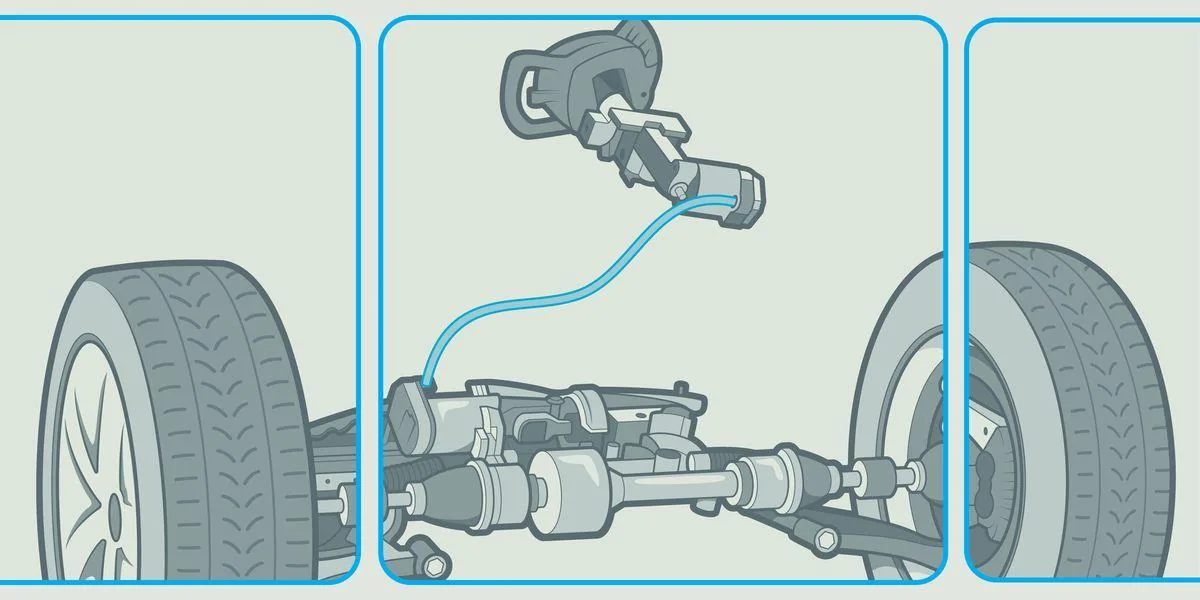
Toyota is not the first automaker to put steer-by-wire into a production car. Nissan did it with the Infiniti Q50 nearly 10 years ago, but where Toyota’s new system is significantly different is that there’s no shaft connecting the steering wheel to the wheels, just some wiring. The Q50 used a traditional steering system as a backup; Toyota is doing away with it entirely.

It’s a big deal. American customers will get their chance to try Toyota’s steer-by-wire system in the Lexus RZ450e electric crossover, with the option set to become available in the next few years. When driving the new RZ450e in the south of France, we recently had the opportunity to try a steer-by-wire prototype, and learn more about the system from Lexus RZ assistant chief engineer Yushi Higashiyama.

If we look at the system from the tires all the way up to the wheel, it starts out conventionally. Connected to the steering knuckles via tie rods is a rack and pinion gear, just like you get in most road cars today. The pinion gear is actuated by an electric motor, however, which receives signals from wires connected to the steering wheel itself. As there’s no physical connection between the steering wheel and the rack, the steering ratio can be continuously variable, something Toyota and Lexus take advantage of. (We’ve seen variable-ratio steering before, but that’s just where the ratio increases or decreases as you get towards lock. We’ve also seen variable-assist steering before, but that’s just varying the level of power assist dependent on speed.)

In both the BZ4X and the RZ450e, a yoke-type device is used in place of a traditional steering wheel. (Lexus doesn’t call it a yoke, and in fact, there is no specific name for it yet. A spokesperson for Lexus called it, simply, a steering apparatus.) The steering ratio is speed dependent, and at very low speeds, it’s very quick, so the driver never has to shuffle the wheel. At higher speeds, the ratio is much slower, though it never requires much input. There’s less than a full turn lock-to-lock, so the driver never has to go hand over hand.

“One of the primary reasons we wanted to implement steer-by-wire technology in the [RZ450e] is so that the steering system can keep up with the improvement in accelerator response and vehicle movement response,” Yushi Higashiyama tells R&T through an interpreter.

There are other reasons, too. “There’s a tendency to focus on the new system and the new technology only, but what’s actually happening is we’re looking at the total package of the cabin itself, and how that affects the driver and car relationship,” Higashiyama adds. “It wasn’t that we were trying to do something new just to be new, it’s really that we’re trying to take on that extra challenge to prepare ourself for future applications.”

Extra challenge is apt here. The BZ4X and RX450e are otherwise offered with a totally conventional electric power-assist steering system. Toyota sees steer-by-wire as the future, and figured these new electric cars presented a great opportunity to develop the new technology.

We drove a Lexus RZ450e prototype with steer-by-wire in the South of France, and the feel was a little strange. At low speeds, it’s very easy to put in too much steering, as the ratio is far faster than any other car’s, but as you get up to road/highway speeds, the ratio slows and it feels a lot more natural. Still, it’s easy to get thrown off because you’re never quite sure what ratio the car will pick. Hardest is slowing down to a near or complete stop from, say, 50 mph to make a sharp turn, because the ratio change is dramatic and sudden. Once you’ve turned in, however, the ratio doesn’t change until you return back to center, even if you add or reduce speed.

The weighting felt fairly natural for everyday driving, though for spirited driving, it felt odd. If you’re in a long corner, for example, with a fixed steering angle and you add some power, you don’t really get sense of the steering unwinding in your hands as you get closer to the limits of grip. In fact, the weighting doesn’t really change at all. Plus, you always have the sense of a motor on the steering wheel torquing back at you, rather than the motor working with you as in a conventional EPAS system. But, it’s early days for a system like this, and Lexus representatives told us as much. Plus, how much steering feel do you need in a luxury electric crossover? Not that much, all considered. Lexus’ upcoming EV sports car, however, will be a different case.

Toyota and Lexus could in theory do a steer-by-wire car with a conventional wheel and a much slower ratio, too. While the automaker hasn’t said if it will do this, there might be good reason too. There’s the packaging/safety/autonomy benefits we discussed earlier, and there’s also an efficiency gain from getting rid of the power assist system.

Of course, you’re probably wondering about the safety, especially where Toyota doesn’t have a mechanical backup as Nissan does. Here essentially, there’s two of every component in the steering system, so if one fails, there’s a backup. In normal operation, steer-by-wire is powered by the 400-volt battery used to power the traction motors, and if that fails, it can run off the car’s 12-volt system. And if that fails, there’s a small backup lithium-ion battery for the steering system alone.

There’s nothing in the Federal Motor Vehicle Safety Standards that defines minimum performance parameters for steering systems in cars sold in the U.S. Just standards regarding the crash safety of conventional steering systems. That said, the National Highway Traffic Safety Agency (NHTSA) published a study in August 2018 on steer-by-wire systems, their potential failure modes, and fail-safes/backups, seemingly with an eye towards implementing new standards. UN regulations detail all sorts of performance parameters, and Lexus says they'll meet these, plus any additional regional requirements where the system is offered. The brand is confident that the product will be fully safe once it reaches customers in the next few years.


https://www.roadandtrack.com/news/a43350167/toyota-steer-by-wire/
 

JBee

Well-known member
First Name
JB
Joined
Nov 22, 2019
Threads
18
Messages
4,913
Reaction score
6,362
Location
Australia
Vehicles
Cybertruck
Occupation
. Professional Hobbyist
Country flag
Get your wheel alignment checked. Sounds like your wheels are toe out and need to be toe in. If your front tyres are old you will see more wearing on the inside, instead of outside. Toe in gives you self centering steering.
Sponsored


Top