
Sponsored

Administrator

Administrator
Staff member
Joined
Nov 15, 2019
Threads
391
Messages
1,423
Reaction score
5,186
Location
Cybertruck Owners Club
Vehicles
CYBERTRUCK
Country flag

Gaximus

Well-known member
Joined
Jun 22, 2024
Threads
23
Messages
1,461
Reaction score
2,286
Location
Mead, CO
Vehicles
CyberBeast, Model 3, Jeep Wrangler, Yamaha R6
Occupation
Software Developer
Country flag
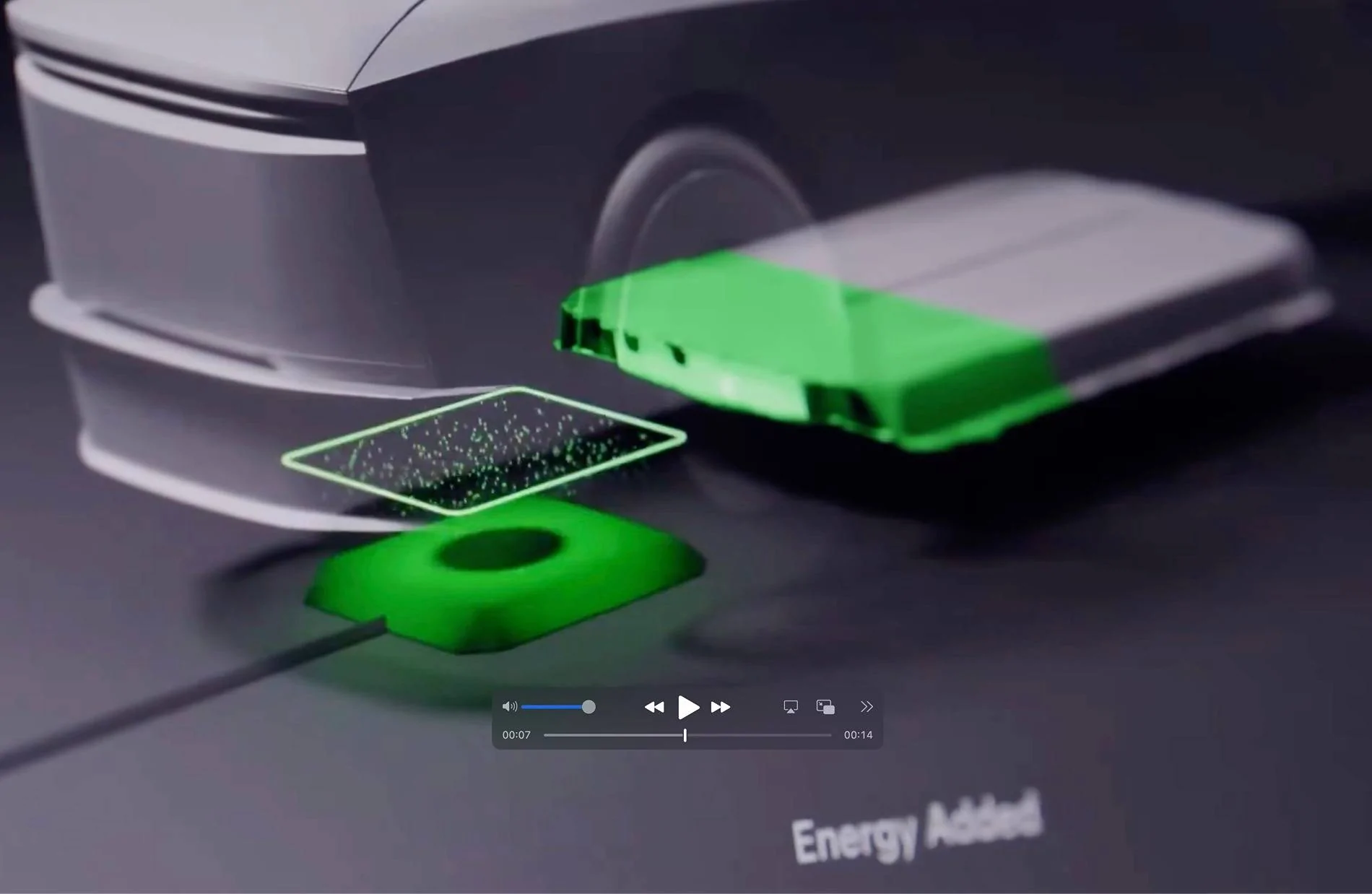
I'm curious what the efficiency is on these. Inductive charging it's incredibly wasteful. I love it for my phone, and it uses magnets to ensure perfect alignment, and it's still not that efficient. If this charges at 25Kw, yet uses 35Kw of power to do so, it'll be a noticeable hit on the electric bill.
 

swengl

Well-known member
First Name
Steve
Joined
Sep 9, 2021
Threads
19
Messages
601
Reaction score
1,103
Location
United States
Vehicles
AWD-CT, Model Y
Country flag
I'm curious what the efficiency is on these. Inductive charging it's incredibly wasteful. I love it for my phone, and it uses magnets to ensure perfect alignment, and it's still not that efficient. If this charges at 25Kw, yet uses 35Kw of power to do so, it'll be a noticeable hit on the electric bill.
This is exactly my concern, as well. For an unmanned Robocab, inductive charging makes perfect sense. For a consumer vehicle that needs to be charged maybe once or twice a week, I'll stick with plugging the HPWC in and getting the best cost efficiency. What I would like to see is a solar road where you drive over inductive chargers and it can boost your range without stopping, but that may still be a few years away from practical use.


CyberGus

Well-known member
First Name
Gus
Joined
May 22, 2021
Threads
91
Messages
10,238
Reaction score
33,893
Location
Austin, TX
Vehicles
1981 DeLorean, 2024 Cybertruck
Occupation
IT Specialist
Country flag
I'm curious what the efficiency is on these. Inductive charging it's incredibly wasteful. I love it for my phone, and it uses magnets to ensure perfect alignment, and it's still not that efficient. If this charges at 25Kw, yet uses 35Kw of power to do so, it'll be a noticeable hit on the electric bill.
WiTricity claims 90%+ efficiency grid-to-battery for their wireless charging solution.

https://witricity.com/technology/why-magnetic-resonance
 

rlhamil

Well-known member
First Name
Richard
Joined
Apr 1, 2020
Threads
6
Messages
553
Reaction score
603
Location
Glen Burnie, Maryland
Vehicles
2002 Trans Am WS6, 2018 Kia Sportage, 2024 Cyberbeast FS
Occupation
retired
Country flag
My thing is that if one cares about how oh-so-green EVs are (I don't hate that but it wasn't my reason for buying one), this isn't nearly efficient enough. I'd want >95% as efficient as plug-in for home use, and I don't see it as feasible at all for supercharger use, at least not in the near future. Wonder if there would be a warning for people with pacemakers not to be nearby when high power inductive charging was taking place. Not to mention if I had an old spinning rust hard drive, would that wipe it? :)

For superchargers, a minor mod to put a reflective rim on the charge port socket, so that a robot arm with camera could plug you in (and auto-park to get close enough, please; those charging cables are short enough to require getting uncomfortably close) would be enough to do a no manual intervention charging; and it would be only less efficient than manually plugging in insofar as the robot arm would use a W/h or two of power.
 

PATEL

Well-known member
Joined
Nov 18, 2019
Threads
157
Messages
398
Reaction score
2,448
Location
FL
Vehicles
Cybertruck & BMW M3
Country flag
WiTricity claims 90%+ efficiency grid-to-battery for their wireless charging solution.

https://witricity.com/technology/why-magnetic-resonance
Yup I read the same source... here's the main takeaway from this article:

https://witricity.com/media/blog/a-beginners-guide-to-wireless-charging-or-is-it-really-that-easy#:~:text=In one word, yes.,(and is most efficient).

In one word, yes. When it comes to wired vs. wireless EV charging efficiency, wireless charging is just as efficient as a Level 2 plug-in charger. In fact, it's likely you're operating in the 20-80% state of charge (SOC) range that your battery likes (and is most efficient).

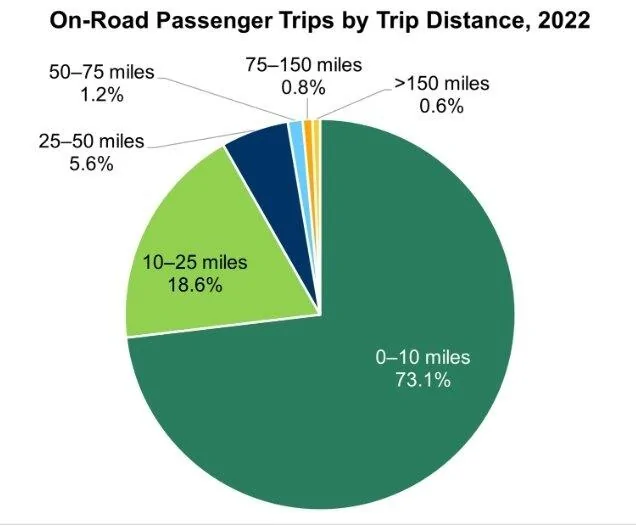
With plug-in charging, it’s less likely that the 20-80% SOC range will be maintained since many drivers tend to forget to plug in. Some drivers even charge only once a week or drive all week and then plug in on the weekend. Not only is this less efficient, but it’s harder on the battery. With wireless charging, simply park and charge.
 

CyberGus

Well-known member
First Name
Gus
Joined
May 22, 2021
Threads
91
Messages
10,238
Reaction score
33,893
Location
Austin, TX
Vehicles
1981 DeLorean, 2024 Cybertruck
Occupation
IT Specialist
Country flag
Yup I read the same source... here's the main takeaway from this article:

https://witricity.com/media/blog/a-beginners-guide-to-wireless-charging-or-is-it-really-that-easy#:~:text=In one word, yes.,(and is most efficient).

In one word, yes. When it comes to wired vs. wireless EV charging efficiency, wireless charging is just as efficient as a Level 2 plug-in charger. In fact, it's likely you're operating in the 20-80% state of charge (SOC) range that your battery likes (and is most efficient).

With plug-in charging, it’s less likely that the 20-80% SOC range will be maintained since many drivers tend to forget to plug in. Some drivers even charge only once a week or drive all week and then plug in on the weekend. Not only is this less efficient, but it’s harder on the battery. With wireless charging, simply park and charge.
It's true that L2 charging via cable is not 100% efficient, depending on the cable length. But I fail to see how efficiency is impacted by SoC.


Woodrick

Well-known member
First Name
Ed
Joined
Dec 30, 2023
Threads
6
Messages
4,786
Reaction score
4,762
Location
Gainesville Ga
Vehicles
Model 3, Model Y, Cybertruck AWD
Occupation
Consultant
Country flag
My thing is that if one cares about how oh-so-green EVs are (I don't hate that but it wasn't my reason for buying one), this isn't nearly efficient enough. I'd want >95% as efficient as plug-in for home use, and I don't see it as feasible at all for supercharger use, at least not in the near future. Wonder if there would be a warning for people with pacemakers not to be nearby when high power inductive charging was taking place. Not to mention if I had an old spinning rust hard drive, would that wipe it? :)

For superchargers, a minor mod to put a reflective rim on the charge port socket, so that a robot arm with camera could plug you in (and auto-park to get close enough, please; those charging cables are short enough to require getting uncomfortably close) would be enough to do a no manual intervention charging; and it would be only less efficient than manually plugging in insofar as the robot arm would use a W/h or two of power.
What was the efficiency of your last ICE vehicle?
 

Crissa

Well-known member
First Name
Crissa
Joined
Jul 8, 2020
Threads
138
Messages
19,571
Reaction score
31,475
Location
Santa Cruz
Vehicles
2014 Zero S, 2013 Mazda 3
Country flag
My thing is that if one cares about how oh-so-green EVs are (I don't hate that but it wasn't my reason for buying one), this isn't nearly efficient enough. I'd want >95% as efficient as...
Plug-in is already only 80-90% efficient. The on-board chargers aren't perfect, nor is the absorption of electrons in a battery.

The advantage, to this point, of plugging in is higher throughput as well as higher efficiency.

-Crissa
 

CyberMoose

Well-known member
Joined
Aug 19, 2020
Threads
1
Messages
825
Reaction score
1,437
Location
.
Vehicles
.
I love the concept and it's great that Tesla is making this.

But I probably won't use it.

Though I think this will be great for things like RoboTaxi's when they need to charge.

The only way I would want this is if I lived in such a big house that my Truck could drop me off at the front door and then go park on the charger in the garage by itself.

But when I park, plugging in my Tesla is on my way inside. It takes like 5 extra seconds to plug it in.

It's definitely cool, but I don't see a whole lot of benefit for the average consumer.

Maybe if someone is super super forgetful. I know I've forgotten to plug in twice in about 2.5 years since I got my car. But if I did that weekly, I might be inclined to by this when it comes out.
 

mongo

Well-known member
Joined
May 27, 2024
Threads
5
Messages
4,521
Reaction score
5,499
Location
SE Michigan
Vehicles
Cyberbeast
Country flag
It's true that L2 charging via cable is not 100% efficient, depending on the cable length. But I fail to see how efficiency is impacted by SoC.
Power into battery vs power to rest of systems while charging during taper.
Of course, there are also quadratic factors in charging efficency (I²R) so the optimal point is somewhere in the middle...
 

Crissa

Well-known member
First Name
Crissa
Joined
Jul 8, 2020
Threads
138
Messages
19,571
Reaction score
31,475
Location
Santa Cruz
Vehicles
2014 Zero S, 2013 Mazda 3
Country flag
But I fail to see how efficiency is impacted by SoC.
A battery isn't 100% efficient in absorbing electrons, and this efficiency varies by state of charge (which is why you have charging curves).

No electronic component is without losses, the best one we can make and use at room temperature is the transformer - but only for a set narrow range of alternating voltage. But even that has waste heat.

If they're talking state of charge, maybe they're offloading the charger into the induction pad, and putting only a rectifier and receiver unit in the vehicle?

-Crissa
Sponsored


Top