
Sponsored

Tire replacement recommendations for foundation series?

Beetlebug62

Well-known member
First Name
Ken
Joined
Mar 24, 2025
Threads
6
Messages
455
Reaction score
797
Location
Maine, USA
Vehicles
2018 Tesla Model 3 LR-AWD, 2025 CyberTruck dual-motor
Occupation
retired
Country flag
Buy decibel meter. Tell me 70mph
I'll try to drive a 1mi stretch later this afternoon. I can only say, it's quieter than my 2018 Model 3. And the noise I do hear, doesn't sound like annoying tire noise.
 

Floridaman

Well-known member
First Name
Dan
Joined
Jun 1, 2024
Threads
6
Messages
72
Reaction score
133
Location
Tampa, FL
Vehicles
Cyberbeast, 1972 Chevelle SS, WRX, 1984 M-1009, M35A2, etc
Country flag
I had 35000 on my original Goodyear (FS Beast). I opted for the BFG KO3s from Discount. I LOVE the tires so far. They feel and ride great and seem as quiet as the Goodyears.

My WH/mile has increased increased, though.. I do tow a pretty good amount with several thousand highway miles, but my Goodyear WH/mile was 402 and the BFGs is 462....
 

Beetlebug62

Well-known member
First Name
Ken
Joined
Mar 24, 2025
Threads
6
Messages
455
Reaction score
797
Location
Maine, USA
Vehicles
2018 Tesla Model 3 LR-AWD, 2025 CyberTruck dual-motor
Occupation
retired
Country flag
Buy decibel meter. Tell me 70mph
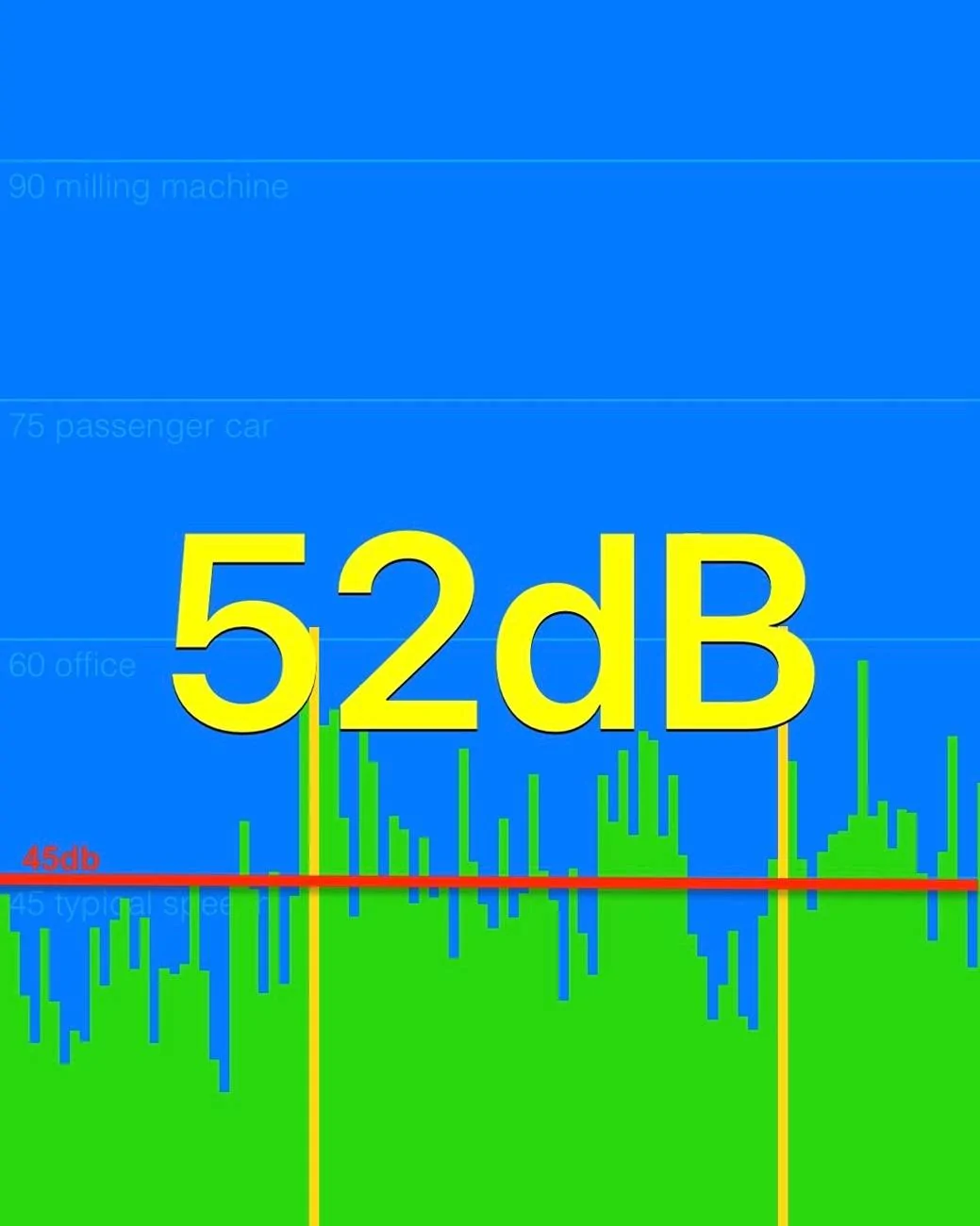
the three are 45mph, 60mph and 70mph.

I added some red lines to make it a little clearer. The big yellow numbers must have been the sound volume at the precise moment when I took the screenshot. You'd be better off guesstimating what the average was.

For example, I think the average at 45mph, was about 45db. Very quiet. If you look carefully, you'll see that the app says 75db is a passenger car.
Tesla Cybertruck Tire replacement recommendations for foundation series? IMG_1466


This was at 60mph. And, like above, I think the average was closet to 60-65db. Seemed quiet to me.
Tesla Cybertruck Tire replacement recommendations for foundation series? IMG_1467


And the below image was at a steady 70mph. I think the average was probably 70db. It didn't seem all that loud to me. And, as I mentioned above, the app thinks 75db is passenger car level.
Tesla Cybertruck Tire replacement recommendations for foundation series? IMG_1468
 
Last edited:


henchman24

Well-known member
Joined
Jul 19, 2023
Threads
0
Messages
370
Reaction score
611
Location
Wyoming
Vehicles
Dual Motor Cybertruck
Country flag
I swapped over to Nokian Outpost nATs within 500 miles of owning my truck (came with all seasons). I deal with some rough dirt roads where I've punctured standard tires before, so it was pretty much a must do and I didn't like the factory all terrain option. Not a ton of tread (built to still have more efficiency at the cost of tire life) and they aren't 3 peak rated (I drive in a lot of snow and ice). Additionally, the factory Goodyear is while not heavy by all terrain standards, it isn't light either. The nATs are 3 peak rated, 60k treadlife, a higher load index, 11 lbs lighter, and should have better puncture resistance than the factory all terrains. They are fantastic tires that I'd recommend. It has the downsides of all all-terrain tires (efficiency hit, some noise, and handling), but the upside is fantastic. They have great grip in snow, ice and off road while being light and rather efficient for an all terrain.
 

TexasRaider

Well-known member
First Name
JR
Joined
Jan 10, 2023
Threads
33
Messages
920
Reaction score
833
Location
Denton
Vehicles
Cybertruck + MS
Occupation
Civil
Country flag
Tire replacement should depend on your zip code. Michigan tires are not good in my Florida. My roads are not like Colorado. I have 20k miles of highway driving. I want quieter tires.
Good point.
Also take into account how many miles you plan on driving.
I was going to go with a top rated tire by TireRack and then saw that it would “probably” only “last” 13 months on the CT even with a 50k mile warranty. So, I went with another tire that was more middle of the road performance, but it’s “projected to last” 4 years.
 

HaulingAss

Well-known member
Joined
Oct 3, 2020
Threads
28
Messages
10,298
Reaction score
20,706
Location
Western Washington, USA
Vehicles
Cybertruck DM, 2010 F-150, 2018 Performance Model 3, 2024 Performance Model 3
Country flag
I swapped over to Nokian Outpost nATs within 500 miles of owning my truck (came with all seasons). I deal with some rough dirt roads where I've punctured standard tires before, so it was pretty much a must do and I didn't like the factory all terrain option. Not a ton of tread (built to still have more efficiency at the cost of tire life) and they aren't 3 peak rated (I drive in a lot of snow and ice). Additionally, the factory Goodyear is while not heavy by all terrain standards, it isn't light either. The nATs are 3 peak rated, 60k treadlife, a higher load index, 11 lbs lighter, and should have better puncture resistance than the factory all terrains. They are fantastic tires that I'd recommend. It has the downsides of all all-terrain tires (efficiency hit, some noise, and handling), but the upside is fantastic. They have great grip in snow, ice and off road while being light and rather efficient for an all terrain.
What do you base your belief on, that the lighter Nokian Outpost nAT tires should have more puncture resistance than the OEM Goodyear All-Terrains?

Both tires use aramid fibers for puncture resistance. However, the OEM Goodyear uses Kevlar which is a specific brand name of an aramid fiber. Both Kevlar and other aramid fibers offer high puncture resistance. Kevlar's unique molecular structure, however, provides superior strength and durability, making it particularly effective against cuts, slashes, and punctures, according to Fiberborne. While all aramid fibers are strong, Kevlar's specific properties often make it the preferred choice for applications demanding high puncture resistance.

Of course, the amount of actual puncture resistance will depend upon the type and amount of plies used, and they way the plies are laid up, in addition to the type of fiber the plies are made from.

Kevlar vs. Aramid Fiber: Key Differences Explained
 

henchman24

Well-known member
Joined
Jul 19, 2023
Threads
0
Messages
370
Reaction score
611
Location
Wyoming
Vehicles
Dual Motor Cybertruck
Country flag
What do you base your belief on, that the lighter Nokian Outpost nAT tires should have more puncture resistance than the OEM Goodyear All-Terrains?

Both tires use aramid fibers for puncture resistance. However, the OEM Goodyear uses Kevlar which is a specific brand name of an aramid fiber. Both Kevlar and other aramid fibers offer high puncture resistance. Kevlar's unique molecular structure, however, provides superior strength and durability, making it particularly effective against cuts, slashes, and punctures, according to Fiberborne. While all aramid fibers are strong, Kevlar's specific properties often make it the preferred choice for applications demanding high puncture resistance.

Of course, the amount of actual puncture resistance will depend upon the type and amount of plies used, and they way the plies are laid up, in addition to the type of fiber the plies are made from.

Kevlar vs. Aramid Fiber: Key Differences Explained
The OEM tire is only an 8 ply tire vs the nAT is a 10 ply… so decently higher rated for puncture. I don’t think the oem CT Goodyear is Kevlar banded, don’t see any documentation for that (not that it makes a huge difference). The snow and ice tire offered is, but don’t think the oem does.
 

HaulingAss

Well-known member
Joined
Oct 3, 2020
Threads
28
Messages
10,298
Reaction score
20,706
Location
Western Washington, USA
Vehicles
Cybertruck DM, 2010 F-150, 2018 Performance Model 3, 2024 Performance Model 3
Country flag
The OEM tire is only an 8 ply tire vs the nAT is a 10 ply… so decently higher rated for puncture. I don’t think the oem CT Goodyear is Kevlar banded, don’t see any documentation for that (not that it makes a huge difference). The snow and ice tire offered is, but don’t think the oem does.
Neither tire has 8 or 10 actual plies. Those ply # ratings are equivalency factors for how much weight at various air pressures they can support (which doesn't translate well to puncture resistance). A higher ply rating has little to do with actual puncture resistance.

My mistake about the Kevlar, only the Goodyear Duratrac RT that Tesla sells for winter use advertises the use of Kevlar (not the OEM Territory RT). But the RT in the Territory RT stands for "Rugged Terrain" which does imply good protection against punctures and cuts. The fact that it's a heavier tire than the Nokian Outpost nAT that has a higher ply rating is interesting. It could indicate thicker sidewall rubber or beefier steel belts. In any case, I don't think any of us have enough information to make an informed conclusion on which tire is more resistant to flats and cuts.


henchman24

Well-known member
Joined
Jul 19, 2023
Threads
0
Messages
370
Reaction score
611
Location
Wyoming
Vehicles
Dual Motor Cybertruck
Country flag
Neither tire has 8 or 10 actual plies. Those ply # ratings are equivalency factors for how much weight at various air pressures they can support (which doesn't translate well to puncture resistance). A higher ply rating has little to do with actual puncture resistance.

My mistake about the Kevlar, only the Goodyear Duratrac RT that Tesla sells for winter use advertises the use of Kevlar (not the OEM Territory RT). But the RT in the Territory RT stands for "Rugged Terrain" which does imply good protection against punctures and cuts. The fact that it's a heavier tire than the Nokian Outpost nAT that has a higher ply rating is interesting. It could indicate thicker sidewall rubber or beefier steel belts. In any case, I don't think any of us have enough information to make an informed conclusion on which tire is more resistant to flats and cuts.
It is true a ply don’t exists like that anymore and it is an approximation of what those used to mean. So while the layers don’t exist like they have in the past, it is still typical that a higher ply tire resists puncture better than a lower rated. Now I didn’t say definitively, I said should… and it should based on the build of the tires. It is built to be a stringer and heavier duty tire


The RT in the name is a marketing term. Means absolutely nothing. The factory all terrain is just a limited tire built for a specific and different purpose. Give just enough traction and off road ability while maintaining range and keeping the on road downsides of all terrains to a minimum. When compared to a triple peak all terrains with standard tread depth, the factory tire really shows its off pavement limitations. Simply a different tire for a different purpose.
 

HaulingAss

Well-known member
Joined
Oct 3, 2020
Threads
28
Messages
10,298
Reaction score
20,706
Location
Western Washington, USA
Vehicles
Cybertruck DM, 2010 F-150, 2018 Performance Model 3, 2024 Performance Model 3
Country flag
It is true a ply don’t exists like that anymore and it is an approximation of what those used to mean. So while the layers don’t exist like they have in the past, it is still typical that a higher ply tire resists puncture better than a lower rated. Now I didn’t say definitively, I said should… and it should based on the build of the tires. It is built to be a stringer and heavier duty tire


The RT in the name is a marketing term. Means absolutely nothing. The factory all terrain is just a limited tire built for a specific and different purpose. Give just enough traction and off road ability while maintaining range and keeping the on road downsides of all terrains to a minimum. When compared to a triple peak all terrains with standard tread depth, the factory tire really shows its off pavement limitations. Simply a different tire for a different purpose.
True. Tesla was wise to equip the Cybertruck with a tire tough enough to handle a decent amount of abuse while still having secure cornering and quiet running on the road. It's surprisingly efficient too, for how well it does off-road.

I also have the Goodyear Duratrac RT that Tesla offers as a winter tire. It's a heavier, tougher tire, with deeper lugs that is highly rated for rugged use. Like the Nokian Outpost's it has a higher load rating too. But it pretty much sucks on-road, which is where 98% of the people are going to use it 95% of the time. The Territory RT really shines on the road and has the flat resistance that I'm not worried about flats when I encounter jagged rocks off-road. Here's the thing: The Territory RT actually has slightly better off-road traction in many situations (compared to the much deeper lug Duratrac RT). In my experience, the Duratrac RT works better on any surface soft enough to make visible depressions (but not in dry sand). The Territory RT works better on any hard surface that is not snow/ice, and in dry, sandy conditions. The big exception is on rock that has a lot of physical features for the deep lugs to grip on. On smooth rock, the Territory RT works better.

Where the Duratrac RT really shines (relative to the Territory RT) is in slippery, sloppy mud and clay or steep organic soil. But not having this is not a deal-killer for me because I can generally use a little momentum to get through a muddy spot (where I commonly travel in the mountains). The really steep terrain, with big exposure, are almost always rocky or sandy/gravel/rock where the Territory RT's work well. Mud and clay washes off of steep slopes around here and is limited to depressions and bogs that are generally not a problem (and I could winch out of if I got stuck).

Don't get me wrong, the Duratrac RT's are tougher, more cut resistant tires, and able to handle more off-road situations (especially mud), but I'm on pavement 60-70% of the time (where they perform much worse). Yes, somewhere close to 1/3 of all my miles of off-pavement. That compromise on the 2/3rds of my miles that are on pavement makes them a tough pill for me to swallow when the Territory RT's work so well off-road and have not been getting flats or tears on rugged terrain. I haven't tried the Nokian Outpost nAT's, but I suspect I would have many of the same impressions I have with the Duratracs (tougher and better in some off-road conditions, but much worse on road). I like to make use of the good cornering qualities of the Cybertruck and really appreciate the quiet smooth ride.

I'm not arguing for or against any particular tire here, just trying to highlight the considerations I use to select the tires I run. I'm a practical guy and know I can get the more street based tires safely through some pretty difficult off-road situations without much concern. It basically comes down to whether the tires are up to the task, or not. And some of that will come down to driver skill. Some people are harder on tires than others. I'm more of a technical driver that pays attention to where my tires are at all times, so I tend not to get sidewall cuts and flats, even on more moderately armored tires. That said, I'm not willing to run the OEM Pirelli All Seasons off-road. They don't have enough protection for what I do. The OEM Territory RT's are really a "Goldilocks" tire for me. I can't believe how well they perform on the road, given their off-road abilities and extra toughness.

The Duratrac RT's are very good, not great, in Winter conditions. The Territory RT's are barely adequate in difficult winter conditions, not confidence inspiring, in difficult winter conditions. That's why I have the Duratracs.
 

pricedm

Well-known member
First Name
Adam
Joined
Feb 17, 2022
Threads
2
Messages
927
Reaction score
1,834
Location
Denver, Colorado, USA
Vehicles
2026 Tesla Model Y LR. 2025 Cybertruck AWD. 2023 MY and 2018 M3: retired
Occupation
IT
Country flag
... I have 20k miles of highway driving. I want quieter tires.
Have you taken a Cybertruck with Core wheels/Pirelli tires on a demo drive? I'm pleased with their on-highway performance, plus some easy gravel mountain roads. My first 750 miles is at 332 W/M energy consumption aka 101.5 mpg/e. This includes three mountain road trips.
 

henchman24

Well-known member
Joined
Jul 19, 2023
Threads
0
Messages
370
Reaction score
611
Location
Wyoming
Vehicles
Dual Motor Cybertruck
Country flag
True. Tesla was wise to equip the Cybertruck with a tire tough enough to handle a decent amount of abuse while still having secure cornering and quiet running on the road. It's surprisingly efficient too, for how well it does off-road.

I also have the Goodyear Duratrac RT that Tesla offers as a winter tire. It's a heavier, tougher tire, with deeper lugs that is highly rated for rugged use. Like the Nokian Outpost's it has a higher load rating too. But it pretty much sucks on-road, which is where 98% of the people are going to use it 95% of the time. The Territory RT really shines on the road and has the flat resistance that I'm not worried about flats when I encounter jagged rocks off-road. Here's the thing: The Territory RT actually has slightly better off-road traction in many situations (compared to the much deeper lug Duratrac RT). In my experience, the Duratrac RT works better on any surface soft enough to make visible depressions (but not in dry sand). The Territory RT works better on any hard surface that is not snow/ice, and in dry, sandy conditions. The big exception is on rock that has a lot of physical features for the deep lugs to grip on. On smooth rock, the Territory RT works better.

Where the Duratrac RT really shines (relative to the Territory RT) is in slippery, sloppy mud and clay or steep organic soil. But not having this is not a deal-killer for me because I can generally use a little momentum to get through a muddy spot (where I commonly travel in the mountains). The really steep terrain, with big exposure, are almost always rocky or sandy/gravel/rock where the Territory RT's work well. Mud and clay washes off of steep slopes around here and is limited to depressions and bogs that are generally not a problem (and I could winch out of if I got stuck).

Don't get me wrong, the Duratrac RT's are tougher, more cut resistant tires, and able to handle more off-road situations (especially mud), but I'm on pavement 60-70% of the time (where they perform much worse). Yes, somewhere close to 1/3 of all my miles of off-pavement. That compromise on the 2/3rds of my miles that are on pavement makes them a tough pill for me to swallow when the Territory RT's work so well off-road and have not been getting flats or tears on rugged terrain. I haven't tried the Nokian Outpost nAT's, but I suspect I would have many of the same impressions I have with the Duratracs (tougher and better in some off-road conditions, but much worse on road). I like to make use of the good cornering qualities of the Cybertruck and really appreciate the quiet smooth ride.

I'm not arguing for or against any particular tire here, just trying to highlight the considerations I use to select the tires I run. I'm a practical guy and know I can get the more street based tires safely through some pretty difficult off-road situations without much concern. It basically comes down to whether the tires are up to the task, or not. And some of that will come down to driver skill. Some people are harder on tires than others. I'm more of a technical driver that pays attention to where my tires are at all times, so I tend not to get sidewall cuts and flats, even on more moderately armored tires. That said, I'm not willing to run the OEM Pirelli All Seasons off-road. They don't have enough protection for what I do. The OEM Territory RT's are really a "Goldilocks" tire for me. I can't believe how well they perform on the road, given their off-road abilities and extra toughness.

The Duratrac RT's are very good, not great, in Winter conditions. The Territory RT's are barely adequate in difficult winter conditions, not confidence inspiring, in difficult winter conditions. That's why I have the Duratracs.
All tires are simply compromises, and the OEM tires are a reflection of that (IMO Tesla prioritizes efficiency above all else on their tires and will sacrifice outlier performance very quickly... off road and performance models really show this). My friend who got a FSCT let me take his out and I found the factory ATs woefully undertired for what I needed (which doesn't align with everybody's needs). Not only off road traction, but especially snow and ice where they are pretty bad. Generally, I don't find Goodyear makes a tire that competes well in this category. This is BFGoodrich and Cooper territory historically with Falken having a say in that. I've built offroad rigs and have had plenty of vehicles and the gold standard in all terrains are the K02s or the Cooper AT3s. I find the nAT Nokians to be very close to those off pavement (they aren't as good as those in mud, but elsewhere very close if not better) without nearly the downsides on pavement. They are very quiet for an AT (I found them quieter than my friend's FSCT, though that could be build differences), they have very good dry and wet grip without as much of an issue with deflection on turn in, and they are some of the best all terrain tires I've tried in the snow (should be considering they are a Finnish company and make some of the best winter tires out there). They may not be for everyone, but I'd encourage anybody that wants a more capable AT tire than the OEM tire to take a look at them. They check a lot of boxes.
 

espresso-drumbeat

Well-known member
First Name
Espresso
Joined
Feb 7, 2024
Threads
20
Messages
148
Reaction score
553
Location
Here
Vehicles
Cybertruck
Lots of good detailed info here, but can someone nudge one FSCT between Michelin Defender Platinum LTX or OEM Goodyear for 100% Street and highway use only (no beach, mud, off-road ever)
Sponsored


Top