
Sponsored

Winch - What is the priority?

  • Thread starter Deleted member 3316
  • Start date
  • Watchers 11

JBee

Well-known member
First Name
JB
Joined
Nov 22, 2019
Threads
18
Messages
4,913
Reaction score
6,362
Location
Australia
Vehicles
Cybertruck
Occupation
. Professional Hobbyist
Country flag
Look, nothing I said is incorrect, and your long spiel about the power supply didn't contradict a thing I said.

-Crissa
Huh did you miss my post?
Sponsored


Ogre

Well-known member
First Name
Dennis
Joined
Jul 3, 2021
Threads
166
Messages
10,735
Reaction score
27,050
Location
Ogregon
Vehicles
Model Y
Country flag
PTO would have some logistical problems. There's no clutch and transmission or drive shaft; and there's stuff between the wheels and the bumper.

Most likely is a 240v unit. Power from the traction battery would be rather more dangerous and variable in the voltage. (Tho people have done it.)

-Crissa
Yep

A PTO or hydraulics doesn’t make sense unless you have a driveshaft to tap into. With a Tesla there is none. The motor and transmission are sealed in the motor assembly and connect direct to the wheels with no clutch and no neutral. The truck would have to be in motion for the PTO to engage which doesn’t make sense.

I doubt there will be a hydraulic system so that’s kind of out as well. Are there air powered winches? Never hear of it.

Plug in motor is kind of the only option.
 

Ogre

Well-known member
First Name
Dennis
Joined
Jul 3, 2021
Threads
166
Messages
10,735
Reaction score
27,050
Location
Ogregon
Vehicles
Model Y
Country flag
Someone upthread mentioned 12v accessories.

The Cybertruck is unlikely to have a 12v system. Most likely the secondary battery will be higher voltage. There might be a 12v outlet but no guarantee.
 

JBee

Well-known member
First Name
JB
Joined
Nov 22, 2019
Threads
18
Messages
4,913
Reaction score
6,362
Location
Australia
Vehicles
Cybertruck
Occupation
. Professional Hobbyist
Country flag
Someone upthread mentioned 12v accessories.

The Cybertruck is unlikely to have a 12v system. Most likely the secondary battery will be higher voltage. There might be a 12v outlet but no guarantee.
Well if the CT gets a 48V accessory bus voltage we'll have another decent option for the winch and ePTO. Question is will it be just a 48V converter on the traction battery or will it have it's own 48V battery and will either of those be sizable enough to run a decent multi kW load?

I'm pretty sure they will throw in some 12V cigarette lights plugs, they need a decent 12V few hundred watt supply for the PC too.
 

JBee

Well-known member
First Name
JB
Joined
Nov 22, 2019
Threads
18
Messages
4,913
Reaction score
6,362
Location
Australia
Vehicles
Cybertruck
Occupation
. Professional Hobbyist
Country flag
If you don't think handling direct voltage off the traction battery is not more dangerous or difficult...

...I do not respect your risk assessment.

There's reasons why household voltage is not 400, and there are reasons why you'd need additional breakers and contactors for such an implementation. And why you'd have to have it installed not by a standard mechanic.

More dangerous of a modification doesn't mean it wouldn't perform better.

-Crissa
Lets rehash:
  1. you said household is not 400V for a reason and is not piped into Australian households - I proved the opposite is true and that it is common in many households, maybe not in the USA, but certainly in the dominate 240V world that supplies 4/5 of the planet's population with power.
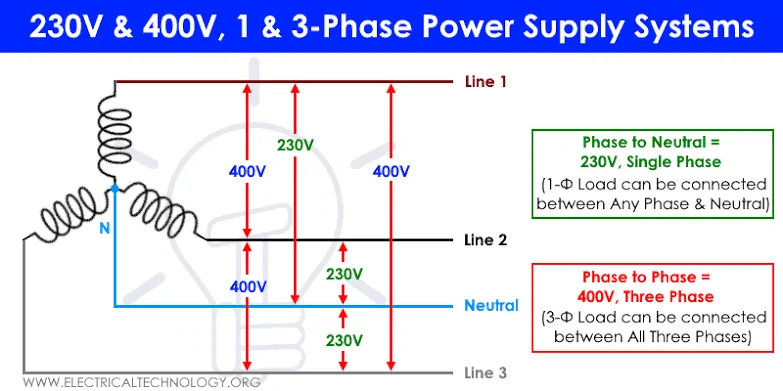
  2. you said 240V comes from a step down transformer - I said it's just the line voltage of a 3 phase supply that runs past the door anyway, there is no step down transformer for 415V 3 phase to 240V, you simply don't need one and can just take one of the phases to neutral/ground instead.
  3. you said dangerous because of a "standard mechanic" - I said it should only be undertake by a qualified mechanic
  4. you said more voltage, more jumping - (I'm assuming you mean arc voltage distance?) I said it all depends on the fault, and where it shorts too (hence the quiz). Air is generally around 1100V per millimeter, so the difference between 240V and 400V is meaningless and just a fraction of a millimeter more (~0.016mm or 0.00062992126")
  5. you said I just hand wave - I think I presented enough facts on the subject to counter all your arguments?

BTW whilst googling for AU 3phase numbers I found this statement on our AEMO government Australian Electricity Market Operator:

"Not withstanding the diminishing number of older and un renovated premises built before the wiring rules of 1976 were adopted, the lions share of our modern homes and businesses in Australia today are supplied with either a 230 volt, 80 Amp single phase supply or a 415 volt, three phase 63 Amp supply. Compared with overseas, a disproportionately large number of Australian homes have a three phase supply connected."

PS It's actually a problem that household solar have on 3 phase in that the net metering is counting the energy import and export separately per phase, with solar being typically installed on 1 phase, and because the import and export rates are different in favor of the network, the 3 phase household is actually paying for power whilst it should really be being paid for exporting household solar power.
 
Last edited:


Crissa

Well-known member
First Name
Crissa
Joined
Jul 8, 2020
Threads
138
Messages
19,571
Reaction score
31,475
Location
Santa Cruz
Vehicles
2014 Zero S, 2013 Mazda 3
Country flag
Lets rehash:

  • you said household is not 400V for a reason and is not piped into Australian households - I proved the opposite is true and that it is common in many households, maybe not in the USA, but certainly in the dominate 240V world that supplies 4/5 of the planet's population with power.
No.

I said:
There's reasons why household voltage is not 400,
And you proved that...

...household voltage is not 400v. Mains voltage is.

I did not say that the wires leading to houses wasn't 400v.

  • you said 240V comes from a step down transformer - I said it's just the line voltage of a 3 phase supply that runs past the door anyway, there is no step down transformer for 415V 3 phase to 240V, you simply don't need one and can just take one of the phases to neutral/ground instead.
I cannot find me making this assertion. You've posted half a dozen times since the post you're quoting.

  • you said dangerous because of a "standard mechanic" - I said it should only be undertake by a qualified mechanic
No, I did not say that.

I said this:
And why you'd have to have it installed not by a standard mechanic.
*sigh* You're arguing with the me that's in your head, not what I said.

  • you said more voltage, more jumping - (I'm assuming you mean arc voltage distance?) I said it all depends on the fault, and where it shorts too (hence the quiz). Air is generally around 1100V per millimeter, so the difference between 240V and 400V is meaningless and just a fraction of a millimeter more (~0.016mm or 0.00062992126")
...I don't see how you contradicted that point. Fractions of milimeters matter when you're building things.

  • you said I just hand wave - I think I presented enough facts on the subject to counter all your arguments?
Where did you contradict me? You said I said things I didn't, and then... Somehow... You're not handwaving away a list of pros and cons? I just gave a list of pros and cons. Higher voltage and touching batteries is more risk.

If you cannot understand that handling 400v takes different care and training than handling 240v, I don't want to touch a single piece of electrician work that you've worked on.

-Crissa
 

JBee

Well-known member
First Name
JB
Joined
Nov 22, 2019
Threads
18
Messages
4,913
Reaction score
6,362
Location
Australia
Vehicles
Cybertruck
Occupation
. Professional Hobbyist
Country flag
I think you must be bored, do I really have to quote every post and tell you what you said too?

And you proved that...

...household voltage is not 400v. Mains voltage is.

I did not say that the wires leading to houses wasn't 400v.
Um see below in your "missing" comment:

400v is not what's piped inside Australian households. It's stepped down to 230, the same as EU, the same as will be available to the AC outlets in the Cybertruck and will already have contactors and breakers.
Can you agree I disproved this with:
  • you said 240V comes from a step down transformer - I said it's just the line voltage of a 3 phase supply that runs past the door anyway, there is no step down transformer for 415V 3 phase to 240V, you simply don't need one and can just take one of the phases to neutral/ground instead.
  • That there are 3 phase 400V supplies going into Australian households with 3 phase 415V plug in the house, kitchen, laundry, outside and garage. They look like this with a switch and AU Clipsal brand:


So yes this is 400V 3phase inside the house to a power point connection on the wall any unqualified Tom, Dick, Harry or Sue can plug a 3 Phase appliance into as they please. You don't have to be qualified to do this, just smart enough to get the cable in the socket.

*sigh* You're arguing with the me that's in your head, not what I said.
and:

If you cannot understand that handling 400v takes different care and training than handling 240v, I don't want to touch a single piece of electrician work that you've worked on.
Your whole angst is predicated on the premise, and false understanding that 400V somehow "jumps" in lethality in comparison to 240V. That's just silly if you recognize that making contact with one cable of a 3phase 400V supply can only result in a 240V shock (and only if your earthed too), and if you touch 2 or more cables together with a tool, results in a short with no power going to you. If you had experience in dealing with it, both physically or in engineering principles you wouldn't be such a worrywart and flap FUD.

If you really want to understand the dangers then you need to at first understand that voltage potentials can only be dangerous if current has somewhere to flow. That is why it is so important to understand the different types of faults, and in particular what potentials are conducted through what and when. These are independent and irrelevant to voltage spark gap distances at all, as the most common faults are not caused by sparks, as connectors are intentionally designed to deal with them.

As for applying this faulty logic to EV voltages and systems that seems to be detracting from the conversation that it is indeed possible to use the the traction battery voltage to supply accessories and implements. We can all agree that the safety of these systems is paramount, and should be executed with careful engineering, but that does not mean that the performance of any solution being discussed here is reduced by it or any other fear of electrons.

For some balance on safety:
Have you seen how a pinhole hydraulic line that leads to losing limbs? Or burns? The point is anything that uses a considerable amount of energy, like required in a winch, easily has the capacity to dismember and maim if it's not treated carefully. Winch operations in itself can be very dangerous regardless of the propulsion used.

Maybe we need an artificial muscle type winch instead like this, by wrapping a resistive heat wire with a polymer. You can then plug it into a hitch that has two contacts on the end to supply power to the heating wire.

 
Last edited:

Crissa

Well-known member
First Name
Crissa
Joined
Jul 8, 2020
Threads
138
Messages
19,571
Reaction score
31,475
Location
Santa Cruz
Vehicles
2014 Zero S, 2013 Mazda 3
Country flag
Yes, I see now that you've decided I did not write what I did write.

You do see that the voltage is brought down for inside the house. You said so yourself.

I'm really, really done with this conversation.

-Crissa

PS: A battery pack isn't three-phase.
 

JBee

Well-known member
First Name
JB
Joined
Nov 22, 2019
Threads
18
Messages
4,913
Reaction score
6,362
Location
Australia
Vehicles
Cybertruck
Occupation
. Professional Hobbyist
Country flag
Yes, I see now that you've decided I did not write what I did write.


You do see that the voltage is brought down for inside the house. You said so yourself.

I'm really, really done with this conversation.

-Crissa

PS: A battery pack isn't three-phase.
To make it simpler, if you plug a multimeter into that 3 phase plug I showed that is installed in the house, you will measure 240V between any phase and ground or neutral, which is the exact same phase as you would measure on a 240V wall socket somewhere else in the same house. But if you measure between any of the 3 phases you get 415V, this is because each phase is offset by 120degrees to the next resulting in a higher voltage than to ground. There is no transformer in the house or on the distribution line, except where its converted down from the incoming 11-22kV transmission line somewhere outside the suburb on a substation.

A battery pack might not be 3 phase but the winch motor will be, unless its 1 phased brushed which no one has mentioned yet. This only really depends on where the motor controller is located.
 
Last edited:

Wood Wombat

Member
First Name
Richard
Joined
Jun 29, 2020
Threads
0
Messages
9
Reaction score
19
Location
Melbourne, Australia
Vehicles
Tesla Model 3 Performance, Toyota Prado
Country flag
There's a little blue flag to the right of my username that gives it away. Heaps of countries have 400V supplies to houses. Point is can be made safe enough to use, just like 240V is made safe enough to use, and shouldn't be discounted as a viable option to drive some gear.
I too am in Australia and have 3 phase 415V in my house. My Tesla HPWC is set up with 32A 3Ph, so 22kW (which is my hope for the on board charger on CT to make Outback touring easier)

As to the danger of this, do you know what these voltages are referred to by electricians? Anything under 600V is considered low voltage. Working on the winch would be no more dangerous than working on AC or other pack voltage stuff in the car. Follow procedure and only work when the contractors are de-energised and it is all good.

If you watch the teardowns of various vehicle batteries in Munro, you will see that they usually have a fair number of orange ports. Large ones for drive motors, smaller ones for other accessories. All we need is an extra one linked to a small water cooled VFD, and then three wires to the winch. IP67 or higher rate every connection, as the other pack voltage devices are, and you will be fine. Note that this is for a permanently fitted winch. While I am sure that you could safely make something movable, I don't think that it is worthwhile.

In the end, Tesla have to know that if they are building a rugged tool, then high-power accessories like winches have to be allowed for in the design.


Wood Wombat

Member
First Name
Richard
Joined
Jun 29, 2020
Threads
0
Messages
9
Reaction score
19
Location
Melbourne, Australia
Vehicles
Tesla Model 3 Performance, Toyota Prado
Country flag
A battery pack might not be 3 phase but the winch motor will be, unless its 1 phased brushed which no one has mentioned yet. This only really depends on where the motor controller is located.
I agree that any sort of brushed motor, in particular the series wound motors found in 12-24V DC winches is very unlikely. The brushes would not last long and having no control of the winch speed would make high power dangerous. For a company that makes power electronics every day, a simple electronically commutated winch motor drive would be something that they could give to the intern for university credit.
 

Crissa

Well-known member
First Name
Crissa
Joined
Jul 8, 2020
Threads
138
Messages
19,571
Reaction score
31,475
Location
Santa Cruz
Vehicles
2014 Zero S, 2013 Mazda 3
Country flag
I too am in Australia and have 3 phase 415V in my house. My Tesla HPWC is set up with 32A 3Ph, so 22kW (which is my hope for the on board charger on CT to make Outback touring easier)

As to the danger of this, do you know what these voltages are referred to by electricians? Anything under 600V is considered low voltage. Working on the winch would be no more dangerous than working on AC or ...
I'm sorry, but what you have to your EVSE is by definition, not household voltage.

And no, it would be more dangerous because it's a live battery, not a system that already has safety cutoffs and breakers and room for more.

Hence, more dangerous.

Alot of handwavium 'oh but I have a special outlet!'.

Well, no Tesla has a special outlet. Maybe the Cybertruck will have some, and I certainly think it would be a good idea for its version of the power-tap-off, but it's not been suggested or demonstrated.

-Crissa
 

JBee

Well-known member
First Name
JB
Joined
Nov 22, 2019
Threads
18
Messages
4,913
Reaction score
6,362
Location
Australia
Vehicles
Cybertruck
Occupation
. Professional Hobbyist
Country flag
Much better going with the politically correct and mass media saturated USB crowd IMHO, at least you know you're getting some real work done, at least based on fabricated data. :unsure: :oops::rolleyes:o_O? :LOL:

There's another whole real world on the other side of the computer screen ?

But seriously, you could actually do something meaningful with USB PD power that goes up to 120W. It won't be fast, but it will work about as good as a hand operated winch, which is slow but still effective in a pinch to pull you out a few meters.
Sponsored

 
Last edited:


Top