
Sponsored

GuyV

Well-known member
First Name
Guy
Joined
Aug 17, 2023
Threads
1
Messages
814
Reaction score
1,073
Location
St. Louis, MO
Vehicles
Tesla Model S, FS Cybertruck AWD
Occupation
Retired
Country flag
Sorry but it is not. Using regen captures energy and stores it in the battery. It also slows you down which means you are wasting less energy in drag.

Regen is the correct answer. Anybody thinking momentum or speed is lossless is incorrect. Google Drag vs Speed and you will see the difference.
Yes it is. It is not lossless, but it loses less than regen which is actually pretty inefficient. It's not like using regen avoids all drag either. You can get an idea of how truly rolling efficient Tesla vehicles are if try out some coasting when it is too cold for regen.
 

HaulingAss

Well-known member
Joined
Oct 3, 2020
Threads
28
Messages
10,371
Reaction score
20,858
Location
Western Washington, USA
Vehicles
Cybertruck DM, 2010 F-150, 2018 Performance Model 3, 2024 Performance Model 3
Country flag
No amount of braking will ever put a drop of gas back in your tank.
Don't worry, I heard GM is working on. Their research program to harvest the hydrogen in the air and use braking energy to convert it to gasoline is running in parallel with their hydrogen vehicle development program. A win in either of these difficult potential fuel sources would vault them ahead of Tesla.

They are calling their program to synthesize gasoline from braking energy ultium braking (tm) and they claim, once developed, it could be applied to their entire lineup and even solar powered EVs will be equipped with gas collection tanks, so they can help fill-up the tanks of ICE vehicles, all powered by clean solar energy!

Mary is still leading the way!


chinokie

Well-known member
Joined
Nov 16, 2019
Threads
5
Messages
54
Reaction score
107
Location
Austin
Vehicles
M3 LR AWD
Country flag
V2
Yes it is. It is not lossless, but it loses less than regen which is actually pretty inefficient. It's not like using regen avoids all drag either. You can get an idea of how truly rolling efficient Tesla vehicles are if try out some coasting when it is too cold for regen.
Hear me now and believe me later...

Momentum is not energy and it is not in the equation.
The critical components are:
Potential energy: Height x mass x g
Kinetic energy: 1/2 mv(2)
Drag force : The difference in drag at 50 kph and 100 kph
is 500%

Probably some other factors like rolling friction but who cares....
 

agordon117

Well-known member
Joined
Jan 11, 2024
Threads
7
Messages
1,196
Reaction score
2,039
Location
Ohio
Vehicles
cybertruck foundation awd
Country flag
No, because sometimes you need to come to a stop more quickly than low regen is capable of. Friction braking is 100% loss.
Actually, the answer is no, because tesla disabled the ability to turn off/reduce regen a couple of years ago :LOL:

I jest. Regen helps when stopping, like I said earlier. Just couldn't pass that up.
 
OP
OP

Cirrus SR22

Well-known member
Joined
Dec 10, 2023
Threads
14
Messages
122
Reaction score
413
Location
California
Vehicles
Cybertruck
Country flag
I don't understand your "not regenerate". When I came back from Val Thorens in the Alps from the mountain to the valley (34 km) with my Y, I arrived in the valley with 36 kms more than I departed ?? Why should not regenerate help ?
My thoughts on possibly coming out ahead by not converting regen power and gaining speed, is that whatever you might gain by this, you're losing by having to increase your speed, and thus increasing wind resistance.

No, it’s doesn’t make a difference how much headwind you have. Coasting if FREE, so if you have a headwind you get less ā€œfreeā€ but whatever you get is still Free
 
Last edited:

charliemagpie

Well-known member
First Name
Charlie
Joined
Jul 6, 2021
Threads
48
Messages
2,982
Reaction score
5,369
Location
Australia
Vehicles
CybrBEAST
Occupation
retired
Country flag
To regen or not to regen, that is the question.

I reckon over time, range will be taken care of and maximised by software updates/FSD/driver assist.

When that time comes, we can look at a report and the question will be answered.
 

CyberGus

Well-known member
First Name
Gus
Joined
May 22, 2021
Threads
91
Messages
10,271
Reaction score
34,017
Location
Austin, TX
Vehicles
1981 DeLorean, 2024 Cybertruck
Occupation
IT Specialist
Country flag
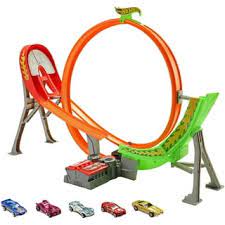
I can shoot a Matchbox car though a track, and it can "coast" up and down hills, even go through a loop, without using regen nor propulsion.

Tesla Cybertruck Awesome range when practicing energy management -- range is as advertised or better in my Cybertruck 1708213727164


However, the speed with fluctuate wildly.

If you wanna drive though the hill country while bouncing between 40MPH and 80MPH, then "coast" all you want. To drive at a constant speed, let regen be your friend.


GuyV

Well-known member
First Name
Guy
Joined
Aug 17, 2023
Threads
1
Messages
814
Reaction score
1,073
Location
St. Louis, MO
Vehicles
Tesla Model S, FS Cybertruck AWD
Occupation
Retired
Country flag
V2


Hear me now and believe me later...

Momentum is not energy and it is not in the equation.
The critical components are:
Potential energy: Height x mass x g
Kinetic energy: 1/2 mv(2)
Drag force : The difference in drag at 50 kph and 100 kph
is 500%

Probably some other factors like rolling friction but who cares....
I hear you but what you say but it doesn't change the efficiency relationship between regen versus coasting. There is a formula to calculate the relationship between momentum and kinetic energy. Momentum seems to be the applicable term to use because in this case, in addition to mass and velocity, direction matters.
 

HaulingAss

Well-known member
Joined
Oct 3, 2020
Threads
28
Messages
10,371
Reaction score
20,858
Location
Western Washington, USA
Vehicles
Cybertruck DM, 2010 F-150, 2018 Performance Model 3, 2024 Performance Model 3
Country flag
V2


Hear me now and believe me later...

Momentum is not energy and it is not in the equation.
The critical components are:
Potential energy: Height x mass x g
Kinetic energy: 1/2 mv(2)
Drag force : The difference in drag at 50 kph and 100 kph
is 500%

Probably some other factors like rolling friction but who cares....
Yeah, the other factors that you don't mention are very significant, namely the fact that regen is lossy. It puts the aero drag to shame at most normal speeds.

The bottom line is that coasting to pick up speed (within a reasonable speed range) is a viable way to use less Wh/mile in rolling terrain when speeds are not too high. But Gus has it right, if you don't want your speed to vary, then regen is the most efficient way to achieve a steady speed.

And the person who originally questioned the validity of the technique of picking up speed downhill to save energy has a very valid point, there will be a speed at which this is a less efficient method, and using regen to avoid reaching that speed is more efficient.
 

webspeedracer

Well-known member
First Name
Jason
Joined
Dec 17, 2023
Threads
1
Messages
212
Reaction score
246
Location
SLC, UT
Vehicles
FS Cybertruck AWD, Rivian R1s MaxPack, 2016 MS75D
Country flag
That can't be correct can it? Tesla has been doing EVs longer and better than anyone, having to manually use the "ole coast n save" manually can't be better than letting the Tesla engineering/software do it can it?

Maybe there is a bug in the software and that would explain the really bad range #s that we have been seeing?
ā€œCoastā€ method described by other posters in this thread is more efficient because of heat losses under acceleration and regen. So if you lose ~5% under throttle and lose ~5% under regen you’ve lost 10% to heat/friction etc for the round trip of that energy. There’s no such thing as a perpetual motion machine due to these losses. Compare that accel/regen calculation to coasting (0% energy used so zero lost).

Of course reality is the downward grade has to either perfectly match friction and drag to keep you at constant speed, OR you must be comfortable exceeding the speed limit (sometimes by a lot) to fully capture the benefits of the coast method. This is commonly used technique for hyperlinking.

And both my Teslas (MS & MX) have a lighter regen setting that I use when I’m trying to stretch to the next charger (eg in the Rocky Mountain west). That setting makes it easier to manage the technique.

Last, the cruise/AP/FSD beta all do terrible job of hypermiling, will not drive as efficiently as I do when I’m trying to reach a fringe destination.

i wish Tesla would add a ā€œGet me thereā€ mode to FSD. It would effectively manage consumption to get me to a place I need to reach, by using max efficiency driving techniques (without being too obnoxious to other drivers around me). Said feature should also use Tesla internal knowledge of which Superchargers are fastest, which plugs are working best, arriving at ideal SOC preheated, etc.. That would add tremendous value to FSD in terms of piece of mind.
 

webspeedracer

Well-known member
First Name
Jason
Joined
Dec 17, 2023
Threads
1
Messages
212
Reaction score
246
Location
SLC, UT
Vehicles
FS Cybertruck AWD, Rivian R1s MaxPack, 2016 MS75D
Country flag
Sorry but it is not. Using regen captures energy and stores it in the battery. It also slows you down which means you are wasting less energy in drag.

Regen is the correct answer. Anybody thinking momentum or speed is lossless is incorrect. Google Drag vs Speed and you will see the difference.
Sorry you’re incorrect, and I suspect your error is assuming that regen energy = 100% recovered. It’s significantly lossy to covert kinetic to stored electricity.

When you allow the car to coast up to its terminal drag velocity (ignoring speed limits for arguments sake.), your car will travel substantially farther down its path before you need to apply throttle to maintain desired speed, versus the throttle-regen-throttle-regen (lossy at every phase) method for which you would maintain a constant speed throughout up/down grades. The coasting method only works (as other posters have noted) if you don’t need to slow the car for some reason (catching slower traffic, speed traps, road ending ?, etc), AND if you’re comfortable allowing your speed to oscillate below and above your desired speed.. incidentally that is why AP/FSD is less efficient than I am when I use coast method; the computer maintains a set speed up/down using too much throttle and too much regen. Try it yourself when you have time and appropriate context to compare. Or ignore the whole concept and just charge longer and drive your Tesla to the next destination without worrying about the whole concept. ?ā€ā™‚

The reason I’ve experimented with this concept often is due to small battery size limits (my MS), road-less-traveled routing, and audacious towing adventures. I have used this method to great effect when towing my 19’ Oliver camper, and in both teslas in regions with large gaps between DCfast/Superchargers (with 4 bikes on back and rooftop boxes as extra drag.. You can’t achieve the same range with regen/accel method.
 

webspeedracer

Well-known member
First Name
Jason
Joined
Dec 17, 2023
Threads
1
Messages
212
Reaction score
246
Location
SLC, UT
Vehicles
FS Cybertruck AWD, Rivian R1s MaxPack, 2016 MS75D
Country flag
No, because sometimes you need to come to a stop more quickly than low regen is capable of. Friction braking is 100% loss.
You’re both correct and incorrect on this one; in city driving @HaulingAss is correct. For freeway driving, @Eddyrelik ā€˜s query is the correct answer to better efficiency (but not necessarily stress-free driving!)
Sponsored


Top