Sponsored

With sales down is the CT going to become a Delorean

PungoteagueDave

Well-known member
First Name
David
Joined
Mar 2, 2025
Threads
2
Messages
952
Reaction score
1,043
Location
Boynton Beach
Vehicles
‘25 Tesla Cybertruck, ‘26 Tesla MY Launch, ‘13 Porsche C4S, ‘26 BMW R1300 GSA
Occupation
retired
Country flag
Incorrect. Structural adhesive is found on the structural elements of every modern car. Calling it "glue" does not change that fact, nor does it mean the Exoskeleton is not structural. Lars (the Head of Vehicle Engineering at Tesla) has made it clear that the sail panels are structural. Otherwise they would have been much thinner and lighter.


While it's obvious that the stainless steel does not carry the same percentage of structural strength as originally planned, this design is actually lighter than it would have been had they used the full 3.0 mm thick panels. Because the other chassis components are shaped and placed specifically where needed to carry the load. The panels just add the last 10-20% of chassis rigidity and payload capacity. Without those panels being structural, the truck would not exhibit such crisp handling performance. This is why people say it handles like a big sports car (because it has more body rigidity than million dollar sports cars). I've driven my Cybertruck on narrow, twisty one lane paved mountain roads with 2400 lbs. of firewood and tools in the back and the handling was still crisp and controllable. No body on frame truck can do that (and even the chassis of other unibody trucks like the Avalanche are not nearly as rigid).


Except the efficiency is not almost the same, the dual motor Cybertruck is around 20% more efficient than most dual motor Silverado's. If you subtract the battery weight from each brand of truck, the Cybertruck is about 1,000 lbs. lighter and has a higher payload capacity. That's due to it's better engineering and using the thick body panels as structural elements.

I know you like to shit on the Cybertruck, but please avoid using inaccurate comparisons and statements when trying to compare the two. If what you said were true, there would be a 340 mile version that weighed the same or less than the Cybertruck. But it's not even close.
Stick with your must-own narrative all you want. The engineers who took it apart at Munro, who had lauded the exoskeleton as revolutionary, concluded that the CT DOES NOT HAVE AN EXOSKELETON. Calling stressed panels, whether glued, screwed, or welded in place, a per-se definition of an exoskeleton may be necessary for your story, but it just isn’t so. EVERY unit-body vehicle uses the exterior panels as stressed members, critical to the strength and integrity of the body. I did not say the stainless panels weren’t stressed members or that they had nothing to do with body integrity, or that they are particularly thin - that’s your defensive fanboism showing.

I did not denigrate the fact that the panels are in most part, glued on - I acknowledged that industrial adhesives are perfectly legit on stressed members - in fact many supercar frame structures are almost entirely glued together, with supplemental rivets. What I said, correctly, is that instead of using the exterior panels as the PRIMARY modality for body structure as originally planned, (hence the name exoskeleton), the PRIMARY structural skeleton for the CT is the underlying super-strong steel structure on which the exterior panels are hung using adhesives.

The ORIGINAL CT design did NOT have that separate internal steel structure. Tesla intended to use the bent stainless steel external structure as the primary strength for the body, actually lightening the overall finished body. The intention was to integrate teh exterior panels directly with the frame castings. Instead the underlying steel skeleton is attached to the castings, and the stainless steel is mostly glued together the steel structure, adding an entire unplanned layer and concomitant weight. What we now have is fairly standard unit-body construction, except heavier than most lightweight steel or aluminum bodies due to the nonstandard castings and added steel layer, plus this thicker-than-standard heavy stainless steel.

If you know anything about the delays and the history of the CT’s engineering, you will know that the engineers had to restart nearly from scratch partway through the final design process. In addition to downsizing the truck about 20% from its original specs, they reached the conclusion that the test bending process for the stainless steel wasn’t working (Elon proclaimed that it was, for him, a hard lesson in metallurgy), and if they proceeded, the entire program could fail. They fell back on a solution that required much less stainless panel bending, while keeping the look, but abandoning the exoskeleton concept.

There is no question that the CT has no exoskeleton. Stick with your narrative if you must - but it is only necessary to look at the actual structural skeleton underlying the stainless panels to know THAT is the current CT skeleton - nothing “Exo” about it - it is entirely “Ino”. It was not originally intended to be there, but was required by the midstream rework due to assembly and fabrication technical limitations. These are the facts, but I do understand why some continue to stick with the exo-narrative.
Sponsored

 
Last edited:
HaulingAss

Well-known member
Joined
Oct 3, 2020
Threads
28
Messages
10,357
Reaction score
20,832
Location
Western Washington, USA
Vehicles
Cybertruck DM, 2010 F-150, 2018 Performance Model 3, 2024 Performance Model 3
Country flag
Right now it's seen as a rich person's plaything, even though many owners (you and I included) actually use it as a tool rather than a toy.
Sadly, in truck-loving America, most truck owners use their trucks as a rich person's plaything. This is not unique to the Cybertruck.
 

HaulingAss

Well-known member
Joined
Oct 3, 2020
Threads
28
Messages
10,357
Reaction score
20,832
Location
Western Washington, USA
Vehicles
Cybertruck DM, 2010 F-150, 2018 Performance Model 3, 2024 Performance Model 3
Country flag
The ORIGINAL CT design did NOT have that separate internal steel structure.
That's incorrect. There was always an interior steel passenger compartment, otherwise the doors would have nothing to seal against. The ultra-hard cold-rolled stainless cannot be formed into curves. That's why there was always a steel passenger safety cage (and it would have been unthinkable not to use it as a structural element).

The first Cybertruck prototypes had this, as did all later revisions. People who were not engineers did not understand this, which is why they were surprised to see any structure at all under the stainless panels. Yes, they were ignorant. I argued right here on this forum there would be interior structural elements (because there HAD to be).

Even Munro and Associates released a video walking back their statement that the panels were not structural. The lead vehicle engineer at Tesla, Lars Morvany, would know better than anyone, he's the one who oversaw all the digital and real life structural analysis. He would not lie about such a basic thing.

You appear desperate to take away all the things that make the Cybertruck superior to other trucks. Why is that? Whether you call it an exoskeleton or not doesn't matter. The fact is, the stainless skin is used as a structural element of the chassis.
 

ZillaVilla

Well-known member
First Name
Scott
Joined
Jul 1, 2023
Threads
1
Messages
99
Reaction score
253
Location
Las Vegas, NV
Vehicles
Cybertruck, Jeep Wrangler
Occupation
Operations Manager
Country flag
This is what I think Tesla should / will do with the Cybertruck:
1. A dually rear-end Cybertruck with a flatbed designed to be great for towing with a 250+ kWh Battery. If you really want to tow big (20,000 lbs), you really want a dually rear end and gooseneck or 5th wheel hitch for safety.
2. A 3-row seating SUV Version that seats 8 adults comfortably.
3. A Baja Edition with a really good off-road package (skid plates, rock sliders, steel bumpers, winch mounts, light bar etc...)
4. Track edition along the lines of a sport truck (lowered, high speed tires, air splitter and wings etc...)
5. CyberVan on those 35" tires would be epic for a number of reasons (camping, big families, and business transporting people or goods)
6. Lower the price on the current AWD and Long Range versions by 30K
7. A cheaper 2-door edition with an 8-foot bed for under 30K

I do believe the price will come down, and premium packages are where you can make more money for the extra options.
 

Sjohnson20

Well-known member
Joined
Nov 30, 2023
Threads
8
Messages
1,451
Reaction score
2,456
Location
Florida
Vehicles
Cybertruck AWD, Model Y
Country flag
But how many of those people put down their reservation payment after the reveal, five-plus years ago? You're already trying to break into the truck market that is highly anti-EV... If it's not affordable to the average guy as the original prices teased,, then the guys who were in that beer budget segment are not going to mortgage themselves to death to have it at current prices.

I think this reflects economic elasticity. It does not mean that the model is a failure. It does not mean Tesla will kill it. It simply means that the reservation numbers don't translate or stretch to this price point. If the negative media eases up, the actual value of the vehicle could shine through and attract more beer-budget buyers once they recognize the superior overall cost of ownership and the actual utility of the truck. Right now it's seen as a rich person's plaything, even though many owners (you and I included) actually use it as a tool rather than a toy.
Tesla in general is still seen as some kind of rich persons car brand even though we know they have plenty of affordable cars now. It's just the perception they gained from the general public. Not sure what keeps that going. Maybe it's the EV part or the FSD or the tech or Elon. Not really sure. I don't think people put Tesla, Ford, and GM in the same category. So that may cause many to think that the Cybertruck is some kind of rare Italian sports car competitor instead of a competitor to Ford or GM.


PungoteagueDave

Well-known member
First Name
David
Joined
Mar 2, 2025
Threads
2
Messages
952
Reaction score
1,043
Location
Boynton Beach
Vehicles
‘25 Tesla Cybertruck, ‘26 Tesla MY Launch, ‘13 Porsche C4S, ‘26 BMW R1300 GSA
Occupation
retired
Country flag
That's incorrect. There was always an interior steel passenger compartment, otherwise the doors would have nothing to seal against. The ultra-hard cold-rolled stainless cannot be formed into curves. That's why there was always a steel passenger safety cage (and it would have been unthinkable not to use it as a structural element).

The first Cybertruck prototypes had this, as did all later revisions. People who were not engineers did not understand this, which is why they were surprised to see any structure at all under the stainless panels. Yes, they were ignorant. I argued right here on this forum there would be interior structural elements (because there HAD to be).

Even Munro and Associates released a video walking back their statement that the panels were not structural. The lead vehicle engineer at Tesla, Lars Morvany, would know better than anyone, he's the one who oversaw all the digital and real life structural analysis. He would not lie about such a basic thing.

You appear desperate to take away all the things that make the Cybertruck superior to other trucks. Why is that? Whether you call it an exoskeleton or not doesn't matter. The fact is, the stainless skin is used as a structural element of the chassis.
It seems to matter a lot to you. You are simply wrong. The original structure was intended to have the door strikers and recessed parts stamped into the external exoskeleton as part of the process. There was to be no internal steel structure. That’s just crazy.

This was sold as the key advance - less complexity, more rigidity, with large stainless stamping merged onto underlying castings. Instead we got MORE complexity.

I’m not trying to take away anything from what makes the CT special. It is unique and special and I love mine. But I also live in the real world and under basic engineering reality. Yes, Tesla found out AFTER showing the prototype that bending and stamping the stainless was near futile given the complexity of the required bends and the difficulty of the material. Google Elon Musk stainless metallurgy.

They tried valiantly to overcome this issue but found it not technically feasible.

You fanbois are amazing, and must stick to the narrative at all costs. No, there was no heavy internal steel structure in the original intended design. And no, the actual engineers at Munro who reverse engineered the CT did not change their opinion that the exoskeleton had been abandoned. They did say that it is essentially a stressed monocoque structure akin to a standard unibody.

Sandy isn’t happy with the end product from an engineering standpoint, thinks the insistence on the stainless look added complexity and that the bizarre shape ended up costing Tesla the ability to take any significant pickup segment market share or price parity. Both of those are now facts, as is the fact that we do not have an exoskeleton.

That’s not taking anything away from the truck except your (apparently precious) false narrative.

This whole discussion reminds me of when Tesla had the big battery swap event. It was immediately obvious that there were people down in the pit with wrenches doing a Wizard of Oz sleight of hand. Most of us knew within a day that there never would be actual commercial application for the swap process, that it was really all about CARB credit qualifying, but man did the fanbois stick with their “swap is a thing” narrative until the bitter end. Believe what you must but I’m done here.
 

HaulingAss

Well-known member
Joined
Oct 3, 2020
Threads
28
Messages
10,357
Reaction score
20,832
Location
Western Washington, USA
Vehicles
Cybertruck DM, 2010 F-150, 2018 Performance Model 3, 2024 Performance Model 3
Country flag
The original structure was intended to have the door strikers and recessed parts stamped into the external exoskeleton as part of the process. There was to be no internal steel structure. That’s just crazy.
Do you have a shred of actual evidence for this? Please present it so we can make up our own minds.

This whole discussion reminds me of when Tesla had the big battery swap event. It was immediately obvious that there were people down in the pit with wrenches doing a Wizard of Oz sleight of hand. Most of us knew within a day that there never would be actual commercial application for the swap process, that it was really all about CARB credit qualifying, but man did the fanbois stick with their “swap is a thing” narrative until the bitter end.
I knew battery swapping was a no-go from the beginning. So did Elon. It was all about government regulations and Elon was just playing their silly games.


Believe what you must but I’m done here.
That's cool, too bad you couldn't provide any evidence before you ran off... :rolleyes:
 
  • Like
Reactions: REM

HaulingAss

Well-known member
Joined
Oct 3, 2020
Threads
28
Messages
10,357
Reaction score
20,832
Location
Western Washington, USA
Vehicles
Cybertruck DM, 2010 F-150, 2018 Performance Model 3, 2024 Performance Model 3
Country flag
Tesla in general is still seen as some kind of rich persons car brand even though we know they have plenty of affordable cars now. It's just the perception they gained from the general public. Not sure what keeps that going. Maybe it's the EV part or the FSD or the tech or Elon. Not really sure. I don't think people put Tesla, Ford, and GM in the same category. So that may cause many to think that the Cybertruck is some kind of rare Italian sports car competitor instead of a competitor to Ford or GM.
At one time Tesla really were expensive. I know you know that, but the "throw shade on Tesla at every opportiunity" crowd wouldn't let that narrative die. The kept repeating it, even after Tesla was affordable by the mainstream. Because they didn't want people on a budget jumping into the Tesla fold.

It worked, but not well enough to prevent Tesla from having the best-selling car in the world for the last two years in a row! So now we find ourselves in the odd situation with a pure electric car being the best-selling car in the world while the media is simultaneously telling us that consumers don't want EVs, they want hybrids and gas cars. ?‍♂
 

HaulingAss

Well-known member
Joined
Oct 3, 2020
Threads
28
Messages
10,357
Reaction score
20,832
Location
Western Washington, USA
Vehicles
Cybertruck DM, 2010 F-150, 2018 Performance Model 3, 2024 Performance Model 3
Country flag
There is no question that the CT has no exoskeleton. Stick with your narrative if you must - but it is only necessary to look at the actual structural skeleton underlying the stainless panels to know THAT is the current CT skeleton - nothing “Exo” about it - it is entirely “Ino”. It was not originally intended to be there, but was required by the midstream rework due to assembly and fabrication technical limitations. These are the facts, but I do understand why some continue to stick with the exo-narrative.
I stick with the narrative because I'm thinking of it in engineering terms (when exoskeleton is really a term from biology and has no engineering definition). You are simply making up an engineering definition of "exoskeleton" that suits you, and then bending the facts and saying they don't fit.

But watch the obviously proud lead structural engineer who helped design, engineer and test the Cybertruck's chassis in the actual shop that built the first ones. If anyone knows how structural the exoskeleton is, it's the Lead Engineer of the Vehicle division of Tesla, Lars Morvany. Because he has put the chassis through all kinds of deflection tests with loads applied to various points. And he has combed through the data of multiple iterations of prototype Cybertrucks kitted out with strain gauges to measure how forces are transferred through the chassis.

And then, when they had perfected and finalized the production version, they brought a Cybertruck for Jay Leno to try out. Here you can here Lars explaining how the structure works and how they were able to make it so quiet while retaining responsiveness by using the sailpanel, exoskeleton actually, to provide more stiffness than a McLaran P1 This stiffness allowed the use of softer isolation mounts without ruining the handling. Pure genius, really. This video is time stamped so it starts right at the test-drive segment, where Lars explains the chassis stiffness:


I will go with Lars, one of the best automotive engineers on the planet, before I listen to you rail about how it's not an exoskeleton, how the stainless steel is not structural and is just for show, etc. etc. etc. You have no credibility, Lars stands with the best automotive engineers in the world. Listen and weep!
 

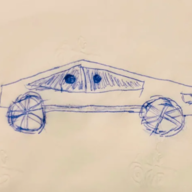
MyKidCouldDrawThat

Well-known member
First Name
Jason
Joined
Jan 4, 2024
Threads
0
Messages
85
Reaction score
107
Location
TN
Vehicles
F250 w/ Edison Motors Reservation
Country flag
It turns out that manufacturing the CT using a stressed skin exoskeleton would have delayed CT production even further and would have been cost prohibitive.

Tesla went with Plan B as an executive decision had to made to get the truck to market. The reservation holders were getting restless with the ongoing production delays.
Sure, but we already waited 5+ years, whats a few more at that point? The entire design of the cybertruck was due to the exoskeleton concept. I loved the design because of that. It could have been uglier and I would still love it. Without the exoskeleton defining the shape, its just a odd/poor aesthetic decision. A facade of the future strapped onto a car of the present.

I pre-ordered because I wanted their promise of getting a truck of the future at a competitive price. They didn't deliver either of those very well. But hey, if they really aren't selling, maybe Tesla cuts the price significantly and I will end up buying one.


HaulingAss

Well-known member
Joined
Oct 3, 2020
Threads
28
Messages
10,357
Reaction score
20,832
Location
Western Washington, USA
Vehicles
Cybertruck DM, 2010 F-150, 2018 Performance Model 3, 2024 Performance Model 3
Country flag
The entire design of the cybertruck was due to the exoskeleton concept. Without the exoskeleton defining the shape, its just a odd/poor aesthetic decision.
The exoskeleton does define the shape. Because the full-hard stainless steel cannot be formed into compound curves. That's why the inner door halves and passenger cage are made from much softer, more workable steels (because they can be stamped into compound curves). The door inners are made from softer stainless steel (for ease of stamping and laser welding to the outer door half) while the passenger safety cage is made from a combination of different strengths of regular steels. The only steel in the Cybertruck that cannot be formed into compound curves is the outer part of the exoskeleton.

The triangular shape of the Cybertruck mimics the shape of a girder bridge. That's how a lighter chassis can have a higher load capacity than the heavier chassis weights of the competition.

In comparison, body-on-frame pickup trucks have an air gap between the cab and bed. That's not good for torsional rigidity and that's why the Cybertruck has the tall side sail panels. The torsional rigidity offers many benefits over traditional body-on-frame construction (lighter weight, crisper more focused handling, less shudder over bumps, better crash safety, more payload capacity, etc).

The engineering of the Cybertruck is really brilliant in the way it creates a really good, safe passenger car while also excelling at being a truck capable of hauling 2,500 lbs. and able to traverse more rugged terrain than traditional pickup trucks. My soft and damage-prone F-150 is looking less capable and more frumpy, the more I use the Cybertruck for the same tasks it was used for. I wish it had the tough exoskeleton instead of the body-on-frame construction that has been used for over a century for it's ease of manufacture.
 

BrockN

Well-known member
First Name
Brock
Joined
Jan 1, 2025
Threads
7
Messages
411
Reaction score
619
Location
Kamloops BC Canada
Vehicles
'24 FS Cybertruck, '23 MY, '15 MS
Occupation
Engineer
Country flag
In comparison, body-on-frame pickup trucks have an air gap between the cab and bed. That's not good for torsional rigidity and that's why the Cybertruck has the tall side sail panels. The torsional rigidity offers many benefits over traditional body-on-frame construction (lighter weight, crisper more focused handling, less shudder over bumps, better crash safety, more payload capacity, etc).
This really can't be overstated. Rigidity is hugely important. Add in the battery pack in the horizontal plane and the combination of it and the sides make a really stiff container to put people in. The sails likely also provide stiffness for that pack and vice versa.

The conventional frame design from Henry Ford's day really hasn't changed much in the years following. And was itself essentially the same thing as was done with wagons prior to his era.
 

Mini2nut

Well-known member
Joined
Apr 2, 2020
Threads
138
Messages
4,117
Reaction score
7,493
Location
Planet Earth
Vehicles
*Tesla MYP *SAWD Cybertruck ordered 2/20/26
Country flag
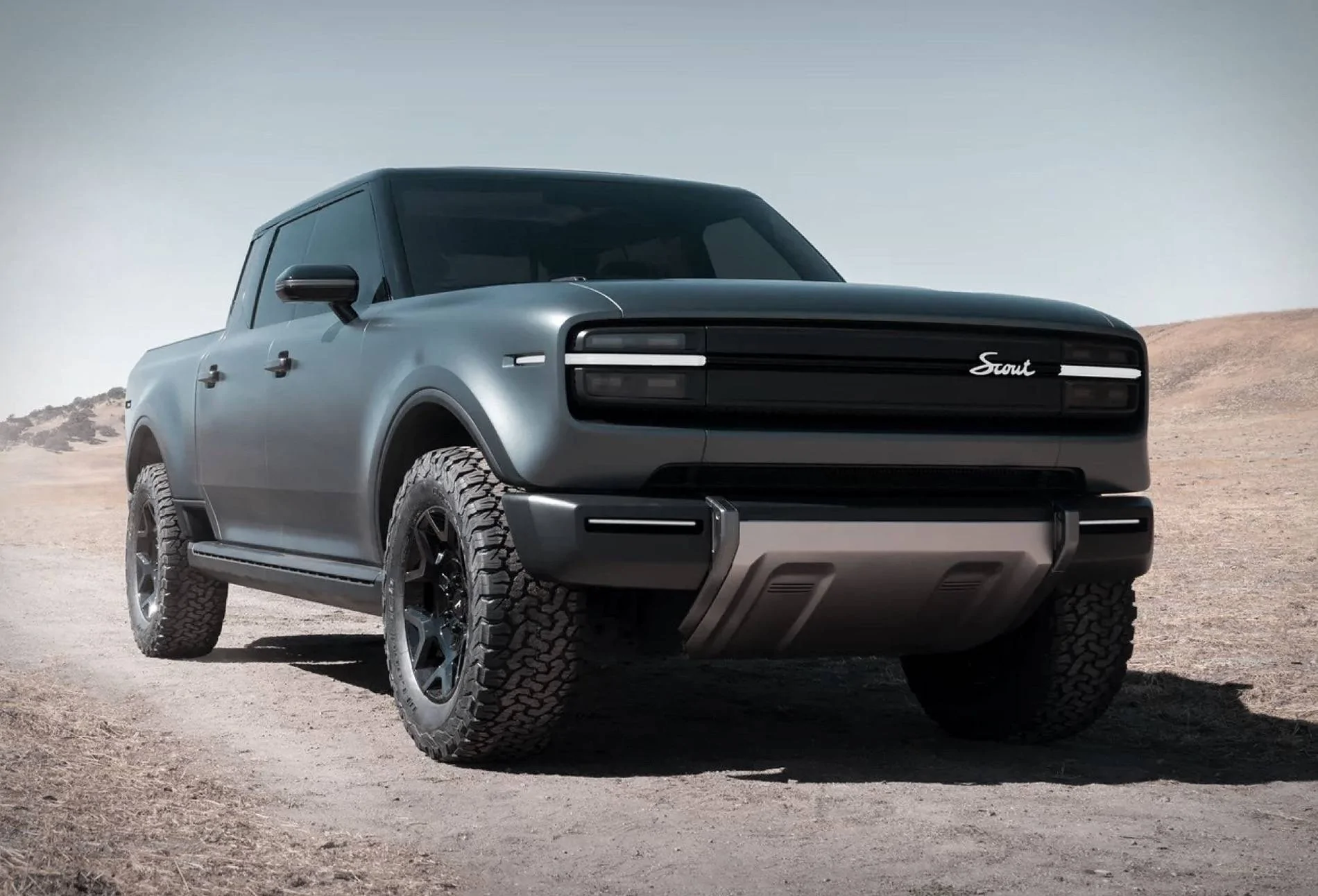
With EV pickup sales so low I am very surprised that VW leadership hasn’t pulled the rug from under the 2027 Scout Terra pickup truck. The 500 mile hybrid version will most likely be the volume seller.

Tesla Cybertruck With sales down is the CT going to become a Delorean IMG_2516
 
Last edited:

YDR37

Well-known member
Joined
Dec 29, 2023
Threads
26
Messages
1,477
Reaction score
2,413
Location
California
Vehicles
Tacoma
Country flag
With EV pickup sales so low I am very surprised that VW leadership hasn’t pulled the rug from under the 2027 Scout Terra pickup truck. The 500 mile hybrid version will most likely be the volume seller.
The Scout Terra pickup will share a platform with the Scout Traveller SUV. In the same way, the Rivian R1T pickup shares a platform with the R1S SUV, and the GMC Hummer EV pickup shares a platform with the Hummer EV SUV.

For Rivian and GMC, the SUV sells better than the pickup, and Scout probably expects the same thing. If the Scout SUV is successful, then a lower-selling Scout pickup could still be profitable, because it shouldn't cost much more to develop and manufacture a pickup version based on the same platform.
 
Last edited:

Deleted member 22486

Guest
FYI, there is no stockpile of vehicles. I ordered last month and my truck was built in late May. Yes there is a number of Foundation series vehicles out there, but that is because they are too high priced for the value compared to an AWD series off the line. Build quality is better also. As for the Model S and X they are most likely about to be replaced with more affordable Model Y's and Model 3s. Approximately 18.7 billion in Vehicle sales for the quarter will allow them to continue to make vehicles and they have built their supply chain and manufacturing to handle variations in sales for all the models.
Are you delusional?

Tesla is currently sitting on a substantial inventory of Cybertrucks:
• According to Tesla-Info.com, US listings recently shot past 10,000 unsold units, costing the company an estimated $800 million to $1 billion in inventory .
• In Q1 2025, Tesla reported about 2,400 unsold Cybertrucks, and by early Q2 those figures surged to around 10,000 .
• Electrek confirmed this record-high inventory as of May 2025 .

There have also been reports of Cybertrucks amassed in overflow lots. For example, roughly 100 vehicles were recently staged at a shuttered shopping center in Michigan—allegedly ready for delivery, but clearly highlighting Tesla’s deep stock build-up.
Sponsored


Top