Sponsored

Future Capability? - Independently Selling Your Range Extender

VAF84

Well-known member
Joined
Jun 14, 2024
Threads
9
Messages
233
Reaction score
449
Location
Central Texas
Vehicles
2024 Sierra EV Denali, EX - 23 Lightning Lariat Extended Range 10mo./21k mi
Occupation
Consultant
Country flag
My question is; could the extender technically be removed and sold independently of the truck to another buyer?

I'm a cost guy. I'm always thinking about dollars; resale, residual, markets, supply/demand, etc. As I started leaning towards the Silverado RST I was kindly reminded by a WSJ article, backed by my own Lightning ownership; that as the most expensive trim it would take the biggest residual hit due to the smaller number of people who would be either able to afford it, or willing to to spend more for range when something like an LT is available. I then got to thinking and considered the Tesla aspect of having a more loyal fanbase (demand), and a unique truck that could prop values "better" than one for a used Silverado that looks like a typical pickup (more supply of traditional truck looking EV). So how to find a product with max range, and try to limit the downside risk of monetary losses?

Ergo Tesla CT with range extender. Could the extender technically be removed and sold independently of the truck to another buyer. If so, that would increase the number of potential buyers in the resale market. More people can afford a non ER CT, and people needing range would go for getting a deal on an ER battery; assuming it could be installed by Tesla or a third party technician. In other words higher demand for both independently, than demand for the package. It would also limit the downside risk of ordering an extended range battery that currently doesn't exist and you may find out you don't need.

What do you all think?
Sponsored

 

Pops

Well-known member
Joined
Dec 31, 2023
Threads
35
Messages
1,204
Reaction score
2,548
Location
Houston, TX
Vehicles
MY, CyberBeast
Country flag
There are a few things to consider.

1) Current Market. The idea of used Tesla batteries already exists. There is a healthy aftermarket for individual cells, and packs from old Tesla vehicles. This used to be one of the cheapest ways to buy batteries, but that advantage is shrinking as the cost of new batteries can rival used cells.
2) Tesla's Support. Its unlikely that Tesla would support this after market directly to consumers. Today if Tesla replaces your current battery pack, they will not let you keep or even buy the original pack off of them. This might carry over to the ER, if they facilitate its removal, they may not release it to you.
3) Technical Limitations. We do not know if these can be connected or disconnected DIY. They might be linked electrically, physically (cooling system) and software configured to your CT. Removing the pack might result in persistent errors that only Tesla has the ability to remove.

Personally I feel buying the ER with the intent to resell is not worth consideration. It might be more beneficial to sell/trade CTs with and without ERs if you wanted to change the configuration. The act of adding/removing and the logistics of selling the resulting used ER would cost more than just getting a different vehicle.

You can ask your CPA but I think if you traded a used 2024 CT A(without ER) for used 2024 CT B(with ER) plus $10k, you would only need to pay taxes on the value gained ($10k). Which would be similar to buying a used battery for $10k.
 
Last edited:

YDR37

Well-known member
Joined
Dec 29, 2023
Threads
26
Messages
1,452
Reaction score
2,377
Location
California
Vehicles
Tacoma
Country flag
We do not know if these can be connected or disconnected DIY.
I think maybe we do know that, and the answer is "no". Tesla's current Cybertruck order page says that the Range Extender: "Requires installation at a Tesla service center."

It seems possible that the cost of the initial installation is included in the "$16,000 est." purchase price. However, it seems very unlikely that the cost for any subsequent removals and re-installations would be included.

So to move a Range Extender from Cybertruck A to Cybertruck B, it will probably be necessary to take both trucks to a service center. Then there could be a disconnection fee to remove the Range Extender from A, followed by an installation fee to connect it to B. If Tesla even allows this, it's probably not going to be cheap. Seems possible that the service costs could limit the market for used Range Extenders.
 
Last edited:

Woodrick

Well-known member
First Name
Ed
Joined
Dec 30, 2023
Threads
6
Messages
4,786
Reaction score
4,762
Location
Gainesville Ga
Vehicles
Model 3, Model Y, Cybertruck AWD
Occupation
Consultant
Country flag
My question is; could the extender technically be removed and sold independently of the truck to another buyer?

I'm a cost guy. I'm always thinking about dollars; resale, residual, markets, supply/demand, etc. As I started leaning towards the Silverado RST I was kindly reminded by a WSJ article, backed by my own Lightning ownership; that as the most expensive trim it would take the biggest residual hit due to the smaller number of people who would be either able to afford it, or willing to to spend more for range when something like an LT is available. I then got to thinking and considered the Tesla aspect of having a more loyal fanbase (demand), and a unique truck that could prop values "better" than one for a used Silverado that looks like a typical pickup (more supply of traditional truck looking EV). So how to find a product with max range, and try to limit the downside risk of monetary losses?

Ergo Tesla CT with range extender. Could the extender technically be removed and sold independently of the truck to another buyer. If so, that would increase the number of potential buyers in the resale market. More people can afford a non ER CT, and people needing range would go for getting a deal on an ER battery; assuming it could be installed by Tesla or a third party technician. In other words higher demand for both independently, than demand for the package. It would also limit the downside risk of ordering an extended range battery that currently doesn't exist and you may find out you don't need.

What do you all think?
If allowed, moving one is probably going to be relatively expensive. It's not as if you can pick it up with one hand, let alone 4 hands.
Installation procedure will probably require all batteries to be drained to empty.

There is no risk in getting one, either you need it or not.

If you don't know, then the answer is not.


There's only a couple of specific use cases in which the come in handy, road tripping is NOT one of them and it can actually slow you down.
 

carsly

Well-known member
First Name
Vin
Joined
Dec 13, 2023
Threads
93
Messages
1,529
Reaction score
2,898
Location
Princeton, NJ
Vehicles
LR Defender, CT AWD
Country flag
Here's one way to think about it.

For the Model S Plaid there is a track package for $15-20K, similar to the range extender. It's mostly suspension bits and wheels/tires. Could you strip it from the vehicle, after installation, and resell the bits? Perhaps. You'd probably be looking at recovery of 30 cents on the dollar excluding the labor involved.

So for the $16K range extender what are we thinking? Labor to install and remove is going to be trickier than a suspension and some wheels and tires given it's hard-piped into the high voltage and cooling systems at a minimum. Maybe it's 10 hours to remove and then who will reprogram the trucks computers? Oh, and you'll probably have to drain and refill the coolant system as well. Seems time/complexity prohibitive and resell might only be limited to those other CT owners who also purchased a range extended and had it fail out of warranty. If the 8 year warranty on motors/batteries extends to the range extender you'll be waiting quite a while to resell.

Why limit resale to people who already bought one? Because they already have the right software unlock, sensors, mounting points/brackets and whatever else is needed to install it.

Some people will remove and resell aftermarket superchargers and turbochargers - but those are smaller, lighter and don't necessarily have the same ties to the engine computers and software as Tesla's more tightly integrated systems.

So it might be possible, but you probably lose at least half the value available in labor charges and trying to reprogram.


agordon117

Well-known member
Joined
Jan 11, 2024
Threads
7
Messages
1,196
Reaction score
2,039
Location
Ohio
Vehicles
cybertruck foundation awd
Country flag
There's only a couple of specific use cases in which the come in handy, road tripping is NOT one of them and it can actually slow you down.
Do we actually know this? Has there been some data that came out that I didn't see?

It could go either way. Either the extended pack charges at some reduced rate because of cooling limitations... Or, your charging curve is just pushed further out in terms of miles added per minute. in the second scenario, 0-50% charging would take a few extra minutes but now you've added 250 miles instead of 160
 
OP
OP
VAF84

VAF84

Well-known member
Joined
Jun 14, 2024
Threads
9
Messages
233
Reaction score
449
Location
Central Texas
Vehicles
2024 Sierra EV Denali, EX - 23 Lightning Lariat Extended Range 10mo./21k mi
Occupation
Consultant
Country flag
I'm going to ignore use case, and range need as there's plenty of other discussions for that. I know bc I'm heavily involved in those ?. Focusing specifically on ability to do the swap, whether cost is prohibitive, potential value if possible, or possibility of doing this.

Because it's going in the bed. I envisioned that the connect/disconnect had to be relatively straight forward; in the sense that all CT's must have the coupling capability built in, or current hardware exists in a way where modification is minimally intrusive. Software would have to be updatable via Tesla (maybe 3rd party?). The move itself, assuming this is possibile I would see via the way you do engine swaps. I'm assuming it'd be the easiest part of the whole process, it's just a big heavy block on a truck bed and not as complicated as an engine in a crowded front compartment. It's mechanic work. Maybe $150 an hr, tops a full 8 hr day of work initially?

Working against this idea are good points by @Pops, bullets 2 and 3. Sort of like modifying your ICE and having dash lights permanently on, or propriety Tesla software that would brick your extended battery if it doesn't recognize the vehicle it's assigned to.

@carsly point brings up another good question, but one that I think is answered. Does placing the deposit flag the truck for getting additional hardware for the extended battery? It's possible, but I assume maybe not. Otherwise they wouldn't call it a deposit. It would be more of a place holder. It would have to be clear on the ordering page that not placing a deposit means that the truck will be incapable of adding an ER battery. Personally, I assumed the deposit just meant you got first dibs.

I still think there's a strong case for being able to do this. However, your points are realistic in the sense of Tesla not being incentivized to allow this, and locking the software so that Tesla can dictate the rules. Annoying, but I also get the legal liabilities Tesla would face by making it easy to do this.
 

Woodrick

Well-known member
First Name
Ed
Joined
Dec 30, 2023
Threads
6
Messages
4,786
Reaction score
4,762
Location
Gainesville Ga
Vehicles
Model 3, Model Y, Cybertruck AWD
Occupation
Consultant
Country flag
Do we actually know this? Has there been some data that came out that I didn't see?

It could go either way. Either the extended pack charges at some reduced rate because of cooling limitations... Or, your charging curve is just pushed further out in terms of miles added per minute. in the second scenario, 0-50% charging would take a few extra minutes but now you've added 250 miles instead of 160
Yes, isn't it obvious though?

Road tripping is an easy one, filling a battery to 100% or even 80% while on the road is a slow way to drive. If you want to travel faster, it's near 0% to 50-60%, the best side of the charging curve.
The 150 extra miles of the Range Extender will indeed help a little, because your 50% will be a little longer, but not significantly so, and only during certain duration trips.

A case that wins is if you are going to remote areas, specifically east of the Mississippi that you are going to get that far away from Superchargers or power, areas that are more than 150 miles off the road.

Last case is towing, and it still isn't going to be a huge differential. It'll add maybe 50% to whatever towing numbers that you are getting. If you are getting 100 miles range, then it may carry you up to 150 miles. East of the Mississippi, it won't matter much.

And as time goes on, many of the areas that are issues will get charger coverage and become non-issues.

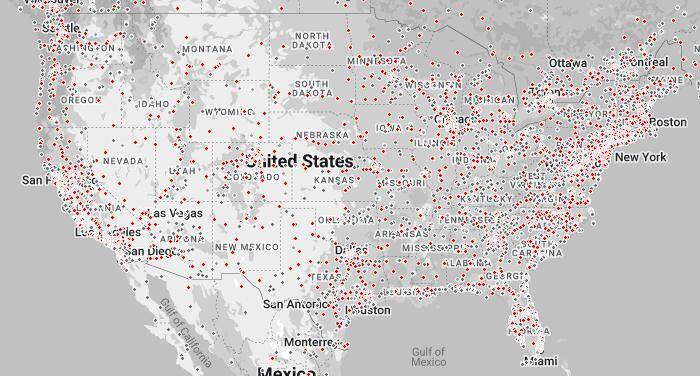
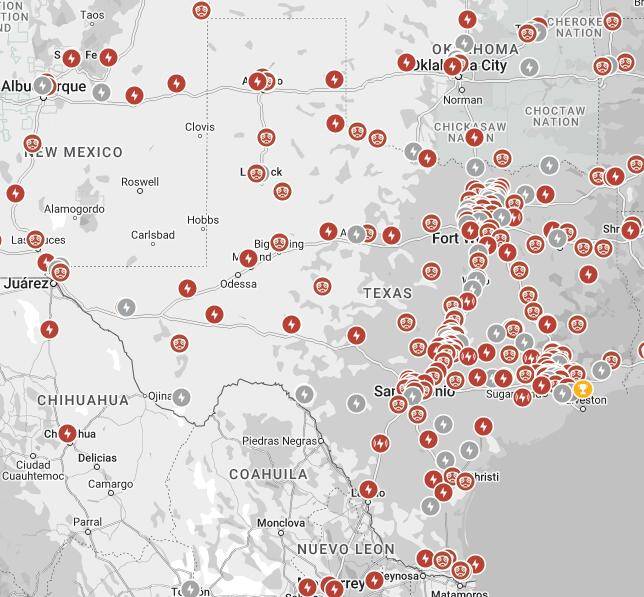
Why do I use the Mississippi as a dividing line, it's Supercharger density. Look at the map below, there are very few holes, and many of those holes you aren't going to go into with a truck anyway. Like the Okefenokee Swamp in South Georgia and the Everglades in South Florida.
Heading west, the density is much lower until you get to the Rockies, after which it shoots back up.

And look around at those that are complaining about the range. Notice how very few of them have signatures that indicate that they have gotten their Cybertruck yet.
Classic Range Anxiety!!!


Tesla Cybertruck Future Capability? - Independently Selling Your Range Extender 1728931429227-r3
 

agordon117

Well-known member
Joined
Jan 11, 2024
Threads
7
Messages
1,196
Reaction score
2,039
Location
Ohio
Vehicles
cybertruck foundation awd
Country flag
Yes, isn't it obvious though?

Road tripping is an easy one, filling a battery to 100% or even 80% while on the road is a slow way to drive. If you want to travel faster, it's near 0% to 50-60%, the best side of the charging curve.
The 150 extra miles of the Range Extender will indeed help a little, because your 50% will be a little longer, but not significantly so, and only during certain duration trips.

A case that wins is if you are going to remote areas, specifically east of the Mississippi that you are going to get that far away from Superchargers or power, areas that are more than 150 miles off the road.

Last case is towing, and it still isn't going to be a huge differential. It'll add maybe 50% to whatever towing numbers that you are getting. If you are getting 100 miles range, then it may carry you up to 150 miles. East of the Mississippi, it won't matter much.

And as time goes on, many of the areas that are issues will get charger coverage and become non-issues.

Why do I use the Mississippi as a dividing line, it's Supercharger density. Look at the map below, there are very few holes, and many of those holes you aren't going to go into with a truck anyway. Like the Okefenokee Swamp in South Georgia and the Everglades in South Florida.
Heading west, the density is much lower until you get to the Rockies, after which it shoots back up.

And look around at those that are complaining about the range. Notice how very few of them have signatures that indicate that they have gotten their Cybertruck yet.
Classic Range Anxiety!!!


1728931429227-r3.jpg
I wouldn't say it's obvious, no. I would say it probably would require some precision guesswork with a spreadsheet and the most up to date charging curve info that we have. I believe we currently are at 150kW by the time our SoC is 50%.

Or we can do it the other way, 150 miles added in 15 minutes is the current charge curve I can find. with the range extender, that number could go as high as 221 miles added in 15 minutes. An extra 70 miles in the same 15 minute stop would be pretty game changing for people dead set on road tripping often in one of these.

Do I know that for sure? no. But my point is that you don't either. For most people, probably the range extender isn't a necessary expense. But to claim that we somehow already know that it will provide no benefit during normal road trips doesn't make sense. We just don't know at this point.
 
OP
OP
VAF84

VAF84

Well-known member
Joined
Jun 14, 2024
Threads
9
Messages
233
Reaction score
449
Location
Central Texas
Vehicles
2024 Sierra EV Denali, EX - 23 Lightning Lariat Extended Range 10mo./21k mi
Occupation
Consultant
Country flag
Yes, isn't it obvious though?

Road tripping is an easy one, filling a battery to 100% or even 80% while on the road is a slow way to drive. If you want to travel faster, it's near 0% to 50-60%, the best side of the charging curve.
The 150 extra miles of the Range Extender will indeed help a little, because your 50% will be a little longer, but not significantly so, and only during certain duration trips.

A case that wins is if you are going to remote areas, specifically east of the Mississippi that you are going to get that far away from Superchargers or power, areas that are more than 150 miles off the road.

Last case is towing, and it still isn't going to be a huge differential. It'll add maybe 50% to whatever towing numbers that you are getting. If you are getting 100 miles range, then it may carry you up to 150 miles. East of the Mississippi, it won't matter much.

And as time goes on, many of the areas that are issues will get charger coverage and become non-issues.

Why do I use the Mississippi as a dividing line, it's Supercharger density. Look at the map below, there are very few holes, and many of those holes you aren't going to go into with a truck anyway. Like the Okefenokee Swamp in South Georgia and the Everglades in South Florida.
Heading west, the density is much lower until you get to the Rockies, after which it shoots back up.

And look around at those that are complaining about the range. Notice how very few of them have signatures that indicate that they have gotten their Cybertruck yet.
Classic Range Anxiety!!!


1728931429227-r3.jpg
Okay, you're dragging me into this. Just because there's gas stations at every other exit doesn't mean that I want to stop at every other exit. They didn't outfit gas cars with 5 gallon tanks because the average person drives less than a 100 miles, and there's enough gas stations to cover roadtrips.

Charging curve does impact driving style and different manufacturers will have different curves. So specifically to the CT maybe that's the better way to drive, but it doesn't make it a favorable road trip experience. Alternatively, vehicles with a flatter curve, like the Lightning, make more sense doing the 10-80% charge.

For towing, we're looking at probably under 1 kW/mi for highway towing. For argument sake, .9kW/mi equates to 112 from 100 to 0%. Your next charge is 70% of that number due to charging buffers; 78 miles per charge after that. That's about four stops just to drive to a nearby city (300mi RT) with a 20' enclosed trailer. That's really annoying.

Convenience. Last weekend I had to go home last minute from my project 300 miles away. My Lightning that had the same range as the dual motor CT would have required me to go out of my way to charge up to start the trip. Then I would have had two stops, each way. I now have a hybrid while I decide on my next EV truck and I went straight home and back with one stop and multiple errands that I wouldn't have run with my EV truck because of factoring in the inconvenience of added downtime to charge.

Third, extended time off the beaten path. Again, for those who live outside the world where they don't leave the house; It's nice to know that you can can treat your EV like an ICE in the sense of filling up once a week. I'm sure apartment dwellers appreciate this as well. In less urban areas, you have high speeds and long distances. Speed and distance exponentially affect range. Sometimes a DC fast charger is 30 minutes out of the way and you want to go "fill up" once a week during a supply run. Range comes into play. Running the numbers and at least from my experience; 460 miles advertised range is comfortable untethered (never home) range because it gives you about 320mi of dependable range in road trip mode and all weather conditions. Not just that, but Kyle from Out of Spec recently made that video about the charging lines in California. More range, means less visits to the public charging stall.

Sure, you want to keep selling trucks to the masses in dense areas where they are primarily commuter trucks regular battery works. Fleets that come home and charge every night also works. There's a large truck owning population outside of that though that needs that range. You don't hear from them because they're not shopping EV trucks due to range constraints. It's literally the first question I'd get asked out in the field; "how far can you go on this thing". With 460 range, I say far enough. With 320 range I have a 10 min explanation about how geography and weather determine the distance, how city driving differs from highway, the way the type of trailer determines it, and I watch as their eyes glaze over.
 
Last edited:


carsly

Well-known member
First Name
Vin
Joined
Dec 13, 2023
Threads
93
Messages
1,529
Reaction score
2,898
Location
Princeton, NJ
Vehicles
LR Defender, CT AWD
Country flag
What I think may be more interesting is a Gen 2 or low-profile Range Extender. Thinking about one that fits in the smugglers hatch or underneath the rear seats. Still permanently installed, for crash safety, wiring, plumbing, etc. but provides just another oomph of battery to get nearer 400 miles of real-world range unladen.
 

Woodrick

Well-known member
First Name
Ed
Joined
Dec 30, 2023
Threads
6
Messages
4,786
Reaction score
4,762
Location
Gainesville Ga
Vehicles
Model 3, Model Y, Cybertruck AWD
Occupation
Consultant
Country flag
I wouldn't say it's obvious, no. I would say it probably would require some precision guesswork with a spreadsheet and the most up to date charging curve info that we have. I believe we currently are at 150kW by the time our SoC is 50%.

Or we can do it the other way, 150 miles added in 15 minutes is the current charge curve I can find. with the range extender, that number could go as high as 221 miles added in 15 minutes. An extra 70 miles in the same 15 minute stop would be pretty game changing for people dead set on road tripping often in one of these.

Do I know that for sure? no. But my point is that you don't either. For most people, probably the range extender isn't a necessary expense. But to claim that we somehow already know that it will provide no benefit during normal road trips doesn't make sense. We just don't know at this point.
The obvious that I was referring to was that the extender really isn't needed for most cases.
Take a look at the numbers that I mentioned, aren't they what you just said?
And don't assume that the additional battery is going to be completely additive to the numbers, Superchargers have limits, on the lower charge levels, you are at the limits of the Supercharger. Details yet to be seen.

Do the Excel work, there are some distances that the Extender will help and others where it won't make a difference. You can generally assume Superchargers at 50 mile intervals (yes some are longer, but many are significantly shorter, down to every exit!) 70 miles additional range may mean that you can skip one, other times probably not.

But don't forget that most Americans don't drive on longer trips, it's a small number. And they only do it 1-2 times a year. For someone on the West Coast with Family on the East, they are going to fly. The longest trips tend to be from NY/NJ to Disney. And of course the winter migration of the snow birds.
 

Woodrick

Well-known member
First Name
Ed
Joined
Dec 30, 2023
Threads
6
Messages
4,786
Reaction score
4,762
Location
Gainesville Ga
Vehicles
Model 3, Model Y, Cybertruck AWD
Occupation
Consultant
Country flag
Okay, you're dragging me into this. Just because there's gas stations at every other exit doesn't mean that I want to stop at every other exit. They didn't outfit gas cars with 5 gallon tanks because the average person drives less than a 100 miles, and there's enough gas stations to cover roadtrips.

Charging curve does impact driving style and different manufacturers will have different curves. So specifically to the CT maybe that's the better way to drive, but it doesn't make it a favorable road trip experience. Alternatively, vehicles with a flatter curve, like the Lightning, make more sense doing the 10-80% charge.

For towing, we're looking at probably under 1 kW/mi for highway towing. For argument sake, .9kW/mi equates to 112 from 100 to 0%. Your next charge is 70% of that number due to charging buffers; 78 miles per charge after that. That's about four stops just to drive to a nearby city (300mi RT) with a 20' enclosed trailer. That's really annoying.

Convenience. Last weekend I had to go home last minute from my project 300 miles away. My Lightning that had the same range as the dual motor CT would have required me to go out of my way to charge up to start the trip. Then I would have had two stops, each way. I now have a hybrid while I decide on my next EV truck and I went straight home and back with one stop and multiple errands that I wouldn't have run with my EV truck because of factoring in the inconvenience of added downtime to charge.

Third, extended time off the beaten path. Again, for those who live outside the world where they don't leave the house; It's nice to know that you can can treat your EV like an ICE in the sense of filling up once a week. I'm sure apartment dwellers appreciate this as well. In less urban areas, you have high speeds and long distances. Speed and distance exponentially affect range. Sometimes a DC fast charger is 30 minutes out of the way and you want to go "fill up" once a week during a supply run. Range comes into play. Running the numbers and at least from my experience; 460 miles advertised range is comfortable untethered (never home) range because it gives you about 320mi of dependable range in road trip mode and all weather conditions. Not just that, but Kyle from Out of Spec recently made that video about the charging lines in California. More range, means less visits to the public charging stall.

Sure, you want to keep selling trucks to the masses in dense areas where they are primarily commuter trucks regular battery works. Fleets that come home and charge every night also works. There's a large truck owning population outside of that though that needs that range. You don't hear from them because they're not shopping EV trucks due to range constraints. It's literally the first question I'd get asked out in the field; "how far can you go on this thing". With 460 range, I say far enough. With 320 range I have a 10 min explanation about how geography and weather determine the distance, how city driving differs from highway, the way the type of trailer determines it, and I watch as their eyes glaze over.
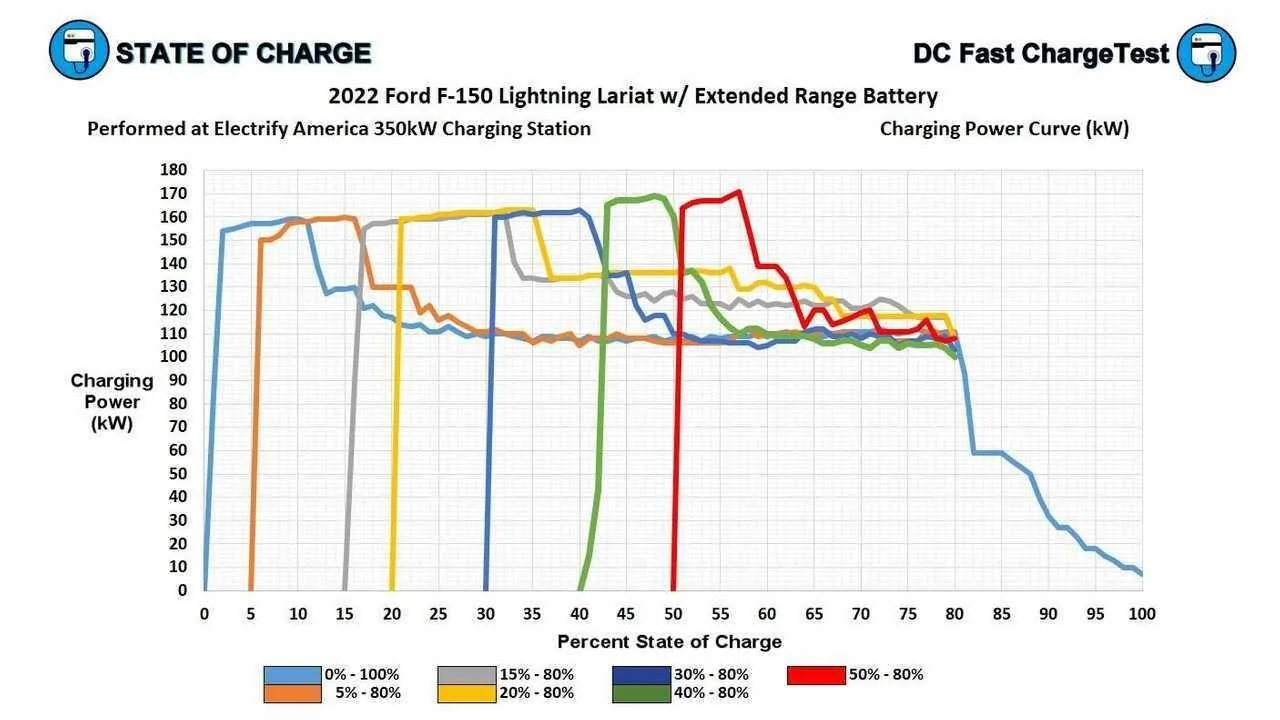
So first, I'm talking about Teslas, not Fords. Yes, the Lightning has an abnormally limited charge curve from what I can see.
Tesla Cybertruck Future Capability? - Independently Selling Your Range Extender 1728999975438-e8

I say limited, because that's not a battery's charge curve, that's limited by outside factors. Evidently the Lightning charges until it hits a certain temperature and then limits to 120 kW.
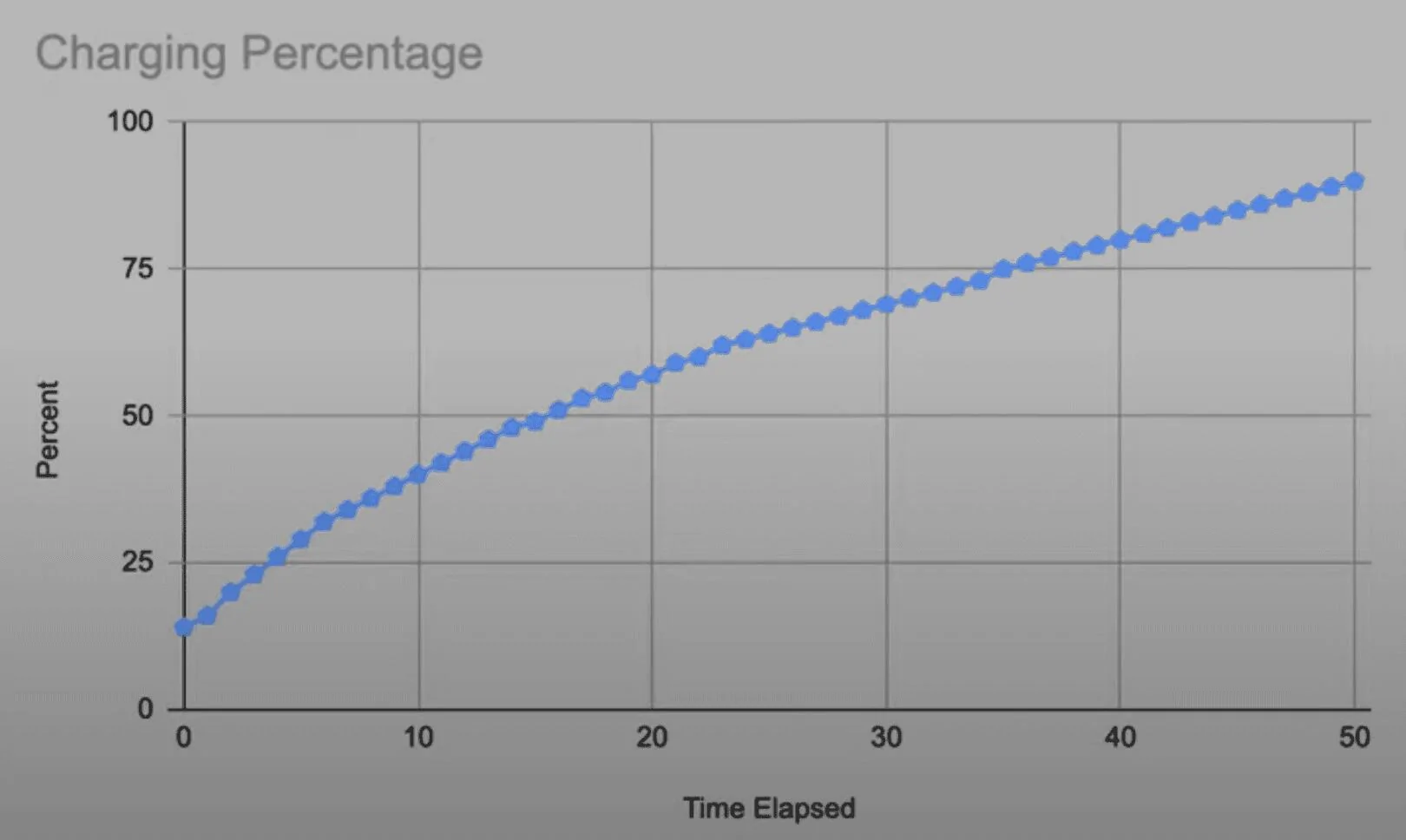
Tesla's follow a more normal curve of exponential decrease in charge rate
Tesla Cybertruck Future Capability? - Independently Selling Your Range Extender 1729001273246-gz


For the Lightning it appears that X->80% charging makes sense. But for Teslas, once you pass 50%, you are heading into diminishing returns. For this graph, look how long it takes to go from 0-50% and then 0-80%. More than twice as long for long for just over half as much.


I don't live in Texas, but I've spent well over 6 months in Texas from one end to the other.

Texas, as yall proudly exclaim, isn't like the rest of the country. There are many roads in which there aren't gas stations every 20 miles, probably a few that don't have gas stations within 50 miles of each other.
That's a Texas issue and doesn't reflect the vast population of the US. It's also one that with Tesla HQ in Texas, you may expect a little focus on in the future.
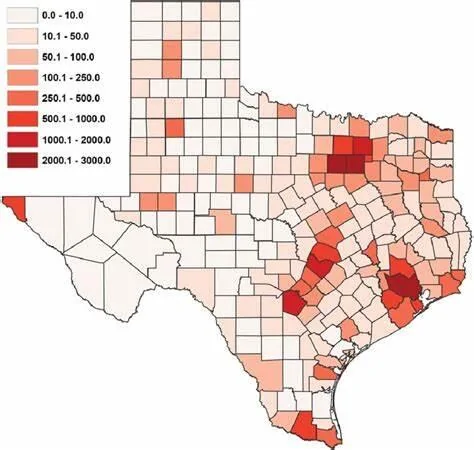
But your problem isn't a general Texas problem either. Here's the Texas population distribution
Tesla Cybertruck Future Capability? - Independently Selling Your Range Extender 1729001443953-ht

Th vast majority of Texans will never go to a white county, unless they just happen to be driving through one and where there is population, there are Superchargers
Tesla Cybertruck Future Capability? - Independently Selling Your Range Extender 1729001562968-qa


So yes, there are a FEW Texans that travel into those areas not covered well by Superchargers. I'm not talking about yall, probably 0.0002% of the Tesla drivers (maybe 0.002% of the Cybertruck drivers)

There are edge cases, you may be one of them. If you read my messages, I try to always make sure to use words that indicate that there are edge cases.

But edge cases are indeed that, not the generalized Cybertruck owner.
 

mongo

Well-known member
Joined
May 27, 2024
Threads
5
Messages
4,520
Reaction score
5,496
Location
SE Michigan
Vehicles
Cyberbeast
Country flag
There's only a couple of specific use cases in which the come in handy, road tripping is NOT one of them and it can actually slow you down.
It really can't slow you down.
Assuming 50 kWh extender at 600 pounds
Tire rolling coefficient 0.01
Added rolling force: 6 pounds
Added loss per mile: 12 Wh
Base energy usage: 123kWh / 320 mile range = 384 Wh/mile
New range: (123+50)/(384+12) = 437 miles
Charge rate increase: (123+50)/(123) = 41% (assuming charger isn't maxed out)
MPH charge rate increase: 437/320 = 37%

The downsides of the extender are slightly (3%) higher energy per mile and loss of payload and cargo space. Offset by longer range (37%) and faster range recovery (37%).

For trips < 320 miles, it makes no difference
For trips >320 and <437 miles, it saves one charge stop
For trips that require a stop, it allows 30%+ faster charging (assuming charger capacity)

For a given charge stop, equivilent departure SOCs:
Base:extended
100:73
90:66
80:59

Range at 80% with Base pack is 60% with extended. Per your post, that is a better charge:
Road tripping is an easy one, filling a battery to 100% or even 80% while on the road is a slow way to drive. If you want to travel faster, it's near 0% to 50-60%, the best side of the charging curve.
Last case is towing, and it still isn't going to be a huge differential. It'll add maybe 50% to whatever towing numbers that you are getting. If you are getting 100 miles range, then it may carry you up to 150 miles. East of the Mississippi, it won't matter much.
If you get 100 miles charging to 100% with base pack, then you get 100 miles charging to 73% with the extender. Assuming a 250kW+ charger, that will be a much faster stop.

Working with round numbers that don't align with the inital assumptions:
For a 300 mile leg, 150 vs 100 is the difference between one stop and two. Or two 66% stops versus two 100% fill ups. Both are improvements.
Sponsored


Top