zeke
Active member
- First Name
- Zeke
- Joined
- Mar 11, 2024
- Threads
- 3
- Messages
- 31
- Reaction score
- 86
- Location
- New Hampshire
- Vehicles
- Model X Plaid, AWD Foundation Cybertruck
- Occupation
- Software Engineer

- Thread starter
- #1
TLDR; scroll down to see a 15kW dual inverter solar panel array stay online during a power outage thanks to Powershare
The story:
March 2024, I took delivery of my truck. It was obviously a very early build with vin in the 4xxx so I knew I was gonna have to work out the early adopter kinks. Like some others, I immediately tried getting and installing the Powershare system but it was a headache all around. I got a grotesque quote from the only installer Tesla trained for these installs and decided to look elsewhere. I eventually convinced a Tesla certified electrician to take the Powershare class and install the system for me, granted I was able to procure the 3V Gateway. A cool $3000 later, the system was up and running!
At the time, solar panels were not allowed on the supply side of the Gateway box so even after pleading with my electrician to at least set up the wiring, he left it where it was, upstream of the Gateway. That meant no solar panels during outages since I don't have fixed batteries in my home.
Fast forward to early last year when solar became supported by the Powershare system. My original electrician ghosted me so I worked with another one that was also willing to learn to do these installs. He comes over, moves the 15kW of solar into the Gateway (mind you, no one could tell us if all 15kW were allowed or if it was too much). We go test it and have no luck.
What we found out later that day was that around that same time of the install, I hit the dreaded PCS2 inverter failure.
No problem. Tesla said 2 weeks to get me in and fix the problem. Naturally that wasn't the case. Day of, after having taken a day off of work, they tell me the part isn't there yet and that I'm pushed back a month. A few weeks go by, the second PCS2 fails so now I'm charging only on DC chargers. The day comes again and they tell me another month.
I just got back the truck with 2 new PCS2 inverters and what do you know, a huge storm hit here in southern NH that took out the grid for a bit. Sure enough, both my SolarEdge inverters detected the micro-grid that the Gateway + truck create and turned on!
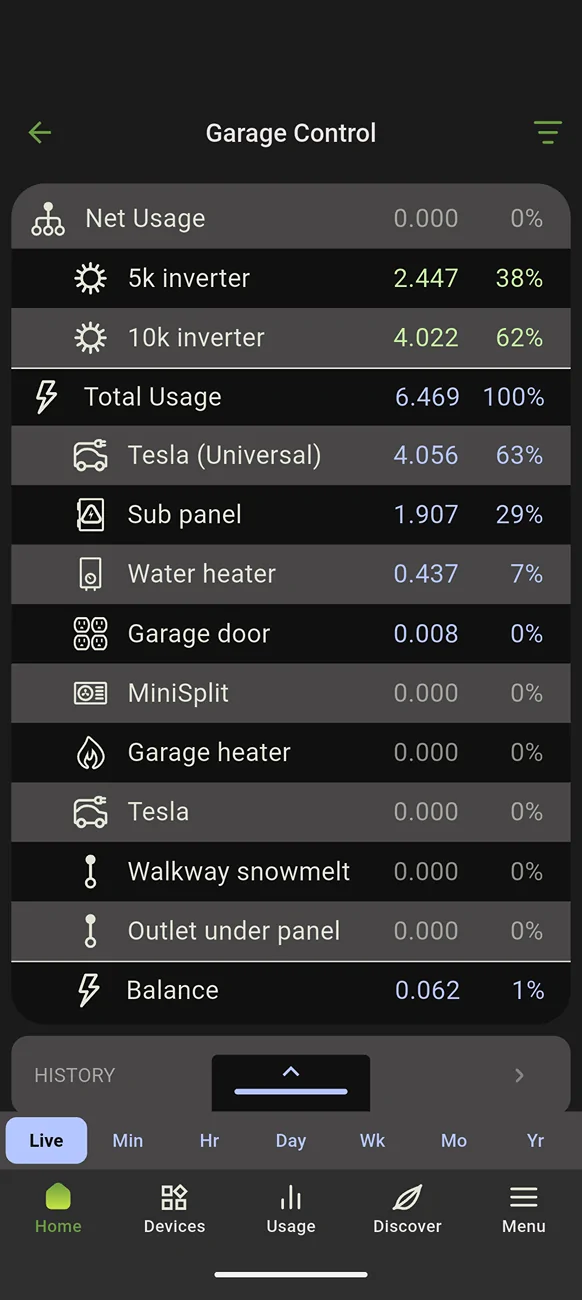
In this image you can see how the grid is disconnected (net usage), how my inverters are putting out about 6.5kW of AC power, how my house (Sub panel) is using 2k, and the rest is being dumped back into the truck.
I couldn't ask for a better system. I mean, I could though, as in one that wasn't proprietary and could be installed by any skilled electrician. But this will do for now.

The story:
March 2024, I took delivery of my truck. It was obviously a very early build with vin in the 4xxx so I knew I was gonna have to work out the early adopter kinks. Like some others, I immediately tried getting and installing the Powershare system but it was a headache all around. I got a grotesque quote from the only installer Tesla trained for these installs and decided to look elsewhere. I eventually convinced a Tesla certified electrician to take the Powershare class and install the system for me, granted I was able to procure the 3V Gateway. A cool $3000 later, the system was up and running!
At the time, solar panels were not allowed on the supply side of the Gateway box so even after pleading with my electrician to at least set up the wiring, he left it where it was, upstream of the Gateway. That meant no solar panels during outages since I don't have fixed batteries in my home.
Fast forward to early last year when solar became supported by the Powershare system. My original electrician ghosted me so I worked with another one that was also willing to learn to do these installs. He comes over, moves the 15kW of solar into the Gateway (mind you, no one could tell us if all 15kW were allowed or if it was too much). We go test it and have no luck.
What we found out later that day was that around that same time of the install, I hit the dreaded PCS2 inverter failure.
No problem. Tesla said 2 weeks to get me in and fix the problem. Naturally that wasn't the case. Day of, after having taken a day off of work, they tell me the part isn't there yet and that I'm pushed back a month. A few weeks go by, the second PCS2 fails so now I'm charging only on DC chargers. The day comes again and they tell me another month.
I just got back the truck with 2 new PCS2 inverters and what do you know, a huge storm hit here in southern NH that took out the grid for a bit. Sure enough, both my SolarEdge inverters detected the micro-grid that the Gateway + truck create and turned on!
In this image you can see how the grid is disconnected (net usage), how my inverters are putting out about 6.5kW of AC power, how my house (Sub panel) is using 2k, and the rest is being dumped back into the truck.
I couldn't ask for a better system. I mean, I could though, as in one that wasn't proprietary and could be installed by any skilled electrician. But this will do for now.
Sponsored