
Sponsored

Pops

Well-known member
Joined
Dec 31, 2023
Threads
35
Messages
1,204
Reaction score
2,548
Location
Houston, TX
Vehicles
MY, CyberBeast
Country flag
Weight appears to be 182 lbs for the basic 6 kWh battery (112 lbs) plus inverter (70 lbs). Add 112 lbs for each additional 6 kWh battery, so should be 294 lbs for 12 kWh or 406 lbs for 18 kWh.

If you carried this in the bed, you wouldn't be able to charge the truck while driving. But you could do so overnight while parked, and it would be a lot quieter than a portable generator. Significantly more expensive though.

Even the 400-lb 18 kWh version, which is available for $8,000 (without panels), would only represent a relatively small fraction (like 15%) of the CT's 122 kWh battery capacity.
I have 6.4kw of solar, 32kWh of batteries and a 12kW (240v) inverter sitting in my garage waiting to be installed in my trailer. The purpose was to be able to tow with the CT somewhere to go camping and leave with more charge then when I got there. I will make a thread about it when its done.

Practically speaking though, you cant charge while moving, and even 32kWh of batteries is <80 miles of driving (not towing). 6.4kw of solar will take 4 perfect days of sun to charge a CT from empty to full. So this really only helps if you camp for around 1 week at a time, and it doesn't "extend" your range like the RE would have.

The holy grail would be tapping directly into the high voltage 800v lines of the CT and connecting a 800v battery bank to it. That's what the RE would have been. If you are able to carry the batteries in the trailer, it would be ideal for towing. No weight or space penalty to the bed of the CT.
Sponsored
 

PungoteagueDave

Well-known member
First Name
David
Joined
Mar 2, 2025
Threads
2
Messages
909
Reaction score
999
Location
Boynton Beach
Vehicles
‘25 Tesla Cybertruck, ‘26 Tesla MY Launch, ‘13 Porsche C4S, ‘26 BMW R1300 GSA
Occupation
retired
Country flag
Stop talking out of your butt! GM and Ford are losing tens of thousands of dollars on every EV truck they sell, even today. Cybertruck production has the best cost structure of any EV truck being made today.

Cybertruck sales volumes will probably surprise all the naysayers in Q3, Q4 and beyond. The timing of increasing sales has more to do with economic conditions than anything else. There is so much fake noise online (compared to in the real world) that it's not even funny. The EV trucks that are in real danger are those of GM, Ford and Rivian because they all have less favorable economics than the Cybertruck and sell in lower volumes.
Talking out my butt? Dude, I actually run the numbers, and am a loyal owner. Ford and GM do NOT lose money on every EV truck they sell. That's a MSM myth. It is true their EV divisions lose money, but they have positive gross margin on every EV they sell. Rivian is the only EV manufacturer with negative gross margin on every vehicle they sell (and have ever sold). Tesla has never sold a single vehicle for a negative margin, but in the EV business neither has Ford or GM. Their net losses from EVs are just like Tesla's in the first ten years - accounting rules require writing off R&D and other costs that aren't related to production - hence the divisional losses - but the actual gross selling price per vehicle minus the cost of producing that individual vehicle has always been positive.
 

PungoteagueDave

Well-known member
First Name
David
Joined
Mar 2, 2025
Threads
2
Messages
909
Reaction score
999
Location
Boynton Beach
Vehicles
‘25 Tesla Cybertruck, ‘26 Tesla MY Launch, ‘13 Porsche C4S, ‘26 BMW R1300 GSA
Occupation
retired
Country flag
??? What separate buildings?
Elon 2023 Shareholders meeting "I'd say a quarter million a year is a reasonable guess and it might be 500,000, I don't know. We'll make as many as people want and can afford. It's going to be hard to make the cost affordable because it is a new car, new manufacturing method, so in the grand scheme of things relative to the production rate of all the other cars we make, it will be small. But still very cool."

That does not mean the lines are sized for 250k-500k now.
Have you actually been to gigfactory Austin? I have. Yes, separate facilities for each line. There is no crossover potential to produce the CT on the same line as the MY. Zero. Different technologies, production methods, equipment. The most obvious is paint, but every structural and finishing element is different. They are not near each other and never will be due to component supply constraints, warehousing, etc. The CT lines were set up INITIALLY to be able to kick out around 200/yr at Austin. Idling the CT production lines has already happened three times, and they are about to shut down entirely for a week - not for retooling, but because of excess inventory build. The unused capacity vs stranded capital conundrum will be a factor in any decision regarding retaining the model - it isn't close to the boutique nature of remaining MS and MX production, where it WAS possible to cross-pollinate with the M3 and MY because production techniques, finishing, etc., are similar.
 

mongo

Well-known member
Joined
May 27, 2024
Threads
5
Messages
4,520
Reaction score
5,495
Location
SE Michigan
Vehicles
Cyberbeast
Country flag
Have you actually been to gigfactory Austin? I have. Yes, separate facilities for each line. There is no crossover potential to produce the CT on the same line as the MY. Zero. Different technologies, production methods, equipment. The most obvious is paint, but every structural and finishing element is different. They are not near each other and never will be due to component supply constraints, warehousing, etc. The CT lines were set up INITIALLY to be able to kick out around 200/yr at Austin. Idling the CT production lines has already happened three times, and they are about to shut down entirely for a week - not for retooling, but because of excess inventory build. The unused capacity vs stranded capital conundrum will be a factor in any decision regarding retaining the model - it isn't close to the boutique nature of remaining MS and MX production, where it WAS possible to cross-pollinate with the M3 and MY because production techniques, finishing, etc., are similar.
I'm confused, are you claiming:
A factory specifically for Cybertruck at 250k volume:
Tesla built a specific plant for billions of dollars intended to ANNUALLY kick out 250k CTs (initially) and 500k CTs eventually.
A separate building for Cybertruck:
Separate buildings.
Or separate assembly lines for Cybertruck:
Yes, separate facilities for each line. There is no crossover potential to produce the CT on the same line as the MY.
?

The most obvious is paint, but every structural and finishing element is different.
Yah, because Cybertruck doesn't have a final paint line to share. E-coat was shared initially, can't it be again?
 

mongo

Well-known member
Joined
May 27, 2024
Threads
5
Messages
4,520
Reaction score
5,495
Location
SE Michigan
Vehicles
Cyberbeast
Country flag
Talking out my butt? Dude, I actually run the numbers, and am a loyal owner. Ford and GM do NOT lose money on every EV truck they sell. That's a MSM myth. It is true their EV divisions lose money, but they have positive gross margin on every EV they sell. Rivian is the only EV manufacturer with negative gross margin on every vehicle they sell (and have ever sold). Tesla has never sold a single vehicle for a negative margin, but in the EV business neither has Ford or GM. Their net losses from EVs are just like Tesla's in the first ten years - accounting rules require writing off R&D and other costs that aren't related to production - hence the divisional losses - but the actual gross selling price per vehicle minus the cost of producing that individual vehicle has always been positive.
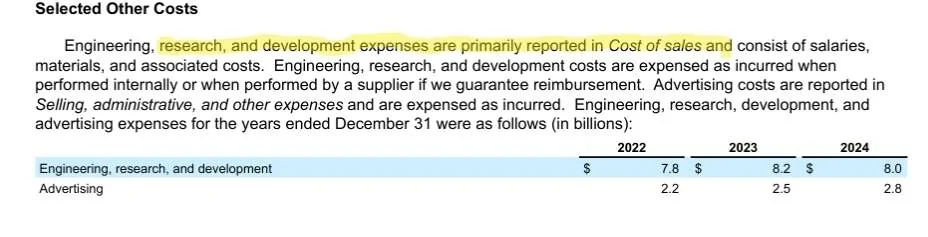
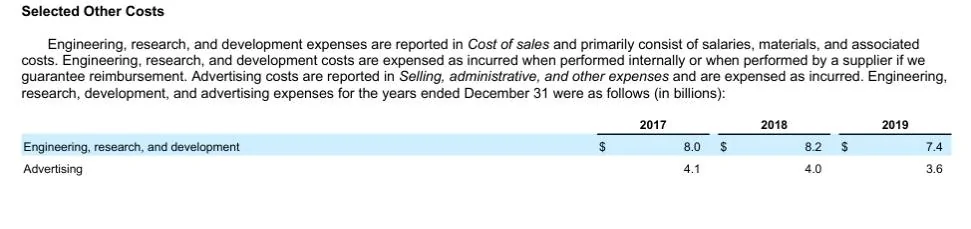
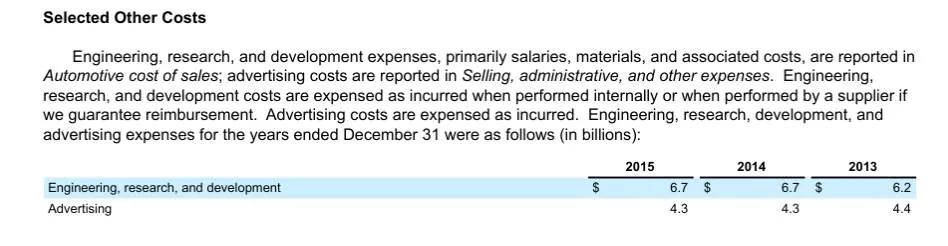
Given Ford doesn't breakout the Engineering, Research, and Development (ERD) portion of Cost of Sales on a per-segment basis, what is your source for the positive vehicle Gross Margin claim?
ERD has been over $6 billion since 2013, with 2024 coming in a $8 billion. Model e segment posted a $5 billion loss in 2024. The only way EVs were gross profitable is if 63% of Fords ERD was allocated to that segment.
Tesla Cybertruck Range Extender Officially Cancelled! Screenshot_20250514_065119_Samsung captur

Tesla Cybertruck Range Extender Officially Cancelled! SmartSelect_20250514_072039_Firefox
Tesla Cybertruck Range Extender Officially Cancelled! SmartSelect_20250514_072139_Firefox
Tesla Cybertruck Range Extender Officially Cancelled! SmartSelect_20250514_072440_Firefox


Tesla has never sold a single vehicle for a negative margin, but in the EV business neither has Ford or GM.
Individual Tesla vehicles have been gross margin negative during ramp periods. Looking only at BOM costs (possibly all variable costs), they have likely been continually positive.
The overall automobile group (which excludes R&D, and includes external services and parts) has been gross positive other than the one quarter during the switch from Roadster to Model S.


HaulingAss

Well-known member
Joined
Oct 3, 2020
Threads
28
Messages
10,298
Reaction score
20,703
Location
Western Washington, USA
Vehicles
Cybertruck DM, 2010 F-150, 2018 Performance Model 3, 2024 Performance Model 3
Country flag
Talking out my butt? Dude, I actually run the numbers, and am a loyal owner. Ford and GM do NOT lose money on every EV truck they sell. That's a MSM myth. It is true their EV divisions lose money, but they have positive gross margin on every EV they sell. Rivian is the only EV manufacturer with negative gross margin on every vehicle they sell (and have ever sold). Tesla has never sold a single vehicle for a negative margin, but in the EV business neither has Ford or GM. Their net losses from EVs are just like Tesla's in the first ten years - accounting rules require writing off R&D and other costs that aren't related to production - hence the divisional losses - but the actual gross selling price per vehicle minus the cost of producing that individual vehicle has always been positive.
Incorrect. Rivian has reported two consecutive quarters of gross profitability for EV sales, although they had to load an unusual amount of regulatory credit sales into those two quarters to do so. So you could say it's not really gross profitability.

It's also incorrect that Tesla has never sold a single EV with negative gross profitability. During Model S ramp they had a full quarter of negative gross profitability. But, yes, in general, Tesla has been gross profitable, even with the original Roadster that sold in very low numbers.

And GM has reported they were "variable profit positive" in 2024, but this is an unknown and undefined financial metric that has never been used by anyone except for GM. It's very hard to take this kind of BS seriously unless you are highly gulible. My best guess as to what it means is that they were gross profitable for certain periods within the year. But that pretty much implies they were not gross profitable for the year as a whole. And if you know how corporate accounting works, that probably means they were not truly gross profitable, even during those specific periods but that the cash flows just lined up to create pockets of gross profitability. It's typical despicable "corporate speak". That said, it probably means they are close to gross profitability and still losing hundreds of millions of dollars per year (on EVs) in terms of net profits.

On the other hand, Tesla not only makes a net profit on their EVs, they typically do so even after backing out regulatory credit sales as so many anti-Tesla people insist is the only proper way to measure profitability. It's a rare quarter that Tesla relies on credits to make a NET profit. The rest are still struggling for a gross profit with regulatory credit sales included. Gross vs. net is a huge difference and just shows how much pricing power Tesla has. It's also how Tesla's huge pile of cash can continue to grow, even while they spend billions on things like development of autonomous driving, humanoid robots, and AI computing. The rest are not doing this. And yet Tesla is still net profitable while the others are still trying to reach a consistent gross profitability.
 

mongo

Well-known member
Joined
May 27, 2024
Threads
5
Messages
4,520
Reaction score
5,495
Location
SE Michigan
Vehicles
Cyberbeast
Country flag
And GM has reported they were "variable profit positive" in 2024, but this is an unknown and undefined financial metric that has never been used by anyone except for GM.
That meant ignoring fixed costs like plant overhead and only including per vehicle costs like BOM, labor, and per shot tool amortization. Theoretically, that means making more vehicle earns them more money; however, they also included credits in the calculation so it's not guaranteed.
Full gross margin means you make money from having a vehicle product. In other words, the variable profit * sold units > fixed manufacturing costs. When gross margin * units sold > operating costs, the company is profitable.
 

bigbangbadaboom

Well-known member
Joined
Jun 6, 2024
Threads
3
Messages
66
Reaction score
67
Location
CA
Vehicles
Tesla Model Y
Country flag
For those who ordered theirs, did you get your refund yet? Mine still hasn't come through
 

CyberZephyr

Well-known member
Joined
Jul 8, 2024
Threads
13
Messages
633
Reaction score
583
Location
Long Island, New York
Vehicles
2021 MY, 2023 MX
Country flag


PungoteagueDave

Well-known member
First Name
David
Joined
Mar 2, 2025
Threads
2
Messages
909
Reaction score
999
Location
Boynton Beach
Vehicles
‘25 Tesla Cybertruck, ‘26 Tesla MY Launch, ‘13 Porsche C4S, ‘26 BMW R1300 GSA
Occupation
retired
Country flag
Given Ford doesn't breakout the Engineering, Research, and Development (ERD) portion of Cost of Sales on a per-segment basis, what is your source for the positive vehicle Gross Margin claim?
ERD has been over $6 billion since 2013, with 2024 coming in a $8 billion. Model e segment posted a $5 billion loss in 2024. The only way EVs were gross profitable is if 63% of Fords ERD was allocated to that segment.
Screenshot_20250514_065119_Samsung capture.webp

SmartSelect_20250514_072039_Firefox.webp
SmartSelect_20250514_072139_Firefox.webp
SmartSelect_20250514_072440_Firefox.webp


Individual Tesla vehicles have been gross margin negative during ramp periods. Looking only at BOM costs (possibly all variable costs), they have likely been continually positive.
The overall automobile group (which excludes R&D, and includes external services and parts) has been gross positive other than the one quarter during the switch from Roadster to Model S.
Given Ford doesn't breakout the Engineering, Research, and Development (ERD) portion of Cost of Sales on a per-segment basis, what is your source for the positive vehicle Gross Margin claim?
ERD has been over $6 billion since 2013, with 2024 coming in a $8 billion. Model e segment posted a $5 billion loss in 2024. The only way EVs were gross profitable is if 63% of Fords ERD was allocated to that segment.
Screenshot_20250514_065119_Samsung capture.webp

SmartSelect_20250514_072039_Firefox.webp
SmartSelect_20250514_072139_Firefox.webp
SmartSelect_20250514_072440_Firefox.webp


Individual Tesla vehicles have been gross margin negative during ramp periods. Looking only at BOM costs (possibly all variable costs), they have likely been continually positive.
The overall automobile group (which excludes R&D, and includes external services and parts) has been gross positive other than the one quarter during the switch from Roadster to Model S.
Incorrect. Rivian has reported two consecutive quarters of gross profitability for EV sales, although they had to load an unusual amount of regulatory credit sales into those two quarters to do so. So you could say it's not really gross profitability.

It's also incorrect that Tesla has never sold a single EV with negative gross profitability. During Model S ramp they had a full quarter of negative gross profitability. But, yes, in general, Tesla has been gross profitable, even with the original Roadster that sold in very low numbers.

And GM has reported they were "variable profit positive" in 2024, but this is an unknown and undefined financial metric that has never been used by anyone except for GM. It's very hard to take this kind of BS seriously unless you are highly gulible. My best guess as to what it means is that they were gross profitable for certain periods within the year. But that pretty much implies they were not gross profitable for the year as a whole. And if you know how corporate accounting works, that probably means they were not truly gross profitable, even during those specific periods but that the cash flows just lined up to create pockets of gross profitability. It's typical despicable "corporate speak". That said, it probably means they are close to gross profitability and still losing hundreds of millions of dollars per year (on EVs) in terms of net profits.

On the other hand, Tesla not only makes a net profit on their EVs, they typically do so even after backing out regulatory credit sales as so many anti-Tesla people insist is the only proper way to measure profitability. It's a rare quarter that Tesla relies on credits to make a NET profit. The rest are still struggling for a gross profit with regulatory credit sales included. Gross vs. net is a huge difference and just shows how much pricing power Tesla has. It's also how Tesla's huge pile of cash can continue to grow, even while they spend billions on things like development of autonomous driving, humanoid robots, and AI computing. The rest are not doing this. And yet Tesla is still net profitable while the others are still trying to reach a consistent gross profitability.
Please allow me to shed a bit more light here. I am a graduate finance prof and retired public company CFO, still sit on a few boards including one public company and a couple private, so get the numbers and the media’s complete lack of knowledge/ability to vet the details. I can’t blame most regular folks who are their victims for buying the corporate spin. I spend a lot of time helping students understand reality vs fiction, and there's mostly fiction out there with respect to EV numbers.

Rivian has NOT produced two quarters of gross profit on EV sales. They reported technical gross profits for two consecutive quarters, but mixed in regulatory credits to get that done. They claim to have reduced variable costs per vehicle by just over $30k per unit, so lost “only” about $20k on every vehicle sold. They have never made a positive margin on vehicle sales. For example, they mixed $299 million of regulatory credits into vehicle gross sales of $922 million last quarter, and reported “automotive costs” of $830 million. Back out the $299 million of credits, and actual vehicle sales ex-credits were really $623 million, which cost $830 million to make, so in reality Rivian lost $207 million on actual vehicle sales. This agrees roughly with their sales numbers - 8,640 vehicles delivered in 1Q25 - about a $24k loss on every vehicle sold. Note also that their sales also tanked compared to prior year - reflecting the EV market in general, not just the “Elon effect” so many are claiming for Tesla’s struggles.

Rivian is using smoke and mirrors to claim gross profit, but are hiding the reality (for those who cannot read a financial statement) that they cannot make vehicles profitably, never have, and likely never will. Tesla has never mixed in or hidden regulatory credits, reporting them separately. I think that Rivian’s reporting borders on fraud (not actually accusing them of this, but it smells really bad) - while technically legal and meeting GAAP standards, they are trying to overcome the negatives associated with having designed and built great vehicles that are too expensive to produce for a consumer market - so are reduced to redefining gross profitability.

The correct way to calculate the number is the aggregate product sales (actual consumer sales revenue excluding any financial mumbo-jumbo) minus the actual cost of producing those specific products. This can and normally does exclude R&D costs, G&A, capital expenditures, exec comp, etc. Tesla has always presented this on a straight-forward basis. Rivian does not.

GM and Ford, as you point out, do not report enough detail to independently recalculate gross profit on EVs, defensible because it is a tiny part of reported sales, but they have disclosed they are unit-level positive, and always have been. Their loses in the EV business come from R&D and allocated G&A.

Your assessment on Tesla is mostly correct except the factual claim that they had a quarter of negative gross profitability. My statement above is correct - that they have never sold a single vehicle at a negative gross profit margin. And Rivian has never sold a single vehicle with a positive gross margin. This remains true. Tesla’s very worst quarter, going from memory, showed an 11% gross margin on vehicle sales, excluding any financial messiness (credits etc.), and they had several quarters with margins over 30%. Their long-term average is in the mid-20’s, but is logically expected to settle lower, I would bet in the mid-teens, as competition and the reality of consumer EV acceptance levels off or even bumps negative y/y, as is likely in 2025. This will still exceed the gross margins put up by the most profitable automotive manufacturers like Porsche, which generally range in the 15-18% area, while conventional manufacturers like Ford & GM do well at 10-11% sales margins.

I think Tesla will have to take a pretty big hit on both existing CT inventory and forward CT production margins because it is a very expensive vehicle to make, and the competitive set (ex-Rivian) costs much less per unit. For Tesla to compete in the general pickup market it will either need to come up with a new (simpler) product or sell the CT for much smaller margins than its formerly minimum acceptable levels. I expect a bit of both. Stainless steel was a dumb idea, as perhaps was the new battery format and the cast structures, as well as the design leading practical considerations (windshield size, bed lift-over height, weight, range) - that stuff simply means that conventional truck makers have a competitive advantage on price - and price is all that matters for fleet buyers, who dominate truck sales.
 
Last edited:

RoboTaxi

Well-known member
Joined
Mar 24, 2024
Threads
23
Messages
646
Reaction score
1,064
Location
Kansas
Vehicles
Beast when the gods bless me
Country flag
I haven’t received a refund yet. These fuckers are going to make me work for it.
 

VAF84

Well-known member
Joined
Jun 14, 2024
Threads
9
Messages
233
Reaction score
449
Location
Central Texas
Vehicles
2024 Sierra EV Denali, EX - 23 Lightning Lariat Extended Range 10mo./21k mi
Occupation
Consultant
Country flag
Please allow me to shed a bit more light here. I am a graduate finance prof and retired public company CFO, still sit on a few boards including one public company and a couple private, so get the numbers and the media’s complete lack of knowledge/ability to vet the details. I can’t blame most regular folks who are their victims for buying the corporate spin. I spend a lot of time helping students understand reality vs fiction, and there's mostly fiction out there with respect to EV numbers.

Rivian has NOT produced two quarters of gross profit on EV sales. They reported technical gross profits for two consecutive quarters, but mixed in regulatory credits to get that done. They claim to have reduced variable costs per vehicle by just over $30k per unit, so lost “only” about $20k on every vehicle sold. They have never made a positive margin on vehicle sales. For example, they mixed $299 million of regulatory credits into vehicle gross sales of $922 million last quarter, and reported “automotive costs” of $830 million. Back out the $299 million of credits, and actual vehicle sales ex-credits were really $623 million, which cost $830 million to make, so in reality Rivian lost $207 million on actual vehicle sales. This agrees roughly with their sales numbers - 8,640 vehicles delivered in 1Q25 - about a $24k loss on every vehicle sold. Note also that their sales also tanked compared to prior year - reflecting the EV market in general, not just the “Elon effect” so many are claiming for Tesla’s struggles.

Rivian is using smoke and mirrors to claim gross profit, but are hiding the reality (for those who cannot read a financial statement) that they cannot make vehicles profitably, never have, and likely never will. Tesla has never mixed in or hidden regulatory credits, reporting them separately. I think that Rivian’s reporting borders on fraud (not actually accusing them of this, but it smells really bad) - while technically legal and meeting GAAP standards, they are trying to overcome the negatives associated with having designed and built great vehicles that are too expensive to produce for a consumer market - so are reduced to redefining gross profitability.

The correct way to calculate the number is the aggregate product sales (actual consumer sales revenue excluding any financial mumbo-jumbo) minus the actual cost of producing those specific products. This can and normally does exclude R&D costs, G&A, capital expenditures, exec comp, etc. Tesla has always presented this on a straight-forward basis. Rivian does not.

GM and Ford, as you point out, do not report enough detail to independently recalculate gross profit on EVs, defensible because it is a tiny part of reported sales, but they have disclosed they are unit-level positive, and always have been. Their loses in the EV business come from R&D and allocated G&A.

Your assessment on Tesla is mostly correct except the factual claim that they had a quarter of negative gross profitability. My statement above is correct - that they have never sold a single vehicle at a negative gross profit margin. And Rivian has never sold a single vehicle with a positive gross margin. This remains true. Tesla’s very worst quarter, going from memory, showed an 11% gross margin on vehicle sales, excluding any financial messiness (credits etc.), and they had several quarters with margins over 30%. Their long-term average is in the mid-20’s, but is logically expected to settle lower, I would bet in the mid-teens, as competition and the reality of consumer EV acceptance levels off or even bumps negative y/y, as is likely in 2025. This will still exceed the gross margins put up by the most profitable automotive manufacturers like Porsche, which generally range in the 15-18% area, while conventional manufacturers like Ford & GM do well at 10-11% sales margins.

I think Tesla will have to take a pretty big hit on both existing CT inventory and forward CT production margins because it is a very expensive vehicle to make, and the competitive set (ex-Rivian) costs much less per unit. For Tesla to compete in the general pickup market it will either need to come up with a new (simpler) product or sell the CT for much smaller margins than its formerly minimum acceptable levels. I expect a bit of both. Stainless steel was a dumb idea, as perhaps was the new battery format and the cast structures, as well as the design leading practical considerations (windshield size, bed lift-over height, weight, range) - that stuff simply means that conventional truck makers have a competitive advantage on price - and price is all that matters for fleet buyers, who dominate truck sales.
Just wanted to thank you for taking time to write this informative response, I know you didn' have to. I love replies like this and unfortunately their appearance are few and far between.
 

mongo

Well-known member
Joined
May 27, 2024
Threads
5
Messages
4,520
Reaction score
5,495
Location
SE Michigan
Vehicles
Cyberbeast
Country flag
Your assessment on Tesla is mostly correct except the factual claim that they had a quarter of negative gross profitability.
Then please explain this financial report...
Tesla Cybertruck Range Extender Officially Cancelled! SmartSelect_20250515_142825_Firefox

"Gross margin for Q3 was negative 17%, in line with previous guidance, primarily because the cost of automotive sales reflects the full burden of operating our Tesla factory allocated over a limited number of vehicles produced, along with launch-related variable cost inefficiencies"

My statement above is correct - that they have never sold a single vehicle at a negative gross profit margin.
If that is so, please explain:
2017 Q3 "We expect Model 3 non-GAAP gross margin to reach breakeven by end of Q4"
2017 Q4 "Since Model 3 production was in the early stages of the ramp, allocation of full operating costs and depreciation made its gross margin negative. We are expecting a negative Model 3 gross margin in Q1"
2018 Q1 "This is primarily based on our ability to reach Model 3 production volume of 5,000 units per week and to grow Model 3 gross margin from slightly negative in Q1 2018 to close to breakeven in Q2 and then to highly positive in Q3 and Q4."
2018 Q2 "Model 3 gross margin turned slightly positive in Q2, expecting roughly 15% in Q3"
2022 Q1 "In addition, Model Y contributed profits, which is the first time in our history that a new product has been profitable in its first quarter."
2024 Q3 "Cybertruck production increased sequentially and achieved a positive gross margin for the first time. "
 

PungoteagueDave

Well-known member
First Name
David
Joined
Mar 2, 2025
Threads
2
Messages
909
Reaction score
999
Location
Boynton Beach
Vehicles
‘25 Tesla Cybertruck, ‘26 Tesla MY Launch, ‘13 Porsche C4S, ‘26 BMW R1300 GSA
Occupation
retired
Country flag
Then please explain this financial report...
SmartSelect_20250515_142825_Firefox.webp

"Gross margin for Q3 was negative 17%, in line with previous guidance, primarily because the cost of automotive sales reflects the full burden of operating our Tesla factory allocated over a limited number of vehicles produced, along with launch-related variable cost inefficiencies"


If that is so, please explain:
2017 Q3 "We expect Model 3 non-GAAP gross margin to reach breakeven by end of Q4"
2017 Q4 "Since Model 3 production was in the early stages of the ramp, allocation of full operating costs and depreciation made its gross margin negative. We are expecting a negative Model 3 gross margin in Q1"
2018 Q1 "This is primarily based on our ability to reach Model 3 production volume of 5,000 units per week and to grow Model 3 gross margin from slightly negative in Q1 2018 to close to breakeven in Q2 and then to highly positive in Q3 and Q4."
2018 Q2 "Model 3 gross margin turned slightly positive in Q2, expecting roughly 15% in Q3"
2022 Q1 "In addition, Model Y contributed profits, which is the first time in our history that a new product has been profitable in its first quarter."
2024 Q3 "Cybertruck production increased sequentially and achieved a positive gross margin for the first time. "
Again, mixing numbers - confusing individual car margins with marginal profitability that includes non-vehicle costs. Note the comment on depreciation - includes costs that have nothing to do with the actual cost of producing a vehicle
Sponsored


Top