
Sponsored

FRUNK on the Cybertruck?

Crissa

Well-known member
First Name
Crissa
Joined
Jul 8, 2020
Threads
138
Messages
19,571
Reaction score
31,475
Location
Santa Cruz
Vehicles
2014 Zero S, 2013 Mazda 3
Country flag
Exactly. Which is why one could argue that any bulkheads are not part of the exoskeleton.
Even a crab has bulkheads in the lower shell.

As far as hitting pedestrians, I think you will find most trucks fare poorly here because the bumper height is roughly at knee level. And bumpers are generally made out of much heavier steel than auto bodies are. At least the cybertruck "bumper" is a little larger and flatter than a typical bumper which can help spread the forces out more evenly on an impacted body. One thing Tesla might do to increase the safety of pedestrians is to make the hood (hinged frunk cover) out of a thinner stainless steel, and perhaps not roll harden it, or roll harden it to a lesser degree. Of course, that would make it susceptible to hail damage. It will be interesting to see how Tesla handles the thickness and hardness of the hood material.
You could also put springs under it. Like the old seats of tractors, it doesn't matter if the surface is hard if the whole thing moves.

-Crissa
Sponsored


JBee

Well-known member
First Name
JB
Joined
Nov 22, 2019
Threads
18
Messages
4,913
Reaction score
6,362
Location
Australia
Vehicles
Cybertruck
Occupation
. Professional Hobbyist
Country flag
JBee, I'm getting tired of your ignorant persistence.

I did not change my mind about anything, and anyone with an understanding of structural design will be able to see that.

You also appear to not understand that load paths are often not as direct as one might assume. One example would be to map the load path of a weight distributing hitch. Placing a weight in the bed of the Cybertruck will create load paths throughout the structure, depending upon where it is placed. Without understanding this, it is futile to continue.
Are you used to "winning" an argument on pure stubbornness then? ?

Telling me I don't know what I'm talking about doesn't explain how it works.

Placing a weight in the bed already defines where it is, and will create a load path through anything that is "in the path" to the ground. So you could tar and feather this contraption, then put or tortoise shell on it, and call it Xanadu, and the forces would still pass through the path I described.

Alternatively, just tell me already how forces go through the rear fender, that is not even attached in the structure of the CT in the picture above. That is what you are saying, right? ?
 

JBee

Well-known member
First Name
JB
Joined
Nov 22, 2019
Threads
18
Messages
4,913
Reaction score
6,362
Location
Australia
Vehicles
Cybertruck
Occupation
. Professional Hobbyist
Country flag
Even a crab has bulkheads in the lower shell.


You could also put springs under it. Like the old seats of tractors, it doesn't matter if the surface is hard if the whole thing moves.

-Crissa
The crab internal bulkheads are not the exoskeleton, but are attached to it.

The exoskeleton interfaces directly with the outside, air, water ground etc, and is the outer most part of the body. Like our skin does.

The hardness of the material matters most? Springs help, but your head or torso still has to decelerate the hood inertia before the springs will work, so having a soft plyable surface is critical for spreading the point load on impact, to a larger area.

Lightly slap your face with three pieces of felt, and then a with a thin piece of hardened stainless. Tell me what feels softer. ?
 
Last edited:

Dids

Well-known member
First Name
Les
Joined
Dec 21, 2019
Threads
10
Messages
1,792
Reaction score
3,820
Location
Massachusetts
Vehicles
04 Tacoma, 23 Cybertruck
Occupation
Self
Country flag
Sorry nothing in that post that has computable values.

You seem to not understand that the front of the CT should be "soft" for crash energy absorption to reduce the deceleration forces experienced by the passenger in case of a collision. Quite literally a dense pillow would be best, like your airbags. Having it "hard" and structural defeats the purposes of making it "safe" for passengers. Further the front of the CT should be "soft" for pedestrian impacts too. Really the only requirement for the front crumple zone to be "safe" is to absorb energy through deformation of it's structure in such a way to reduce sudden deceleration forces of the soft bodied endoskeleton passengers. The cabin structure is the only part of the vehicle that should remain dimensionally stable (to a certain degree) to protect the passengers from ingress. Your comments regarding deflecting vehicles etc are even more preposterous.

BTW your load path is just a collection of unrelated variables without any constants.

Let me redefine the query. Through what parts of the structure does the force of a load in the bed or passenger compartment make it's way to the road? Then, which of those parts are "exoskeleton"?

For example: The load in the bed would go through the bed floor, the rear cast, the suspension arms and air spring, to the wheel knuckle, bearings and axle, and then wheel bolts, wheel and tyre. At which point do the rear fenders play a roll given the picture of the structure above? Have a think about it.
Load path could be bed to external skin to bracket to suspension arms... That would make it an exoskeleton.
 

JBee

Well-known member
First Name
JB
Joined
Nov 22, 2019
Threads
18
Messages
4,913
Reaction score
6,362
Location
Australia
Vehicles
Cybertruck
Occupation
. Professional Hobbyist
Country flag
Load path could be bed to external skin to bracket to suspension arms... That would make it an exoskeleton.
Theoretically yes, but the suspension arms are connected to the cast, not the fender, and the bed sits on top the cast. So it would be bed, cast, suspension, wheels. Note that the straight inside sail wall next to the bed is the structural piece, not the bent outside wall with the sail storage opening.

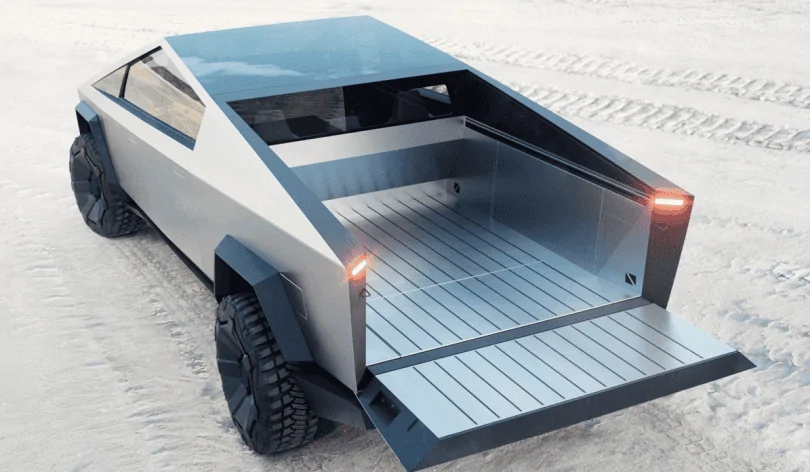
Tesla Cybertruck FRUNK on the Cybertruck? ontent%2Fuploads%2F2019%2F11%2Fcybertruck-bed-open


SolarWizard

Well-known member
First Name
MB
Joined
Nov 18, 2020
Threads
22
Messages
1,255
Reaction score
2,202
Location
San Diego
Vehicles
AWD
Occupation
solar, DCFC & battery biz owner
Country flag
Man ya’ll love to argue ha
The trunk, IF A TRUCK EXISTS, would not be used to deflect obstacles.
we have F150 lightnings. That whole trunk area is a crumple zone aka the sacrificial lamb. Even if you would prefer your CT to be a murder death kill machine to other vehicles, other objects vehicles regularly encounter will be tougher than the CT is (blasphemy I know). Bridges, K rails etc. if something doesn’t help absorb the forces from an impact there the endoskeleton creatures inside the exoskeleton truck will go squish.
As someone who works with trucks, id much rather have that area reserved for a winch, air compressor & power takeoff than a “boot”. Plus all the heat pump and 12v batteries (if they are being serious this being the best truck ever, it needs 2 IMO)
 

TyPope

Well-known member
First Name
Ty
Joined
Mar 31, 2020
Threads
33
Messages
3,210
Reaction score
4,923
Location
Chesapeake Beach, MD
Vehicles
'23 MYLR, FS Cyberbeast 280xx
Occupation
Current Operations for... an organization
Country flag
Dude chill.

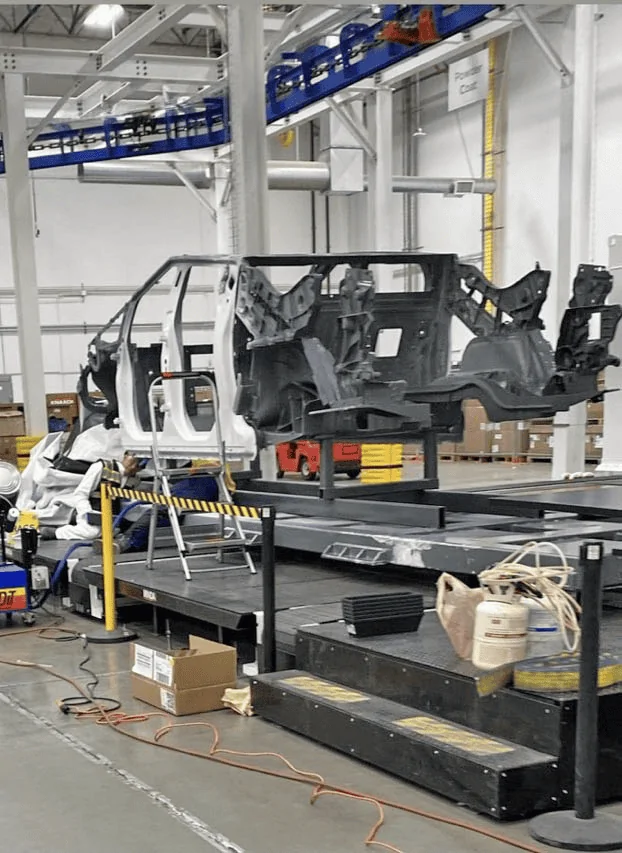
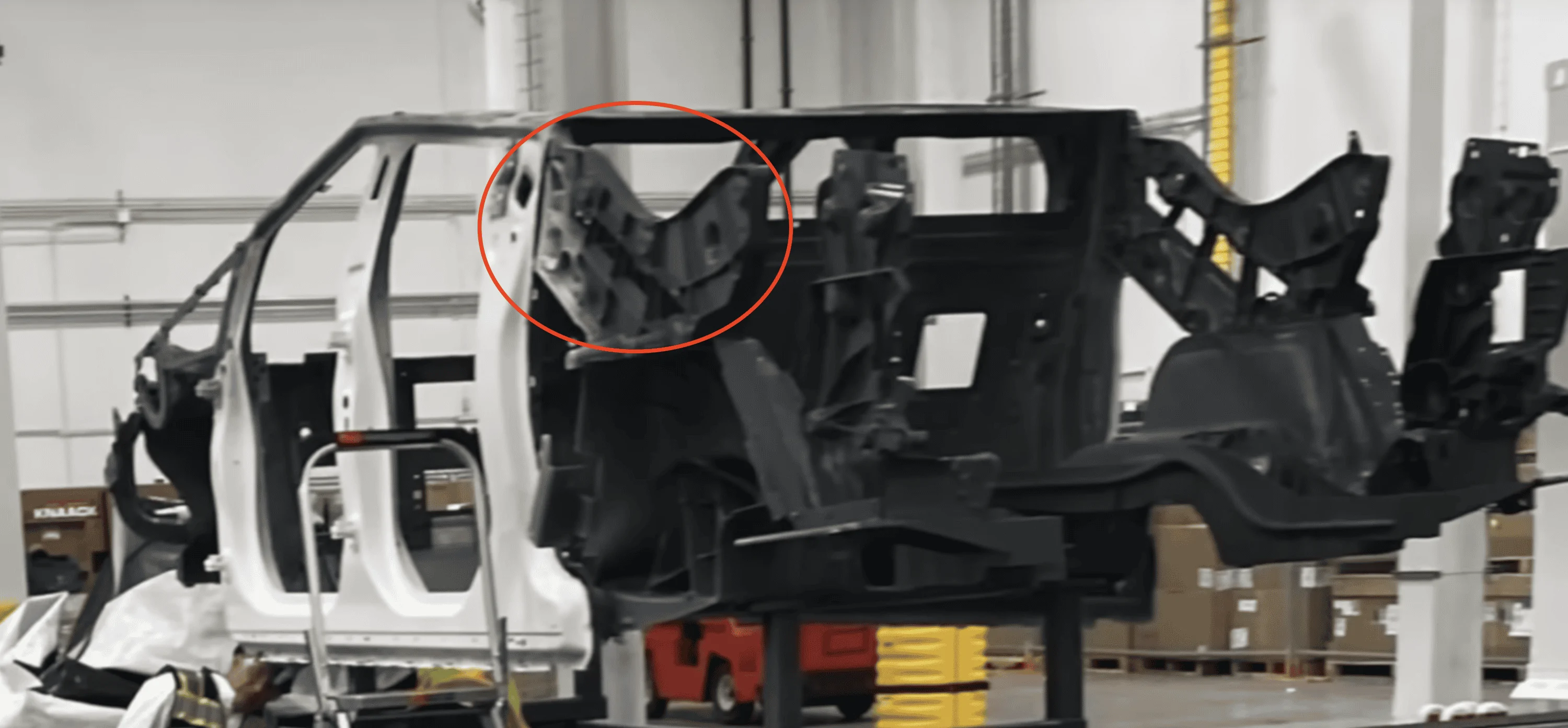
Please highlight for my inferior mind what parts are "exoskeleton" and "structural" in this photo:

1670903093621.png


Given that the definition of exoskeleton is:

exoskeleton

ĕk″sō-skĕl′ĭ-tn
noun
  1. A hard outer structure, such as the shell of an insect or crustacean, that provides protection or support for an organism.
  2. In zoology and anatomy, any structure produced by the hardening of the integument, as the shells of crustaceans or the scales and plates of fishes and reptiles, especially when such modified integument is of the nature of bone, as the carapace of a turtle or the plates of a sturgeon; the dermoskeleton: opposed to endoskeleton.
The picture depicts the nature of a endoskeleton, being "internal structure".

If you want to join the renaming club good for you. But I posted a long set of reasons on my thoughts, which you didn't care to refute whatsoever in another thread.

How about you prove to me what part you think is exoskeleton? I think that will be much easier, because I think you only have the front fenders left that fit the definition...:eek::eek::rolleyes:;)

And even those haven't been confirmed to do anything for the vehicle structure yet.
There is no exoskeleton in that photo... just a mocked up body in white.
 

Jhodgesatmb

Well-known member
First Name
Jack
Joined
Dec 1, 2019
Threads
89
Messages
6,486
Reaction score
9,022
Location
San Francisco Bay area
Website
www.arbor-studios.com
Vehicles
Tesla Cybertruck FS AWD, Tesla Model Y LR
Occupation
Retired AI researcher
Country flag
Dude chill.

Please highlight for my inferior mind what parts are "exoskeleton" and "structural" in this photo:

1670903093621.png


Given that the definition of exoskeleton is:

exoskeleton

ĕk″sō-skĕl′ĭ-tn
noun
  1. A hard outer structure, such as the shell of an insect or crustacean, that provides protection or support for an organism.
  2. In zoology and anatomy, any structure produced by the hardening of the integument, as the shells of crustaceans or the scales and plates of fishes and reptiles, especially when such modified integument is of the nature of bone, as the carapace of a turtle or the plates of a sturgeon; the dermoskeleton: opposed to endoskeleton.
The picture depicts the nature of a endoskeleton, being "internal structure".

If you want to join the renaming club good for you. But I posted a long set of reasons on my thoughts, which you didn't care to refute whatsoever in another thread.

How about you prove to me what part you think is exoskeleton? I think that will be much easier, because I think you only have the front fenders left that fit the definition...:eek::eek::rolleyes:;)

And even those haven't been confirmed to do anything for the vehicle structure yet.
This is not about emotion so I need not chill. It is about what is/not known vs. conjecture.

There is no SS outer skin shown in that photograph and any number of people (Sandy Munro included) have noted the same. This is fact. There are some inner stampings shown that are never load-carrying, and the 'casting' shown here (which I happen to believe is just a tooling jig for what is to come later) is, indeed, structural (for the drive unit and suspension but not for vehicle rigidity) and exists on every vehicle in some form but is not considered the skeleton as in a body on frame or unibody design to my knowledge.

I am not defining terms. Your definition of exoskeleton is fine with me. My challenge is that you are claiming that the SS skin has changed and you do not know (no one outside of Tesla does).It doesn't really matter to me how many words you have uttered on the subject, or how often, I disagree with the same arguments over and over again. If/When Tesla/Elon tell us that the SS skin has changed material, thickness, or dimensions, that is when we can chat about changes. Or, when we start seeing SS skins in the dumpster and can 'measure' them, even in an ad hoc fashion. But definitely not because of any user-promoted argument however logical or reasonable.
 

Jhodgesatmb

Well-known member
First Name
Jack
Joined
Dec 1, 2019
Threads
89
Messages
6,486
Reaction score
9,022
Location
San Francisco Bay area
Website
www.arbor-studios.com
Vehicles
Tesla Cybertruck FS AWD, Tesla Model Y LR
Occupation
Retired AI researcher
Country flag
There is no exoskeleton in that photo... just a mocked up body in white.
"Part" of a mocked up BIW. We are not even sure how much of the BIW is shown here, and there is at least a possibility that what is shown here as a rear casting might only be a tooling jig (but that is off topic).
 

Jhodgesatmb

Well-known member
First Name
Jack
Joined
Dec 1, 2019
Threads
89
Messages
6,486
Reaction score
9,022
Location
San Francisco Bay area
Website
www.arbor-studios.com
Vehicles
Tesla Cybertruck FS AWD, Tesla Model Y LR
Occupation
Retired AI researcher
Country flag
Theoretically yes, but the suspension arms are connected to the cast, not the fender, and the bed sits on top the cast. So it would be bed, cast, suspension, wheels. Note that the straight inside sail wall next to the bed is the structural piece, not the bent outside wall with the sail storage opening.

ontent%2Fuploads%2F2019%2F11%2Fcybertruck-bed-open.png
"So it would be bed, cast, suspension, wheels". Is the current argument about where the vertical load path from cargo to road is? If so, then sure, but that is not what the SS skin is for. On the other hand, if the argument is about the function of the 3mm SS outer skin, then the vertical load from cargo to road is an orthogonal discussion. If you watch the 2 videos I posted (one by ConnectingTheDots and the other by TheLimitingFactor), which I believe speak convincingly about the merits of a 3mm SS outer skin, they never talk about the vertical load path of cargo to road. Rather, they talk about the overall longitudinal and flexural rigidity of [any] vehicle and how the different designs achieve it. I no longer have the tools to perform an FEA on the design but I do believe that I would find, if I did perform one, that the 3mm SS outer skin does provide the claimed rigidity.


RVAC

Well-known member
Joined
Aug 11, 2021
Threads
1
Messages
864
Reaction score
1,291
Location
-
Vehicles
-
Theoretically yes, but the suspension arms are connected to the cast, not the fender, and the bed sits on top the cast. So it would be bed, cast, suspension, wheels. Note that the straight inside sail wall next to the bed is the structural piece, not the bent outside wall with the sail storage opening.

ontent%2Fuploads%2F2019%2F11%2Fcybertruck-bed-open.webp
Is the inside sail wall even going to be providing much structural support as opposed to being mostly cosmetic given what we're seeing with these castings?

Tesla Cybertruck FRUNK on the Cybertruck? casging
 

HaulingAss

Well-known member
Joined
Oct 3, 2020
Threads
28
Messages
10,298
Reaction score
20,704
Location
Western Washington, USA
Vehicles
Cybertruck DM, 2010 F-150, 2018 Performance Model 3, 2024 Performance Model 3
Country flag
Even a crab has bulkheads in the lower shell.
True, but let's not get too caught up in terminology. The fact is, the crab has an exoskeleton and so does the Cybertruck. Unless you want to say it's not an exoskeleton, then it doesn't have one, at least not for anyone who thinks it doesn't. I'm not saying it's logical to say Cybertruck doesn't have an exoskeleton, or that a crab doesn't either, but it's really just a descriptor and people can use whatever terminology they want.

I've made the case why the Cybertruck is an exoskeleton, because it's unibody and the entire structure is structural. There is a bumble bee buzzing around these parts that doesn't seem to understand load paths and thinks since the skin is outside the most direct path from the bed to the suspension that it must be entirely outside the load path.

However, load paths are graduated. There is the main load path but that does not imply the rest of the structure is not in the load path. Also, load paths change dynamically. For example, a static load path could have a more direct path to the ground but if the truck is driving on uneven surfaces the load path can dynamically move all through the structure.

The heavier the load, and the more uneven the ground and the faster the truck is moving over uneven ground, the more the load path will be transfered to the stainless steel exterior. The mechanism that causes this is deflection of the structural elements. Yes, they actually deform slightly before they break. This is what can cause large loads to be transfered from the core of the exoskeleton out to the composite skin. The skin takes more and more of the load as the core of the exoskeleton deforms further.

The stainless steel skin will actually prevent the core from failing by taking on a sharply increasing amount of the load as the loadings increase, whether due to speed on a bumpy road or merely the sheer weight of the cargo in a more static situation. And the core of the exoskeleton supports the skin to keep it from buckling. Thats why I call it a composite exoskeleton. Not because it is not entirely an exoskeleton, but because the skeleton itself is made up of a composite of materials acting as one unit.

Even anthropods of the animal kingdom have composite exoskeletons for additional strength and resilience. That is, their exoskeletons have distinct layers giving the composite the required properties. In otherwords, the exoskeleton is not homogenous:

From Wikipedia:

Arthropods are covered with a tough, resilient integument or exoskeleton of chitin. Generally the exoskeleton will have thickened areas in which the chitin is reinforced or stiffened by materials such as minerals or hardened proteins. This happens in parts of the body where there is a need for rigidity or elasticity. Typically the mineral crystals, mainly calcium carbonate, are deposited among the chitin and protein molecules in a process called biomineralization. The crystals and fibres interpenetrate and reinforce each other, the minerals supplying the hardness and resistance to compression, while the chitin supplies the tensile strength. Biomineralization occurs mainly in crustaceans. In insects and arachnids, the main reinforcing materials are various proteins hardened by linking the fibres in processes called sclerotisation and the hardened proteins are called sclerotin. The dorsal tergum, ventral sternum, and the lateral pleura form the hardened plates or sclerites of a typical body segment.

Tesla Cybertruck FRUNK on the Cybertruck? 1670973629676
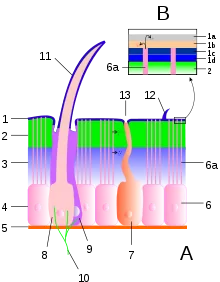
A: Cuticle and epidermis; B: Epicuticle detail . 1: Epicuticle; 1a: Cement layer; 1b: Wax layer; 1c: Outer epicuticle; 1d: Inner epicuticle. 2: Exocuticle; 3: Endocuticle; 2+3: Procuticle; 4: Epidermis; 5: Basement membrane; 6: epidermal cell; 6a: Pore canal; 7: Glandular cell; 8: Trichogen cell; 9: Tormogen cell; 10: Nerve; 11: Sensilia; 12: Hair; 13: Gland opening.
You will note that the insect exoskeleton has two primary layers bonded tightly together and acting as one: the top lime green layer called the Exocuticle- and the lower blue layer called Endocuticle. There is also a very thin, skin like covering of the exocuticle called the Epicuticle that provides abrasion resistance and makes the exterior smooth and slippery. It probably adds some stiffness and sheer strength as well.

So, the idea that a "true" exoskeleton is only the outer layer is false. These insects rely upon the layered construction of their exoskeleton for strength and resilience just as the Cybertruck uses a layered composite construction to leverage the strengths of different materials and different shapes to adequately handle the forces as the load path moves through the structure. It will be incredibly rigid so it would be difficult to "see" the load path move around, through the structure, but just know that's exactly what's happening as the truck drives on uneven surfaces. You could place a 3,000 lb. steel cube in the bed of the Cybertruck and it would barely stress the structure. Now take it on an uneven trail at 10-15 mph and the loads involved climb dramatically due to dynamic loading relating to the momentum of the steel cube and also of the Cybertruck itself (including the battery).

This kind of situation develops suprisingly large torsion loads through the chassis and puts the 3mm stainless steel skin to real work. Even the load path of the weight of the battery will be transfered through the skin of the Cybertruck through dynamic loading. If the skin of the truck were not tightly bonded to the other elements of the exoskeleton, the underlying structure would be a real flexi-flyer before it broke. The outer layer of the exoskeleton is what prevents it from twisting, bending and failing. It is absolutely critical to the structural integrity of the Cybertruck.

I hope this helps the buzzing bee understand why the Cybertruck has an exoskeleton and why it matters. It's what will give the Cybertruck the best cargo and towing capacity in its class while also having the lightest chassis in its class. Tesla creates superior value by leveraging the advantages of superior engineering. They are not worried about spending too much on engineering for three reasons:

1) The are incredibly efficient at difficult engineering due to using exceptionally talented engineers without a lot of corporate red tape and the best software and software know-how in the industry. Tesla loves to hire people for which this is child's play.
2) They plan on costing that engineering over millions of units, making the engineering very inexpensive on a per unit basis.
3) Tesla uses superior engineering skills to reduce manufacturing expenses, and this makes the vehicle lighter, stronger and less expensive to build (which means they can build and sell more of them because they offer more compelling value).

These processes look very different and move much faster at Tesla than they do at Ford or GM.
 

JBee

Well-known member
First Name
JB
Joined
Nov 22, 2019
Threads
18
Messages
4,913
Reaction score
6,362
Location
Australia
Vehicles
Cybertruck
Occupation
. Professional Hobbyist
Country flag
ROFL…


:D:ROFLMAO::ROFLMAO::ROFLMAO:???????:rolleyes::cautious:

Wait… are you serious? Have you read the past 3-4 pages?
I think HaulingAss has just read his posts. :ROFLMAO:


Top