cvalue13
Well-known member
- Joined
- Aug 17, 2022
- Threads
- 74
- Messages
- 7,153
- Reaction score
- 13,769
- Location
- Austin, TX
- Vehicles
- F150L
- Occupation
- Fun-employed

I mean, maybe the magic here is that you’re talking about % state - which as I understand it is the better way to view Tesla’s dataIn my experience the range predictor for nav is pretty good. Usually estimates low (I typically arrive with slightly higher charge then originally estimated)
I don't even look at the EPA guesstimate and keep it on %.
but in any event, I think we were talking past one another a little bit. I was emphasizing the distinction/comparison of stated EPA range (eg what would be relayed verbally on NOV 30), vs real world Tesla range on dash
and even then, as reliable and level-headed as you always are, and so I take your anecdotal experience on board, I’m left with it still being at best confusing given the available population-level data of Tesla’s on-dash range vs realized - including as relates to seasonality
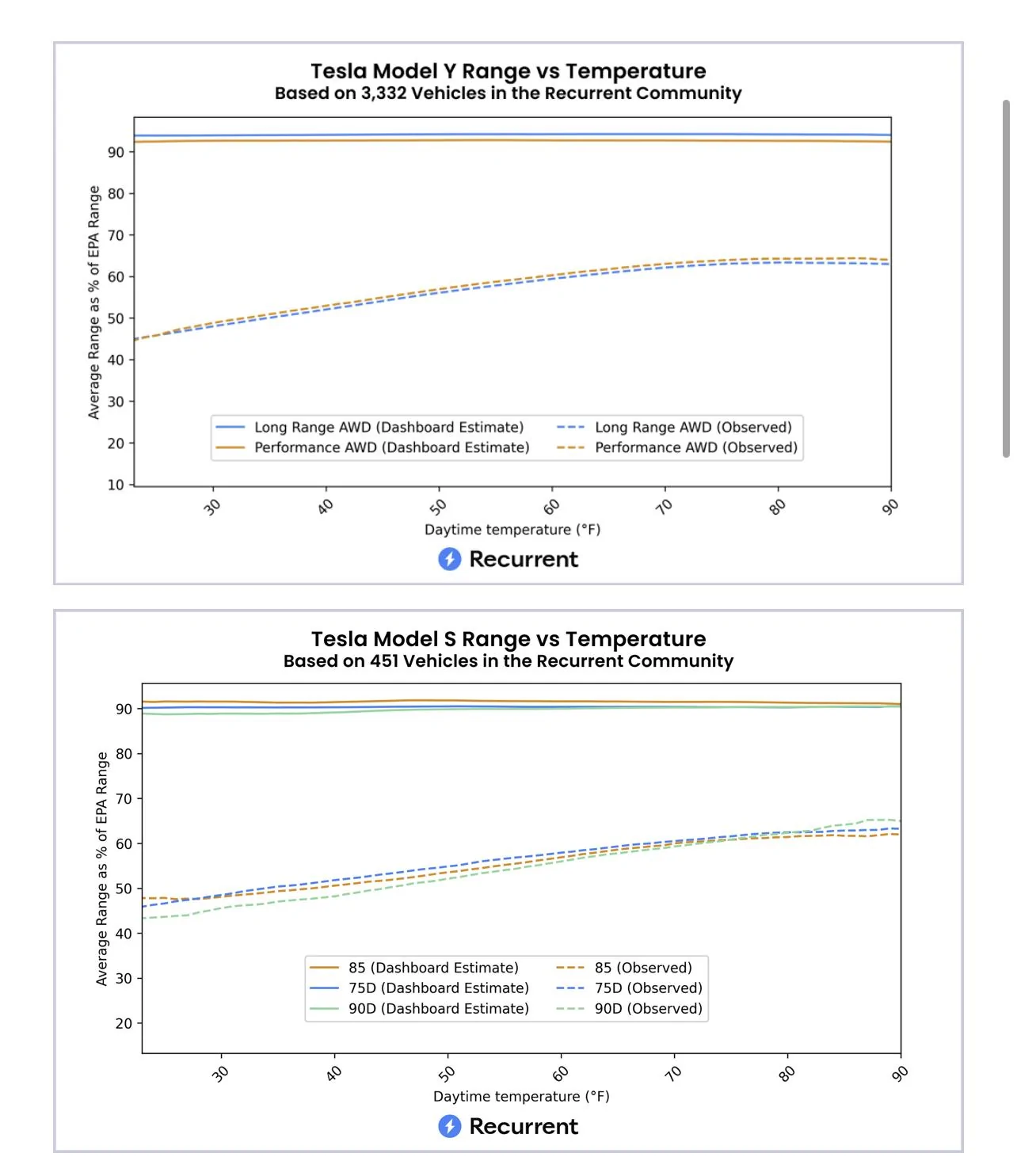
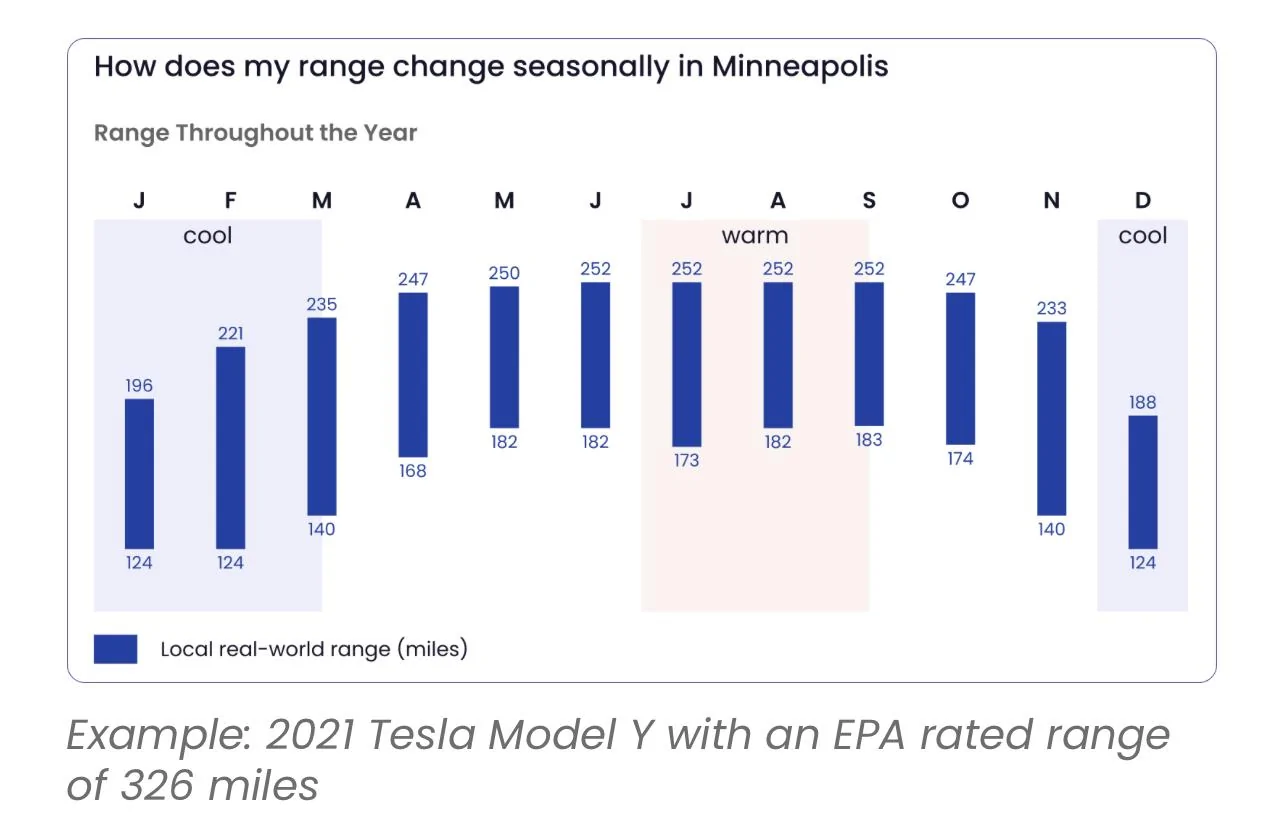
those graphs above in no way foreclose that there are within the data folks with your experience, but instead that the averages require there are an equal number of folks with the opposite experience
In any event, these are all just side-bar details of what I think we’re both clear on
(1) what EPA they state on Nov 30 will be with respect to a specific configuration (trim, tire selection, weight, etc.) AND
(2) folks need to remember that when it comes to range, this Tesla is NOT going to behave like other Teslas - as a requirement/consequence of physics (it’s bigger, heavier, and with much larger contact patch)
Range-wise, BEV trucks, by requirements of physics, behave very different from BEV cars
small conditions variation (that would be a relative blip to range in a sedan), have outsized effects on a truck like this
Tesla is good at engineering - but they cannot change physics
Sponsored