Sponsored

Wh/mile efficiency reported on the highway (heat on, 30°F, 85 mph)

BayouCityBob

Well-known member
Joined
Apr 14, 2022
Threads
24
Messages
495
Reaction score
1,569
Location
Texas
Vehicles
2018 Model 3
Country flag
I think the underlined is possibly your error

As speed increases, the drag force on the vehicle will increase more steeply for the CT than for the MY.

532247FC-F8EE-4714-8F39-5B62EE61308B.webp


Their parity in range at EPA conditions is basically an artifact of the relevant battery size as relates to their respective frontal plane/Cd.

Meanwhike, there are other factors at play, such as the power-torque curve of the engine and selected gear reduction, which can affect relevant range as well. And here, the CT’s ‘sweet spot’ is possibly ‘tuned’ different/worse ar upper highway speeds than a MY, since the CT is also ‘tuned’ for low end power/torque for off-road/towing/rock crawling.
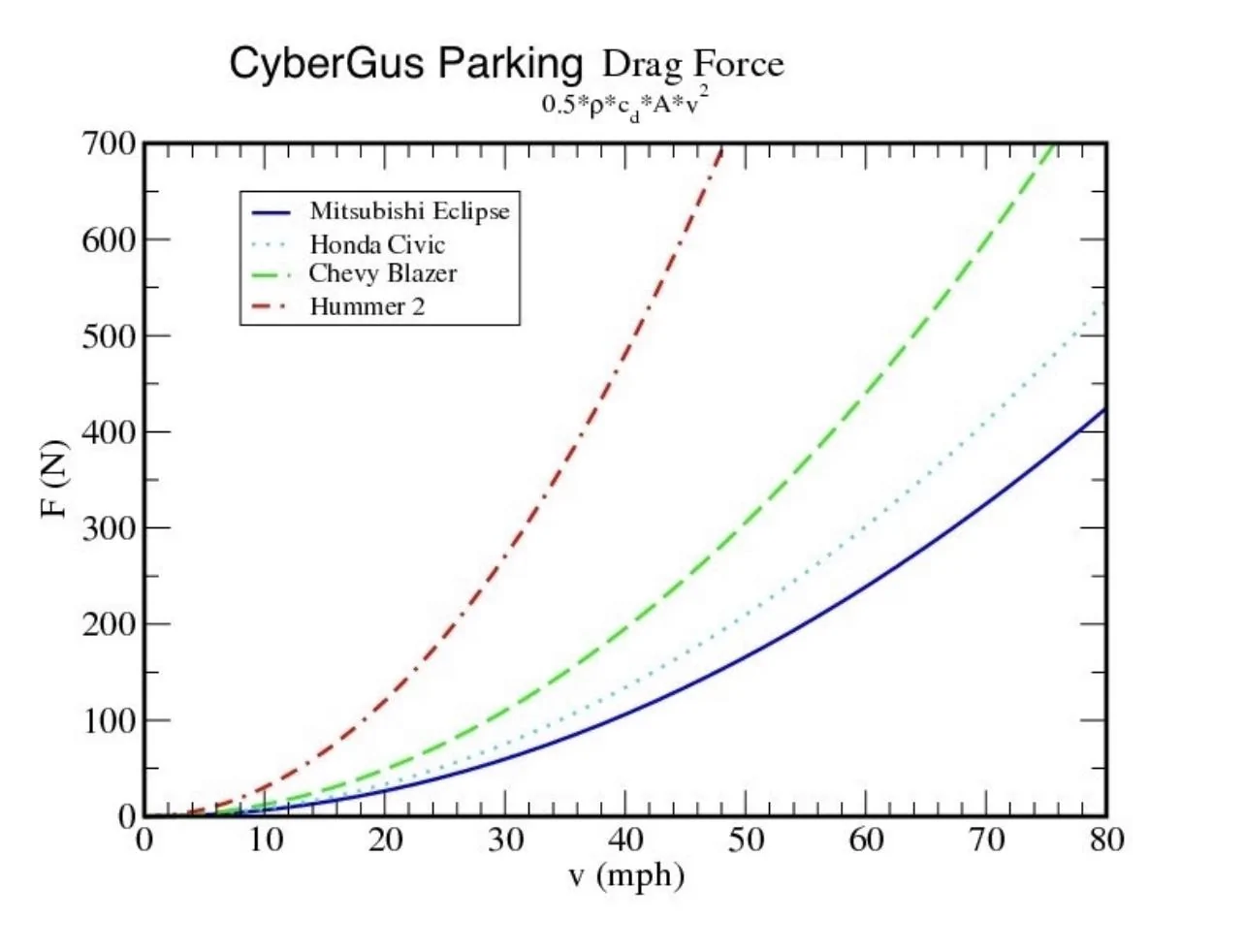
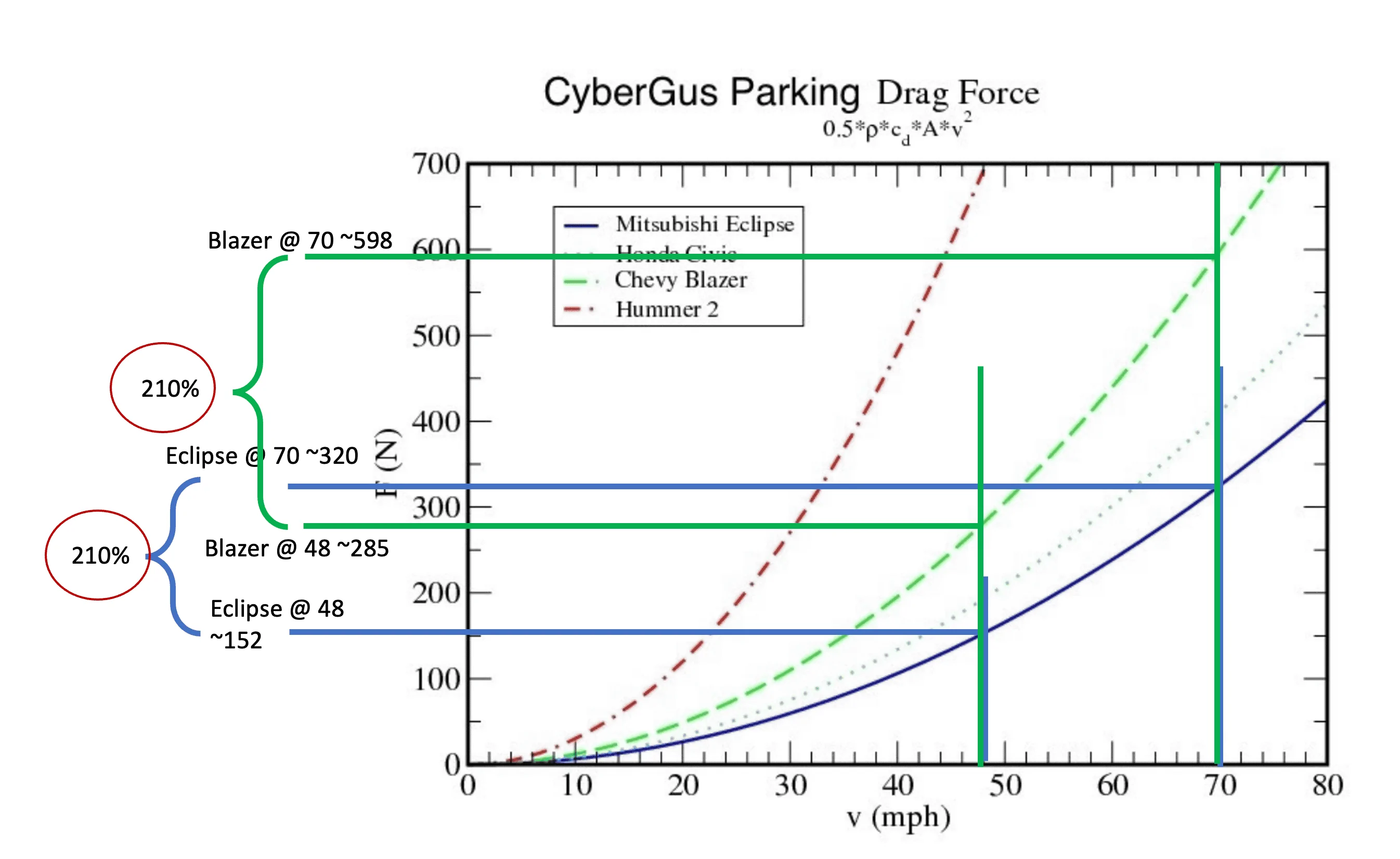
I think you will find that in your chart the percentage of additional energy required to go from say 48 mph to 70 mph is the same for the Eclipse or the Blazer. So if both start with enough energy to go the same distance at 48 mph then they will be able to go the same (shorter) distance at 70 even though the Blazer will consume far more energy in total. At least that is how I see it.

Tesla Cybertruck Wh/mile efficiency reported on the highway (heat on, 30°F, 85 mph) Screenshot 2023-12-29 at 16.43.31
Sponsored


cvalue13

Well-known member
Joined
Aug 17, 2022
Threads
74
Messages
7,153
Reaction score
13,769
Location
Austin, TX
Vehicles
F150L
Occupation
Fun-employed
Country flag
I think you will find that in your chart the percentage of additional energy required to go from say 48 mph to 70 mph is the same for the Eclipse or the Blazer. So if both start with enough energy to go the same distance at 48 mph then they will be able to go the same (shorter) distance at 70 even though the Blazer will consume far more energy in total. At least that is how I see it.

Screenshot 2023-12-29 at 16.43.31.webp
I’ll admit I only have one eye and 2 brain cells working today. Having said that, I’m not sure I’m following.

maybe another of our fine members can arbitrate/cure me of my ignorance


While I agree that when both vehicles are at 0% they’re both at 0%, the original question I thought was “how could a CT use a greater percentage of its battery/mi when traveling at [80]mph than a MY traveling at the same speed”

the answer I’m suggesting here is that it takes more energy/mi for the CT because the drag force on the CT at [80]mph is far greater than the drag force on a MY at [80]mph (then also greater rolling resistance of the tires, and differences in efficiency due to the sweet spot of gearing of the motors].

What you show in your graph basically seems to assume both vehicles have unlimited/sufficient battery to “absorb” that extra energy.

But we’re here, I think, talking about when does that energy curve run into the “end” of the battery.

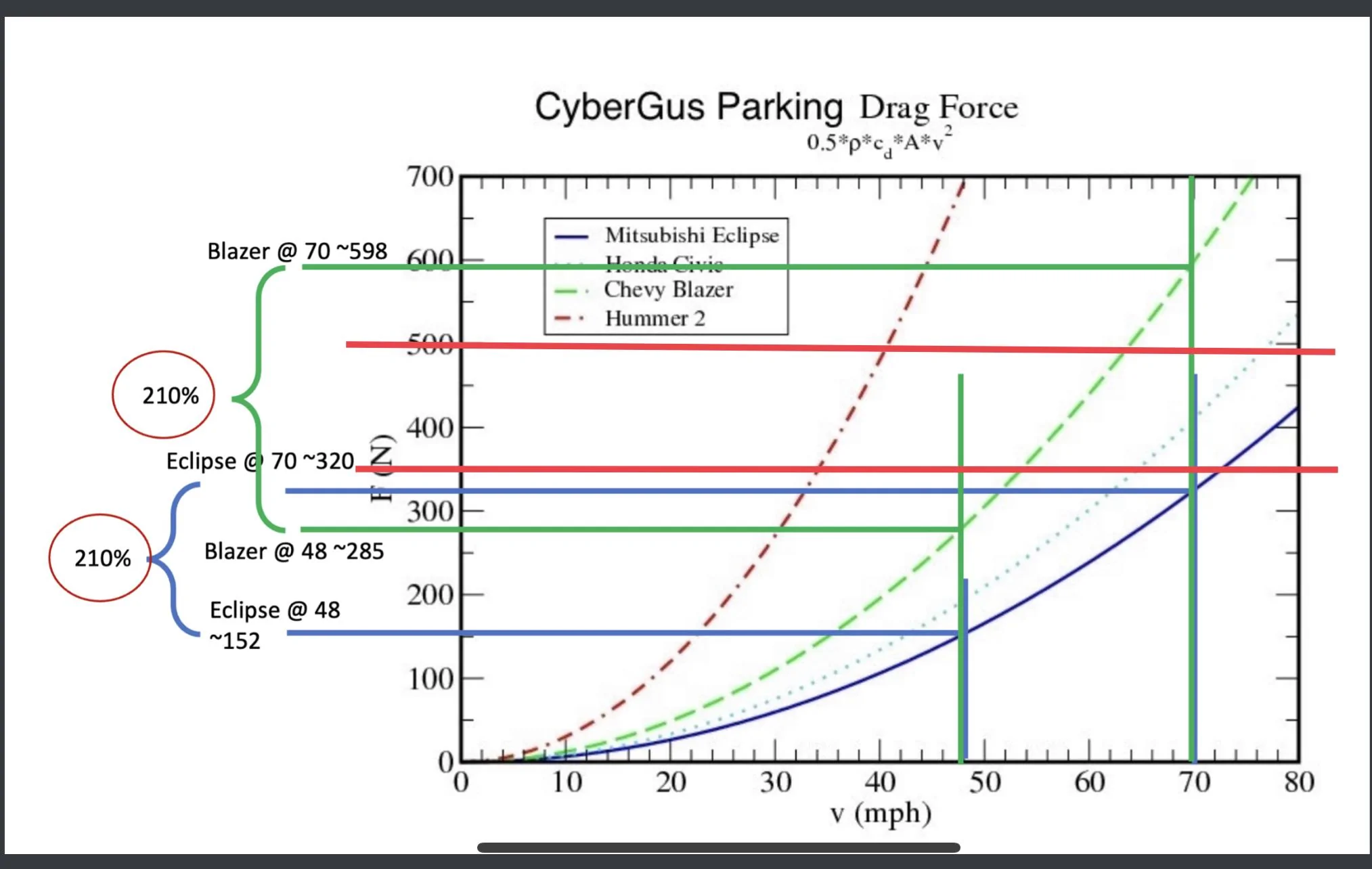
in the modified chart below, the bottom red line represents the total N of energy in the Eclipse’s tank, while the top red line represents the total N of energy in the Blazer’s tank.


Tesla Cybertruck Wh/mile efficiency reported on the highway (heat on, 30°F, 85 mph) 26628F46-9B4D-4812-A458-54D9BD2917E0


the eclipse makes it the 210%, while the Blazer doesn’t
 
OP
OP
Gigahorse

Gigahorse

Well-known member
Joined
Dec 19, 2023
Threads
19
Messages
2,864
Reaction score
3,239
Location
USA
Vehicles
AWD
yes, under EPA conditions, and straight from the horse's mouth


1703886676134.png


just based on the above alone, do the maths on a CT with a "301 mile range" at EPA conditions, and if at a sustained 75mph you're down to 210mi range
Or based on what we are seeing the EPA rating of 340 and in the real world it is down to 180, expected a drop but not that big across a 3 CT and different driver sample of over 3,000 miles.
 

cvalue13

Well-known member
Joined
Aug 17, 2022
Threads
74
Messages
7,153
Reaction score
13,769
Location
Austin, TX
Vehicles
F150L
Occupation
Fun-employed
Country flag
Or based on what we are seeing the EPA rating of 340 and in the real world it is down to 180, expected a drop but not that big across a 3 CT and different driver sample of over 3,000 miles.
but remember, all these Foundation units come in the Goodyear ATs

So a Foundation AWD is EPA for 318

A Foundation Beast EPA rated for 301

mat least while they’re on the Goodyears (and not until someone changes shoes to the Pirelli street tires)


Take a Foundation Beast at consistent 75-80mph down a freeway, much less with some added lead-foot and/or a few PSI low, and yeah you’ll likely be seeing around 200 give or take
 

Sjohnson20

Well-known member
Joined
Nov 30, 2023
Threads
8
Messages
1,467
Reaction score
2,526
Location
Florida
Vehicles
Cybertruck AWD, Model Y
Country flag
Driving in freezing temps kills your range. If it was 30 degrees then this sounds about right.


OP
OP
Gigahorse

Gigahorse

Well-known member
Joined
Dec 19, 2023
Threads
19
Messages
2,864
Reaction score
3,239
Location
USA
Vehicles
AWD
Driving in freezing temps kills your range. If it was 30 degrees then this sounds about right.
So if it is cold, like it is in most of the country this time of year, you can expect to get 170 miles or range instead of 340?
All of the cold impacts I have seen on the X Y 3 etc have been like 25% max
 

cvalue13

Well-known member
Joined
Aug 17, 2022
Threads
74
Messages
7,153
Reaction score
13,769
Location
Austin, TX
Vehicles
F150L
Occupation
Fun-employed
Country flag
All of the cold impacts I have seen on the X Y 3 etc have been like 25% max
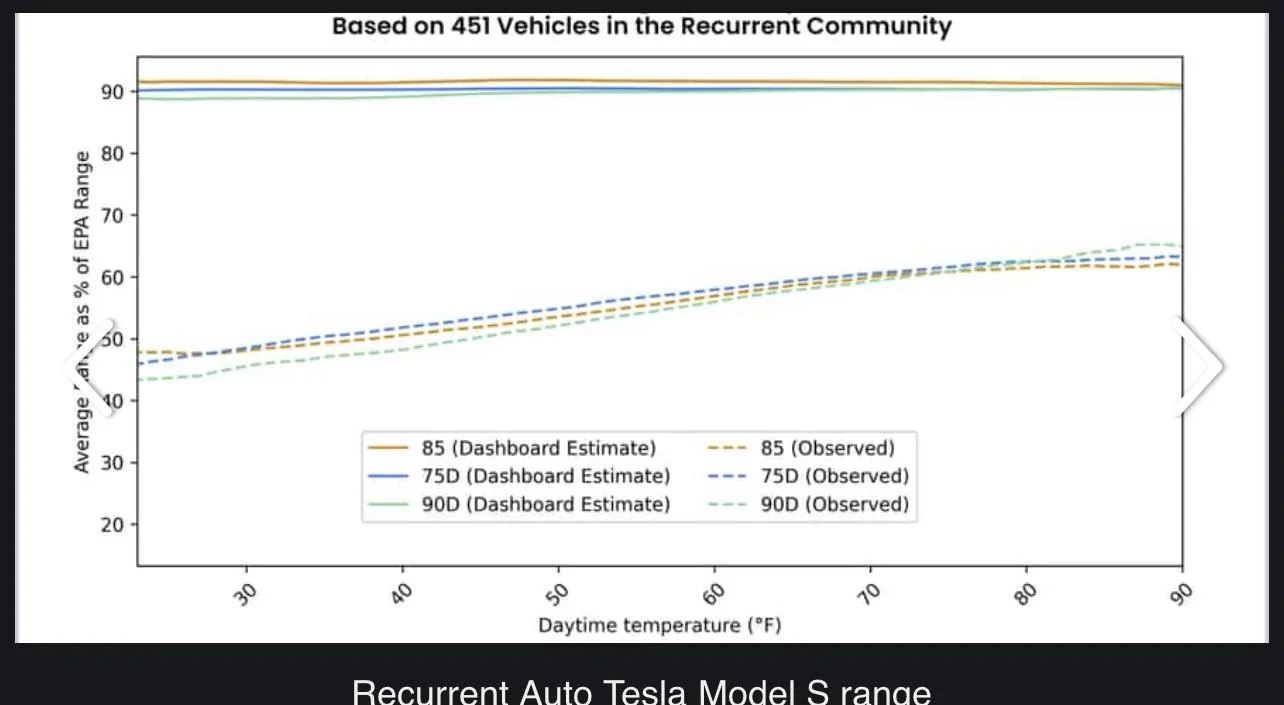
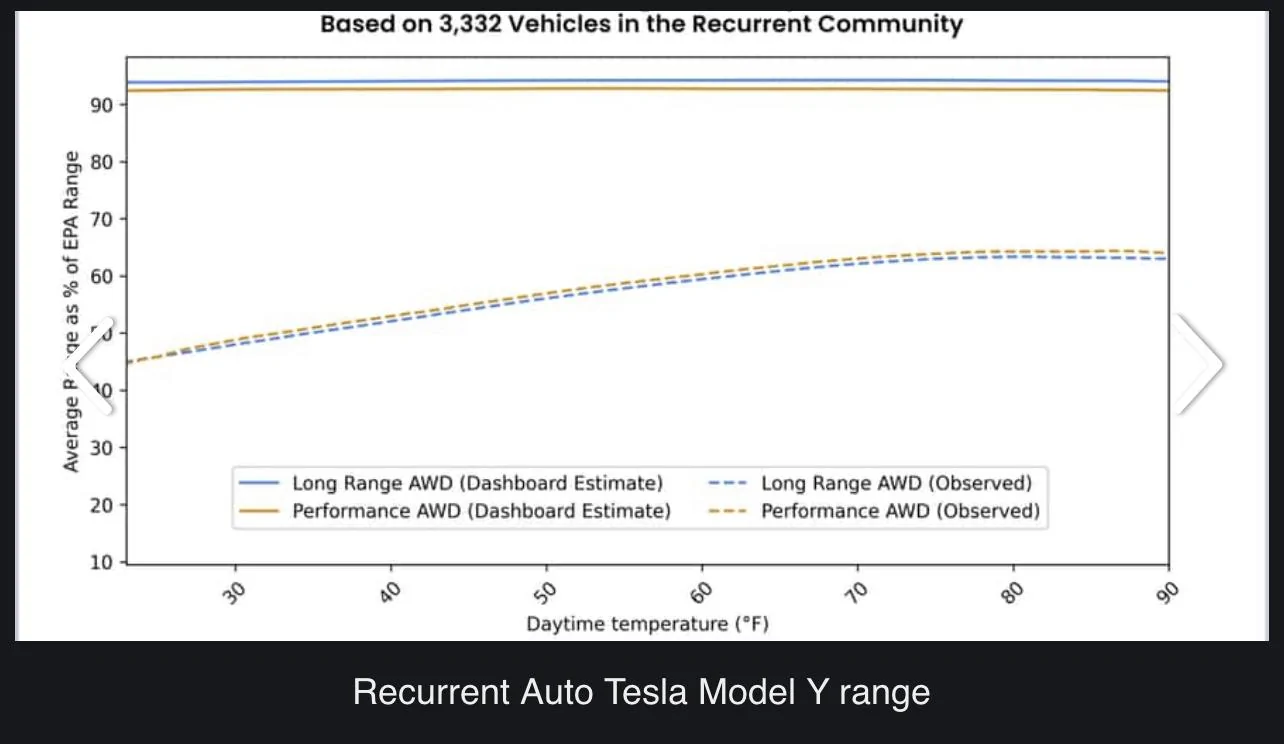
collected data from over 12,000 Teslas, and 360,000 charging cycles, in temperatures less than 30 degrees Fahrenheit, the Model Y had an average range of roughly 45 percent of the EPA estimate. Model S similar.

Tesla Cybertruck Wh/mile efficiency reported on the highway (heat on, 30°F, 85 mph) 286EC20E-538B-4D1A-BCD4-8C1C9D4DB98B
Tesla Cybertruck Wh/mile efficiency reported on the highway (heat on, 30°F, 85 mph) BE8C1D07-35A2-4E5B-8B37-E01512A333B9
 
OP
OP
Gigahorse

Gigahorse

Well-known member
Joined
Dec 19, 2023
Threads
19
Messages
2,864
Reaction score
3,239
Location
USA
Vehicles
AWD
collected data from over 12,000 Teslas, and 360,000 charging cycles, in temperatures less than 30 degrees Fahrenheit, the Model Y had an average range of roughly 45 percent of the EPA estimate. Model S similar.
Less than 30 is pretty cold, though the big study that was done was based on national winter average of 30-50F?
 

cvalue13

Well-known member
Joined
Aug 17, 2022
Threads
74
Messages
7,153
Reaction score
13,769
Location
Austin, TX
Vehicles
F150L
Occupation
Fun-employed
Country flag
Less than 30 is pretty cold, though the big study that was done was based on national winter average of 30-50F?
done on data from the vehicles - apparently they can log the car’s temp sensor and correlate to range outcomes captured in those temperatures
 
OP
OP
Gigahorse

Gigahorse

Well-known member
Joined
Dec 19, 2023
Threads
19
Messages
2,864
Reaction score
3,239
Location
USA
Vehicles
AWD
done on data from the vehicles - apparently they can log the car’s temp sensor and correlate to range outcomes captured in those temperatures
Yea was saying that the sub 30 numbers were a LOT worse than the 30-50 numbers if I remember correctly. Something about getting below freezing 32f/0c started to make a really big difference in range.


Bkb13

Well-known member
Joined
Jul 23, 2023
Threads
23
Messages
380
Reaction score
980
Location
Austin
Vehicles
raptor
Occupation
Entrepreneur
Country flag
collected data from over 12,000 Teslas, and 360,000 charging cycles, in temperatures less than 30 degrees Fahrenheit, the Model Y had an average range of roughly 45 percent of the EPA estimate. Model S similar.

286EC20E-538B-4D1A-BCD4-8C1C9D4DB98B.webp
BE8C1D07-35A2-4E5B-8B37-E01512A333B9.webp

Facts hurt!

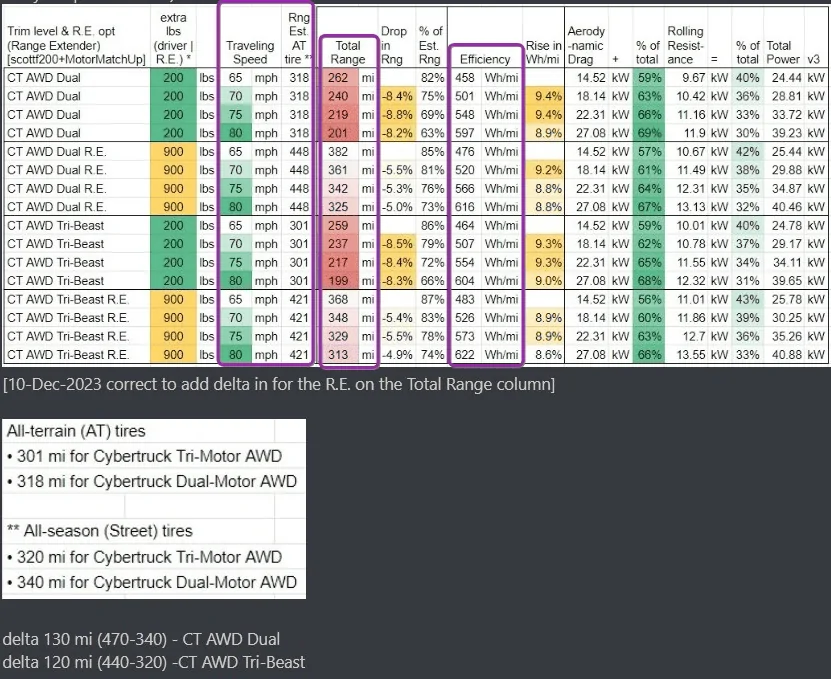
@scottf200 provided some interesting charts that should help everyone on this thread to understand the issue.

Tesla Cybertruck Wh/mile efficiency reported on the highway (heat on, 30°F, 85 mph) IMG_6068
 

scottf200

Well-known member
Joined
Jul 31, 2021
Threads
53
Messages
2,221
Reaction score
3,241
Location
Western NC
Vehicles
X; immed family 3 & Y
Country flag
Facts hurt!

@scottf200 provided some interesting charts that should help everyone on this thread to understand the issue.

IMG_6068.webp
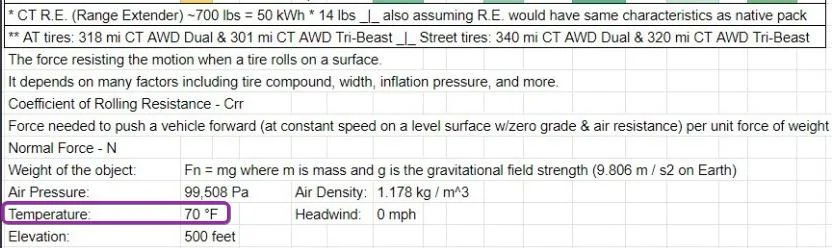
In my thread that provide a couple ways to look at that speed-vs-efficiency data, the MotorMatchUp site did define their inputs ... one of which was 70F. [ @cvalue13 gave me some good feedback on that thread too]

Tesla Cybertruck Wh/mile efficiency reported on the highway (heat on, 30°F, 85 mph) sWBsUAU
 

Mini2nut

Well-known member
Joined
Apr 2, 2020
Threads
138
Messages
4,159
Reaction score
7,595
Location
Planet Earth
Vehicles
$59k CT delivered 6/26/26
Country flag
The bottom line? Cybertruck owners will be Cyber disappointed with the battery range.

Keep in mind that the new 4680 batteries were all about cutting manufacturing costs, not efficiency. Tesla cut the battery cell count down to roughly 1300 cells for the Cybertruck.
 

JBee

Well-known member
First Name
JB
Joined
Nov 22, 2019
Threads
18
Messages
4,913
Reaction score
6,362
Location
Australia
Vehicles
Cybertruck
Occupation
. Professional Hobbyist
Country flag
I’ll admit I only have one eye and 2 brain cells working today. Having said that, I’m not sure I’m following.

maybe another of our fine members can arbitrate/cure me of my ignorance


While I agree that when both vehicles are at 0% they’re both at 0%, the original question I thought was “how could a CT use a greater percentage of its battery/mi when traveling at [80]mph than a MY traveling at the same speed”

the answer I’m suggesting here is that it takes more energy/mi for the CT because the drag force on the CT at [80]mph is far greater than the drag force on a MY at [80]mph (then also greater rolling resistance of the tires, and differences in efficiency due to the sweet spot of gearing of the motors].

What you show in your graph basically seems to assume both vehicles have unlimited/sufficient battery to “absorb” that extra energy.

But we’re here, I think, talking about when does that energy curve run into the “end” of the battery.

in the modified chart below, the bottom red line represents the total N of energy in the Eclipse’s tank, while the top red line represents the total N of energy in the Blazer’s tank.


26628F46-9B4D-4812-A458-54D9BD2917E0.webp


the eclipse makes it the 210%, while the Blazer doesn’t
The aerodynamic drag for the MY and CT are substantially different, and as such energy consumption does NOT extrapolate in a linear fashion.

This means that with increasing speed a CT will experience even more range loss in comparison to a much smaller and slippery MY.

This is clearly demonstrated in the graph without the annotations, between the Hummer and Eclipse.

Simply the more sensitive a vehicle is to drag, the more the deviation with increasing airspeed.

Maybe this helps compare the MY AWD and the CT AWD, and show how a more sensitive vehicle to drag, results in more air speed induced range loss:

(NOTE: This is wh per km not wh per mile!)

SpeedAero CTAero MYCTMYDifference
mphkmhwh/kmwh/km
25402.431.21109971.12
31503.791.891171011.16
38605.462.721291081.19
44707.433.711431161.23
50809.74.841611281.26
569012.286.131811411.28
6310015.167.572041561.31
6911018.359.152301731.33
7512021.8310.892591921.35
8113025.6212.792912131.37
8814029.7214.833272361.39
9415034.1217.023672611.41
10016038.8219.374122891.43

Note the same applies to when the drag is increased by a trailer.

So you can expect "less" range reduction with a CT than a MY whilst towing the same trailer.

PS This also means that because you have a 50% larger battery in the CT you will get better range than a MY at lower speeds where aerodynamic drag is reduced. If you want to go far, go slow with the CT!
 
Last edited:

Wraven

Well-known member
First Name
Doug
Joined
Oct 19, 2023
Threads
14
Messages
372
Reaction score
798
Location
San Antonio Texas
Vehicles
Foundations CyberBeast, M3P
Country flag
Facts hurt!

@scottf200 provided some interesting charts that should help everyone on this thread to understand the issue.

IMG_6068.png

If I'm reading this correctly at total power? Trying to reconcile this against the EPA formula of 1 gallon of gasoline equivalent of 33.7 kilowatt hours.
Sponsored


Top