
Sponsored

meinnovations

Active member
First Name
Mike
Joined
Jan 26, 2026
Threads
3
Messages
42
Reaction score
24
Location
Seattle
Vehicles
MS, MY, MX, CB
Occupation
engineer
Country flag
As to the weight warning, that's not the hitch weight itself, but the rear axle (which includes 1.34*hitch if not using a WD setup).
Now that you mention that, I recall that it said axle weight. Thank you. Since the truck has the data, my hope is they will display it, for parity with Rivian if nothing else. Super useful for trailer weight distribution.
Sponsored


no%X#XMVk65v#cq

Well-known member
First Name
J
Joined
Sep 11, 2024
Threads
9
Messages
292
Reaction score
667
Location
USA
Vehicles
CT FS AWD
Recently pulled a rather large (30ft 7500 ish lbs) camper out of muddy wet grass where it sat for a year. I was positioned on gravel. It was effortless, not a slip. Then 4 wheel steer made backing it down a slalom puzzle to thread the needle into a building in which it barely fit pretty easy.

But honestly, I was most impressed with the visibility through the roof while backing. I didn't even think about it until after the fact, but I could see to back perfect even with the tonneau closed.
 

PungoteagueDave

Well-known member
First Name
David
Joined
Mar 2, 2025
Threads
2
Messages
974
Reaction score
1,061
Location
Boynton Beach
Vehicles
‘25 Tesla Cybertruck, ‘26 Tesla MY Launch, ‘13 Porsche C4S, ‘26 BMW R1300 GSA
Occupation
retired
Country flag
Doesn't work in trailer mode
(But if you unplug the trailer harness ...)
And then the trailer brakes lock up (at least with my electric over hydraulic setup). My 3-axle trailer brake system will not reverse unless receiving a reverse signal from the truck.

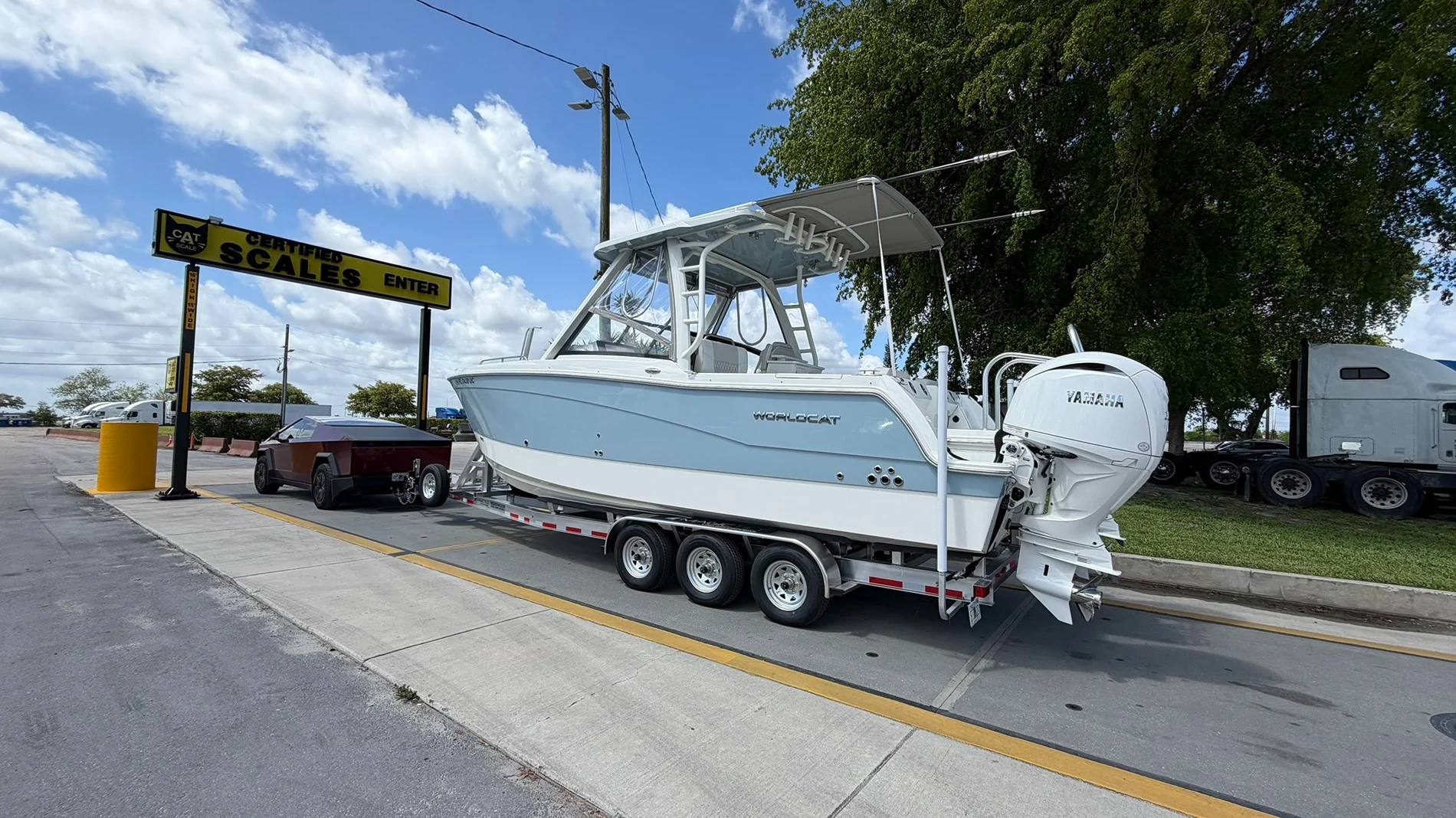
The latest setup with new trailer & full brake control:
Tesla Cybertruck Towing ~10,000 lb boat at the launch ramp 1782851403562-f0


Tesla Cybertruck Towing ~10,000 lb boat at the launch ramp 1782851451580-j2
 

PungoteagueDave

Well-known member
First Name
David
Joined
Mar 2, 2025
Threads
2
Messages
974
Reaction score
1,061
Location
Boynton Beach
Vehicles
‘25 Tesla Cybertruck, ‘26 Tesla MY Launch, ‘13 Porsche C4S, ‘26 BMW R1300 GSA
Occupation
retired
Country flag
Now that you mention that, I recall that it said axle weight. Thank you. Since the truck has the data, my hope is they will display it, for parity with Rivian if nothing else. Super useful for trailer weight distribution.
The truck does not display axle weight stats - but will notify you if you go over the limit (not by how much, just that you've exceeded the axle weight limit).

My first stop with any new trailer is the CAT scales (see above) to document statistical compliance. On the largest trailers I use a weight distribution hitch - almost unheard of in the boat towing realm because it requires switching the trailer brakes from surge to electric over hydraulic - but it adds a significant measure of towing stability and security - lets me dial in the front/rear axle weights. I custom ordered the trailers for teh last two boats to have this configuration - adds a couple grand, money well spent. However, it is necessary remove the torsion bars at the boat ramp to reduce pressure on the hitch system when backing over the ramp break-over point.

https://www.notateslaapp.com/news/2...-you-when-youre-overloaded-with-update-202526
 

mongo

Well-known member
Joined
May 27, 2024
Threads
6
Messages
4,652
Reaction score
5,652
Location
SE Michigan
Vehicles
Cyberbeast
Country flag
The truck does not display axle weight stats - but will notify you if you go over the limit (not by how much, just that you've exceeded the axle weight limit).

My first stop with any new trailer is the CAT scales (see above) to document statistical compliance. On the largest trailers I use a weight distribution hitch - almost unheard of in the boat towing realm because it requires switching the trailer brakes from surge to electric over hydraulic - but it adds a significant measure of towing stability and security - lets me dial in the front/rear axle weights. I custom ordered the trailers for teh last two boats to have this configuration - adds a couple grand, money well spent. However, it is necessary remove the torsion bars at the boat ramp to reduce pressure on the hitch system when backing over the ramp break-over point.

https://www.notateslaapp.com/news/2...-you-when-youre-overloaded-with-update-202526
Break over should unload the bars though? Or does your WD not allow reverse movement past the unloaded point?

And then the trailer brakes lock up (at least with my electric over hydraulic setup). My 3-axle trailer brake system will not reverse unless receiving a reverse signal from the truck.

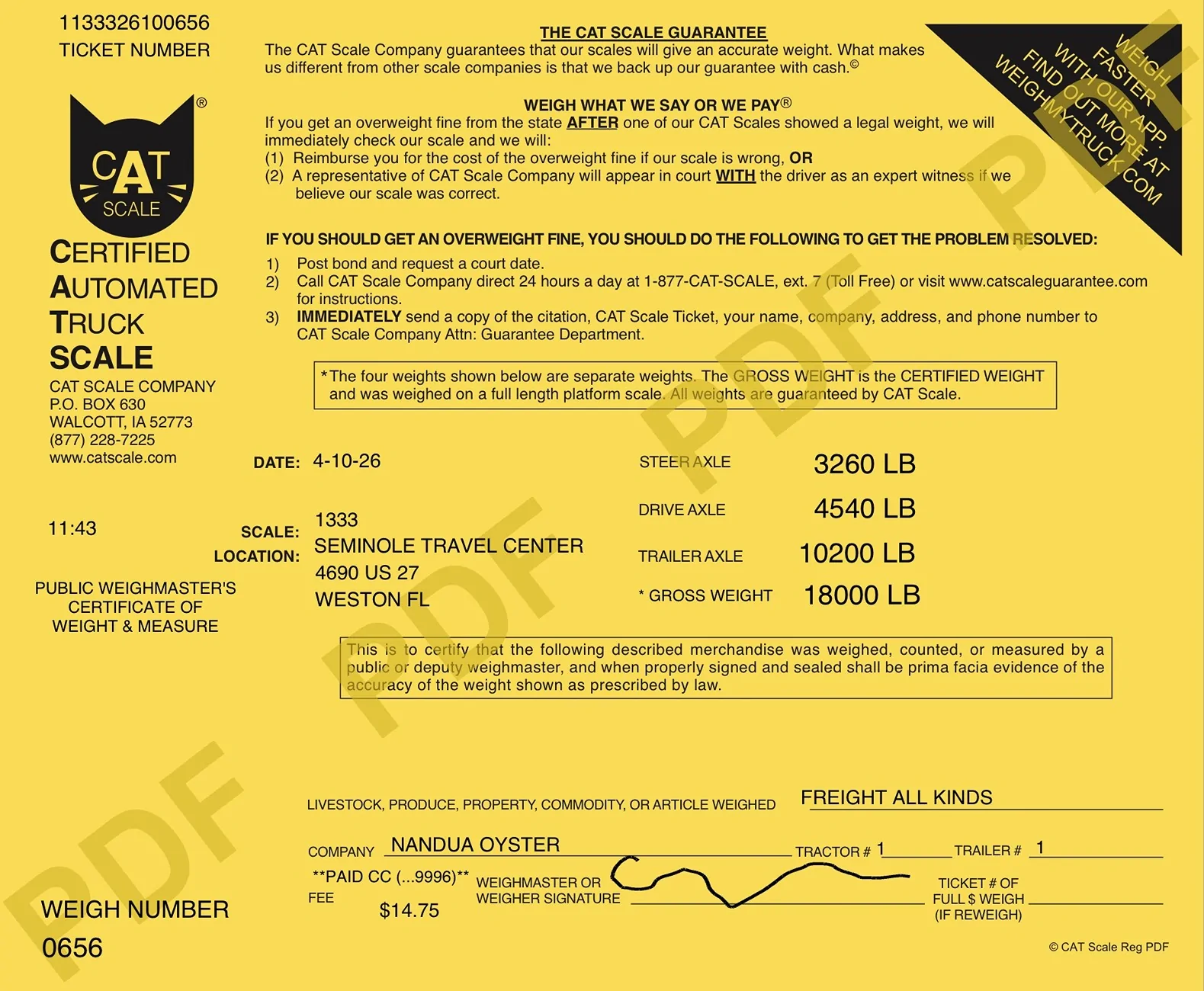
The latest setup with new trailer & full brake control:
1782851403562-f0.webp


1782851451580-j2.webp
Truck reading is 7,800
Curb is 6,669 (AWD with AT)
So 1,131 payload and tongue
Front
3,260 - 3,305 = -45
Rear:
4,540 - 3,364 = 1,176

Trailer is 10,200, if it's split 90/10 that would make tongue 1,133, leaving only 2 pounds of cargo and passenger.
Running full tanks again? Might be light in the nose, or did you trigger the reading while outside the truck?


MCraft99

Well-known member
Joined
Feb 20, 2026
Threads
2
Messages
232
Reaction score
223
Location
USA
Vehicles
FS CB 8/24
Country flag
Break over should unload the bars though? Or does your WD not allow reverse movement past the unloaded point?


Truck reading is 7,800
Curb is 6,669 (AWD with AT)
So 1,131 payload and tongue
Front
3,260 - 3,305 = -45
Rear:
4,540 - 3,364 = 1,176

Trailer is 10,200, if it's split 90/10 that would make tongue 1,133, leaving only 2 pounds of cargo and passenger.
Running full tanks again? Might be light in the nose, or did you trigger the reading while outside the truck?
Payload is 2500. GVWR is 9,169. He has 1,369lb for passenger and gear left.
 

PungoteagueDave

Well-known member
First Name
David
Joined
Mar 2, 2025
Threads
2
Messages
974
Reaction score
1,061
Location
Boynton Beach
Vehicles
‘25 Tesla Cybertruck, ‘26 Tesla MY Launch, ‘13 Porsche C4S, ‘26 BMW R1300 GSA
Occupation
retired
Country flag
Break over should unload the bars though? Or does your WD not allow reverse movement past the unloaded point?


Truck reading is 7,800
Curb is 6,669 (AWD with AT)
So 1,131 payload and tongue
Front
3,260 - 3,305 = -45
Rear:
4,540 - 3,364 = 1,176

Trailer is 10,200, if it's split 90/10 that would make tongue 1,133, leaving only 2 pounds of cargo and passenger.
Running full tanks again? Might be light in the nose, or did you trigger the reading while outside the truck?
Not sure where you got your numbers. Premium All-Wheel Drive All Terrain tire rear GVWR is rated 5,062, front is rated 4,107. Overall 9,169 GVWR. I'm at 7,800 for the CT alone in this setup. Plenty of cushion there. Weights taken without driver but the bed had and extra hitch and a spare tire.

In my prior posts on this I had a two-axle trailer, so the numbers shifted a bit - I now have less concern about the boat's fuel loading, but in this case it was nearly full (direct from the dealer on pickup day). I traded back the 2-axle trailer for the difference in price because the bigger wheels caused the boat's overall height to exceed the 13'6" limits for a bridge/tunnel that we use twice per year. The cat-style boat sits entirely above the wheels/tires, due to its format, unlike a v-hull boat that nestles in between the wheels. The triple-axle setup saves three inches des the height reduction trick. I also like having more braking power and less tongue weight, which a three-axle format affords. However, it does NOT like to turn, leaves tire scuff marks everywhere I turn sharply, which the 4-wheel steering makes easy.
 

mongo

Well-known member
Joined
May 27, 2024
Threads
6
Messages
4,652
Reaction score
5,652
Location
SE Michigan
Vehicles
Cyberbeast
Country flag
Payload is 2500. GVWR is 9,169. He has 1,369lb for passenger and gear left.
Too much payload wasn't my concern, lack of payload was.
"leaving only 2 pounds of cargo and passenger", not for. There is tons of payload left, but the tongue weight looks too low.

Not sure where you got your numbers. Premium All-Wheel Drive All Terrain tire rear GVWR is rated 5,062, front is rated 4,107. Overall 9,169 GVWR. I'm at 7,800 for the CT alone in this setup. Plenty of cushion there. Weights taken without driver but the bed had and extra hitch and a spare tire.

In my prior posts on this I had a two-axle trailer, so the numbers shifted a bit - I now have less concern about the boat's fuel loading, but in this case it was nearly full (direct from the dealer on pickup day). I traded back the 2-axle trailer for the difference in price because the bigger wheels caused the boat's overall height to exceed the 13'6" limits for a bridge/tunnel that we use twice per year. The cat-style boat sits entirely above the wheels/tires, due to its format, unlike a v-hull boat that nestles in between the wheels. The triple-axle setup saves three inches des the height reduction trick. I also like having more braking power and less tongue weight, which a three-axle format affords. However, it does NOT like to turn, leaves tire scuff marks everywhere I turn sharply, which the 4-wheel steering makes easy.
Right, there is lots of payload left.
No driver makes it better, but spare and extra hitch (plus ball carrier in use) mean it's definitely under 10% tongue as configured.

Your scuffing comment reminds me of the time I passed a semi with a multi-multi axle trailer and it squealed so loud I thought it had jammed on its brakes because of me. Nope, just making a left turn. Some trailer wheels turning forward, some backwards, middle ones not all at.
 

mongo

Well-known member
Joined
May 27, 2024
Threads
6
Messages
4,652
Reaction score
5,652
Location
SE Michigan
Vehicles
Cyberbeast
Country flag
Caveat:
The WD does shift some load to the trailer, so the tongue weight can't (easily?) be directly calculated from one scale reading.
 

PungoteagueDave

Well-known member
First Name
David
Joined
Mar 2, 2025
Threads
2
Messages
974
Reaction score
1,061
Location
Boynton Beach
Vehicles
‘25 Tesla Cybertruck, ‘26 Tesla MY Launch, ‘13 Porsche C4S, ‘26 BMW R1300 GSA
Occupation
retired
Country flag
Caveat:
The WD does shift some load to the trailer, so the tongue weight can't (easily?) be directly calculated from one scale reading.
Correct, but this isn’t my first towing rodeo. Our trailer row now has 12 trailers, and there are many in the past. The World Cat’s hitch system is by Weigh-Safe, and I went with their specs, which for a 10k trailer rig, provides for a roughly 750-900 lb pure (unsprung) weight on the ball. Remember that the ball is a few inches rearward of the Tesla CT tongue-weight spec. That becomes essentially irrelevant after locking the trailer frame to the truck “frame” using the weight distribution torsion bars. Weigh-Safe provides an app that assists in dialing in the final scale pressure. You input the truck’s measured axle weights, the trailer weight, length measurements, etc. In my case, the app specified cranking the pressure up to 2,250-2,400 pounds, which it did with ease (middle of the adjustment was right there).

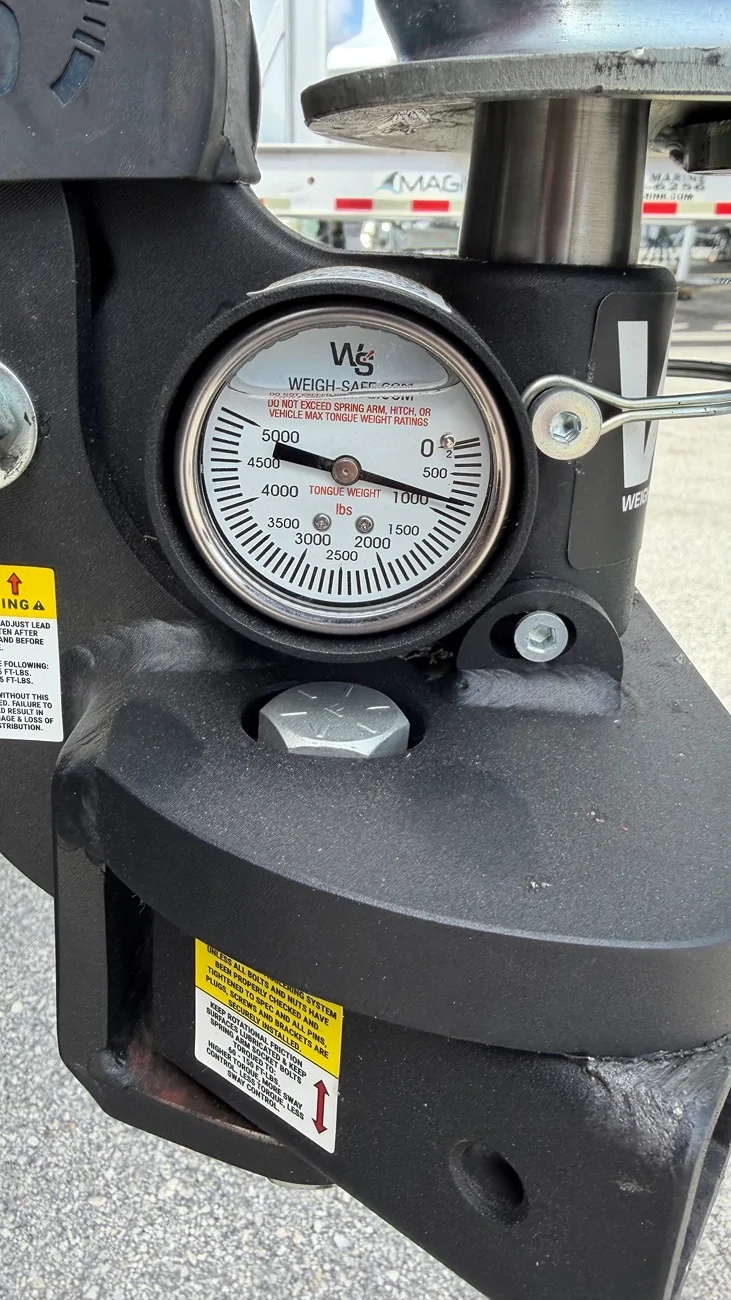
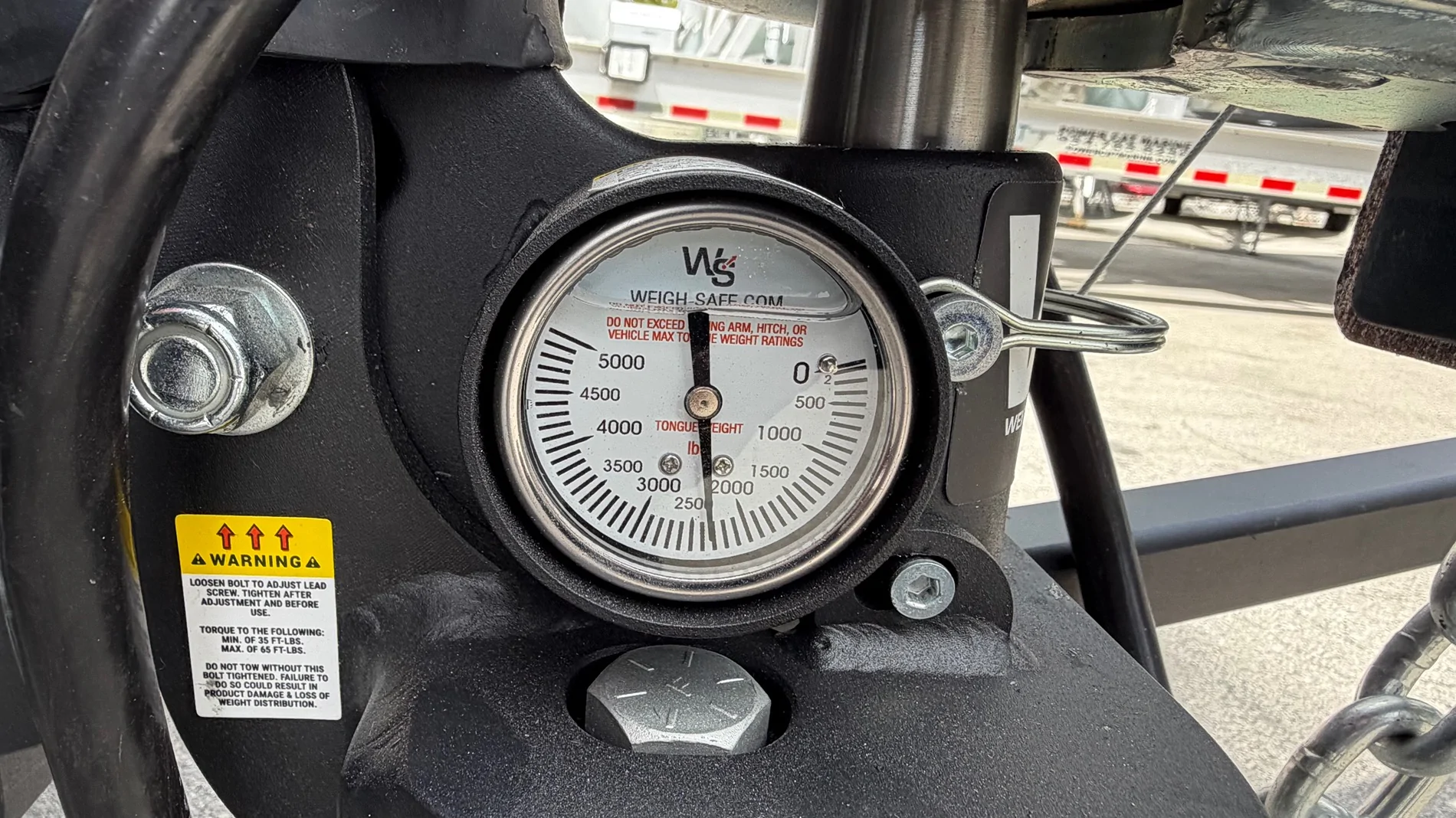
This first pic is just hanging the trailer on the hitch ball with no weight distribution applied - just above 800 pounds:


Tesla Cybertruck Towing ~10,000 lb boat at the launch ramp 1782875607150-r8


This pic is the pressure (no longer actually the tongue weight) after adding weight distribution into the mix - just over 2,300 pounds. Note that the difference between 800 pounds pure tongue weight and 2,300 pounds final pressure on the ball, or roughly 1,500 pounds, is the amount of weight being transferred to the front truck axle and to the three trailer axles. I don’t know how to calculate the physics of how much went to each, given the difference in lever length (long trailer, short truck). I suppose I could have done a CAT scale test with and without to see the split, but didn’t think to do that, so just have the final outcome shown in the printout above:

Tesla Cybertruck Towing ~10,000 lb boat at the launch ramp 1782875807096-rs


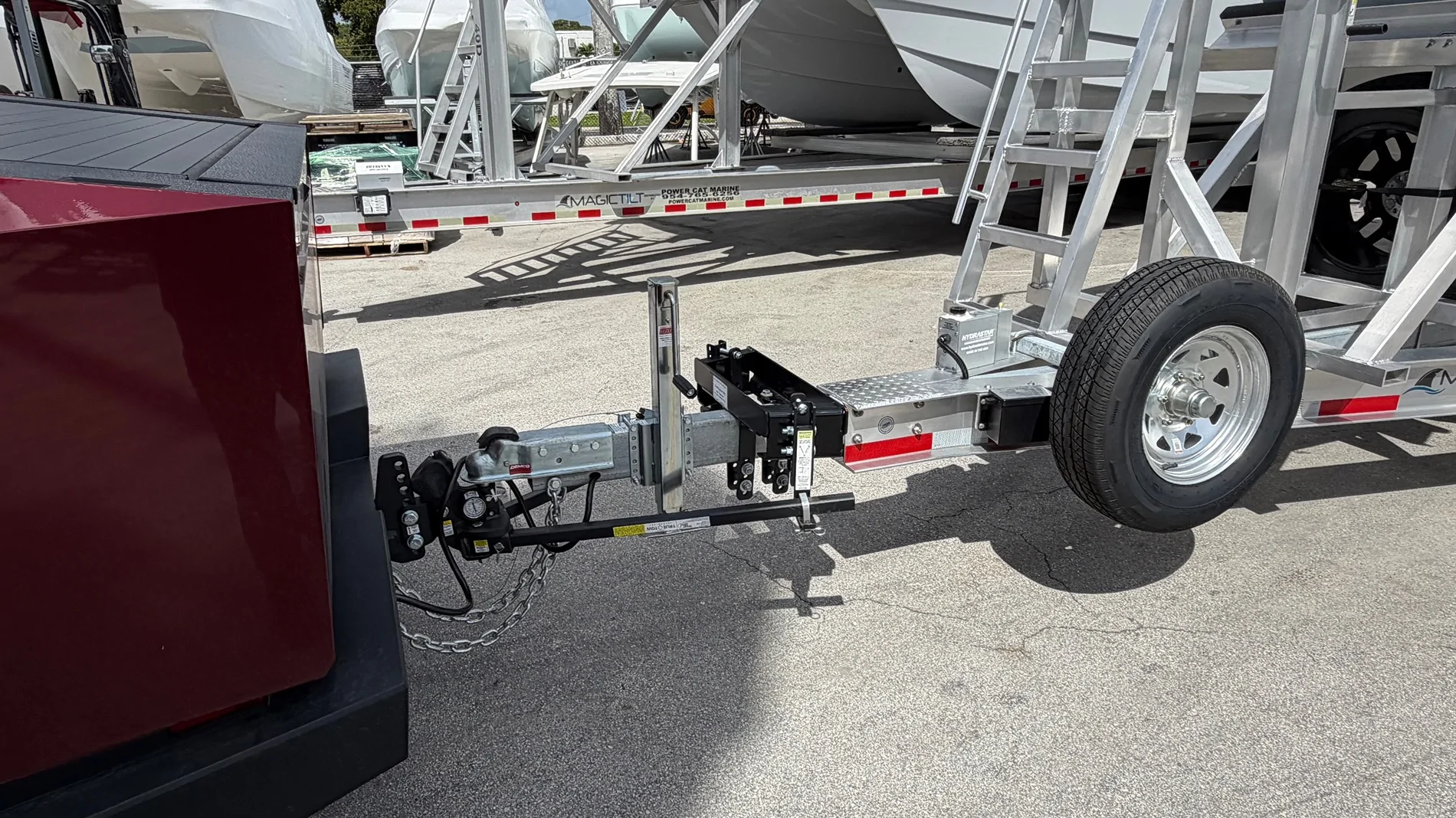
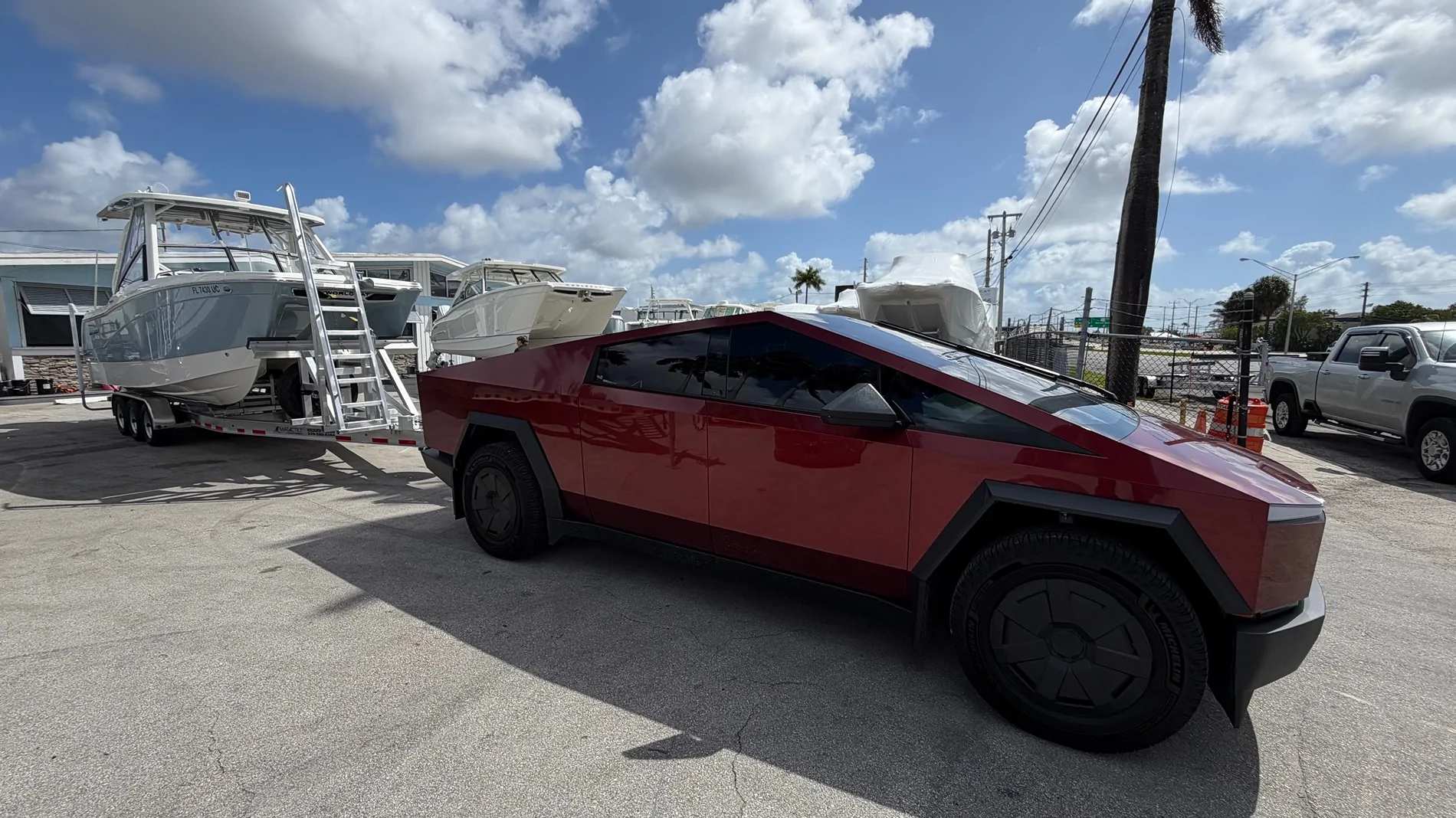
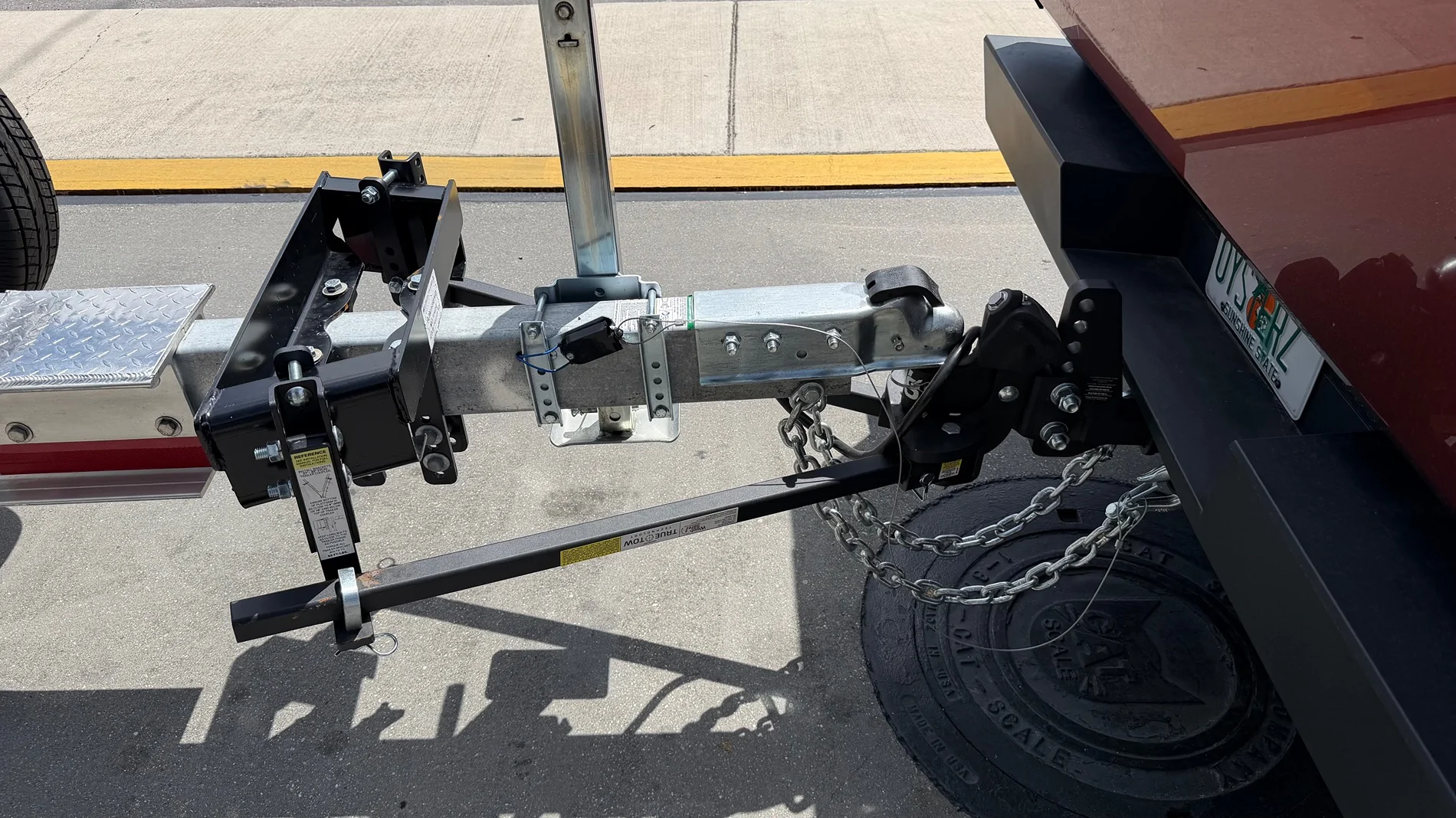
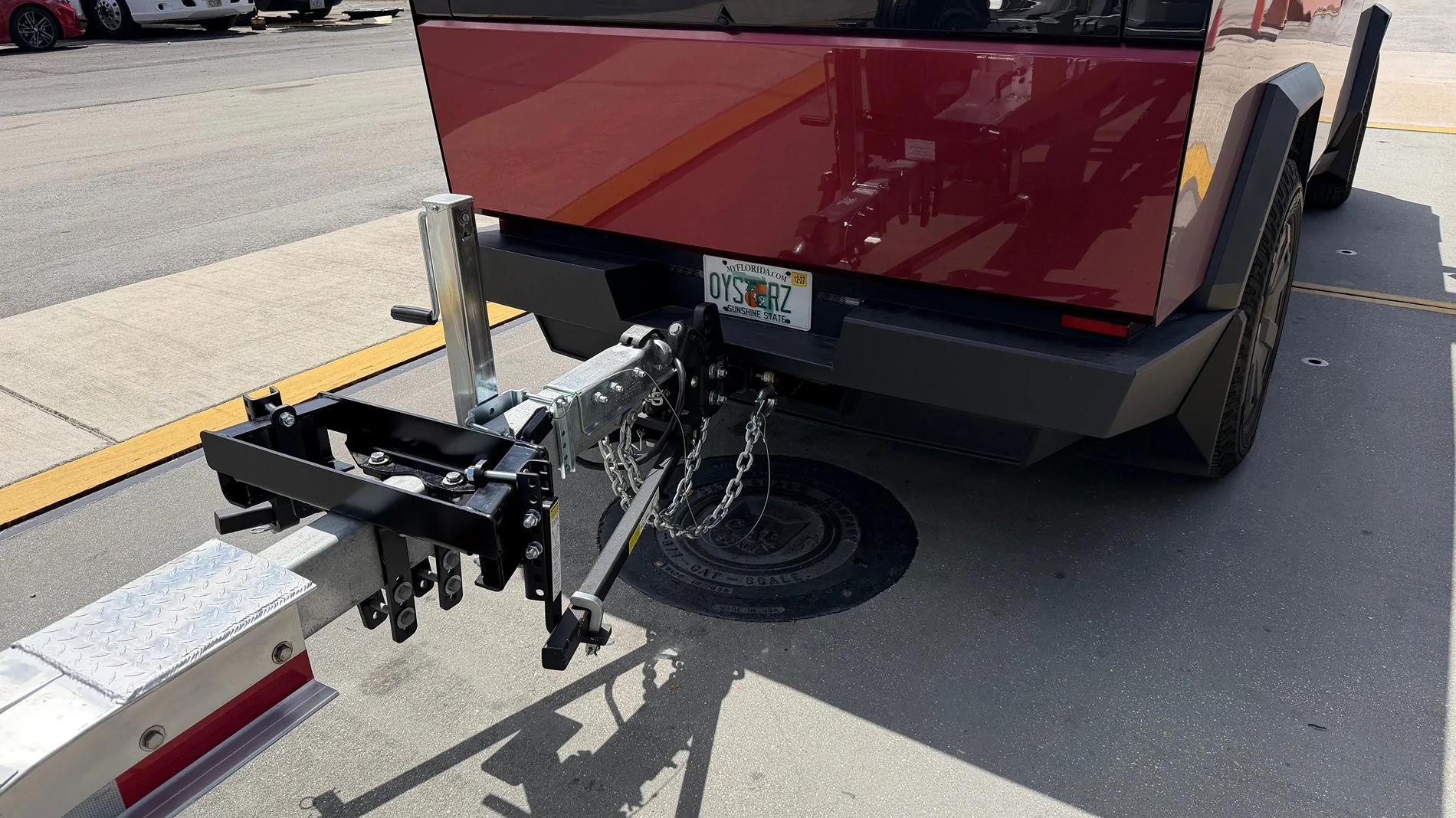
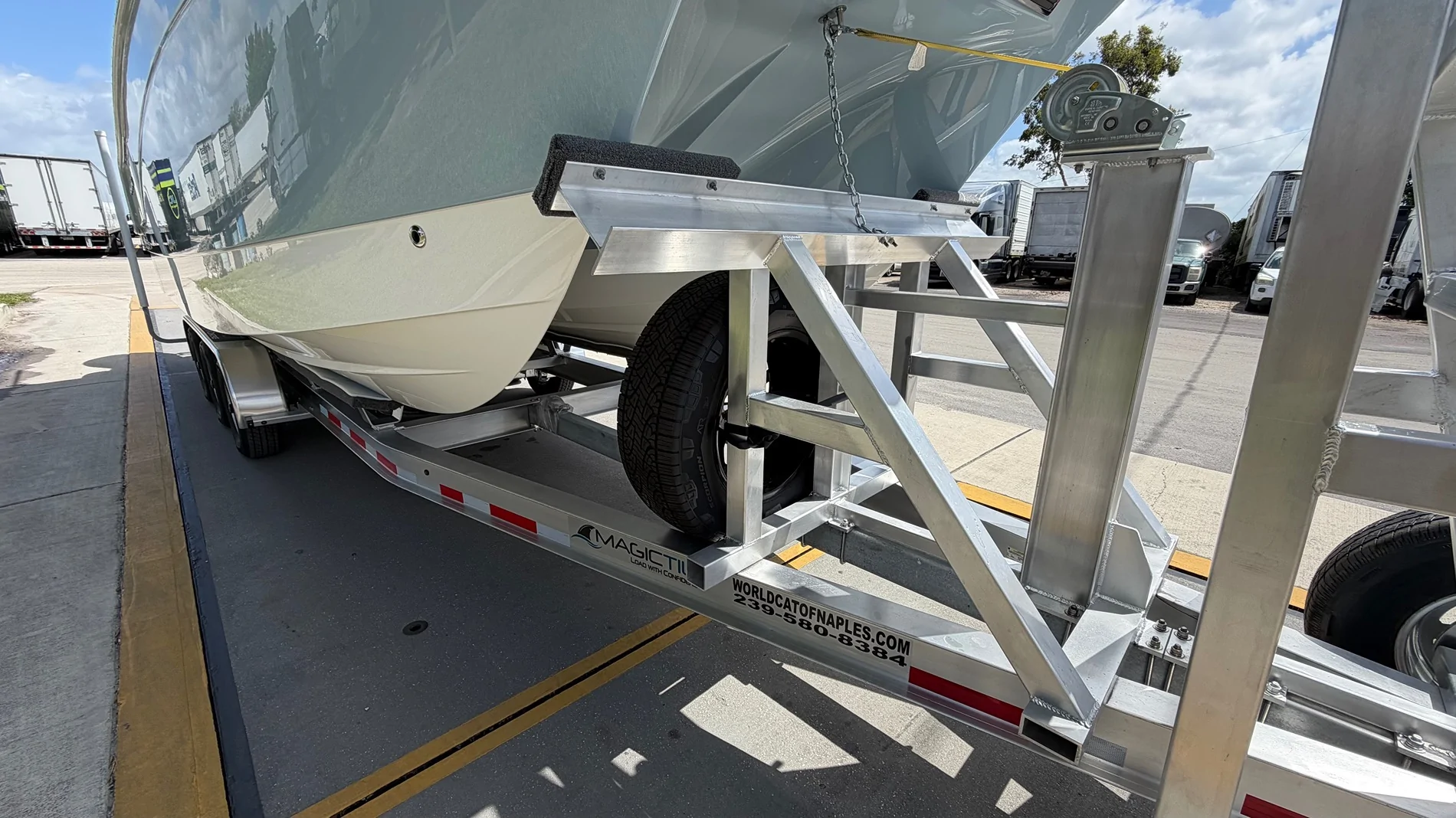
A few pics follow showing the final dialed-in setup. It trailers fantastic, at least as well as my F-350. Of course, only for 90 miles max, so useful around town, but useless for the 1,100-mile trip north in May and south in November. Oh well.

Tesla Cybertruck Towing ~10,000 lb boat at the launch ramp 1782876557907-p8


Tesla Cybertruck Towing ~10,000 lb boat at the launch ramp 1782876611197-m7


Tesla Cybertruck Towing ~10,000 lb boat at the launch ramp 1782876674178-8l


Tesla Cybertruck Towing ~10,000 lb boat at the launch ramp 1782876717816-k


Tesla Cybertruck Towing ~10,000 lb boat at the launch ramp 1782876755644-yc


I later switched the CT spare out of the bed and onto the trailer, adding a bit more tongue weight.

Tesla Cybertruck Towing ~10,000 lb boat at the launch ramp 1782876861653-k6


Tesla Cybertruck Towing ~10,000 lb boat at the launch ramp 1782876884786-yv


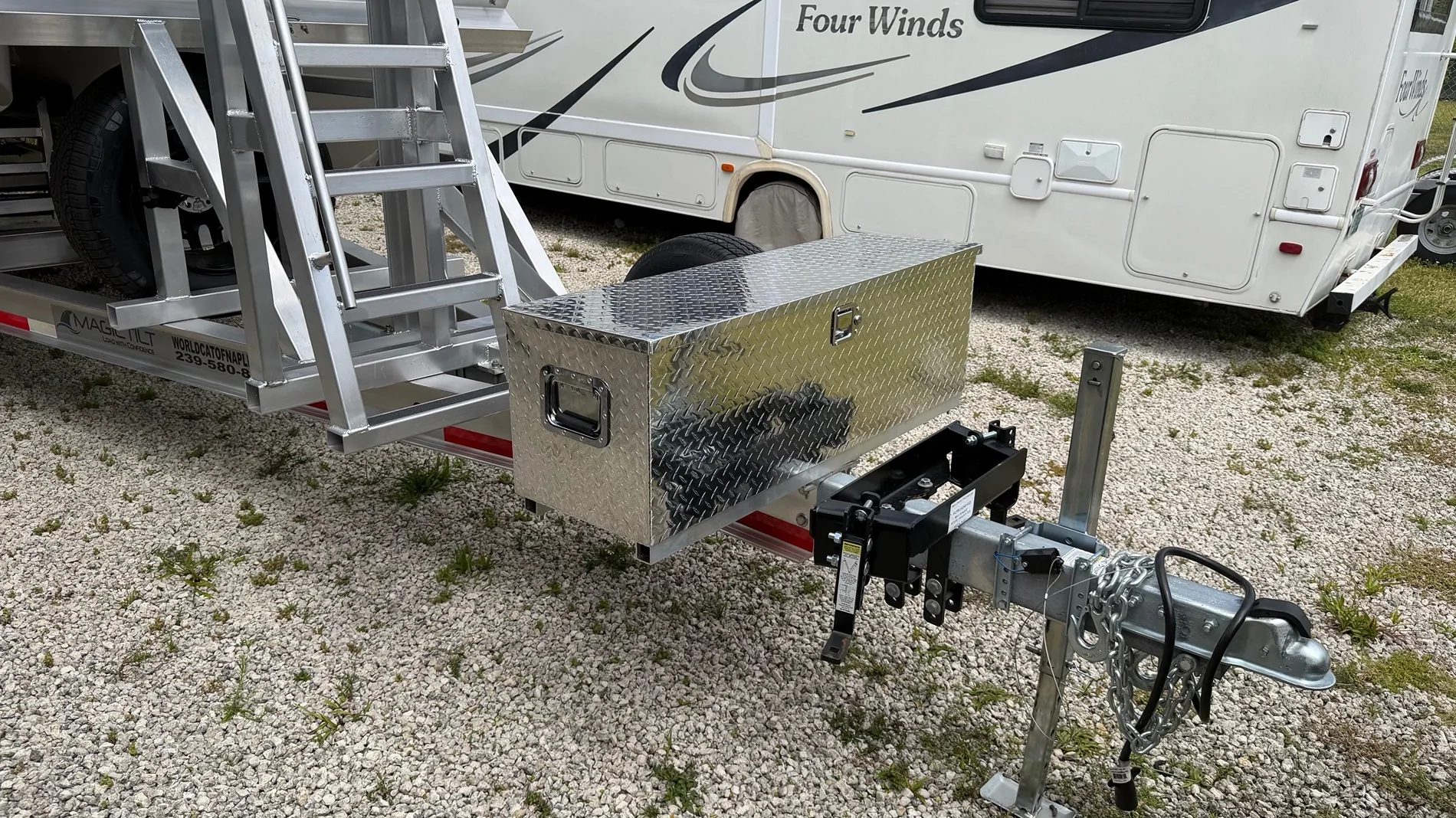
Finally, I recently fabricated and added a tool box to the trailer tongue, shifting a bit more weight to the sweet spot:

Tesla Cybertruck Towing ~10,000 lb boat at the launch ramp 1782877184893-xn


I think this is about as perfect a 10k trailer setup with a max-tall-sized boat that can be towed within specs behind a CT. However, because Tesla provides no separate specs for weight distribution hitch use, unlike every other pickup truck manufacturer, we have no exact spec for this setup. What we know is that it is set up within spec without weight distribution, a bit light on the tongue (roughly 950 pounds with the added hitch box and CT spare tire), and that adding weight distribution has to improve the physics even further, with the proof in how well it rides and tracks, which is perfectly. I don’t believe it is possible to document this any further to prove compliance with specification, nor or tweak it any better for trailering performance. I’m still hoping for a CT with (a) FSD trailer awareness, and (b) 450+ miles unladen range. For now, I have to pay a guy with a proper tow vehicle to make the two long hauls - It’s not bad at $1,600 each way including fuel, but I would much prefer to do it myself. However, the fact is that a CT really cannot be used for its max towing specs over any real distance.

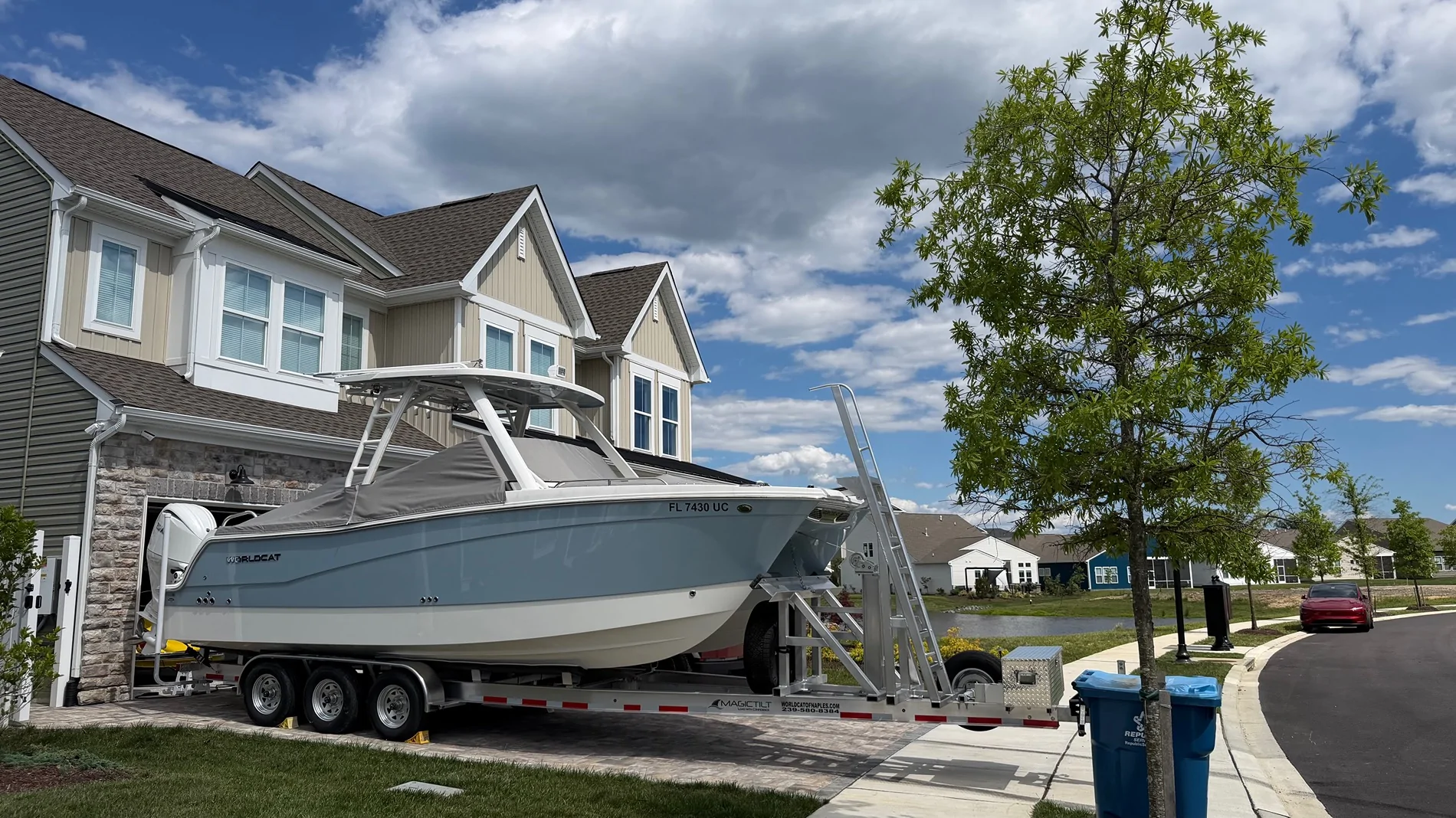
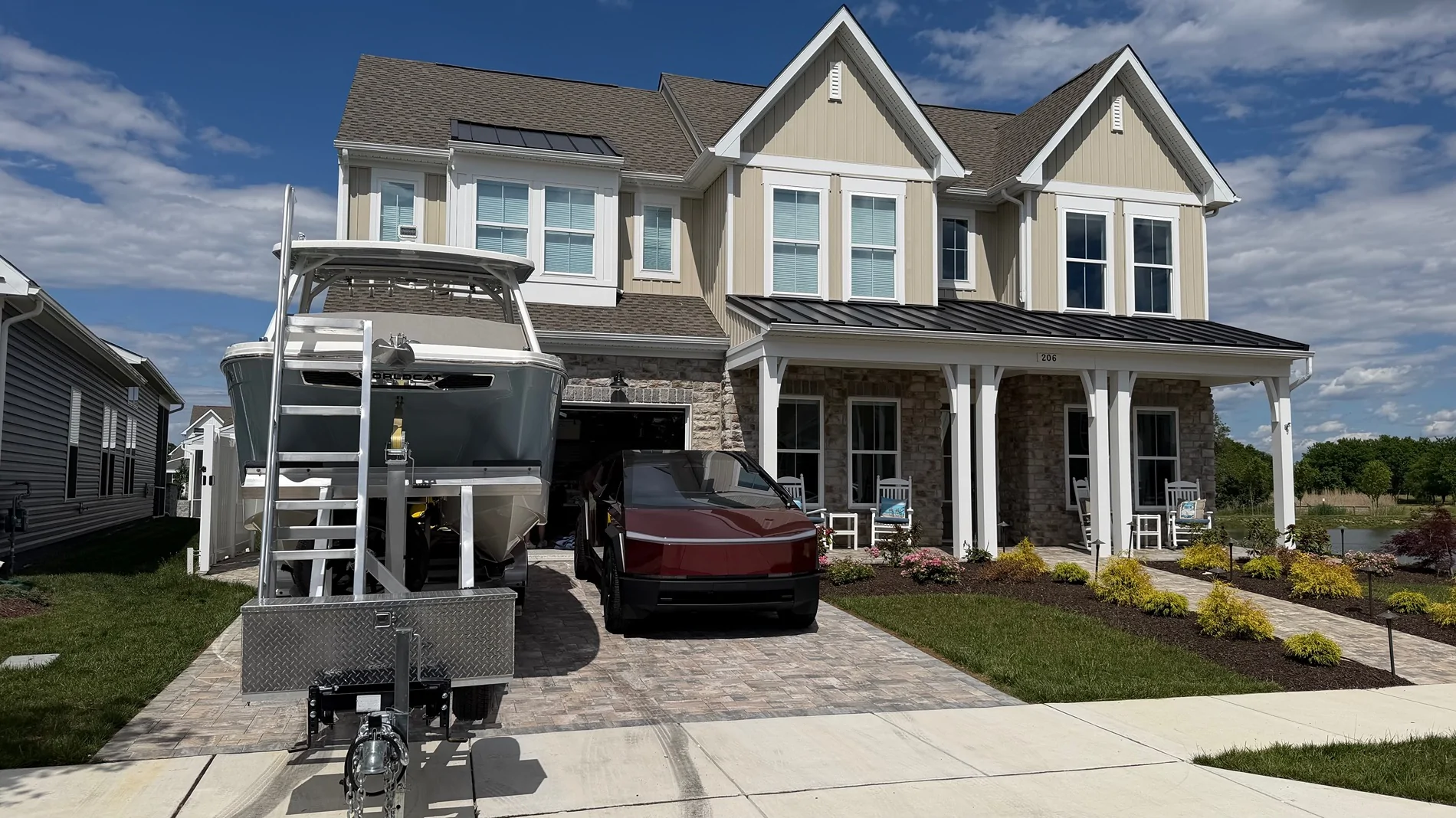
Your comment on the scrubbing is dead on. It is the nature of three parallel axles and six tires - something has to give in a turn, and you can see the front axle tires squeegieing (sp?) right when the rears are squeegieing left, while the middles just sit there. I do leave a fair amount of tire tread behind in tight turns, especially on abrasive concrete. My wife has banned me from parking the trailer, even temporarily, on the driveway pavers in front of one of our homes.

She wasn’t happy after this picture, made me get out the power washer.

Tesla Cybertruck Towing ~10,000 lb boat at the launch ramp 1782877963011-1c


Tesla Cybertruck Towing ~10,000 lb boat at the launch ramp 1782878002028-0


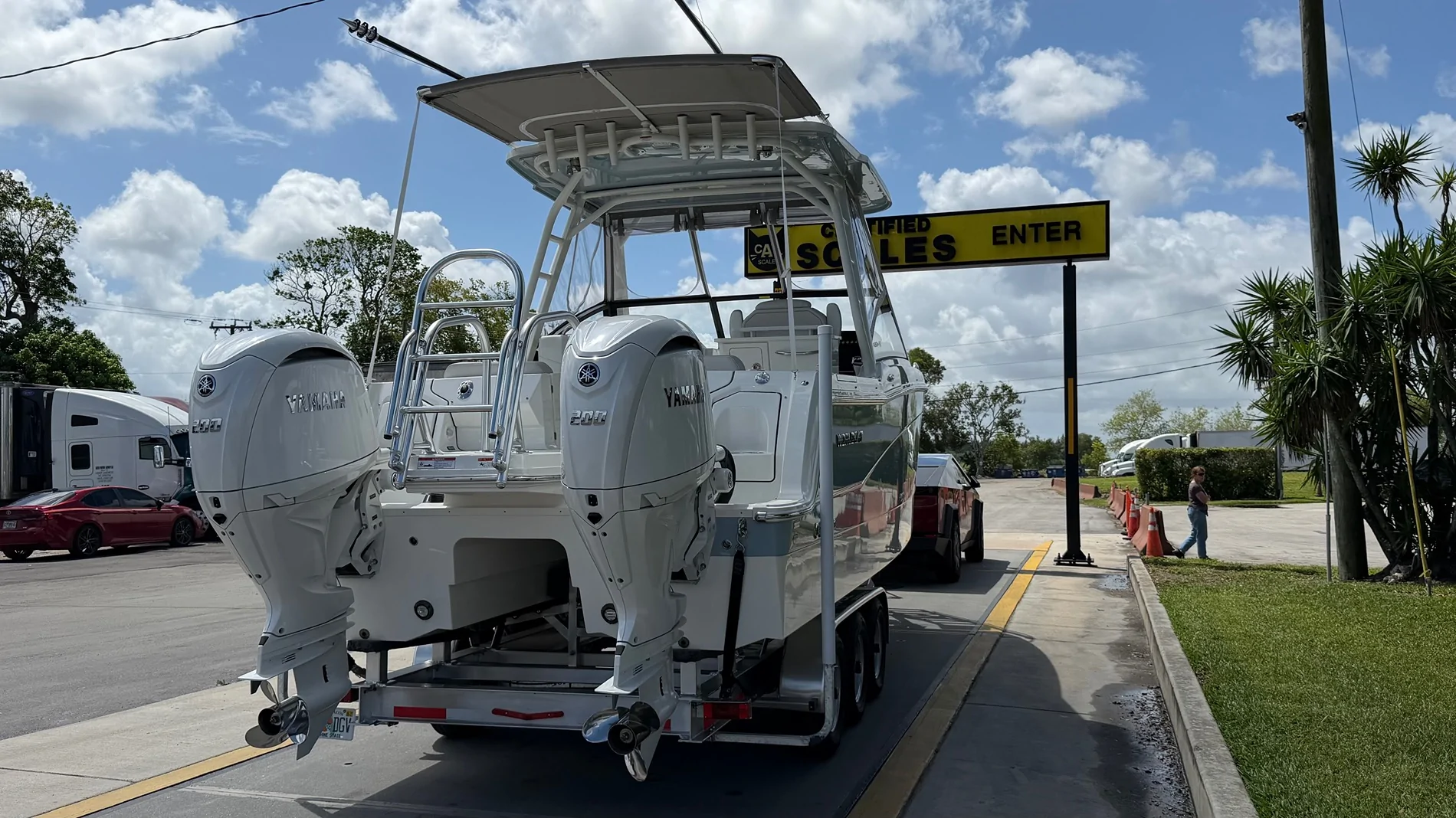
We think of the CT as a big vehicle until seeing it in this perspective - that’s not a big boat (26-ft hull, 29 overall), but man does it dwarf the truck.


mongo

Well-known member
Joined
May 27, 2024
Threads
6
Messages
4,652
Reaction score
5,652
Location
SE Michigan
Vehicles
Cyberbeast
Country flag
Correct, but this isn’t my first towing rodeo. Our trailer row now has 12 trailers, and there are many in the past. The World Cat’s hitch system is by Weigh-Safe, and I went with their specs, which for a 10k trailer rig, provides for a roughly 750-900 lb pure (unsprung) weight on the ball. Remember that the ball is a few inches rearward of the Tesla CT tongue-weight spec. That becomes essentially irrelevant after locking the trailer frame to the truck “frame” using the weight distribution torsion bars. Weigh-Safe provides an app that assists in dialing in the final scale pressure. You input the truck’s measured axle weights, the trailer weight, length measurements, etc. In my case, the app specified cranking the pressure up to 2,250-2,400 pounds, which it did with ease (middle of the adjustment was right there).

This first pic is just hanging the trailer on the hitch ball with no weight distribution applied - just above 800 pounds:


1782875607150-r8.webp


This pic is the pressure (no longer actually the tongue weight) after adding weight distribution into the mix - just over 2,300 pounds. Note that the difference between 800 pounds pure tongue weight and 2,300 pounds final pressure on the ball, or roughly 1,500 pounds, is the amount of weight being transferred to the front truck axle and to the three trailer axles. I don’t know how to calculate the physics of how much went to each, given the difference in lever length (long trailer, short truck). I suppose I could have done a CAT scale test with and without to see the split, but didn’t think to do that, so just have the final outcome shown in the printout above:

1782875807096-rs.webp


A few pics follow showing the final dialed-in setup. It trailers fantastic, at least as well as my F-350. Of course, only for 90 miles max, so useful around town, but useless for the 1,100-mile trip north in May and south in November. Oh well.

1782876557907-p8.webp


1782876611197-m7.webp


1782876674178-8l.webp


1782876717816-kb.webp


1782876755644-yc.webp


I later switched the CT spare out of the bed and onto the trailer, adding a bit more tongue weight.

1782876861653-k6.webp


1782876884786-yv.webp


Finally, I recently fabricated and added a tool box to the trailer tongue, shifting a bit more weight to the sweet spot:

1782877184893-xn.webp


I think this is about as perfect a 10k trailer setup with a max-tall-sized boat that can be towed within specs behind a CT. However, because Tesla provides no separate specs for weight distribution hitch use, unlike every other pickup truck manufacturer, we have no exact spec for this setup. What we know is that it is set up within spec without weight distribution, a bit light on the tongue (roughly 950 pounds with the added hitch box and CT spare tire), and that adding weight distribution has to improve the physics even further, with the proof in how well it rides and tracks, which is perfectly. I don’t believe it is possible to document this any further to prove compliance with specification, nor or tweak it any better for trailering performance. I’m still hoping for a CT with (a) FSD trailer awareness, and (b) 450+ miles unladen range. For now, I have to pay a guy with a proper tow vehicle to make the two long hauls - It’s not bad at $1,600 each way including fuel, but I would much prefer to do it myself. However, the fact is that a CT really cannot be used for its max towing specs over any real distance.

Your comment on the scrubbing is dead on. It is the nature of three parallel axles and six tires - something has to give in a turn, and you can see the front axle tires squeegieing (sp?) right when the rears are squeegieing left, while the middles just sit there. I do leave a fair amount of tire tread behind in tight turns, especially on abrasive concrete. My wife has banned me from parking the trailer, even temporarily, on the driveway pavers in front of one of our homes.

She wasn’t happy after this picture, made me get out the power washer.

1782877963011-1c.webp


1782878002028-0p.webp


We think of the CT as a big vehicle until seeing it in this perspective - that’s not a big boat (26-ft hull, 29 overall), but man does it dwarf the truck.
Nice write up!
Note, I wasn't trying to say your setup was wrong, just running first level analysis of the scale numbers.

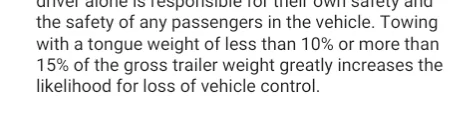
What does pure/unsprung mean? Weigh Safe True Tow calls out 10%-15% inital tongue weight.
Your modifications definitely improved it.
Tesla Cybertruck Towing ~10,000 lb boat at the launch ramp AISelect_20260701_074848_Firefox
Tesla Cybertruck Towing ~10,000 lb boat at the launch ramp AISelect_20260701_075814_Firefox


I agree it would be appreciated if Tesla gave weight distribution guidance.
Would also be nice if the WD manufacturers called out differences in installation for vehicle with air suspension (rear doesn't sink when loaded, so don't set ball height above trailer level).

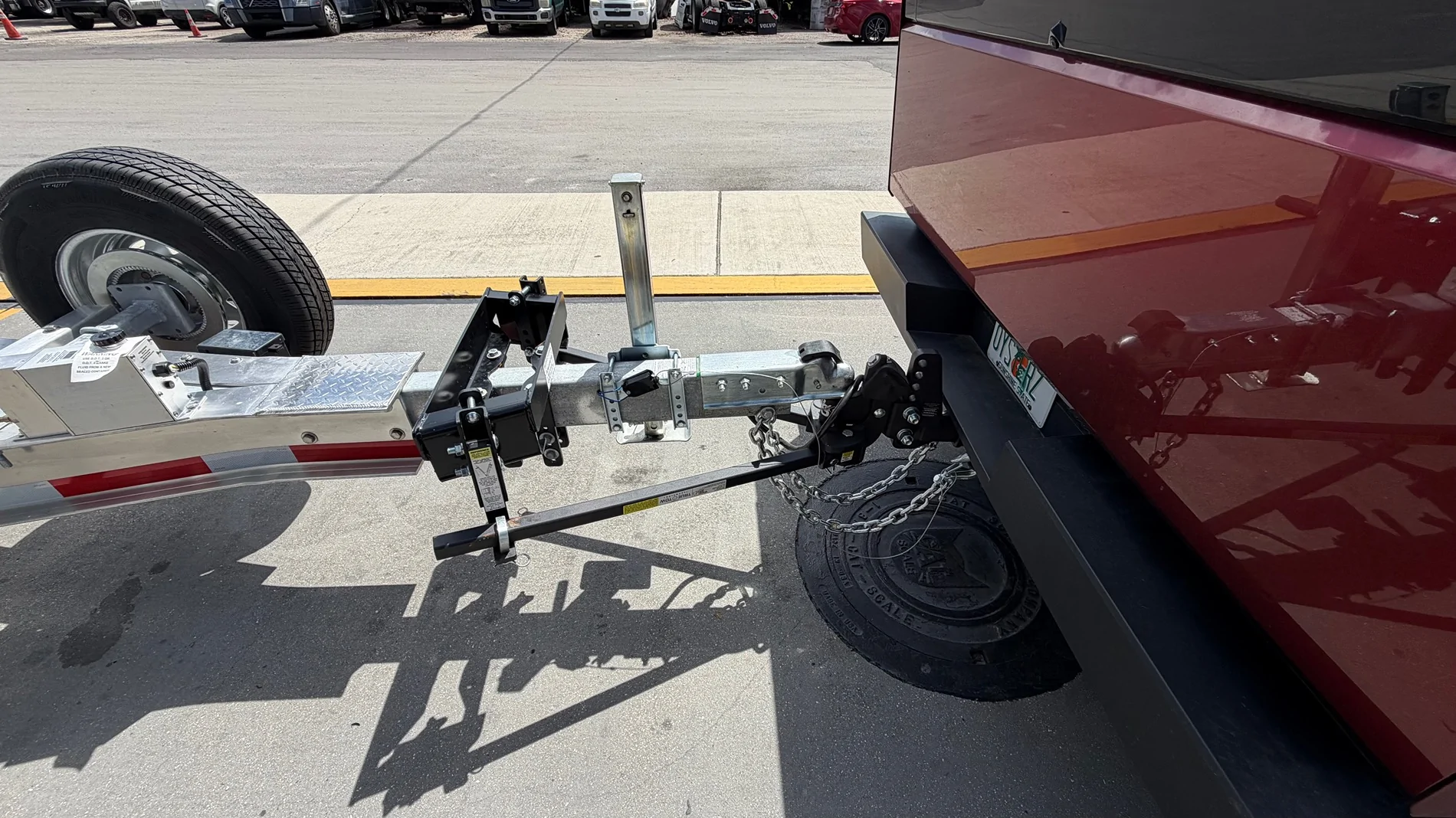
I see you have the captive bar variety of WD, those would bend backwards if break-over angle exceeded the unloaded angle. Chain-bar style would just flop around.

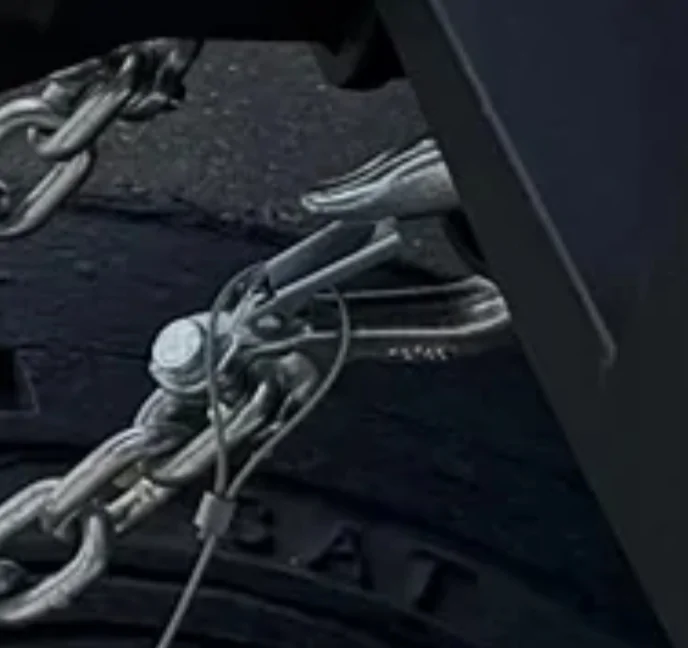
It sounds like your brakes will lock up on loss of power, so that's an additional failsafe, but is the breakaway cable sharing a snap hook with the safety chain?
Tesla Cybertruck Towing ~10,000 lb boat at the launch ramp AISelect_20260701_071555_Firefox

I've yet to find a good clip spot separate from the main receiver structure.

The difference in ball load is proportional to the weight shift, but not a direct value. The ball load increase depends on weight shift and WD arm length relative to trailer axle distance. That's why the app needs the arm and axle measurements.
Tesla Cybertruck Towing ~10,000 lb boat at the launch ramp AISelect_20260701_080443_Firefox


The WD bars act as a lever with the ball as fulcrum and weight shift is based on the distance from the ball to axles.
Cybertruck wheelbase is 143 inches, specified max ball to rear axle is 49 inches. As with my WD, that number isn't achieved, and might be more like 55 inches in your setup. I'll just call trailer axle 198 inches to make numbers easy
To offload 100 pounds from rear axle, we can use the free body model and set the ball as zero
R = -100
F+R+T = 0 (net weight change)
F+T=100, T=100-F
F*(143+55)+R*(55) + T*(-198) = 0

198F -5500 = 198T
198F -5500 = 198(100-F)
396F = 25300
F=63.9
T=36.1

So now we can calculate the torque on the ball. Trailer is being pushed down by the spring arms. If we set the bar atrach point as the fulcrum then the ball force is the ratio of the bar to ball and bar to axle distances. That lets us calculate ball force without needing to find the exact bar force.
Bar attachment distance from ball: 27 inches (guess based on installation manual)
Bar to axle: 171
Ball force = T*171/27 = 6.3*T
So, in this example ball load would be 227 for every 100 pounds of rear axle weight reduction
Or, 356 pounds for every 100 pounds of restored front axle load

Key point: arm length drives ball load

Working backwards from the 1,500 pounds loaded addition:
T=1500/6.3 = 238 pounds
F+R+T=0 (zero overall vertical force)
F+R+238=0
F=-238-R
198F+55R = 198T (zero overall torque)
F=-55/198R+T
F=-55/198R + 238
-238-R = -55/198R + 238
143/198R = -476
R = -659 pounds
F = 421 pounds
T = 238 pounds

Original truck loading 800 pounds, no WD:
F+R=800
55R + 198F = 0
F=800-R
55R + 198(800-R) = 0
143R = 198*800
R = 1,108 pounds
F = -308 pounds

Combined:
F = 70 pounds
R= 449 pounds
Which is close-ish but off due to incorrect length approximations.

Nice parking job! Were the outboards sticking into the garage?
 

PungoteagueDave

Well-known member
First Name
David
Joined
Mar 2, 2025
Threads
2
Messages
974
Reaction score
1,061
Location
Boynton Beach
Vehicles
‘25 Tesla Cybertruck, ‘26 Tesla MY Launch, ‘13 Porsche C4S, ‘26 BMW R1300 GSA
Occupation
retired
Country flag
Nice write up!
Note, I wasn't trying to say your setup was wrong, just running first level analysis of the scale numbers.

What does pure/unsprung mean? Weigh Safe True Tow calls out 10%-15% inital tongue weight.
Your modifications definitely improved it.
AISelect_20260701_074848_Firefox.webp
AISelect_20260701_075814_Firefox.webp


I agree it would be appreciated if Tesla gave weight distribution guidance.
Would also be nice if the WD manufacturers called out differences in installation for vehicle with air suspension (rear doesn't sink when loaded, so don't set ball height above trailer level).

I see you have the captive bar variety of WD, those would bend backwards if break-over angle exceeded the unloaded angle. Chain-bar style would just flop around.

It sounds like your brakes will lock up on loss of power, so that's an additional failsafe, but is the breakaway cable sharing a snap hook with the safety chain?
AISelect_20260701_071555_Firefox.webp

I've yet to find a good clip spot separate from the main receiver structure.

The difference in ball load is proportional to the weight shift, but not a direct value. The ball load increase depends on weight shift and WD arm length relative to trailer axle distance. That's why the app needs the arm and axle measurements.
AISelect_20260701_080443_Firefox.webp


The WD bars act as a lever with the ball as fulcrum and weight shift is based on the distance from the ball to axles.
Cybertruck wheelbase is 143 inches, specified max ball to rear axle is 49 inches. As with my WD, that number isn't achieved, and might be more like 55 inches in your setup. I'll just call trailer axle 198 inches to make numbers easy
To offload 100 pounds from rear axle, we can use the free body model and set the ball as zero
R = -100
F+R+T = 0 (net weight change)
F+T=100, T=100-F
F*(143+55)+R*(55) + T*(-198) = 0

198F -5500 = 198T
198F -5500 = 198(100-F)
396F = 25300
F=63.9
T=36.1

So now we can calculate the torque on the ball. Trailer is being pushed down by the spring arms. If we set the bar atrach point as the fulcrum then the ball force is the ratio of the bar to ball and bar to axle distances. That lets us calculate ball force without needing to find the exact bar force.
Bar attachment distance from ball: 27 inches (guess based on installation manual)
Bar to axle: 171
Ball force = T*171/27 = 6.3*T
So, in this example ball load would be 227 for every 100 pounds of rear axle weight reduction
Or, 356 pounds for every 100 pounds of restored front axle load

Key point: arm length drives ball load

Working backwards from the 1,500 pounds loaded addition:
T=1500/6.3 = 238 pounds
F+R+T=0 (zero overall vertical force)
F+R+238=0
F=-238-R
198F+55R = 198T (zero overall torque)
F=-55/198R+T
F=-55/198R + 238
-238-R = -55/198R + 238
143/198R = -476
R = -659 pounds
F = 421 pounds
T = 238 pounds

Original truck loading 800 pounds, no WD:
F+R=800
55R + 198F = 0
F=800-R
55R + 198(800-R) = 0
143R = 198*800
R = 1,108 pounds
F = -308 pounds

Combined:
F = 70 pounds
R= 449 pounds
Which is close-ish but off due to incorrect length approximations.

Nice parking job! Were the outboards sticking into the garage?
I’ve parked a lot of trailers a lot of times, the first time. Knocking wood here, but can put any trailer on a dime, no fancy Ford-style backing assists required, just an eye and good mirrors.

The outboards cleared the doors by an inch. The HOA (Four Seasons at Kent Island) sent a violation notice the next day. They did the same with my 4-place jet ski trailer the prior week. Having a home in a 55+ closed community has security advantages due to our primary residences being elsewhere - Florida and our Virginia oyster farm, but this ticky-tacky stuff gets really old (really, I can’t bring the trailer to the house for 24-hours to load/unload? Really?). I have trailer storage at the adjacent marina, where our lift slip is located next to our floating jet ski storage slip. I brought the trailers over, a half mile, to load/unload other stuff into the vessels/trailer boxes and roof pod, including two motorcycles on the jet ski trailer, before launch and after retrieval, prepping for the trip north or south. It also provides a chance to flush the brakes and trailers with Salt-Away in a controlled environment without the pressure of doing so at the boat ramps. Same deal at our Florida community except that’s directly on the ICW, with both slips directly out back - the HOA is equally a PITA. So between the HOAs and my wife’s objection to tire scuffs, I guess we’ll be ferrying the stuff/motorcycles to the boat ramps and never again bring either trailer to the houses. Argh.

Thanks for the math. The World Cat dealer set up the tongue weight by shifting the bow stop fore/aft on the trailer to put the boat forward or back. I am quite familiar with improper trailer loading and sway concerns for an unloaded tongue. Both Magic Tilt and World Cat say that having three axles greatly diminishes concerns about tongue weight because having the primary load centered over three axles greatly diminishes the need for weight control at the ball - it’ll essentially sit there nicely with near zero weight at the hitch, self-balanced. That doesn’t take care of the moving dynamics issue, but both told me that 500 pounds is sufficient, so only 5%, in the case of weight distribution and triple trailer axles - but that’s not what’s in writing - except the Weigh-Safe app came up with 800 pounds minimum recommended, with knowledge of all my specs.

As to the location for the safety brake clip, there is another solution that I use when on the road - put the loop through the chain connection loop on the hitch and then to the hitch pin (I use a Weigh-Safe locking pin). You caught me in the pic with a temporary clip-on - which in all honesty isn’t defeating much of the safety braking element given the stoutness of those particular chain hooks - but it was a temporary thing on the first day with only local pulling involved - no highway, and not the normal practice. Towing break-away failure is much more likely to occur somewhere else in the system, although I honestly cannot picture how the devices here could come apart. However, metal can fail. I once saw a weight-distribution hitch completely fail - on the main square in Jackson Hole Wyoming, a hitch casting sheared/broke in two while a duallie was driving around a corner towing a 45-ft camper. He was going slow, and the system was new. The trailer tongue dug an-8-ft long trench in the road surface - tied up traffic for hours in a bottleneck location. The sound and visuals from that event are seared in my mind.

This is all due to trying to use a system at the edges of capacity - Can it do it? Yes. Should it do it? A harder call, but it can be done. I prefer to tow with huge spec cushions and excess capacity. In my businesses we have a primary rule regarding ethics - never get so close the line that we get chalk on our feet. Applying that to towing, obviously our F-350 diesel that’s set up to tow over 20k is a much better answer than the CT. However, that went out the window after the HOA notice saying no one-ton pickup trucks allowed, so I spent $400/month in 2021 for offsite vehicle storage, and we didn’t have daily use of the truck. So it now lives permanently at the farm, towing the work boats and equipment flatbeds that the CT can’t even dream of handling.

All high class problems, lots of maths, and then a dockworker forgets a hitch ball lock pin anyway… or the brakes fail due to being continually immersed in saltwater. We’ve given up on the work boats’ trailer brakes - removed the chunks of rust and welded up the surge brake boxes, and rely on the big trucks’ braking capacity to stop the trailer too. Those trailers go into seawater at least monthly, but in our absence, there’s no getting the guys to properly maintain them, with the only saving grace being they used only are in a rural spot on tiny roads, 100 miles from the nearest highway, so when they break, it’s at slow speed with no one around. Our primary launch ramp there is a county sand launch on a gravel road. But break they do, regularly. Axels rust out, bearings fail, lights almost never work, and we’ve even had a trailer frame break after 20 years of the galvanization on inside being filled with saltwater. I cannot tell you how many times we’ve used the backhoe to lift a boat off a trailer SNAFU (and it’s now our default bottom paint method - two big webbing straps, hoist in the air over the trailer for a couple hours, paint fast, back in the water the same day)… Proving life rule #2 - You cannot have nice things. Anything you own actually owns you.
 
Last edited:

mongo

Well-known member
Joined
May 27, 2024
Threads
6
Messages
4,652
Reaction score
5,652
Location
SE Michigan
Vehicles
Cyberbeast
Country flag
I’ve parked a lot of trailers a lot of times, the first time. Knocking wood here, but can put any trailer on a dime, no fancy Ford-style backing assists required, just an eye and good mirrors.

The outboards cleared the doors by an inch. The HOA (Four Seasons at Kent Island) sent a violation notice the next day. They did the same with my 4-place jet ski trailer the prior week. Having a home in a 55+ closed community has security advantages due to our primary residences being elsewhere - Florida and our Virginia oyster farm, but this ticky-tacky stuff gets really old (really, I can’t bring the trailer to the house for 24-hours to load/unload? Really?). I have trailer storage at the adjacent marina, where our lift slip is located next to our floating jet ski storage slip. I brought the trailers over, a half mile, to load/unload other stuff into the vessels/trailer boxes and roof pod, including two motorcycles on the jet ski trailer, before launch and after retrieval, prepping for the trip north or south. It also provides a chance to flush the brakes and trailers with Salt-Away in a controlled environment without the pressure of doing so at the boat ramps. Same deal at our Florida community except that’s directly on the ICW, with both slips directly out back - the HOA is equally a PITA. So between the HOAs and my wife’s objection to tire scuffs, I guess we’ll be ferrying the stuff/motorcycles to the boat ramps and never again bring either trailer to the houses. Argh.

Thanks for the math. The World Cat dealer set up the tongue weight by shifting the bow stop fore/aft on the trailer to put the boat forward or back. I am quite familiar with improper trailer loading and sway concerns for an unloaded tongue. Both Magic Tilt and World Cat say that having three axles greatly diminishes concerns about tongue weight because having the primary load centered over three axles greatly diminishes the need for weight control at the ball - it’ll essentially sit there nicely with near zero weight at the hitch, self-balanced. That doesn’t take care of the moving dynamics issue, but both told me that 500 pounds is sufficient, so only 5%, in the case of weight distribution and triple trailer axles - but that’s not what’s in writing - except the Weigh-Safe app came up with 800 pounds minimum recommended, with knowledge of all my specs.

As to the location for the safety brake clip, there is another solution that I use when on the road - put the loop through the chain connection loop on the hitch and then to the hitch pin (I use a Weigh-Safe locking pin). You caught me in the pic with a temporary clip-on - which in all honesty isn’t defeating much of the safety braking element given the stoutness of those particular chain hooks - but it was a temporary thing on the first day with only local pulling involved - no highway, and not the normal practice. Towing break-away failure is much more likely to occur somewhere else in the system, although I honestly cannot picture how the devices here could come apart. However, metal can fail. I once saw a weight-distribution hitch completely fail - on the main square in Jackson Hole Wyoming, a hitch casting sheared/broke in two while a duallie was driving around a corner towing a 45-ft camper. He was going slow, and the system was new. The trailer tongue dug an-8-ft long trench in the road surface - tied up traffic for hours in a bottleneck location. The sound and visuals from that event are seared in my mind.

This is all due to trying to use a system at the edges of capacity - Can it do it? Yes. Should it do it? A harder call, but it can be done. I prefer to tow with huge spec cushions and excess capacity. In my businesses we have a primary rule regarding ethics - never get so close the line that we get chalk on our feet. Applying that to towing, obviously our F-350 diesel that’s set up to tow over 20k is a much better answer than the CT. However, that went out the window after the HOA notice saying no one-ton pickup trucks allowed, so I spent $400/month in 2021 for offsite vehicle storage, and we didn’t have daily use of the truck. So it now lives permanently at the farm, towing the work boats and equipment flatbeds that the CT can’t even dream of handling.

All high class problems, lots of maths, and then a dockworker forgets a hitch ball lock pin anyway… or the brakes fail due to being continually immersed in saltwater. We’ve given up on the work boats’ trailer brakes - removed the chunks of rust and welded up the surge brake boxes, and rely on the big trucks’ braking capacity to stop the trailer too. Those trailers go unused water at least monthly, but in our absence, there’s no getting the guys to properly maintain them, with the only saving whenever being they are in a rural spot, 100 miles from the nearest highway, so when they break, it’s at slow speed. But break they do, regularly. Proving life rule #2 - You cannot have nice things. Anything you owns actually owns you.
Indeed!
I wish my travel trailer had three axles, or existing ones shifted a few inches forward. Front cargo bay + Cyberbeast means minimal margin from limits.

Part of why I'm tempted to put an underslung battery pack in the trailer rear (along with range boost). Of course, being a CB, there isn't a convenient extra port on the pack.
More rational approach is moving the trailer spare to a rear hitch mount along with a truck spare (300 pound accessory receiver).
 

MCraft99

Well-known member
Joined
Feb 20, 2026
Threads
2
Messages
232
Reaction score
223
Location
USA
Vehicles
FS CB 8/24
Country flag
Last edited:

SabrToothSqrl

Well-known member
Joined
Apr 1, 2026
Threads
4
Messages
170
Reaction score
252
Location
PA
Vehicles
CT Ordered | 2023 Y, X, Previous: 2013 S85, 2018 3, 2019X. 3 Wranglers, 2 Tahoes
Occupation
Cat Herder
Country flag
With all these weight calculations, don't forget a fully charged battery weighs more than an empty one ;)

A fully charged Cybertruck battery weighs about 5 micrograms (0.000005 grams) more than a discharged one. :p

If I ever get mine, I'll post my aquatic use case photos. Today marks exactly 100 days since I ordered.
Sponsored


Top