Sponsored

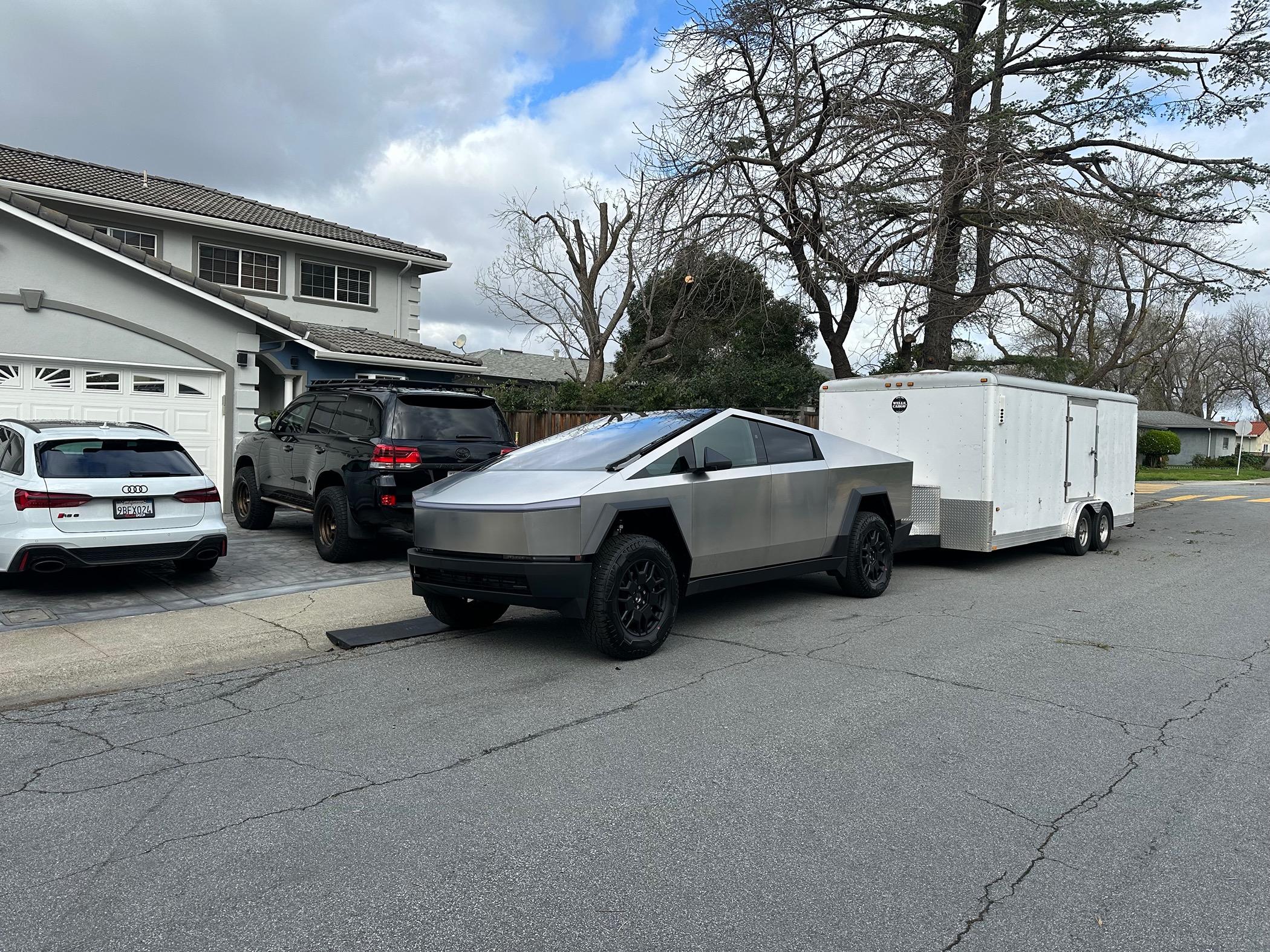
500 Miles on my Cyber Truck. 400 of them towing a car. Do I need a weight distribution hitch?

Woodrick

Well-known member
First Name
Ed
Joined
Dec 30, 2023
Threads
6
Messages
4,786
Reaction score
4,762
Location
Gainesville Ga
Vehicles
Model 3, Model Y, Cybertruck AWD
Occupation
Consultant
Country flag
Id rather not have to hook up a weight distribution hitch. Towing so far has been great. Just not sure if highway patrol would have an issue with not using one on a technically only a half ton truck
For safe towing, it's not the highway patrol that I worry about, it's your own life.

In 99% of the situations, it may be that your rig is sufficient, but you only die once.

In the tow vehicle, weight distribution between the front and rear axles is important. with trailers, it is too common for the weight on the front axle to be significantly decreased. This causing steering issues. It's not uncommon to be going down the Interstate, someone in front of you stops quickly, you swerve to miss them, but then correct the swerve, only to have the trailer fling you off the Interstate, because you don't have enough down-force to steer.

The tongue weight should nominally be 10% of the trailer weight. 10,000 lb trailer (fully loaded) means 1,000 lb tongue weight. You also have to be careful that you don't have anything in the truck bed, because you will probably exceed rear axle weight limits if you do.

After hitching, the trailer should be level and the truck level as well (without the assistance of load levelling suspensions). This may mean, as shown in one of my videos, that your hitch rig may need height adjustment.

Like I said 99% of the time, things may work great. But it's the 1%...

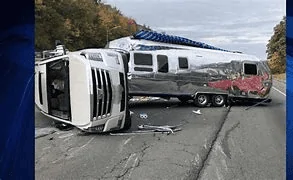
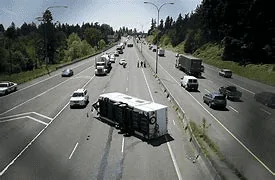
  • Where you see the tandem trailer with dual flats or quad flats (overloaded trailer and/or old tires)
  • Trucks going down road with nose in air (too much tongue weight and no load balancing)
  • Rear tire blow out on tow vehicles (too much rear axle weight, load in bed AND trailer mis-balanced)

Just trying to keep this from happening
Tesla Cybertruck 500 Miles on my Cyber Truck. 400 of them towing a car. Do I need a weight distribution hitch? 1712065387431-v
Tesla Cybertruck 500 Miles on my Cyber Truck. 400 of them towing a car. Do I need a weight distribution hitch? 1712065467782-kr
Sponsored


acey

Well-known member
First Name
j
Joined
Apr 29, 2020
Threads
1
Messages
87
Reaction score
155
Location
Colorado front range
Vehicles
'24 Cybertruck
Country flag
Most of the miles on my CT have been with an enclosed car trailer with car inside.
My last truck was a Chevy 2500 Dually. I have to say, the CT tows great.

I want to dial in my setup and searched the interwebs but only finding contradicting information. Do I need a weight distribution hitch or not? I dont feel ant sense of the front end feeling light. Nor do I feel any sway. Im towing about 7500 lbs. Some say I need one. While some say the unibody construction wont allow a weight distir

I just want to make sure all the bases are covered incase of a towing mishap and some investigator tells me I should have been using a particular type of hitch.
IMG_0012.jpeg
How is the range towing that trailer?
 

SSonnentag

Well-known member
First Name
Shawn
Joined
Feb 24, 2020
Threads
12
Messages
623
Reaction score
1,229
Location
Arizona
Vehicles
2018 MX and 2023 MYP
Occupation
IT Specialist
Country flag
How is the range towing that trailer?
I can answer that one just from the picture. Range is TERRIBLE. Sails are big and flat for a reason. :LOL:

My Diesel truck would drop from 20 mpg to 12 pulling that trailer at 65 mph.
An EV, being more efficient, would drop even more, probably dropping from 2.1 miles/kWh to ~1 mile/kWh.
 

Cyber Man

Well-known member
Joined
Dec 30, 2023
Threads
11
Messages
1,049
Reaction score
2,260
Location
California
Vehicles
BMW X1, Porsche Cayenne, R1T Perf max, Cyberbeast
Country flag
WD for Cybertruck is a great question to research about. I have the high end Hensley hitch that I use for my airstream. I want to know whether I need it for the CT. I’m aware of all the advantages of WD. I have heard that WD hitches can mess with the software. As the tongue weight changes constantly, WD is actually not recommended by some manufactures on some of these vehicles (for Example Range Rover). I think we need to check with Tesla or refer to manual. If WD doesn’t mess with CT’s software, it’s better to use one, especially if the tongue weight is cutting close to the limit (1100 lbs tongue weight for CT).
 
OP
OP

Propernice

Member
Joined
Mar 24, 2024
Threads
2
Messages
19
Reaction score
32
Location
Milpitas, CA
Vehicles
Cybertruck, Model 3, Audi RS6, Toyota Landcruiser
Occupation
Business owner
Country flag
WD for Cybertruck is a great question to research about. I have the high end Hensley hitch that I use for my airstream. I want to know whether I need it for the CT. I’m aware of all the advantages of WD. I have heard that WD hitches can mess with the software. As the tongue weight changes constantly, WD is actually not recommended by some manufactures on some of these vehicles (for Example Range Rover). I think we need to check with Tesla or refer to manual. If WD doesn’t mess with CT’s software, it’s better to use one, especially if the tongue weight is cutting close to the limit (1100 lbs tongue weight for CT).
This is exactly my concern. Ive towed many times with various vehicles. I had a specific question about using a WD with the Cybertruck but instead getting unrelated responses.
How is the range towing that trailer?
I looked up a lot of cybertruck towing videos prior to towing and saw towing range listed be between 95-120 miles with an open trailer and an RV. I am seeing much better range. Did some 100 mile round trips from a full charge (320 mile Range starting on indicator) which said 170 miles after my trip.

Seems to have gone much better than the online reviews


SSonnentag

Well-known member
First Name
Shawn
Joined
Feb 24, 2020
Threads
12
Messages
623
Reaction score
1,229
Location
Arizona
Vehicles
2018 MX and 2023 MYP
Occupation
IT Specialist
Country flag
In my opinion, I wouldn't mess with a WD hitch. FIrst off, we don't know if they are approved for use on the CT by Tesla. Most unibody trucks specifically state not to use WD hitches. Second, in all of the towing tests I've seen on YouTube, where the trailer loads are up near the rated CT towing capacity, there have been no indications of swaying or other control issues. So as long as the tongue weight is within CT specs, and the trailer weight is under the CT capacity, just tow. Of course, be sure your trailer load is properly balanced on its own axle(s), with 10-15% of the total trailer weight on the hitch while staying below the CT hitch limits.
 

Woodrick

Well-known member
First Name
Ed
Joined
Dec 30, 2023
Threads
6
Messages
4,786
Reaction score
4,762
Location
Gainesville Ga
Vehicles
Model 3, Model Y, Cybertruck AWD
Occupation
Consultant
Country flag
In my opinion, I wouldn't mess with a WD hitch. FIrst off, we don't know if they are approved for use on the CT by Tesla. Most unibody trucks specifically state not to use WD hitches. Second, in all of the towing tests I've seen on YouTube, where the trailer loads are up near the rated CT towing capacity, there have been no indications of swaying or other control issues. So as long as the tongue weight is within CT specs, and the trailer weight is under the CT capacity, just tow. Of course, be sure your trailer load is properly balanced on its own axle(s), with 10-15% of the total trailer weight on the hitch while staying below the CT hitch limits.
With the loaded trailer are the front and rear axle weights the same percentage as they were without the trailer?

Odds are that there is significantly more weight on the rear and less on the front. That creates control issues.

Get the truck weighed without the trailer, both front and rear axle weights, measure the front and rear fender levels.
Hitch up the trailer, fully loaded and weight the entire rig.
It's really simple to do and there are lots of scales that will do it for you, for free or a small charge.
 

Cyber Man

Well-known member
Joined
Dec 30, 2023
Threads
11
Messages
1,049
Reaction score
2,260
Location
California
Vehicles
BMW X1, Porsche Cayenne, R1T Perf max, Cyberbeast
Country flag
With the loaded trailer are the front and rear axle weights the same percentage as they were without the trailer?

Odds are that there is significantly more weight on the rear and less on the front. That creates control issues.

Get the truck weighed without the trailer, both front and rear axle weights, measure the front and rear fender levels.
Hitch up the trailer, fully loaded and weight the entire rig.
It's really simple to do and there are lots of scales that will do it for you, for free or a small charge.
I hope someday Tesla adds live axle load information and warn users when loads exceeds safety. WDs are incredibly useful to balance axle loads and improves safety, but it’s important to know that when OEMs publish tow ratings, they do account for axle load bearing capacity without using WD hitch systems. So it’s important to stay within those specs. I hope we get an official answer from Tesla on whether WDs can be used with CT or not, including proprietary ProPride or Hensley hitches. It’s ok if they don’t recommend. We just need an official answer on whether they “can” be used. We need not speculate or debate the benefits of WDs. That’s not the point. The point is whether WDs are compatible with CT or not.
 

MeadowShade

Well-known member
First Name
Fred
Joined
Jan 29, 2024
Threads
7
Messages
362
Reaction score
367
Location
VA
Vehicles
Bike
Country flag
I have a 3,000 pound camper and a car hauler. The camper dealer required the WD hitch and it was just a waste of money if you ask me. The CT is more than double the weight of the camper and though I can tell a very minor difference, it is just not enough to make it safer IMO and the swerve test is the same with or without it.

A WD hitch transfers some of the weight to the front wheels of the truck, so it does "feel" different. IF you manage your tongue weight and you can with a car in the box by loading it backwards for forwards and rolling it up and back. Tongue weight should be 10%. More and you really feel it and less and the swerve gets started and you get turned on your side at highway speed.

Get a tongue weight gauge at Northern or Harbor Freight or take mine!

It is hard to use, "how the truck looks" to get the tongue weight right because of the load leveling in the suspension. Also the trailer mode DOES have anti-sway code in it as well!


Cyber Man

Well-known member
Joined
Dec 30, 2023
Threads
11
Messages
1,049
Reaction score
2,260
Location
California
Vehicles
BMW X1, Porsche Cayenne, R1T Perf max, Cyberbeast
Country flag
I have a 3,000 pound camper and a car hauler. The camper dealer required the WD hitch and it was just a waste of money if you ask me. The CT is more than double the weight of the camper and though I can tell a very minor difference, it is just not enough to make it safer IMO and the swerve test is the same with or without it.

A WD hitch transfers some of the weight to the front wheels of the truck, so it does "feel" different. IF you manage your tongue weight and you can with a car in the box by loading it backwards for forwards and rolling it up and back. Tongue weight should be 10%. More and you really feel it and less and the swerve gets started and you get turned on your side at highway speed.

Get a tongue weight gauge at Northern or Harbor Freight or take mine!

It is hard to use, "how the truck looks" to get the tongue weight right because of the load leveling in the suspension. Also the trailer mode DOES have anti-sway code in it as well!
My personal opinion is - when it comes to the safety of the family, few hundred dollars go a long way. If WD is compatible with CT, I would absolutely recommend it. I have towed for several years and did extensive research before buying WD on a 4000 lbs trailer. I can’t tell you how many times the weather got unpredictable during my camping trips. I give all the credits to WD for making towing safe.

Yes, if you stay within OEM specs, the skid plate testing results will all be under threshold. No problem with understeer or oversteer, but why take risk and not make the rig safer? Putting more weight at the rear of the trailer to lighten the tongue weight is not ideal. Tail heavy trailers cause sway, and no matter how sophisticated the software is, physics will always override software. Trailers don’t have drivetrain. Best is to have top notch hitch system and make the rig safe. Here’s a simple demonstration of what happens when Trailers are loaded with heavy tail

I know WD or not is a highly debated topic. IMO, safety is the number one priority, and nothing is enough to make anything 100% safe. We can only do whatever best we have. WD is one of them.
 
Last edited:

SSonnentag

Well-known member
First Name
Shawn
Joined
Feb 24, 2020
Threads
12
Messages
623
Reaction score
1,229
Location
Arizona
Vehicles
2018 MX and 2023 MYP
Occupation
IT Specialist
Country flag
Since the CT has auto-leveling suspension, would a WD hitch even do anything? I think WD hitches only come into play when the bed sags due to trailer load. The WD hitch fights the sag by placing some load on the front axle. With no sag there will be no weight transfer.
 

Cyber Man

Well-known member
Joined
Dec 30, 2023
Threads
11
Messages
1,049
Reaction score
2,260
Location
California
Vehicles
BMW X1, Porsche Cayenne, R1T Perf max, Cyberbeast
Country flag
Since the CT has auto-leveling suspension, would a WD hitch even do anything? I think WD hitches only come into play when the bed sags due to trailer load. The WD hitch fights the sag by placing some load on the front axle. With no sag there will be no weight transfer.
Nope! Auto leveling and WD are two completely different things. Auto leveling won’t change the axle loads. You can overload rear axle by several lbs and make the rig highly unsafe, but you can still have perfectly leveled wheel wells. WD changes the axle loads and helps with oversteer/understeer/sway. Wheel leveling is just the side effect of loads distributed evenly by WD.
 

mongo

Well-known member
Joined
May 27, 2024
Threads
6
Messages
4,661
Reaction score
5,664
Location
SE Michigan
Vehicles
Cyberbeast
Country flag
Since the CT has auto-leveling suspension, would a WD hitch even do anything? I think WD hitches only come into play when the bed sags due to trailer load. The WD hitch fights the sag by placing some load on the front axle. With no sag there will be no weight transfer.
For non leveling vehicles, the sag is proportional to the weight. A WD hitch reduces rear axle load which reduces sag and increases front axle load increasing sag, end result a more even rake and more steering authority. It also increases trailer axle load.
With air suspension, weight and sag are decoupled. More air, less sag, but same axle load.

Visual: a WD hitch adds a pitch torque component to the hitch assembly. With excessive WD, you could completely unload the rear axle of the tow vehicle, basically forming a roof truss like structure with a high collar tie.
 

MeadowShade

Well-known member
First Name
Fred
Joined
Jan 29, 2024
Threads
7
Messages
362
Reaction score
367
Location
VA
Vehicles
Bike
Country flag
Since the CT has auto-leveling suspension, would a WD hitch even do anything? I think WD hitches only come into play when the bed sags due to trailer load. The WD hitch fights the sag by placing some load on the front axle. With no sag there will be no weight transfer.
Level does not mean safe. You can have too much weight on the back axle or not enough and be unstable. Sure, level is better, but that does NOT make it safe. WD gets you weight to the correct axle and load leveling adds to the stability.

BUT, this does not really matter IF the CT is double the weight of the trailer. When I tow my car hauler, the total weight of the trailer and the Model A Ford is 1,800 for the aluminum box trailer and 2,500 for the Model A or 4,300 pounds. If I have 400 to 500 on the tongue, it tows just fine without any WD. BUT, if you cannot get your tongue weight right by checking it, WD can help. You still need to figure out a way to measure it. ALSO, get your ball height right! I see trailers going down the road and the trailer ball is 12 inches too high and the trailer is in dump mode all the time.

My camper has a 21" ball height when the trailer is level. So, I have to raise the ball on the receiver up 4 inches so I am level. Remember that the ball height changes when you "start" the CT if you have it set to go to Entry when it is in park.
Sponsored


Top