Sponsored

Charging cars at home at night is not the way to go, Stanford study finds

firsttruck

Well-known member
Joined
Sep 25, 2020
Threads
205
Messages
2,761
Reaction score
4,441
Location
mx
Vehicles
none
Country flag

Annual Average Electricity Price Comparison by State
2020 January
https://neo.ne.gov/programs/stats/inf/204.htm

Average Electricity Rate for All Sectors (Cents per Kilowatthour)

Louisiana 7.51
Oklahoma 7.63
Idaho 7.99
Utah: 8.27
Wyoming: 8.27
Arkansas: 8.32
Washington: 8.33
Nevada 8.33
Texas 8.36
....


Estimates for the future, in predominately sunny parts of the USA ( and world), prices for electricity might drop significantly to 10% of current prices. In some places as low as .01/kWh (1 cent /kWh).


-------------------------


I could not find a link to the original Credit Suisse report. Hopefully someone else can post a link here if they find it.


The Climate Economy Is About to Explode A new report (by Credit Suisse) suggests that the U.S.'s Inflation Reduction Act could be even bigger than Congress thinks.
By Robinson Meyer
October 5, 2022
https://www.theatlantic.com/science/archive/2022/10/inflation-reduction-act-climate-economy/671659/

.....
Late last month, analysts at the investment bank Credit Suisse published a research note about America’s new climate law that went nearly unnoticed. The Inflation Reduction Act, the bank argued, is even more important than has been recognized so far: The IRA will “will have a profound effect across industries in the next decade and beyond” and could ultimately shape the direction of the American economy, the bank said. The report shows how even after the bonanza of climate-bill coverage earlier this year, we’re still only beginning to understand how the law works and what it might mean for the economy.

.....
Second, the U.S. is “poised to become the world’s leading energy provider,” according to the bank. America is already the world’s largest producer of oil and natural gas. The IRA could further enhance its advantage in all forms of energy production, giving it a “competitive advantage in low-cost clean electricity and hydrogen production, infrastructure, geologic storage, and human capital,” the report states. By 2029, U.S. solar and wind could be the cheapest in the world at less than $5 per megawatt-hour ( less than 1 cent /kWh), the bank projects; it will also become competitive in hydrogen, carbon capture and storage, and wind turbines. (The law will help America’s battery industry, but the bank doesn’t see the U.S. becoming the world’s biggest battery producer, given that China already has such a dominant advantage.)

Perhaps rosiest of all was the bank’s view of major risks to the IRA. The bill passed with not even a single Republican vote, but the bank concludes that the GOP is relatively unlikely to repeal the law, even if they take the White House in 2024. That’s because it would hurt their own voters most: “Republican-leaning states are likely to see the most investment, job, and economic benefits from the IRA,” the report claims. Instead, the IRA is most likely to stumble because America still struggles with building out its energy infrastructure: The country might not be able to get government approval to permit enough power lines, green infrastructure, and carbon-injection wells for the law to matter, the bank said. This risk is all the more heightened now that Senator Joe Manchin’s permitting-reform bill—which, for all its flaws, would have clearly allowed for more renewable transmission construction—has failed. Powerful business groups are also lobbying to revise the most transmission-friendly sections from that bill if Congress revisits it.

The Credit Suisse report is truly remarkable. What stuck with me most was this declaration: For big corporations, the IRA “definitively changes the narrative from risk mitigation to opportunity capture.” In other words, companies should no longer worry that they might be unprepared for future climate regulation, such as a carbon tax. They should be scared of missing out on the economic growth that the energy transition (and the IRA) will bring about.

-------------------------


Credit Suisse Predicts Renewable Energy That Is “Too Cheap To Meter” By 2025
By Steve Hanley
Published 2022 Oct 16

https://cleantechnica.com/2022/10/1...le-energy-that-is-too-cheap-to-meter-by-2025/

-------------------------
Sponsored

 
Last edited:

JBee

Well-known member
First Name
JB
Joined
Nov 22, 2019
Threads
18
Messages
4,913
Reaction score
6,362
Location
Australia
Vehicles
Cybertruck
Occupation
. Professional Hobbyist
Country flag
Annual Average Electricity Price Comparison by State
2020 January
https://neo.ne.gov/programs/stats/inf/204.htm

Average Electricity Rate for All Sectors (Cents per Kilowatthour)

Louisiana 7.51
Oklahoma 7.63
Idaho 7.99
Utah: 8.27
Wyoming: 8.27
Arkansas: 8.32
Washington: 8.33
Nevada 8.33
Texas 8.36
....


Estimates for the future, in predominately sunny parts of the USA ( and world), prices for electricity might drop significantly to 10% of current prices. In some places as low as .01/kWh (1 cent /kWh).


-------------------------


I could not find a link to the original Credit Suisse report. Hopefully someone else can post a link here if they find it.


The Climate Economy Is About to Explode A new report (by Credit Suisse) suggests that the U.S.'s Inflation Reduction Act could be even bigger than Congress thinks.
By Robinson Meyer
October 5, 2022
https://www.theatlantic.com/science/archive/2022/10/inflation-reduction-act-climate-economy/671659/

.....
Late last month, analysts at the investment bank Credit Suisse published a research note about America’s new climate law that went nearly unnoticed. The Inflation Reduction Act, the bank argued, is even more important than has been recognized so far: The IRA will “will have a profound effect across industries in the next decade and beyond” and could ultimately shape the direction of the American economy, the bank said. The report shows how even after the bonanza of climate-bill coverage earlier this year, we’re still only beginning to understand how the law works and what it might mean for the economy.

.....
Second, the U.S. is “poised to become the world’s leading energy provider,” according to the bank. America is already the world’s largest producer of oil and natural gas. The IRA could further enhance its advantage in all forms of energy production, giving it a “competitive advantage in low-cost clean electricity and hydrogen production, infrastructure, geologic storage, and human capital,” the report states. By 2029, U.S. solar and wind could be the cheapest in the world at less than $5 per megawatt-hour ( less than 1 cent /kWh), the bank projects; it will also become competitive in hydrogen, carbon capture and storage, and wind turbines. (The law will help America’s battery industry, but the bank doesn’t see the U.S. becoming the world’s biggest battery producer, given that China already has such a dominant advantage.)

Perhaps rosiest of all was the bank’s view of major risks to the IRA. The bill passed with not even a single Republican vote, but the bank concludes that the GOP is relatively unlikely to repeal the law, even if they take the White House in 2024. That’s because it would hurt their own voters most: “Republican-leaning states are likely to see the most investment, job, and economic benefits from the IRA,” the report claims. Instead, the IRA is most likely to stumble because America still struggles with building out its energy infrastructure: The country might not be able to get government approval to permit enough power lines, green infrastructure, and carbon-injection wells for the law to matter, the bank said. This risk is all the more heightened now that Senator Joe Manchin’s permitting-reform bill—which, for all its flaws, would have clearly allowed for more renewable transmission construction—has failed. Powerful business groups are also lobbying to revise the most transmission-friendly sections from that bill if Congress revisits it.

The Credit Suisse report is truly remarkable. What stuck with me most was this declaration: For big corporations, the IRA “definitively changes the narrative from risk mitigation to opportunity capture.” In other words, companies should no longer worry that they might be unprepared for future climate regulation, such as a carbon tax. They should be scared of missing out on the economic growth that the energy transition (and the IRA) will bring about.

-------------------------


Credit Suisse Predicts Renewable Energy That Is “Too Cheap To Meter” By 2025
By Steve Hanley
Published 2022 Oct 16

https://cleantechnica.com/2022/10/1...le-energy-that-is-too-cheap-to-meter-by-2025/

-------------------------
Who's the IRA? Irish Republican Army? :ROFLMAO:
 

fhteagle

Well-known member
Joined
Sep 28, 2022
Threads
5
Messages
305
Reaction score
689
Location
Telluride, CO
Vehicles
2013 Volt, CT Res x2
Country flag
One thing I wonder is as EV market share percentages go up, if the future increase in EV DC fast charging utilization during the day would soak up the "excess solar" effectively. Would road trip events be sufficient demand by itself? Should commercial vehicles have programmed, staggered lunch/charging breaks near peak solar production? Or is increased EV charging during the workday by those who drive a commute to a commercial property the only way to soak up enough sun? I do not think I have seen any good models, articles, etc looking at predicting that.

A decent look at a relatively rooftop solar heavy market (Australia), and just how many "hours of storage" they would need to balance their grid nearly all the time:


I was surprised at how few hours would mostly get the job done, without any additional demand shaping. That storage could be fixed, vehicle-based, and/or running hydro resources more like a battery and less like a baseload resource.

It's going to take more "price aware use" as I call it to effectively match renewable generation. Going to be bumpy road between the old "centralized, stabilized production" grid and the "decentralized, dynamically balanced use" grid of tomorrow. Good news is the tools for an individual property owner to meet their own needs are cheaper than ever. Bad news is rollout of the technology to make price aware use information available is lagging way way way behind installation of renewables. IEEE 2030 for the win?!?
 
Last edited:

JBee

Well-known member
First Name
JB
Joined
Nov 22, 2019
Threads
18
Messages
4,913
Reaction score
6,362
Location
Australia
Vehicles
Cybertruck
Occupation
. Professional Hobbyist
Country flag
One thing I wonder is as EV market share percentages go up, if the future increase in EV DC fast charging utilization during the day would soak up the "excess solar" effectively. Would road trip events be sufficient demand by itself? Should commercial vehicles have programmed, staggered lunch/charging breaks near peak solar production? Or is increased EV charging during the workday by those who drive a commute to a commercial property the only way to soak up enough sun? I do not think I have seen any good models, articles, etc looking at predicting that.

A decent look at a relatively rooftop solar heavy market (Australia), and just how many "hours of storage" they would need to balance their grid nearly all the time:


I was surprised at how few hours would mostly get the job done, without any additional demand shaping. That storage could be fixed, vehicle-based, and/or running hydro resources more like a battery and less like a baseload resource.

It's going to take more "price aware use" as I call it to effectively match renewable generation. Going to be bumpy road between the old "centralized, stabilized production" grid and the "decentralized, dynamically balanced use" grid of tomorrow. Good news is the tools for an individual property owner to meet their own needs are cheaper than ever. Bad news is rollout of the technology to make price aware use information available is lagging way way way behind installation of renewables. IEEE 2030 for the win?!?
The amount of storage for Australia is essentially just overcoming peak use after the sun sets. 5 hours is actually heaps, but a lot of that could be replaced using existing solar that is being curtailed and having it power more EV charging during the day. Obviously only works if you have enough over generation and enough EV's.

The crazy number though is not the 5 hours, it's the 120,000MWh or 120GWh of storage, which is more than Tesla makes a year. But that also means that if that year worth of Tesla EV production would be V2G enabled and connected in Australia we could go full RE.

Similar to how I normally configure our off-grid installs, in that I always install more PV modules than the inverter output rating, because this means solar takes up load earlier in the day, and reduces later in the day, and performs better in overcast conditions which in turn reduces the amount of batteries that are needed for storage.
 

AlDente

Well-known member
First Name
Roberto
Joined
Dec 28, 2022
Threads
11
Messages
583
Reaction score
1,044
Location
CA
Vehicles
Tesla 2026 "Premium" Cybertruck DM
Occupation
Retired (of a fashion)
Country flag
Seems easily solved with more solar/charging stalls in the world.

-Crissa
Yes, like the one in my garage.
I realize I am not the norm (for many reasons :) ) but I daytime charge our Tesla's at most once a week each and my solar generates more than the energy my cars require even when I'm actively charging. Solar and commercial battery storage (Mega Chargers) will mitigate the demand but it all starts with us. Be responsible how and when you charge. It will get easier and better.


Gurule92

Well-known member
Joined
Sep 2, 2021
Threads
201
Messages
3,825
Reaction score
7,374
Location
Colorado Springs
Vehicles
MYP
Occupation
"Cyber" stuff
Country flag
Yes, like the one in my garage.
I realize I am not the norm (for many reasons :) ) but I daytime charge our Tesla's at most once a week each and my solar generates more than the energy my cars require even when I'm actively charging. Solar and commercial battery storage (Mega Chargers) will mitigate the demand but it all starts with us. Be responsible how and when you charge. It will get easier and better.
Lol
 

HaulingAss

Well-known member
Joined
Oct 3, 2020
Threads
28
Messages
10,426
Reaction score
20,966
Location
Western Washington, USA
Vehicles
Cybertruck DM, 2010 F-150, 2018 Performance Model 3, 2024 Performance Model 3
Country flag
Charging an EV is very much like running a clothes dryer for the average motorist who drives around 34 miles per average day. Plug that into a 30-50 amp clothes dryer outlet and the car will only charge for somewhere between 30 minutes to an hour and change. Not much different from running one or two loads through a dryer.

People who say the grid won't be able to adapt to handle ever increasing EV adoption don't understand how utilities operate. They make money selling electricity and the more they sell, the more they make. Electrical utilities are one of the biggest beneficiaries of the rapid move to EV's. Sure, they have to invest in more capacity than they otherwise would, but that's exactly how they make higher profits.

Of course, there are always those who understand the basics but want to implant fear and doubt into the heads of people who might be thinking of upgrading their car to a new EV. Because there are still a lot of people who depend upon robust ICE sales for their income and they don't want to see their gravy-train go into decline. That's because about 1/4 of the American economy is dependent upon car sales, fuel, auto parts, oil and filters and other car related expenses (and EV's are only about 3% currently). Their fear and desperation is palatable. That's where all these fake narratives come from.
 

HaulingAss

Well-known member
Joined
Oct 3, 2020
Threads
28
Messages
10,426
Reaction score
20,966
Location
Western Washington, USA
Vehicles
Cybertruck DM, 2010 F-150, 2018 Performance Model 3, 2024 Performance Model 3
Country flag
Wow. Stanford just lost credibility with me. This is a case of researchers who endeavor to find contradicting data to universally accepted truths, and while finding a grain of it, are vastly misleading. The overwhelming highest electrical demand on the electrical grid is during mid-day (especially in warmer climates, especially during summer). My state power co drops my rate to $0.017 / Kw-h if I charge my EV between 9 pm and 6 am. They are very aware of the improvement on their system if I choose to charge at night, instead of mid-day (when they are firing up natural gas generators to keep up with demand during the summer).

While I would agree that when the majority of vehicles are charging at night the grid would benefit from smart assignments, and there is much development in that area, this article's general thesis is (IMO) somewhere between grossly misleading and flat wrong.
There are two periods through the day that tend to have far lower electrical demand than the peak periods. Specifically, the late morning hours into the early afternoon and the middle of the night. As EV's make up increasingly larger portions of the auto fleet, the morning/mid-day period is ripe for charging because this is when there is typically a surplus of solar energy, and that surplus is rapidly growing.

I think the study is sincere but perhaps they should have emphasized that EV's are typically very well suited to utility programs designed to load shift consumption into more favorable periods.

The reason for that is if you tell a consumer they will save money if they don't run their air conditioner or electric range between 4 pm and 8pm, you are not going to change consumer behavior as much as if you tell them they can save money by charging their EV's during non-peak hours.

This paper is more about the rapidly growing portion of our electricity that comes from solar. So, I agree, workplace Level II chargers make a ton of sense because cars will be able to replenish the energy they consumed on the way to work with cheap solar and be done charging well before peak demand starts to kick in in the mid-late afternoon.
 

HaulingAss

Well-known member
Joined
Oct 3, 2020
Threads
28
Messages
10,426
Reaction score
20,966
Location
Western Washington, USA
Vehicles
Cybertruck DM, 2010 F-150, 2018 Performance Model 3, 2024 Performance Model 3
Country flag
We really need to change how we look at EV's and how they should be used, until now ICE have had little to no interactivity with the electricity network, except for running the fuel pumps at the service station.
Oil refineries consume far more electricity per gallon of gasoline produced than gas stations use pumping it into your tank. That's why oil refineries always have their own power sub-stations. Fewer oil refineries = less electrical consumption.


JBee

Well-known member
First Name
JB
Joined
Nov 22, 2019
Threads
18
Messages
4,913
Reaction score
6,362
Location
Australia
Vehicles
Cybertruck
Occupation
. Professional Hobbyist
Country flag
Oil refineries consume far more electricity per gallon of gasoline produced than gas stations use pumping it into your tank. That's why oil refineries always have their own power sub-stations. Fewer oil refineries = less electrical consumption.
Exactly, so their own dedicated power stations for refineries barely interact with the wider consumer network.

(BTW this post is nearly a year old - don't you have your notifications on, or have you just quit following me? :p )
 

HaulingAss

Well-known member
Joined
Oct 3, 2020
Threads
28
Messages
10,426
Reaction score
20,966
Location
Western Washington, USA
Vehicles
Cybertruck DM, 2010 F-150, 2018 Performance Model 3, 2024 Performance Model 3
Country flag
Exactly, so their own dedicated power stations for refineries barely interact with the wider consumer network.

(BTW this post is nearly a year old - don't you have your notifications on, or have you just quit following me? :p )
I think your point is based upon energy distribution. The point I was making was based upon energy generation and time of day of charging. In this respect, the power sub-stations that refineries need to make gasoline will reduce demand for new generation sources. The refineries have a relatively flat consumption curve through the 24-hour day although they do draw slightly more power at night than they do during the day.
 
Last edited:

cvalue13

Well-known member
Joined
Aug 17, 2022
Threads
74
Messages
7,153
Reaction score
13,769
Location
Austin, TX
Vehicles
F150L
Occupation
Fun-employed
Country flag
Oil refineries consume far more electricity per gallon of gasoline produced than gas stations use pumping it into your tank.
And what do those cogeneration facilities use to produce their electricity?

And what portion of the power used by oil refineries is electricity?

You seem to be repeating something you heard, without a lot of understanding of the basics
 
Last edited:

cvalue13

Well-known member
Joined
Aug 17, 2022
Threads
74
Messages
7,153
Reaction score
13,769
Location
Austin, TX
Vehicles
F150L
Occupation
Fun-employed
Country flag
You seem to be repeating something you heard, without a lot of understanding of the basics
TLDR: Elon’s quip in 2017 was incorrect. Oil refineries use only about 15% electricity. Of that, most is cogeneration at impressive efficiency - with some exporting power.

You can read eg the breakdown below, or just back of napkin try and work out the math in your head how at the price of a gallon of gasoline a refinery could be upside down in electricity costs, turning dollars into dimes.


So: Exactly How Much Electricity Does it Take To Produce A Gallon of Gasoline?

Paul Martin
Paul Martin
Chemical process development expert. Antidote to…
Published Jul 27, 2017
+ Follow
First, why do I care what the answer is? And why should you care? A little history may help you understand.

My son Jacob and I took on a project a little over three years ago, to convert my 1975 Triumph Spitfire roadster into a fully electric vehicle, which we call the E-Fire. The project flowed from my personal and professional interests in the transition to renewable energy sources and in reducing the environmental impact of global energy consumption. It was also spurred on by my purchase of our first Prius in 2008. I have driven nothing but Priuses since: I’m fascinated by the seamless way that Toyota managed to integrate the EV drivetrain with the Atkinson cycle gasoline engine. The vehicle not only has exceptional fuel economy, but toxic emissions are also greatly reduced.
Tesla Cybertruck Charging cars at home at night is not the way to go, Stanford study finds beta&t=6FhFyria8-sIVKYLBIFij9Gvd08QFrjyFeuY7IVUNWk

(We won't be needing THIS any more! 80 pounds of gasoline with a flip-top lid, separated from the passenger compartment by a 1/8" thick sheet of pressboard covered with vinyl, always had me a little worried...)
Tesla Cybertruck Charging cars at home at night is not the way to go, Stanford study finds beta&t=Uahlx0jfnpKHsx-my4spkoJIR3B2AiFRexDcLnk5_K0

(Jacob wiring the front battery pack: 22 LiFePO4 batteries. Another ten went where the gas tank used to be. The result is 100 km (60 miles) reliable range on a charge, without leaving the cells at a damagingly low depth of discharge)

The E-Fire project was a great opportunity for me to integrate these interests and to work together with my son at an age where he could be both a learner and a real helper too. That said, I would have considered the project a failure if I didn’t also produce a car which was useful for my commute, at a cost (ignoring our labour of course!) far less than that of the cheapest EV available to me at the time, a Gen 1 Nissan Leaf.
Tesla Cybertruck Charging cars at home at night is not the way to go, Stanford study finds beta&t=2ExaQ73lhxGVVn6BUVRiK7jjjupZXSumWpm2QKJ8xOs

(If you're going to put up with a 75 mile round-trip commute daily in the Toronto-Hamilton region's notoriously disgusting traffic, you might as well do it in something fun!)

The result is spectacular: a car which is an absolute blast to drive, and which turns heads, but which has also reduced my commuting energy consumption by 80% and greenhouse gas emissions by 97%. That result is due to both the efficiency of the EV drivetrain and to Ontario’s unbelievable 40 g CO2/kWh electrical grid. After over 11,000 miles of driving, my face is still sore from the “EV grin”. The instant, quiet torque of an electric motor is quite intoxicating!

The project of course also fed into my interests in the feasibility and limits of both renewable generation and energy efficiency improvement measures by which we could meet the incredible challenge of transitioning away from fossil fuels- something which an honest evaluation of the science on the topic makes quite clear to be an absolute necessity. A lot of my LinkedIn commentary is now tied to issues related to efficiency, renewable generation and the threat of global warming, because frankly I see a tremendous amount of uninformed rubbish being spewed daily, in the form of unfair criticism or denial, unsubstantiated claims, crazy predictions or hype related to particular technologies. What often passes for "science journalism" in the Internet era just makes my blood boil: how can we expect non-technical people, which most of our voters and political leaders are, to make reasonable decisions on technical matters if we keep feeding them this garbage?

Case in point is the subject of this article: just exactly how much electricity does it take to refine a gallon of gasoline?
Here’s the quote from Elon Musk, in an interview related to the release of the movie “Revenge of the Electric Car”, which I found here:
http://www.businessinsider.com/elon-musk-and-chris-paine-explain-how-the-electric-car-got-its-revenge-2011-10
Elon: “Exactly. Chris has a nice way of saying it which is, you have enough electricity to power all the cars in the country if you stop refining gasoline. You take an average of 5 kilowatt hours to refine gasoline, something like the Model S can go 20 miles on 5 kilowatt hours. You basically have the energy needed to power electric vehicles if you stop refining.”
Ding! My “hype detector” went off on that one, big time! This had to be an exaggeration. If it were true, it would make no economic sense at current retail gasoline prices, for one thing. But Elon Musk is a smart guy, so there’s no doubt a grain of truth in it, as there is in most myths. It was time for a little digging to find the source of the error.

I sat down and read the GM/Argonne National Laboratories well to tank and well to wheels studies to figure this out, as part of an effort to do accurate calculations for my own converted EV’s energy and GHG performance.
https://greet.es.anl.gov/publication-wft2tv3v
The GM/ANL study and the resulting GREET model are very complex, as you would expect given that oil refineries produce a lot of different fuels-gasoline, diesel and jet fuel, home heating oil and bunker fuel for ships, propane etc. But refineries produce a host of other products, and also internally recycle a lot of material and energy, often sharing energy and materials across the fence with numerous petrochemical plants which don’t even count as part of the refinery itself, and with the greater electrical grid.

The end result of a very careful and well-documented analysis via the GREET model which takes all of this complexity into account, is that from well to gas tank, gasoline is about 81 to 83% source energy efficient. The figures from the US average in 2001 were 98% for production/recovery, 84.5% for refining, 98.41% for distribution/transport to and from the refinery, and over 99.8% for storage. All the figures except the last one are from the GE/ANL well to tank study (2001) and subsequent well to wheels study, except the last one which is from Environment Canada. The figure compares almost exactly with the more recent EU JRC well to tank study (2014) which gives a comparable figure of about 82%. Put simply, this means that 118 J of energy in crude oil is used to produce 100 J of energy in the form of gasoline. 18 J is “lost” in the process.

As an engineer, such a comparison leaves me a bit cold. Even though heat and chemical energy and thermodynamic work and electrical energy all have the same units (Joules), that does not mean these forms of energy are all equivalent! The gods of thermodynamics take their tithe any time energy changes form.

OK, let’s look at Elon’s claim on its face: 5 kWh/US gallon is about 5/35.3 kWh or about 14% of the lower heating value (LHV) of a gallon of gasoline- but only if you were to convert the LHV (heat units) into electrical energy (kWh) at 100% efficiency. Ding! There’s the error! Of course aside from small home or jobsite generators, nobody burns gasoline to make electricity (regrettably there is still a lot of diesel burned though…). In general, simple fuel-burning power plants are on the order of 30% efficient based on the lower heating value (LHV) of the fuel. A modern gas-fired, combined cycle power plant can now reach about 60% efficiency, but that’s really not a fair comparison here.

Looking at the biggest energy sink in the gasoline production chain, which is refining at roughly 15% of the source energy, it’s important to know that most of the energy used in the refinery isn’t electricity. Fuel gas is used either directly in fired equipment or indirectly to produce steam, and it represents most of the source energy loss. A lot of that fuel gas in most refineries consists of byproduct streams from within the refinery itself, so it really does originate from the source, i.e. from crude oil itself.

Converting 15% of the chemical energy in a gallon of gasoline to electrical kWh at 100% efficiency is disingenuous because doing so in reality is impossible. On average, only about 15% of the energy used in a refinery is used in the form of electricity. Some refineries are electrical importers, and some are exporters from their cogen facilities, so only the average across a country or region is worth considering.

For a fair evaluation of Elon’s claim, the 15% of the 15% of the source (crude oil) energy used in the refinery in the form of electricity should be converted from source energy (fuel gas) at closer to 30% efficiency. A barrel of oil equivalent has a LHV of about 35.6 kWh/gal which is very close to the 35.3 kWh/gal LHV figure for a typical gasoline. So 15% x 15% x 35.6 kWh/gal is about 0.8 kWh/gallon of actual electrical energy use. Converted back to equivalent fuel gas used to make that electricity at 30% efficiency, you end up with an overall real well to tank efficiency for gasoline of about 80%, i.e. 2-3% worse than the figure which treats electric energy and fuel LHV as if they were equivalent. The GHG emissions figures in GREET work out to roughly the same result when you back-calculate.
My converted EV could drive about 3.2 miles at 250 Wh/mile on the electricity saved for every gallon of gasoline it didn’t use (that 250 Wh/mile figure is what my car averages, taking into account the efficiency of the charger and battery). Pre conversion, my Spitfire got about 29 miles to the US gallon if driven conservatively, so we’d make it roughly 1/10th as far. Elon’s Model S is a much heavier and larger car, so it consumes more like 400 Wh/mile and would only travel about 2 miles on that energy. Elon’s estimate is therefore out by an order of magnitude, and my “hype detector” was proven to be reasonably well calibrated.

We could do the more ridiculous comparison, taking the overall 20% of the source crude energy lost between well and tank, converting it all back to kWh at say 30% efficiency. That yields 20% x 30% x 35.6 kWh/gallon = 2.1 kWh, or enough electricity to take Elon’s model S a whopping 5.2 miles. Even on this ridiculous basis, Elon’s estimate is still out by a factor of about four.

Clearly, the amount of electricity used in refining and distributing gasoline is not insignificant, but nowhere nearly as high as Mr. Musk claimed. We’re going to have to find renewable sources of electricity if we want to convert all our gasoline cars to battery EVs- much less all the diesel cars, aircraft and ships dependent on crude oil. And more importantly, we have to remember that even if we decide tomorrow that fossil gasoline and diesel, jet and bunker fuel are no longer needed in any quantity (and I guarantee you that we won’t do that tomorrow, or in two decades either!), we would still be running crude oil refineries, adjusting the refinery processes to make a different suite of products. We’ll need to do that to produce the host of other materials and products that are every bit as necessary to modern life as electricity, but which are far harder to make from renewable sources.

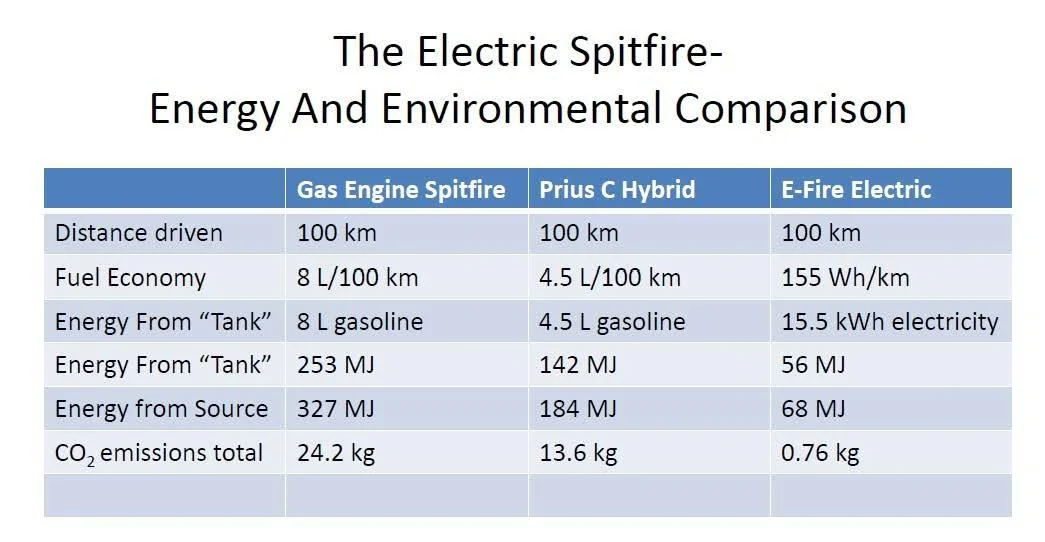
I’ll leave you with the measured and calculated energetic and environmental performance of my E-Fire versus itself prior to conversion, and versus my most efficient vehicle- my Prius C hybrid. The results should be crystal clear- in a region like Ontario with a good grid, EVs are an environmental godsend.
Tesla Cybertruck Charging cars at home at night is not the way to go, Stanford study finds beta&t=apfo4EXtKYimzplqixJM78VN_kusFFhJy3RX6EUWPaE

Battery EVs are a tremendous technology- one that will greatly help us toward a future which allows us to enjoy most if not all of the benefits we’ve derived from fossil energy, but without the GHG consequences. They will allow us to retain the freedom of individual transport, without discharging toxic emissions directly into the breathing zone of passersby. And the efficiency of the EV drivetrain and lithium-ion battery combination mean that we won’t have to build out as much expensive renewable infrastructure as we would if we were going to rely on other, less efficient renewable fuels such as biofuels or hydrogen- fuels which require more lossy steps of chemical or energy conversion. EVs don’t need hype or exaggerated claims to make them out to be more than they are: they can definitely stand on their own merits.
Sponsored


Top