OP
OP
cvalue13
Well-known member
- Joined
- Aug 17, 2022
- Threads
- 74
- Messages
- 7,153
- Reaction score
- 13,769
- Location
- Austin, TX
- Vehicles
- F150L
- Occupation
- Fun-employed

- Thread starter
- #91
Appreciate all the thought you’ve put into this.With that understanding in hand, accepting the internal structure as the CT's primary structure becomes a lot more palatable.
If I may, from the layman’s chair, push back on a few things:
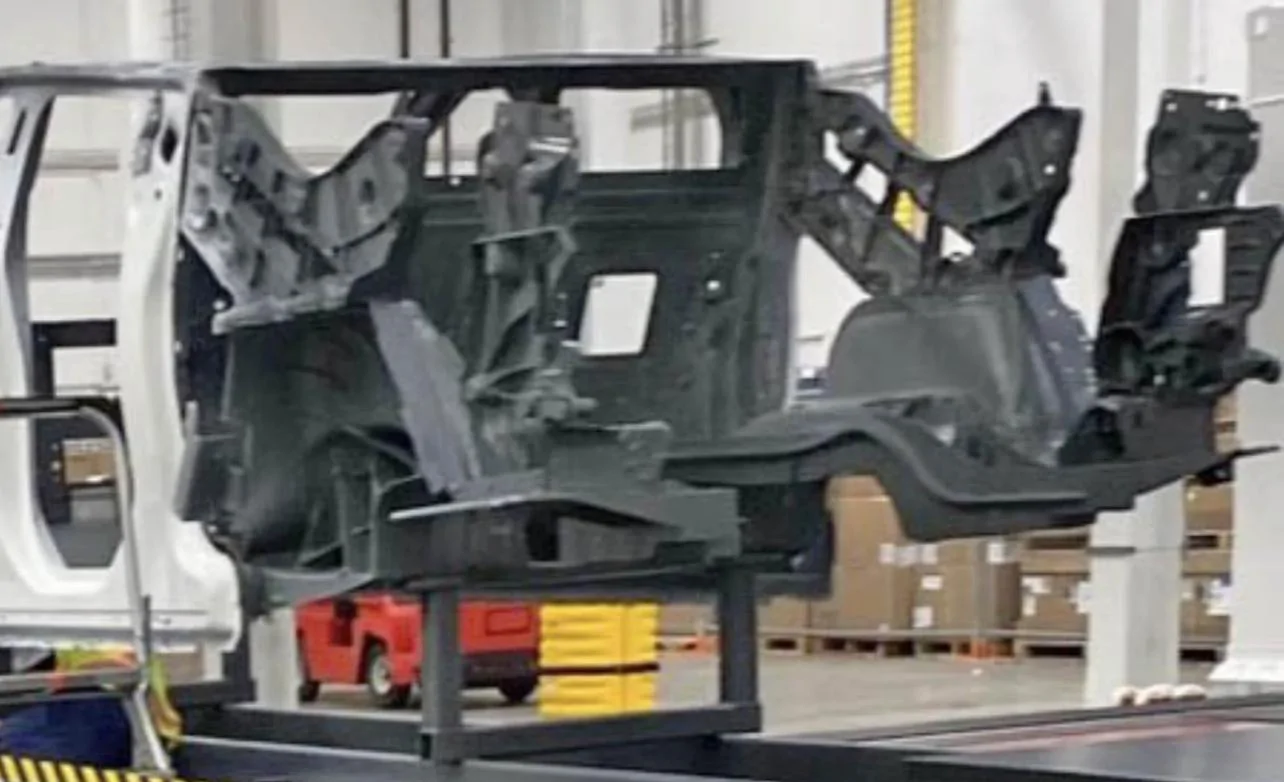
We should get out of the way that as you know I don’t believe the sail storage exists. This most recent frame/casting photo only further confirms that for me. The bulk of the sails, in my view, are inhabited by the rear casting and makes far too nominal any remaining void.
If you’ll agree on that momentarily only purposes of argument’s sake on topic at hand:
consider the reasons that historically unibody and monocoque designs have been insufficient for significant payload, towing, or offroad capabilities. The reasons for this you’ve described in parts of your post. but in real terms, with a significant payload or towing, the bodies would flex so badly the doors wouldn’t open until the load was released. The reason for this was basically that the rear wheels created a fulcrum, the front of the vehicle a counter-weight, and so a significant load on the hitch or rearward portion of the bed and the body-frame would begin bending “around” the wheels/fulcrum, causing the vehicle to distort longitudinally and incur damage at any weak point forward of the rear wheels. Similar issues occurred off-roading with any material torsional forces applied.That means it is only the front fender, and possibly the rear sail fender, if it doesn't open, that can actually be attached to the CT in a mechanical way that allows for loads to be passed through them. As such the amount that the SS skin can contribute to the structural rigidity of the frame is limited to those areas only, and given that the casts are attached to the drive assembly and suspension, and the suspension risers are supported by the cabin frame and casts, there is little to no load that will go through the outside skins themselves, without being forced to make a detour there intentionally.
Now, if we believe the unveil payload/towing/off-roading claims, the CT as you’ve describe it would seem destined to meet the same fate. If it’s only material structural support were a rear aluminum casting attached to a central aluminum cab frame, then it would only be as strong as that joint at the cab/casting junction - for any of payload/towing force or torsional rotation.
For brevity and at only at this cartoon level of depth, the resulting conclusions would seem to be either:
(1) the CT as you describe it will not meet its on-screen payload/towing/offroad specs, or
(2) something else offers the CT more longitudinal (and torsional) rigidity
at the rear, I believe that ‘something else’ could be fairly assumed the SS panels, as follows:
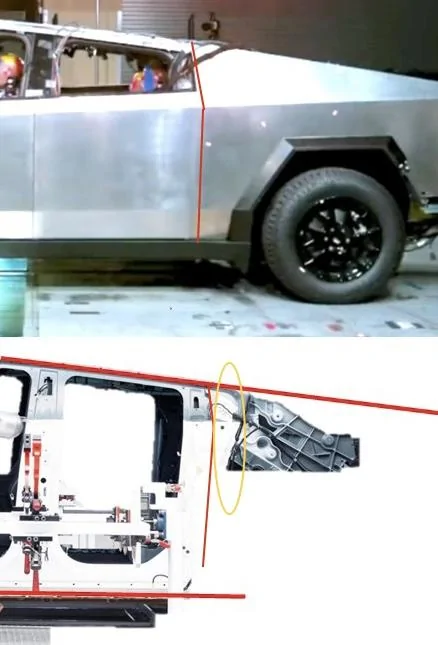
if the rear SS quarter panels is attached not only to the rear casting but also continues on to attach to the cab frame, those SS panels become effectively giant mending brackets. Those brackets would not just reinforce the cab-casting joint, but possibly become the primary means of adhering them.That means it is only the front fender, and possibly the rear sail fender, if it doesn't open, that can actually be attached to the CT in a mechanical way that allows for loads to be passed through them.
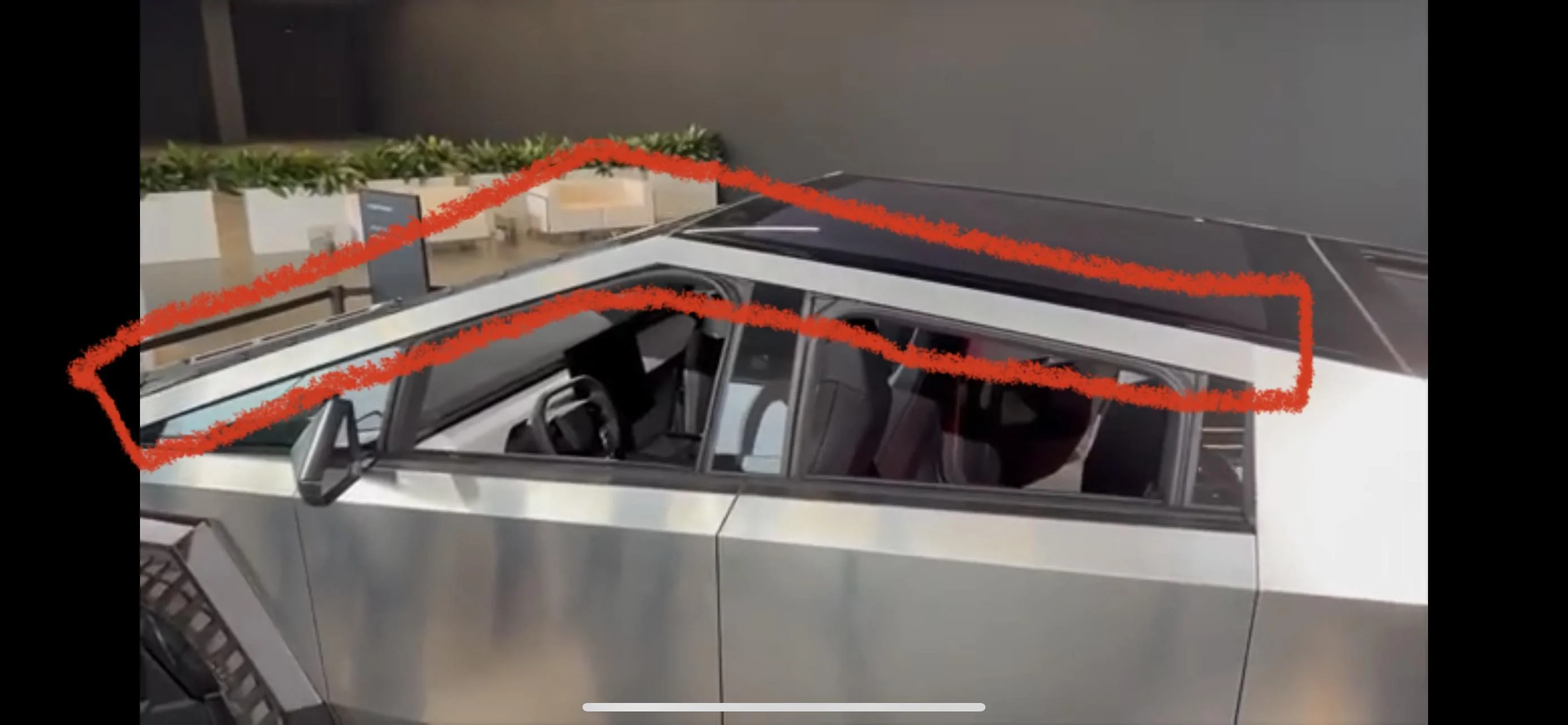
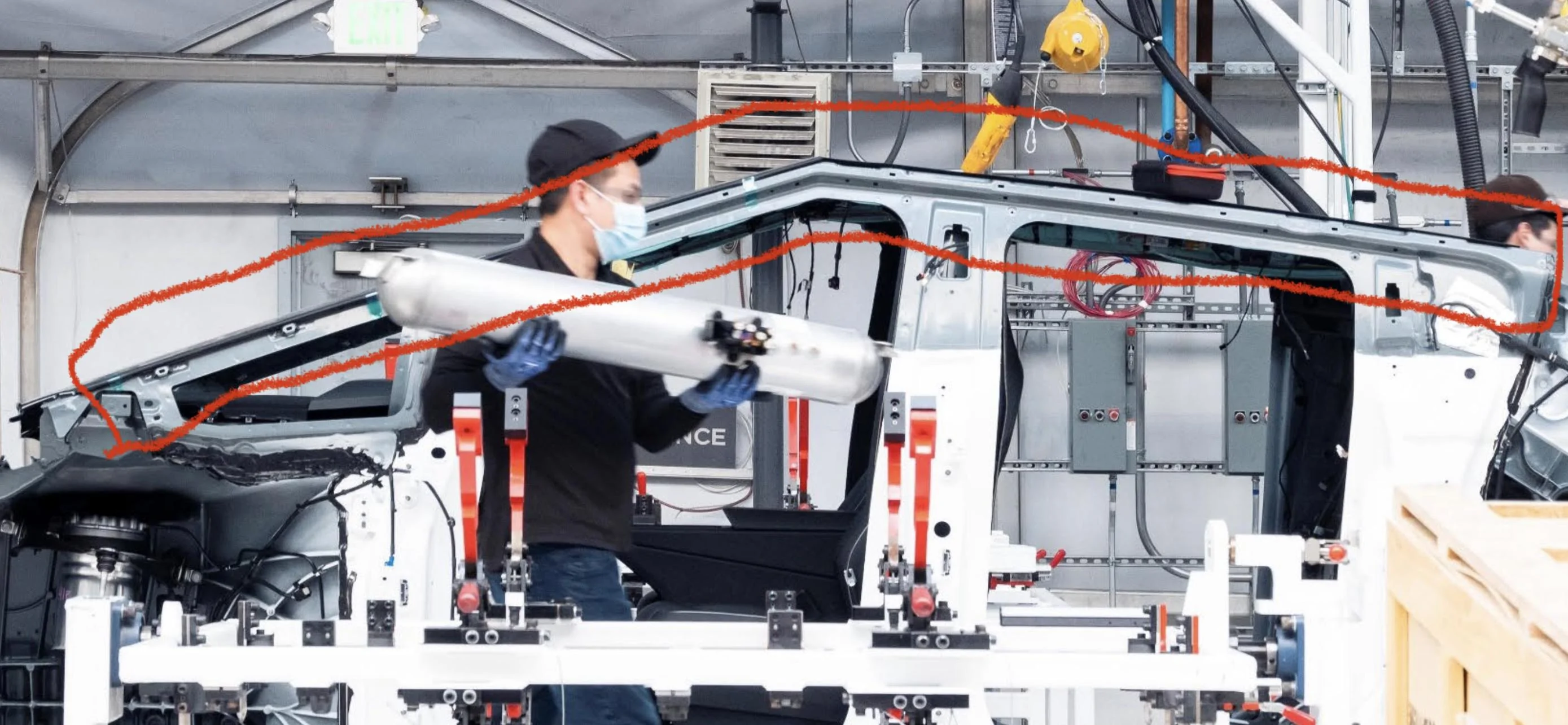
Also, it would possibly provide another explanation for the sail pillar design of the CT generally: those ‘triangles’ are designed in part to allow the rear quarter panels to transfer load at the hitch/rear of the bed up to the location of max sheer force in the casting/cab joint.
Similarly, as for torsional forces, the C-shape of the rear quarter panels likewise becomes a structural design choice - for reasons I find hard to put in text, but the “C-shape” mention likely clues you in on the intent.
all this talk an oversimplification for brevity (ha!), but in fine:
I’m torn by both understanding and partially agreeing with your post (especially concerning the portions of the vehicle forward of the ~rear door handle), while at the same time believing that fully adopting that view would mean the CT will not meet its stated payload/towing/offroad specs - I cannot believe the joint between the rear casting and can frame, in aluminum, would suffice.
To avoid that conclusion, it lends me to believe the rear quarter panels in particular are attached to the cab, essentially creating mending brackets that distribute the loads.
And to further believe, on that view, yet another reason the sail storage isn’t real

Sponsored