Sponsored

Cyberman

Well-known member
First Name
Adam
Joined
Apr 7, 2020
Threads
37
Messages
2,518
Reaction score
3,964
Location
San Diego
Vehicles
F150,F550, Escape
Occupation
Cybercontractor
Country flag
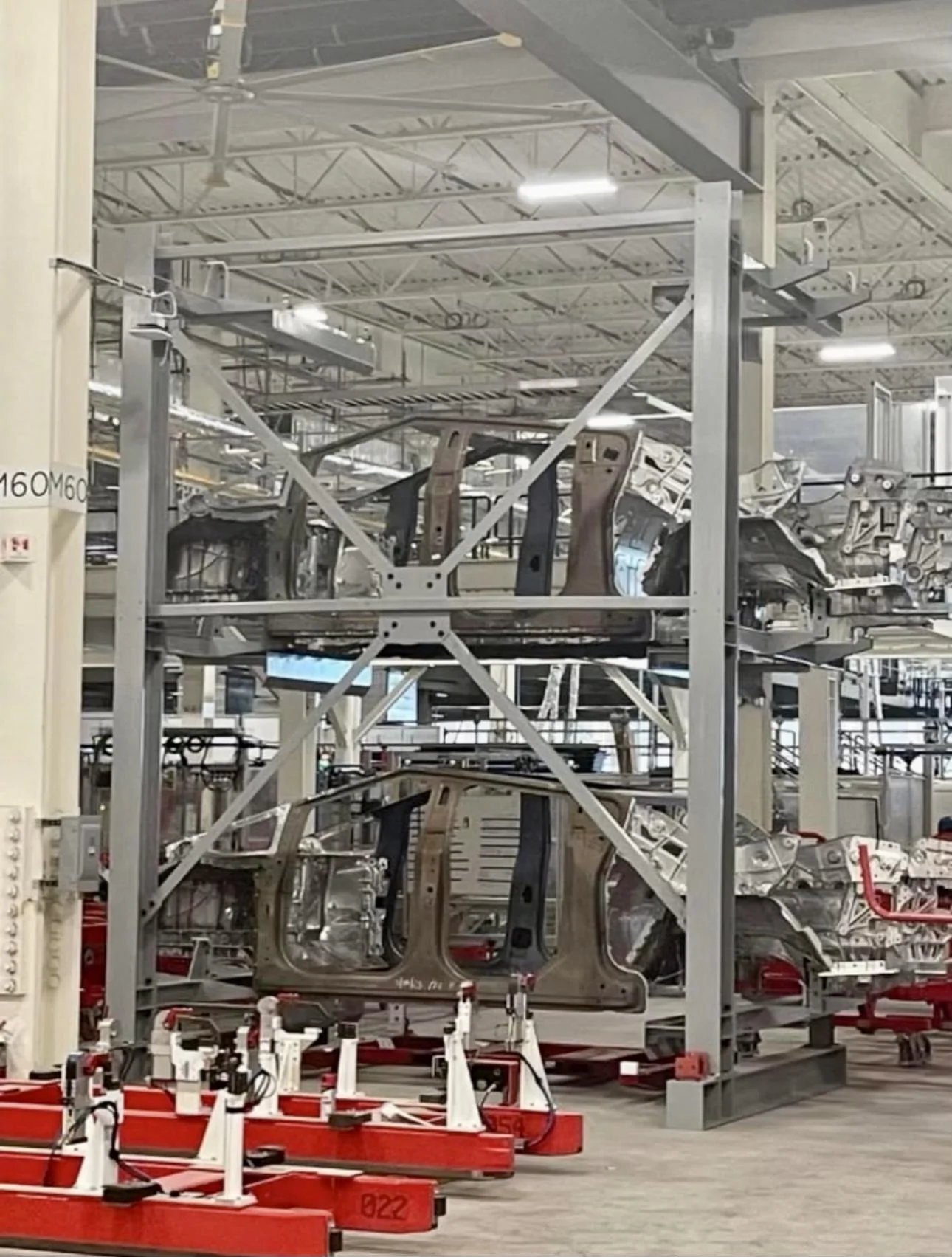
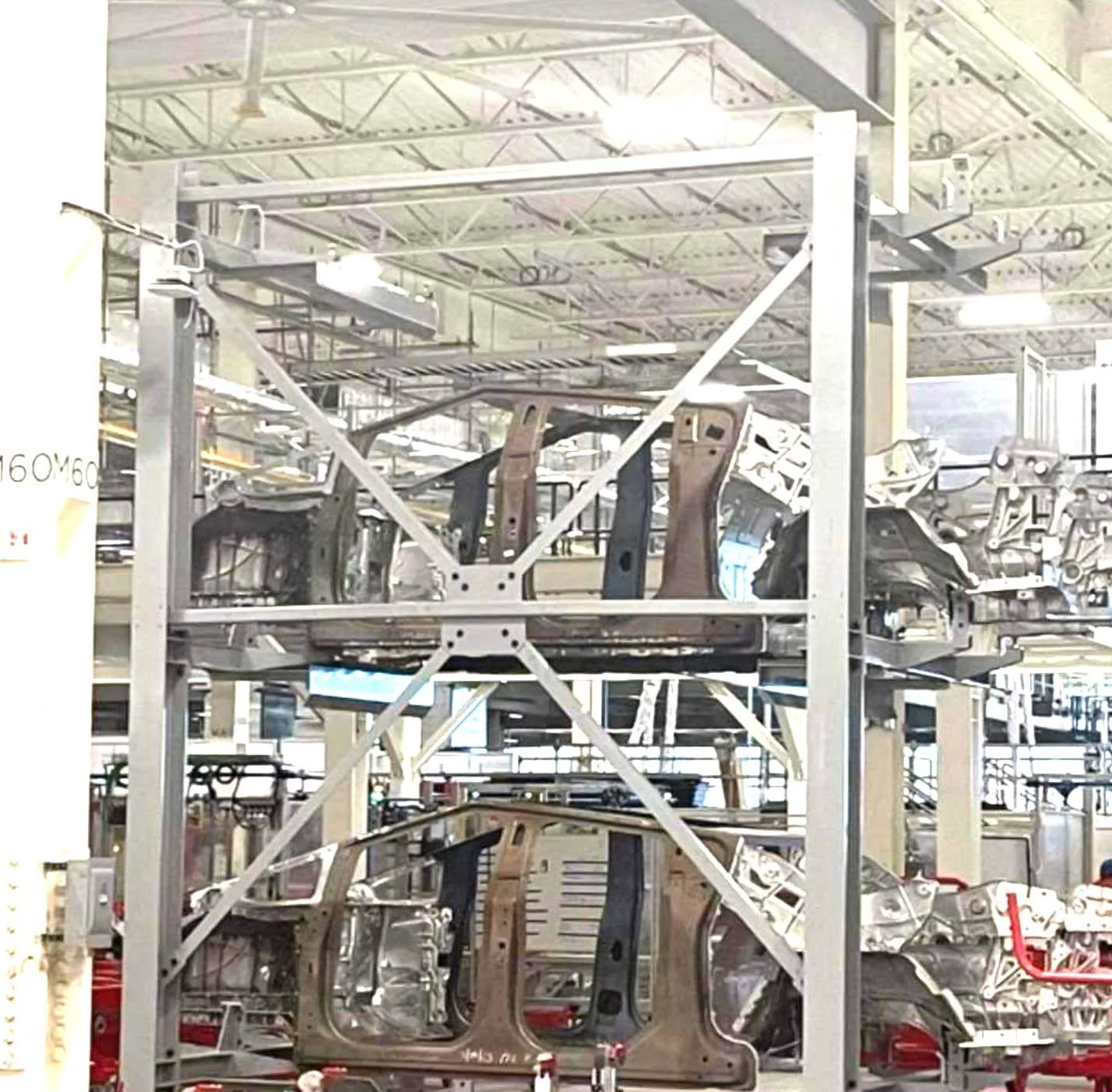
Someone named Anonymous posted this pic on a social media site. I managed too grab it before it disappeared. He must have pulled it because I went to comment and it showed a "this is no longer available" page. Please take down if not allowed.

Tesla Cybertruck frames castings.jpg
You see those little things that look like golf bags at the bottom of the pic? Those are people. Real, full-size people, not midgets. That's how big and awesome Cybertruck is. I have spoken!
Sponsored


Cyberman

Well-known member
First Name
Adam
Joined
Apr 7, 2020
Threads
37
Messages
2,518
Reaction score
3,964
Location
San Diego
Vehicles
F150,F550, Escape
Occupation
Cybercontractor
Country flag
Will y'all stop it with the "exoskeleton" references?!? They're meaningless!!! Every car without a cross braced roll cage can be called "exoskeleton". Anything that Tesla produces can be argued to fit the loose definition of exoskeleton. There is no legal definition of the term in relation to automobiles that can be referenced to declare that a unibody, or stamped metal and castings covered with non-structural metal, or even body on frame construction is inconsistent with Elon's comment. So long as it doesn't have bones on the inside covered with tendons, ligaments, muscle and skin, exoskeleton fits. ?
Pipe down, Dan. We at CTOC take the term exoskeleton very seriously. No other vehicle has 3mm of cold rolled awesomeness surrounding it, no other vehicle ever had the moniker exoskeleton. It's ours, so quit fuckin' with it, see? Soft on the inside, hard on the outside, like the lobster. So stop bein' a wise guy, eh? Hey, you're not a copper, are you?
 

Jhodgesatmb

Well-known member
First Name
Jack
Joined
Dec 1, 2019
Threads
89
Messages
6,488
Reaction score
9,025
Location
San Francisco Bay area
Website
www.arbor-studios.com
Vehicles
Tesla Cybertruck FS AWD, Tesla Model Y LR
Occupation
Retired AI researcher
Country flag
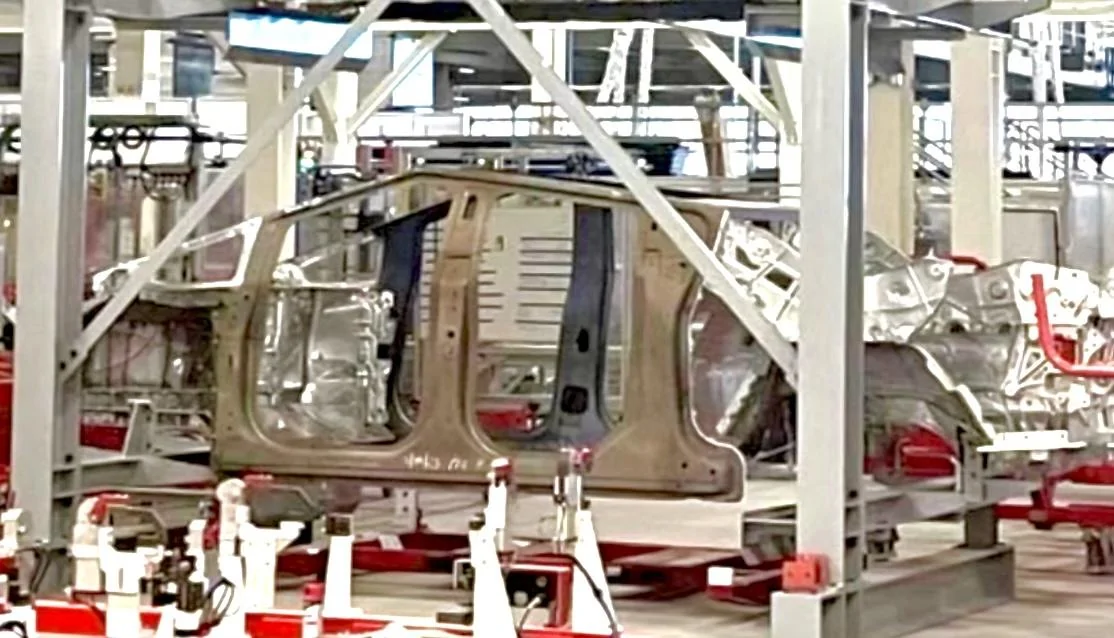
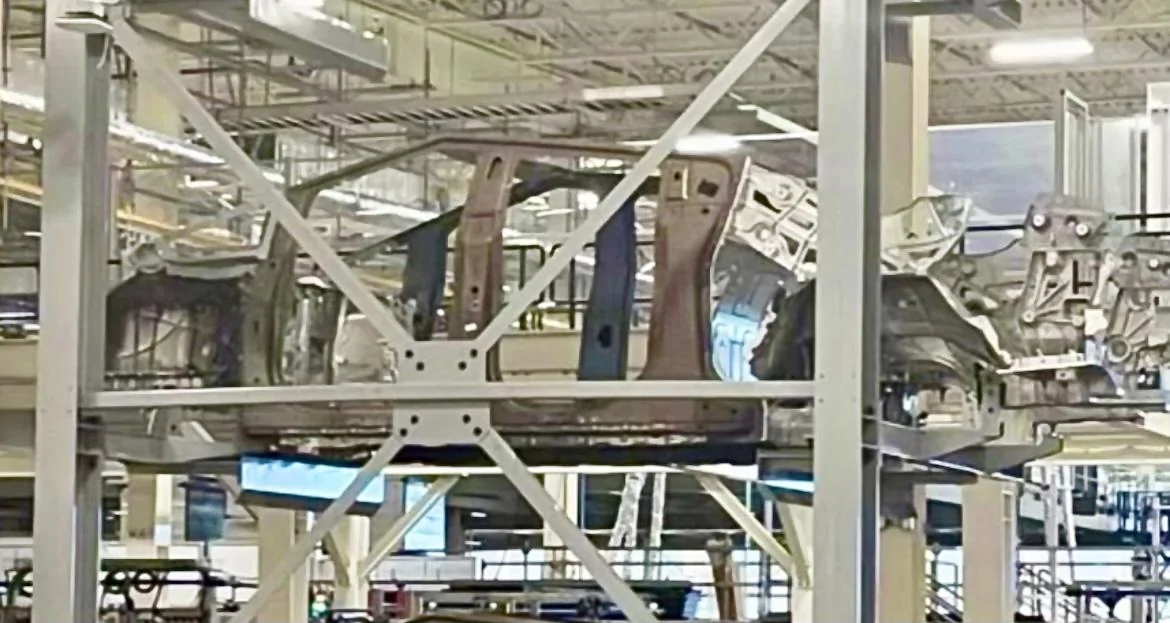
Partial rear castings, no front castings (?) - but good shot of the firewall forward of cab:

55576882-A46F-40DF-B08A-89469B0EA37C.jpeg


0C30F79D-6DAC-44EF-B55E-6D7218B57E63.jpeg


37AE9D94-D367-4445-8A57-BCAADE5BBD4E.jpeg
Castings look complete to me, but no exoskeleton. Surprising since these are sitting in the general assembly area and not the machine shop.
 

greggertruck

Well-known member
First Name
g
Joined
Mar 30, 2022
Threads
228
Messages
2,628
Reaction score
7,655
Location
Zimbabwe
Website
www.twitter.com
Vehicles
Dual-CT
Occupation
I post Cybertruck stuff on the Internet and people like it.
Country flag
Oh, OK. Not sure I needed to see that, complete with anatomically correct butthole
Apologies. Truly. The point wasn’t being made directly to you. Deeply sorry Cyberman.


Jhodgesatmb

Well-known member
First Name
Jack
Joined
Dec 1, 2019
Threads
89
Messages
6,488
Reaction score
9,025
Location
San Francisco Bay area
Website
www.arbor-studios.com
Vehicles
Tesla Cybertruck FS AWD, Tesla Model Y LR
Occupation
Retired AI researcher
Country flag
I don’t see the exoskeleton design. The BIW appears to be very traditional.
Huh? Traditional for a Tesla because there are 2 gigacastings and a set of stampings for the cab? Only one car in the world is like that and it is made by Tesla in this factory - so not traditional.
 

FutureBoy

Well-known member
First Name
Reginald
Joined
Oct 1, 2020
Threads
215
Messages
3,556
Reaction score
6,062
Location
Kirkland WA USA
Vehicles
Toyota Sienna
Occupation
Financial Advisor
Country flag
I don’t see the exoskeleton design. The BIW appears to be very traditional.
Hmmm.... I can understand the confusion.

Given the below picture, it seems like so much for the metal is formed in a way that looks like what a traditional manufacturer has internally as the frame and structural pieces. We don't regularly see most of those pieces in a traditional ICE vehicle because they get covered up by a thin sheet of metal/carbon/fiber/plastic. Those outside pieces are basically just a way to make the vehicle look "like it should" and if designed correctly, help somewhat with aerodynamics.

But let's look at the picture below a little more closely.

Tesla Cybertruck Cybertruck BIW body-in-white frames with front/rear castings 🤩 [7/11/23] 1689136732665


First off, let's look at what parts of the image will actually be exposed to or be visible from the outside of the vehicle. Which parts could we potentially see or take a picture of if we were to see the vehicle say, at the Petersen in the parking lot the next time Franz shows up with the kids.

1. Wheel wells - I get that walking around a vehicle most people don't "see" the wheel wells because they tend to have a wheel and tire in front. But much like a lobster that has legs, the exoskeleton has attachments. In this case the wheels, drive shaft, suspension, etc parts could all be considered part of the lobster legs that are outside the exoskeleton. So from what I see, the wheel wells are part of a proper exoskeleton.

2. The pillars around the doors - Now technically, if the doors of the vehicle are shut, then this portion of the body is not visible from the outside. But if you just open the doors, you can directly see this part of the skeleton. In many vehicles there are important regulatory stickers right on these pillars. Much like when a lobster loses a leg or a claw and the body of the lobster still has its exoskeleton protection, the physical body and strength of the passenger cabin is in a sense defined as the cabin without the doors. Yes the doors help strengthen things but mostly because they are wedged between the door pillars and locked tight. Not because the fringe of the doors cover the pillars.

3. The metal frame above the doors - Again, like the pillars, without the doors the portion of this metal facing us is exposed to us directly when the doors are open. The top portion of that metal is exposed under the glass roof. The question here is if the glass fits the bill of being structurally sound enough to be part of the exoskeleton. Looking down from the top of the finished vehicle, the only parts between the occupants and the great blue sky are the glass and these metal parts. I would argue, that this metal and potentially the glass itself are part of the exoskeleton and have nothing "outside" of them to cover the exoskeleton.

4. The small triangles on the front of the vehicle at the top of the front wheel wells and going up the side of the A pillar - Much like the metal at the top of the doors, these little triangles may or may not be structural. But they get covered by glass and that's about it. So either the glass or this small piece of metal or, more likely, the two parts together are the structure for this portion. And again they are exposed to the outside so I think of them as classical exoskeleton.

5. The portion of the rear casting between the 2 wheel wells - Much like the wheel wells themselves, this portion has some pieces like drive shafts, wiring, etc that will get exposed here. But if we look at the underside pictures of the CT that Franz last showed us at the Petersen, this portion of the vehicle is covered with what looks like some sort of composite material to cover up the inner workings and protect it from debris etc that might come up from the ground below. So far, this is the first portion of the vehicle that in final state will not be directly exposed to the outside.

6. The sail pillar section above the wheel wells - This part of the metal seems to be part of the rear giga-casting. And in the final vehicle it gets covered on both the inside and the outside with what looks to be the super strong stainless steel. So the metal exposed here is, in the end, internal structure and not visible to the outside.

7. The giga-casting portions at the bottom between the A and C pillars. - I don't really know if this portion gets covered from the bottom by the composite protection pieces under the CT body. Looking at how the front casting has a bit of a raised area there though, I would argue that it probably gets covered.

So given the above, how much of the metal that we can see ends up being "internal" and not part of what one might naively think of as an exoskeleton like on a lobster? I would argue that really only items 5, 6, and 7 would count as being internal. The vast majority of the metal we can see will also be visible in the final completed vehicle.

Now though, lets think of what frame elements on a typical ICE vehicle there would be that we do not see here.

1. The under body of the cabin - We cannot see exactly what is in this portion of the body in this picture. But we know that this is where the "structural battery pack" gets bolted in. Now there are multiple layers to the battery pack but since Tesla seems to think of the battery pack as a single element in the final build, I think of it as part of the exposed exoskeleton in the end because it is visible from underneath the vehicle.

2. The firewall - In a typical ICE vehicle there is a huge hunk of metal filled with explosives that are being lit and exploded on a regular basis at the front of the vehicle. As a result there is a need for a very strong "fire proof" wall between the passenger cabin and the front of the vehicle. I believe the firewall is a part of the structural frame in these ICE vehicles. In the CT though, it looks like no such structural metal is needed here. If there was a need for this, it most likely would have been part of the front giga-casting.

3. The bed wall - On a pickup type vehicle, there is a need for a strong wall between the passenger compartment and the bed of the truck so that in a head-on collision, heavy contents of the bed do not fly straight through the passenger compartment crushing all occupants. From the looks of the image above, there is no such wall installed yet. We know that a wall does end up getting put in though. Now is that wall part of an exoskeleton? Well if the tonneau cover is open, I would argue that it is. So again, this part of the structure fits the classic exoskeleton idea.

So what else is left at this point that could be considered to either be exoskeleton or not but is still structural.

Well we know that there is the SS body. I don't know if that will qualify as being strong enough to be truly structural but based on what we see in the picture, there doesn't seem to be any other structural members underneath the SS. So if the SS is structural, it qualifies as exoskeleton. If it is not structural, it is not actually part of the skeleton.

Other than that, we do have some "strong" parts like bumpers but those don't seem to be classified as structural in either ICE or any other kind of vehicle.

So given all the above, when I look at an image like we were given here, I see essentially the body of a lobster and think exoskeleton. Really, an exoskeleton in the classic sense. What I don't see is the classic truck style frame formed with I-beams, thick solid steel components that stiffen the frame, and a thin metal "body" attached to the outside. I also do not see the "body on frame" style build where a bunch of structural members are all built up, attached to each other, welded together, and then again have a thin metal "body" attached to the outside.

But hey, I am just a random person on the internet with no claim to any automotive expertise. So if you like, just take my musings as immaterial and ignore the whole thing. I have seen multiple people over the last few years try to argue many different ways about the exoskeleton question. The vast majority of the arguments seem to come down to semantics and / or how you want to define various terms. Plus for every one of the "experts" who make an argument, there is another "expert" arguing the exact opposite point. So if you ask me, those arguments don't really hold much water either.

In the end, I just want to be out driving my CT and enjoying the great benefits of a very solid and strong SS outer shell that reminds me of a lobster body. Call it whatever you want. I just like the strength and protection that outside SS shell provides.
 
Last edited:

HaulingAss

Well-known member
Joined
Oct 3, 2020
Threads
28
Messages
10,319
Reaction score
20,736
Location
Western Washington, USA
Vehicles
Cybertruck DM, 2010 F-150, 2018 Performance Model 3, 2024 Performance Model 3
Country flag
I don’t see the exoskeleton design. The BIW appears to be very traditional.
I'm guessing you have never been involved in building pickup chassis' for any of the major OEM's. :ROFLMAO:

There is nothing traditional about it. That thing would crumple like a bad engineering experiment with 3500 lbs. in it, if you tried to drive it like that, without the 3mm thick SS tying it all together, making it rigid.
 

greggertruck

Well-known member
First Name
g
Joined
Mar 30, 2022
Threads
228
Messages
2,628
Reaction score
7,655
Location
Zimbabwe
Website
www.twitter.com
Vehicles
Dual-CT
Occupation
I post Cybertruck stuff on the Internet and people like it.
Country flag
I'm guessing you have never been involved in building pickup chassis' for any of the major OEM's. :ROFLMAO:

There is nothing traditional about it. That thing would crumple like a bad engineering experiment with 3500 lbs. in it, if you tried to drive it like that, without the 3mm thick SS tying it all together, making it rigid.
Ya, i see what you’re saying

Like it’s got some structure but it’s really just to bridge the panels not to really act like a framing in the traditional sense?


greggertruck

Well-known member
First Name
g
Joined
Mar 30, 2022
Threads
228
Messages
2,628
Reaction score
7,655
Location
Zimbabwe
Website
www.twitter.com
Vehicles
Dual-CT
Occupation
I post Cybertruck stuff on the Internet and people like it.
Country flag
Doesn’t matter what surfaces, some people gotta cry and whine about something.
Whine??? That’s not whining. It’s 9 pages of “April fools day” fun.
 

HaulingAss

Well-known member
Joined
Oct 3, 2020
Threads
28
Messages
10,319
Reaction score
20,736
Location
Western Washington, USA
Vehicles
Cybertruck DM, 2010 F-150, 2018 Performance Model 3, 2024 Performance Model 3
Country flag
Ya, i see what you’re saying

Like it’s got some structure but it’s really just to bridge the panels not to really act like a framing in the traditional sense?
Oh no, everything you see there is framing, in the traditional (non-automotive) sense of the word "framing", but it's not put together anything like any traditional car or truck I've ever seen. And the way much of it, especially the load area, is comprised of castings, which are much stiffer than the stamped steel frame it's attached to, tells me that the stamped portion that forms most of the safety cage needs to be stiffened up to be solidly attached to the stiffer castings. And the castings need something to transfer their loads to, so they don't fracture when loaded. Obviously, this will be accomplished by sandwiching the 3mm thick SS to the outer surface of both the castings and the cabin stampings, thus unitizing them (in terms of loads applied in any direction) far more effectively than the attachment points at the contact areas between the stampings and casting alone could ever achieve. The 3mm thick stainless steel skin works in harmony with the castings and stampings to unitize the structure such that the material strength at any given point is not overwhelmed (assuming the design is successful).

I say the above under the assumption the design is successful, because I have to believe Tesla has tested the crap out of the basic structure, found the achilles heel(s) and redesigned to apply the knowledge gained, in an iterative process. Unless they are so good at finite element modeling that they nailed it on the first try, that's just too hard to believe.

This took massively more engineering than a typical truck that has been slowly re-iterated for decades, a little here, a little there, and that is due to the number of different materials and constructions used (stampings, castings and plate steel) all in one unitized structure of a very unique design.

It's astounding, is what it is!

I'm sure the legacy OEM engineers are looking at it and thinking, "gee, I've never been asked to develop anything like that, that new, that different, that over-arching, that complex!" They are more accustomed to engineering a new bracket that attaches to the frame and will hold a body panel at the correct position. That alone takes multiple layers of engineering, but it is child's play compared to what Tesla has done here.

Engineers at legacy OEM's would be laughed out of the room if they suggested under-taking such an engineering project. Probably even fired. No one would know how to manage such a project, or even how to validate it properly when they had their first engineering prototype. Scratch all that, they wouldn't even know where to begin because it's not in their well-established corporate DNA.

Tesla has designed something that would literally be impossible to design at a legacy OEM. It's a huge risk, but I trust that Tesla knows how to validate it to minimize risk of warranty expense. Here's why:

Tesla is famous at avoiding the "sunk cost" fallacy and would have cancelled the project if the results were not good enough to put into production. And "good enough" for Tesla means "exceptional". The "sunk cost fallacy" is briefly described by Wikipedia quite well:

In economics and business decision-making, a sunk cost (also known as retrospective cost) is a cost that has already been incurred and cannot be recovered.[1][2] Sunk costs are contrasted with prospective costs, which are future costs that may be avoided if action is taken.[3] In other words, a sunk cost is a sum paid in the past that is no longer relevant to decisions about the future. Even though economists argue that sunk costs are no longer relevant to future rational decision-making, people in everyday life often take previous expenditures in situations, such as repairing a car or house, into their future decisions regarding those properties.

Bygones principle[edit]
According to classical economics and standard microeconomic theory, only prospective (future) costs are relevant to a rational decision.[4] At any moment in time, the best thing to do depends only on current alternatives.[5] The only things that matter are the future consequences.[6] Past mistakes are irrelevant.[5] Any costs incurred prior to making the decision have already been incurred no matter what decision is made.
We know the Tesla corporate culture is fully aware of the sunk cost fallacy and adept at avoiding falling victim to it, we know this simply by watching their actions. This is why we see them ripping out brand new factory paving that was just laid three weeks previous. It's why they spent money developing the "Magic Dock" and then quit deploying it as soon as it had achieved its presumed purpose of getting the major OEMs on the NACS charging bandwagon. Tesla never hesitates to back down if they realize they are on a faulty path. The fact that Elon has given his stamp of approval to the Cybertruck every step of the way is a very good sign that it's a great design.

People hear Elon talk up the Cybertruck and they don't understand what's so great about it, I mean, it's a truck, right? And it will do truck things, right? Even if does look a little funny to some traditionalists. But a truck is only a better truck to Elon if it's demonstrably better. That means it has to do the truck things better, it has to carry more weight without breaking, it has to go over bigger obstacles and wade through deeper water and get better traction and do it all easier, faster and more efficiently, while lasting longer. Most importantly, it has to offer better value for what you get. And to Elon that means it needs better engineering. Engineering is not expensive to Elon for two reasons:

1) Elon knows that 100 expensive, highly experienced engineers are worse than 8 really good ones who have already proven themselves to be exceptional. And he has a lot of exceptional engineers. And I'm sure that a lot more of the new young engineers turn into exceptional engineers in such an engineering environment. I'm not saying only 8 engineers worked on Cybertruck, but it was a lot less, probably by a factor of 10, than legacy would have deployed had they been crazy enough to attempt such a crazy engineering exercise. Only Tesla can pull such a thing off, and only Tesla would even try.

2) Elon doesn't cost out such engineering over 5 or 6 years because he know a truely superior product, one that has significant cost and performance advantages over the status quo, will have a life of decades. In his mind, he costs the engineering required over at least a decade of expanding production. Engineering is cheap when looked at properly, costed over enough vehicles - legacy auto avoids engineering wherever possible. Which is why a 2023 truck is not very different from a 1970 truck, in terms of the basic design.

Not only is engineering cheap, it is the ticket to succeeding when it comes to complex, mass-produced manufactured items. Because it leads to a better recipe. And the engineering of the vehicle itself is only a portion, it's the engineering of the production system and equipment that matters even more.

So when Elon puts his stamp of approval on the Cybertruck, I think I can trust it. Not because I worship Elon, but because his track record, and his companies track records, are too good to discount. And they know how to avoid the sunk cost fallacy, how to rip out the bad and replace it with the good. And they have tested this thing behind closed doors, far more than we will ever know. With computer simulations and with real world tests to validate the finite element analyses.

Sure, the Cybertruck will have teething pains, and Elon knows it will, all new cars do. And the Cybertruck will probably have a few more than Model 3 and Model Y, which actually had very few in the bigger picture, as far as new models go. I have the 9,0xxth Model 3 made, it has over 70K on the odometer and it's a smashing good car over 5 years later, blowing away other cars made today, both gas and electric, with it's efficiency, power, low cost of ownership and pleasure to drive.

Tesla will fix any Cybertruck niggles as they crop up, and none will be show stoppers because Tesla knows how to put things into perspective - they take care of the big stuff and leave the little niggles to the last minute (and beyond).

So, if any of this has scared any of you, cancel your reservations and let me move up as close to the front of the line as possible. I will take quite a few niggles, if necessary, to get my hands on this engineering marvel as soon as possible! I would take the first one they are willing to release to the general public, if only they were willing to sell it to me!

If I hear anyone else say it looks like a traditional frame, I'm going to keel over and die of laughter!

Hang tough everyone, I think we are in for a real treat!
 
Last edited:

WHIZZARD OF OZ

Well-known member
First Name
Ivan
Joined
Mar 11, 2021
Threads
1
Messages
2,288
Reaction score
2,090
Location
Australia
Vehicles
VW Up!
Occupation
Electric Wheelchair Builder
Country flag
Hmmm.... I can understand the confusion.

Given the below picture, it seems like so much for the metal is formed in a way that looks like what a traditional manufacturer has internally as the frame and structural pieces. We don't regularly see most of those pieces in a traditional ICE vehicle because they get covered up by a thin sheet of metal/carbon/fiber/plastic. Those outside pieces are basically just a way to make the vehicle look "like it should" and if designed correctly, help somewhat with aerodynamics.

But let's look at the picture below a little more closely.

1689136732665.png


First off, let's look at what parts of the image will actually be exposed to or be visible from the outside of the vehicle. Which parts could we potentially see or take a picture of if we were to see the vehicle say, at the Petersen in the parking lot the next time Franz shows up with the kids.

1. Wheel wells - I get that walking around a vehicle most people don't "see" the wheel wells because they tend to have a wheel and tire in front. But much like a lobster that has legs, the exoskeleton has attachments. In this case the wheels, drive shaft, suspension, etc parts could all be considered part of the lobster legs that are outside the exoskeleton. So from what I see, the wheel wells are part of a proper exoskeleton.

2. The pillars around the doors - Now technically, if the doors of the vehicle are shut, then this portion of the body is not visible from the outside. But if you just open the doors, you can directly see this part of the skeleton. In many vehicles there are important regulatory stickers right on these pillars. Much like when a lobster loses a leg or a claw and the body of the lobster still has its exoskeleton protection, the physical body and strength of the passenger cabin is in a sense defined as the cabin without the doors. Yes the doors help strengthen things but mostly because they are wedged between the door pillars and locked tight. Not because the fringe of the doors cover the pillars.

3. The metal frame above the doors - Again, like the pillars, without the doors the portion of this metal facing us is exposed to us directly when the doors are open. The top portion of that metal is exposed under the glass roof. The question here is if the glass fits the bill of being structurally sound enough to be part of the exoskeleton. Looking down from the top of the finished vehicle, the only parts between the occupants and the great blue sky are the glass and these metal parts. I would argue, that this metal and potentially the glass itself are part of the exoskeleton and have nothing "outside" of them to cover the exoskeleton.

4. The small triangles on the front of the vehicle at the top of the front wheel wells and going up the side of the A pillar - Much like the metal at the top of the doors, these little triangles may or may not be structural. But they get covered by glass and that's about it. So either the glass or this small piece of metal or, more likely, the two parts together are the structure for this portion. And again they are exposed to the outside so I think of them as classical exoskeleton.

5. The portion of the rear casting between the 2 wheel wells - Much like the wheel wells themselves, this portion has some pieces like drive shafts, wiring, etc that will get exposed here. But if we look at the underside pictures of the CT that Franz last showed us at the Petersen, this portion of the vehicle is covered with what looks like some sort of composite material to cover up the inner workings and protect it from debris etc that might come up from the ground below. So far, this is the first portion of the vehicle that in final state will not be directly exposed to the outside.

6. The sail pillar section above the wheel wells - This part of the metal seems to be part of the rear giga-casting. And in the final vehicle it gets covered on both the inside and the outside with what looks to be the super strong stainless steel. So the metal exposed here is, in the end, internal structure and not visible to the outside.

7. The giga-casting portions at the bottom between the A and C pillars. - I don't really know if this portion gets covered from the bottom by the composite protection pieces under the CT body. Looking at how the front casting has a bit of a raised area there though, I would argue that it probably gets covered.

So given the above, how much of the metal that we can see ends up being "internal" and not part of what one might naively think of as an exoskeleton like on a lobster? I would argue that really only items 5, 6, and 7 would count as being internal. The vast majority of the metal we can see will also be visible in the final completed vehicle.

Now though, lets think of what frame elements on a typical ICE vehicle there would be that we do not see here.

1. The under body of the cabin - We cannot see exactly what is in this portion of the body in this picture. But we know that this is where the "structural battery pack" gets bolted in. Now there are multiple layers to the battery pack but since Tesla seems to think of the battery pack as a single element in the final build, I think of it as part of the exposed exoskeleton in the end because it is visible from underneath the vehicle.

2. The firewall - In a typical ICE vehicle there is a huge hunk of metal filled with explosives that are being lit and exploded on a regular basis at the front of the vehicle. As a result there is a need for a very strong "fire proof" wall between the passenger cabin and the front of the vehicle. I believe the firewall is a part of the structural frame in these ICE vehicles. In the CT though, it looks like no such structural metal is needed here. If there was a need for this, it most likely would have been part of the front giga-casting.

3. The bed wall - On a pickup type vehicle, there is a need for a strong wall between the passenger compartment and the bed of the truck so that in a head-on collision, heavy contents of the bed do not fly straight through the passenger compartment crushing all occupants. From the looks of the image above, there is no such wall installed yet. We know that a wall does end up getting put in though. Now is that wall part of an exoskeleton? Well if the tonneau cover is open, I would argue that it is. So again, this part of the structure fits the classic exoskeleton idea.

So what else is left at this point that could be considered to either be exoskeleton or not but is still structural.

Well we know that there is the SS body. I don't know if that will qualify as being strong enough to be truly structural but based on what we see in the picture, there doesn't seem to be any other structural members underneath the SS. So if the SS is structural, it qualifies as exoskeleton. If it is not structural, it is not actually part of the skeleton.

Other than that, we do have some "strong" parts like bumpers but those don't seem to be classified as structural in either ICE or any other kind of vehicle.

So given all the above, when I look at an image like we were given here, I see essentially the body of a lobster and think exoskeleton. Really, an exoskeleton in the classic sense. What I don't see is the classic truck style frame formed with I-beams, thick solid steel components that stiffen the frame, and a thin metal "body" attached to the outside. I also do not see the "body on frame" style build where a bunch of structural members are all built up, attached to each other, welded together, and then again have a thin metal "body" attached to the outside.

But hey, I am just a random person on the internet with no claim to any automotive expertise. So if you like, just take my musings as immaterial and ignore the whole thing. I have seen multiple people over the last few years try to argue many different ways about the exoskeleton question. The vast majority of the arguments seem to come down to semantics and / or how you want to define various terms. Plus for every one of the "experts" who make an argument, there is another "expert" arguing the exact opposite point. So if you ask me, those arguments don't really hold much water either.

In the end, I just want to be out driving my CT and enjoying the great benefits of a very solid and strong SS outer shell that reminds me of a lobster body. Call it whatever you want. I just like the strength and protection that outside SS shell provides.
Well, l guess that's that!
NO-ONE is ever calling a CYBERTRUCK 'The Shrimp' ?
 

QuanTim

Active member
Joined
Mar 7, 2021
Threads
0
Messages
33
Reaction score
136
Location
UK
Vehicles
Cybertruck
Country flag
Oh no, everything you see there is framing, in the traditional (non-automotive) sense of the word "framing", but it's not put together anything like any traditional car or truck I've ever seen. And the way much of it, especially the load area, is comprised of castings, which are much stiffer than the stamped steel frame it's attached to, tells me that the stamped portion that forms most of the safety cage needs to be stiffened up to be solidly attached to the stiffer castings. And the castings need something to transfer their loads to, so they don't fracture when loaded. Obviously, this will be accomplished by sandwiching the 3mm thick SS to the outer surface of both the castings and the cabin stampings, thus unitizing them (in terms of loads applied in any direction) far more effectively than the attachment points at the contact areas between the stampings and casting alone could ever achieve. The 3mm thick stainless steel skin works in harmony with the castings and stampings to unitize the structure such that the material strength at any given point is not overwhelmed (assuming the design is successful).

I say the above under the assumption the design is successful, because I have to believe Tesla has tested the crap out of the basic structure, found the achilles heel(s) and redesigned to apply the knowledge gained, in an iterative process. Unless they are so good at finite element modeling that they nailed it on the first try, that's just too hard to believe.

This took massively more engineering than a typical truck that has been slowly re-iterated for decades, a little here, a little there, and that is due to the number of different materials and constructions used (stampings, castings and plate steel) all in one unitized structure of a very unique design.

It's astounding, is what it is!

I'm sure the legacy OEM engineers are looking at it and thinking, "gee, I've never been asked to develop anything like that, that new, that different, that over-arching, that complex!" They are more accustomed to engineering a new bracket that attaches to the frame and will hold a body panel at the correct position. That alone takes multiple layers of engineering, but it is child's play compared to what Tesla has done here.

Engineers at legacy OEM's would be laughed out of the room if they suggested under-taking such an engineering project. Probably even fired. No one would know how to manage such a project, or even how to validate it properly when they had their first engineering prototype. Scratch all that, they wouldn't even know where to begin because it's not in their well-established corporate DNA.

Tesla has designed something that would literally be impossible to design at a legacy OEM. It's a huge risk, but I trust that Tesla knows how to validate it to minimize risk of warranty expense. Here's why:

Tesla is famous at avoiding the "sunk cost" fallacy and would have cancelled the project if the results were not good enough to put into production. And "good enough" for Tesla means "exceptional". The "sunk cost fallacy" is briefly described by Wikipedia quite well:


We know the Tesla corporate culture is fully aware of the sunk cost fallacy and adept at avoiding falling victim to it, we know this simply by watching their actions. This is why we see them ripping out brand new factory paving that was just laid three weeks previous. It's why they spent money developing the "Magic Dock" and then quit deploying it as soon as it had achieved its presumed purpose of getting the major OEMs on the NACS charging bandwagon. Tesla never hesitates to back down if they realize they are on a faulty path. The fact that Elon has given his stamp of approval to the Cybertruck every step of the way is a very good sign that it's a great design.

People hear Elon talk up the Cybertruck and they don't understand what's so great about it, I mean, it's a truck, right? And it will do truck things, right? Even if does look a little funny to some traditionalists. But a truck is only a better truck to Elon if it's demonstrably better. That means it has to do the truck things better, it has to carry more weight without breaking, it has to go over bigger obstacles and wade through deeper water and get better traction and do it all easier, faster and more efficiently, while lasting longer. Most importantly, it has to offer better value for what you get. And to Elon that means it needs better engineering. Engineering is not expensive to Elon for two reasons:

1) Elon knows that 100 expensive, highly experienced engineers are worse than 8 really good ones who have already proven themselves to be exceptional. And he has a lot of exceptional engineers. And I'm sure that a lot more of the new young engineers turn into exceptional engineers in such an engineering environment. I'm not saying only 8 engineers worked on Cybertruck, but it was a lot less, probably by a factor of 10, than legacy would have deployed had they been crazy enough to attempt such a crazy engineering exercise. Only Tesla can pull such a thing off, and only Tesla would even try.

2) Elon doesn't cost out such engineering over 5 or 6 years because he know a truely superior product, one that has significant cost and performance advantages over the status quo, will have a life of decades. In his mind, he costs the engineering required over at least a decade of expanding production. Engineering is cheap when looked at properly, costed over enough vehicles - legacy auto avoids engineering wherever possible. Which is why a 2023 truck is not very different from a 1970 truck, in terms of the basic design.

Not only is engineering cheap, it is the ticket to succeeding when it comes to complex, mass-produced manufactured items. Because it leads to a better recipe. And the engineering of the vehicle itself is only a portion, it's the engineering of the production system and equipment that matters even more.

So when Elon puts his stamp of approval on the Cybertruck, I think I can trust it. Not because I worship Elon, but because his track record, and his companies track records, are too good to discount. And they know how to avoid the sunk cost fallacy, how to rip out the bad and replace it with the good. And they have tested this thing behind closed doors, far more than we will ever know. With computer simulations and with real world tests to validate the finite element analyses.

Sure, the Cybertruck will have teething pains, and Elon knows it will, all new cars do. And the Cybertruck will probably have a few more than Model 3 and Model Y, which actually had very few in the bigger picture, as far as new models go. I have the 9,0xxth Model 3 made, it has over 70K on the odometer and it's a smashing good car over 5 years later, blowing away other cars made today, both gas and electric, with it's efficiency, power, low cost of ownership and pleasure to drive.

Tesla will fix any Cybertruck niggles as they crop up, and none will be show stoppers because Tesla knows how to put things into perspective - they take care of the big stuff and leave the little niggles to the last minute (and beyond).

So, if any of this has scared any of you, cancel your reservations and let me move up as close to the front of the line as possible. I will take quite a few niggles, if necessary, to get my hands on this engineering marvel as soon as possible! I would take the first one they are willing to release to the general public, if only they were willing to sell it to me!

If I hear anyone else say it looks like a traditional frame, I'm going to keel over and die of laughter!

Hang tough everyone, I think we are in for a real treat!
One of the best takes I've read on here. Perfect summation of Tesla, Elon and the Cybertruck ethos!
 

FutureBoy

Well-known member
First Name
Reginald
Joined
Oct 1, 2020
Threads
215
Messages
3,556
Reaction score
6,062
Location
Kirkland WA USA
Vehicles
Toyota Sienna
Occupation
Financial Advisor
Country flag
One of the best takes I've read on here. Perfect summation of Tesla, Elon and the Cybertruck ethos!
Not that I should be talking but…

Does it count as a summation if it’s TLDR?
Sponsored


Top