Sponsored

Cybertruck Trailer Hitch/Casting Failure @10,400 lbs *VERTICAL LOAD*

cybercricket

Well-known member
Joined
Oct 31, 2024
Threads
13
Messages
659
Reaction score
798
Location
Oregon
Vehicles
Cybertruck
Country flag
I'm not worried about mine in a towing capacity. But is there risk in horizontal load when I'm using my truck to yank out a stump or pull somebody out of a ditch or snow? 7000 truck yoinking a stuck object? Is that reason to worry?
Use a dynamic recovery rope for such applications.
Sponsored


Baldyloxx

Well-known member
Joined
Oct 10, 2023
Threads
2
Messages
519
Reaction score
619
Location
Earth
Vehicles
Model Y
Country flag
…it’s not rated for 10k tongue weight

so what exactly is this proving?

other than chaos generates clicks…
 
Last edited:

Baldyloxx

Well-known member
Joined
Oct 10, 2023
Threads
2
Messages
519
Reaction score
619
Location
Earth
Vehicles
Model Y
Country flag
I would love to see them try to tow with the other truck after this test…(permanent deformation)
 

PungoteagueDave

Well-known member
First Name
David
Joined
Mar 2, 2025
Threads
2
Messages
947
Reaction score
1,036
Location
Boynton Beach
Vehicles
‘25 Tesla Cybertruck, ‘26 Tesla MY Launch, ‘13 Porsche C4S, ‘26 BMW R1300 GSA
Occupation
retired
Country flag
I watched 4 seconds of this dumb video. That HUGE machine is capable of lifting 10,000lbs+. Why would you wreck a vehicle? Try that on ANY other hitch.
EDIT. The Cybertruck broke at 10,400lbs and the ram made 10,700 and did not break.
10,000lb tongue weight? Impressive.
Most steel hitches connected to a steel frame could do this without much damage if any. It would be way beyond the manufacturer's specifications, but it wouldn't normally break the truck.

I tow a 9,500-pound 12-ft tall boat, and am VERY careful about Tesla's specs for the center of the ball, etc. Tesla provides zero guidance on towing with a weight-distributing hitch, but implies this isn't possible given its guidance that the max weight rating for the towing function applies only for balls placed 7.3" or less behind the hitch pin. See specs on tongue weights here:

https://www.tesla.com/ownersmanual/cybertruck/en_us/GUID-EBDD7BD9-8942-45CA-8E0D-26B48185DEB9.html

That's far closer than any weight-distributing hitch.

My Weigh-Safe standard hitch (no weight distribution) is 8.5" behind the center of the hitch pin, so it already has substantially more leverage than in the Tesla specification for 1,100 pound tongue weight qualification. I have no way of knowing how much less weight I should have with that added 1.2" of horizontal leverage, but it cannot be small. making a stab at the math: 1.2 inches beyon teh Tesla standard for 1,100 pounds/7.3 = 16.5%. implying my standard hitch's max tongue weight is 1,100 x .835, or 920 pounds. I'm no physicist and the leverage may be somehow multiplied, making this too optimistic. Any thoughts?

I would love to put use my weight distribution hitch with the electric-over-hydraulic brakes on our 9,500-lb two-axle trailer rig, but am scared that because it is 12" from hitch pin to ball, it might not sustain a 950-pound tongue weight. Using the calculation above 12-7.3 = 4.7 inches over the spec for 1,100 lbs tongue weight. 4.7/7.3 = 64.4%. 1-64.4 = 35.6%, which seems to imply my maximum tongue weight with the weight distributing hitch is only 35.6% x 1,100, or about 400 pounds, obviously a nonstarter.

I had no such worries with the Superduty and F-150 trucks that the CT replaced. With the weight distributing hitch, max hitch weight was 1,250 pounds on the F-150. Ford hitches are rated at only 500 pounds tongue weight without weight distribution hitch, 1,250 with weight distribution. BUT the weight distribution receiver puts the ball about 4" further to the rear from the hitch pin, compounding the problem with an aluminum frame structure. There's no way that I am aware of to know this for the CT, but given the various pictures of broken castings, I am concerned about our plans to run between South Florida to upstate NY twice per year - after the range extender comes out - and how much will THAT affect towing capacity? Diminishing returns? Wrong tool for the job?
 
Last edited:


Gigahorse

Well-known member
Joined
Dec 19, 2023
Threads
18
Messages
2,828
Reaction score
3,189
Location
USA
Vehicles
AWD
Why would a pothole create a surge in weight on the hitch ? What's the physics of that ?
Drive a loaded trailer over one and watch the load :)

But in seriousness a pothole or dip at speed creates a sharp difference in elevation from the vehicle to the trailer, essentially dropping it off a small cliff, the force can be significant.
 

2000prerunner

Well-known member
First Name
Steve
Joined
May 11, 2021
Threads
0
Messages
85
Reaction score
156
Location
San Diego, CA
Vehicles
2018 Toyota Tacoma
Occupation
BSer
Country flag
I wonder if you can reinforce the cast aluminum unibody bumper mounts with a steel overlay that also bolts into multiple points . Kind of like how they sell, pseudo frame rails for Jeep XJ ,Cherokees, that are unibody. So people can weld shock mounts and roll cages off of that.
when it comes to adding reinforcement to pick up truck frames, I’m used to that and this is not strange in the off-road / mod world. Many companies sell overlay kits or “frame boxing” kits for F150-raptor or Toyota Tacoma‘s to reinforce the stock frame rails for off-road beating. Probably sounds scary to yall but not that big of a deal . When my 3rd Tacoma was brand new under warranty , I had no issue welding a new subframe on, bc I knew the stock one would fold off roading (sold through jd fab : https://jdfabrication.com/collections/gen-3-tacoma-16-6-lug/products/tacoma-05-18-lower-arm-pivots
 

mongo

Well-known member
Joined
May 27, 2024
Threads
6
Messages
4,535
Reaction score
5,518
Location
SE Michigan
Vehicles
Cyberbeast
Country flag
Most steel hitches connected to a steel frame could do this without much damage if any. It would be way beyond the manufacturer's specifications, but it wouldn't normally break the truck.

I tow a 9,500-pound 12-ft tall boat, and am VERY careful about Tesla's specs for the center of the ball, etc. Tesla provides zero guidance on towing with a weight-distributing hitch, but implies this isn't possible given its guidance that the max weight rating for the towing function applies only for balls placed 7.3" or less behind the hitch pin. See specs on tongue weights here:

https://www.tesla.com/ownersmanual/cybertruck/en_us/GUID-EBDD7BD9-8942-45CA-8E0D-26B48185DEB9.html

That's FAR closer than any weight-distributing hitch. My Weigh-Safe standard hitch (no weight distribution) is 8.5" behind the center of the hitch pin, so it already has substantially more leverage than in the Tesla specification for 1,100 pound tongue weight qualification. I have no way of knowing how much less weight I should have with that added 1.2" of leverage, but it cannot be small. Any thoughts?

I would love to put use my weight distribution hitch with my electric-over-hydraulic brakes on our 9,500-lb two-axle trailer rig, but am scared that because it is 12" from hitch pin to ball, it might not sustain a 950-pound tongue weight.

I had no such worries with the Superduty and F-150 trucks that the CT replaced. With the weight distributing hitch, max hitch weight was 1,250 pound on the F-150. There's no way that I am aware of to know this for the CT, but given the various pictures of broken castings, I am concerned about our plans to run between South Florida to upstate NY twice per year - after the range extender comes out - and how much will THAT affect towing capacity? Diminishing returns? Wrong tool for the job?
Physics would indicate a weight distribution hitch is compatible with Cybertruck despite the ball to pin distance. This is because the only way to load the front axle is to create a net torque which acts like an upward force on the receiver with the tension arms effectively lifting the hitch assembly. It's still net tongue weight, but at a different angle.

Plus, Tesla used WD during their testing (but good luck trying to find those images now ?... ok I found some)
Tesla
Tesla Cybertruck Cybertruck Trailer Hitch/Casting Failure @10,400 lbs *VERTICAL LOAD* SmartSelect_20250312_182025_Firefox


Not tesla:
Tesla Cybertruck Cybertruck Trailer Hitch/Casting Failure @10,400 lbs *VERTICAL LOAD* SmartSelect_20250312_181413_Firefox

I, too, am awaiting range extender details to see how much payload remains (especially since Beast already takes a hit)
 

Crissa

Well-known member
First Name
Crissa
Joined
Jul 8, 2020
Threads
138
Messages
19,571
Reaction score
31,477
Location
Santa Cruz
Vehicles
2014 Zero S, 2013 Mazda 3
Country flag
I'm not worried about mine in a towing capacity. But is there risk in horizontal load when I'm using my truck to yank out a stump or pull somebody out of a ditch or snow? 7000 truck yoinking a stuck object? Is that reason to worry?
Are you planning on dropping your truck on the stump to break it loose? Because vertical load ≠ horizontal load.

-Crissa
 

cybercricket

Well-known member
Joined
Oct 31, 2024
Threads
13
Messages
659
Reaction score
798
Location
Oregon
Vehicles
Cybertruck
Country flag
Drive a loaded trailer over one and watch the load :)

But in seriousness a pothole or dip at speed creates a sharp difference in elevation from the vehicle to the trailer, essentially dropping it off a small cliff, the force can be significant.
I'm mostly wondering what is the suspension doing at that time...


cybercricket

Well-known member
Joined
Oct 31, 2024
Threads
13
Messages
659
Reaction score
798
Location
Oregon
Vehicles
Cybertruck
Country flag
Most steel hitches connected to a steel frame could do this without much damage if any. It would be way beyond the manufacturer's specifications, but it wouldn't normally break the truck.

I tow a 9,500-pound 12-ft tall boat, and am VERY careful about Tesla's specs for the center of the ball, etc. Tesla provides zero guidance on towing with a weight-distributing hitch, but implies this isn't possible given its guidance that the max weight rating for the towing function applies only for balls placed 7.3" or less behind the hitch pin. See specs on tongue weights here:

https://www.tesla.com/ownersmanual/cybertruck/en_us/GUID-EBDD7BD9-8942-45CA-8E0D-26B48185DEB9.html

That's far closer than any weight-distributing hitch.

My Weigh-Safe standard hitch (no weight distribution) is 8.5" behind the center of the hitch pin, so it already has substantially more leverage than in the Tesla specification for 1,100 pound tongue weight qualification. I have no way of knowing how much less weight I should have with that added 1.2" of horizontal leverage, but it cannot be small. making a stab at the math: 1.2 inches beyon teh Tesla standard for 1,100 pounds/7.3 = 16.5%. implying my standard hitch's max tongue weight is 1,100 x .835, or 920 pounds. I'm no physicist and the leverage may be somehow multiplied, making this too optimistic. Any thoughts?

I would love to put use my weight distribution hitch with the electric-over-hydraulic brakes on our 9,500-lb two-axle trailer rig, but am scared that because it is 12" from hitch pin to ball, it might not sustain a 950-pound tongue weight. Using the calculation above 12-7.3 = 4.7 inches over the spec for 1,100 lbs tongue weight. 4.7/7.3 = 64.4%. 1-64.4 = 35.6%, which seems to imply my maximum tongue weight with the weight distributing hitch is only 35.6% x 1,100, or about 400 pounds, obviously a nonstarter.

I had no such worries with the Superduty and F-150 trucks that the CT replaced. With the weight distributing hitch, max hitch weight was 1,250 pounds on the F-150. Ford hitches are rated at only 500 pounds tongue weight without weight distribution hitch, 1,250 with weight distribution. BUT the weight distribution receiver puts the ball about 4" further to the rear from the hitch pin, compounding the problem with an aluminum frame structure. There's no way that I am aware of to know this for the CT, but given the various pictures of broken castings, I am concerned about our plans to run between South Florida to upstate NY twice per year - after the range extender comes out - and how much will THAT affect towing capacity? Diminishing returns? Wrong tool for the job?
I was under the impression Weight Distribution hitches aren't needed because CT has a self-leveling air suspension. Normally WD takes out the sag out of the rear axle of the vehicle to keep more weight on the front, but CT does that by leveling the suspension.
 

mongo

Well-known member
Joined
May 27, 2024
Threads
6
Messages
4,535
Reaction score
5,518
Location
SE Michigan
Vehicles
Cyberbeast
Country flag
I was under the impression Weight Distribution hitches aren't needed because CT has a self-leveling air suspension. Normally WD takes out the sag out of the rear axle of the vehicle to keep more weight on the front, but CT does that by leveling the suspension.
The issue isn't so much the sag, it's the removal of weight from the front axle. With 11k trailer about 400 pounds move from front to rear along with the 1,100 tongue weight. WD shifts things back.
 

DJAlan2000

Well-known member
First Name
Alan
Joined
Jul 9, 2024
Threads
4
Messages
504
Reaction score
397
Location
Oxnard, CA
Vehicles
Tesla Model Y-LR and our CyberTruck FS
Country flag
I'm not worried about mine in a towing capacity. But is there risk in horizontal load when I'm using my truck to yank out a stump or pull somebody out of a ditch or snow? 7000 truck yoinking a stuck object? Is that reason to worry?
There is ALWAYS a risk when doing things like that!

The key is to not 'jerk' things if you can... Like with a stump, use a tire/wheel for extra leverage by placing the rope/chain/strap around the stump, then over a tire that is standing vertically and THEN hooked to your vehicle... It will give you about 2-3 times the leverage AND will help take up some of the 'shock' as well...

But in any case, I wouldn't worry too much about it...
 

PungoteagueDave

Well-known member
First Name
David
Joined
Mar 2, 2025
Threads
2
Messages
947
Reaction score
1,036
Location
Boynton Beach
Vehicles
‘25 Tesla Cybertruck, ‘26 Tesla MY Launch, ‘13 Porsche C4S, ‘26 BMW R1300 GSA
Occupation
retired
Country flag
I was under the impression Weight Distribution hitches aren't needed because CT has a self-leveling air suspension. Normally WD takes out the sag out of the rear axle of the vehicle to keep more weight on the front, but CT does that by leveling the suspension.
That's not how WD works - without it the air suspension can keep a truck level, but cannot exert more pressure downward on the front axle, or transfer any of the weight forward, which is what a WD hitch achieves. You can have a perfectly level truck, with an over-weighted rear axle and a lightened front axle that won't steer properly, in the extreme.
 

earthworm

Active member
Joined
Apr 22, 2024
Threads
4
Messages
29
Reaction score
75
Location
USA
Vehicles
S, X
Country flag
TLDR - this is crash structure and the truck is breaking at the intended location and at the intended strength.

Anecdotally, I've towed a buddy's 9k lbs trailer that maxed out my tongue weight for a few hundred miles of i20 with plenty of bumps and potholes. Also did a handful of full pulls when merging onto the interstate. Air suspension does a great job automatically leveling with various tongue weights. My cybertruck has been absolutely outstanding and I have complete confidence in the towing performance and safety, although it's quite entertaining watching youtubers come up with crazy tests.

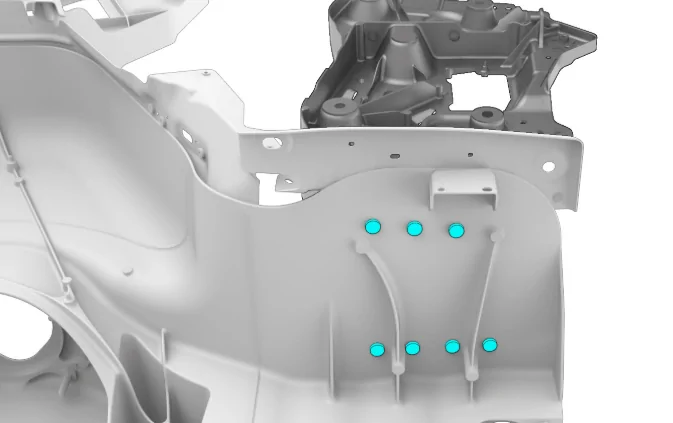
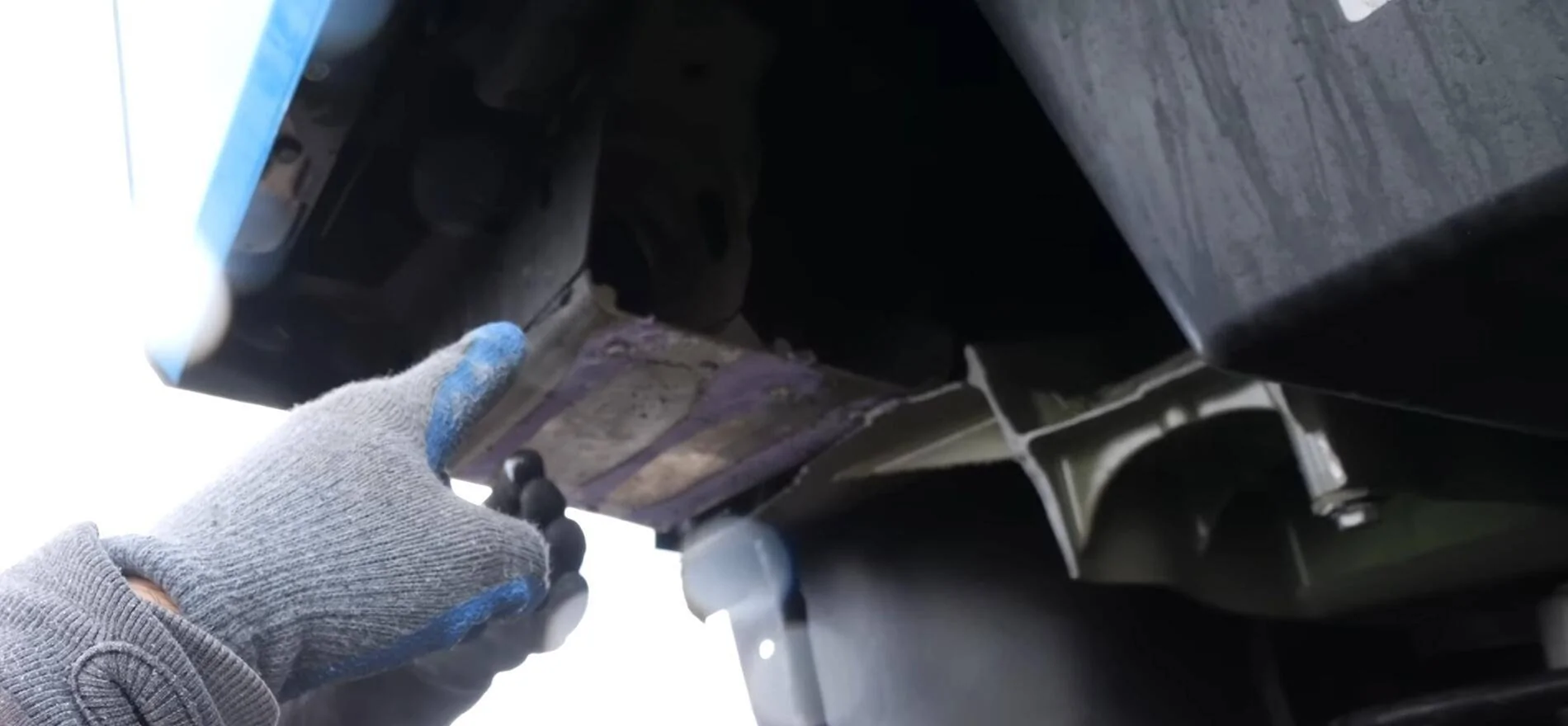
Quite interesting to see the different failure points. JerryRigEverything's cybertruck seemed to fail where the frame rail section of the rear under body casting meets the tailgate towers. That area has both spot-welds and structural adhesive in the collision repair manual.
Tesla Cybertruck Cybertruck Trailer Hitch/Casting Failure @10,400 lbs *VERTICAL LOAD* 1741822257683-1d


Both the welds and the structural adhesive had to fail for the separation we saw in the video:
Tesla Cybertruck Cybertruck Trailer Hitch/Casting Failure @10,400 lbs *VERTICAL LOAD* 1741822185426-ds


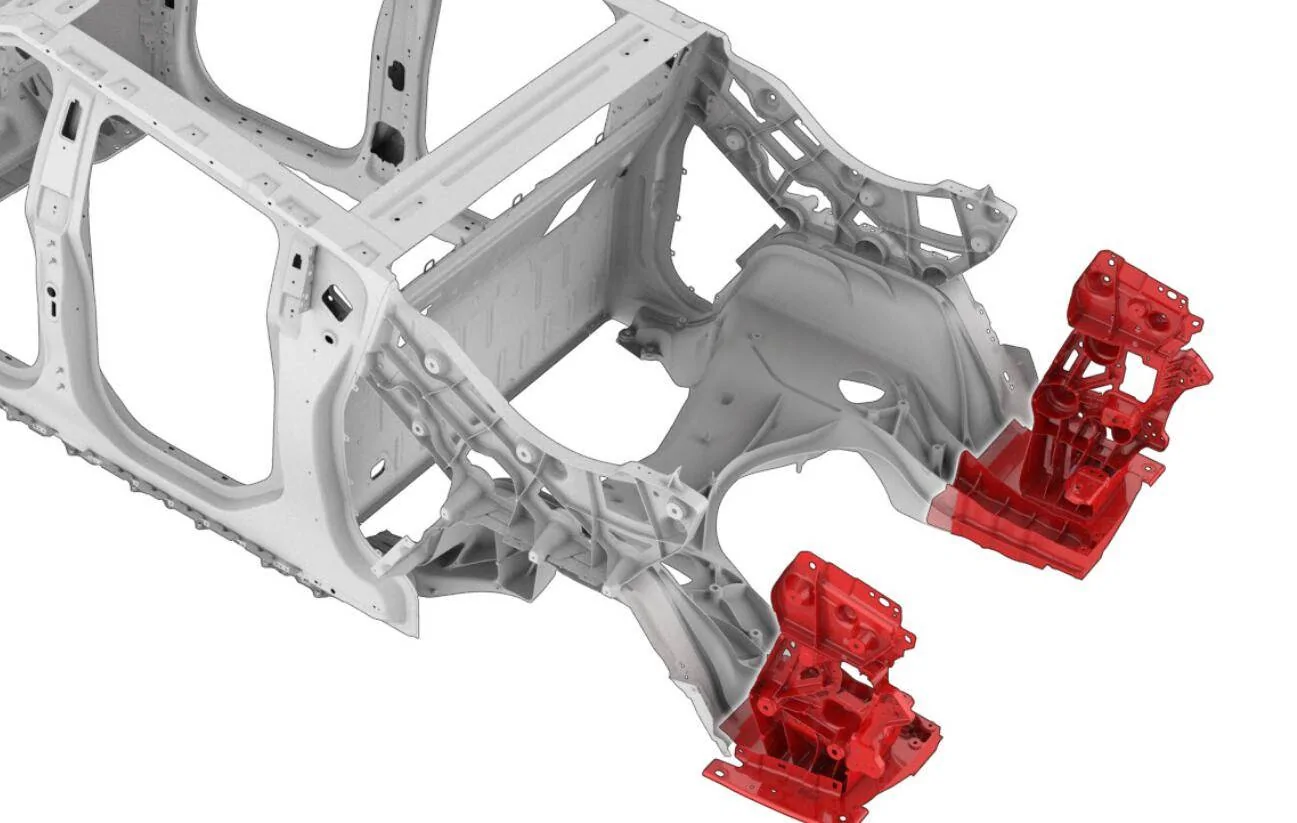
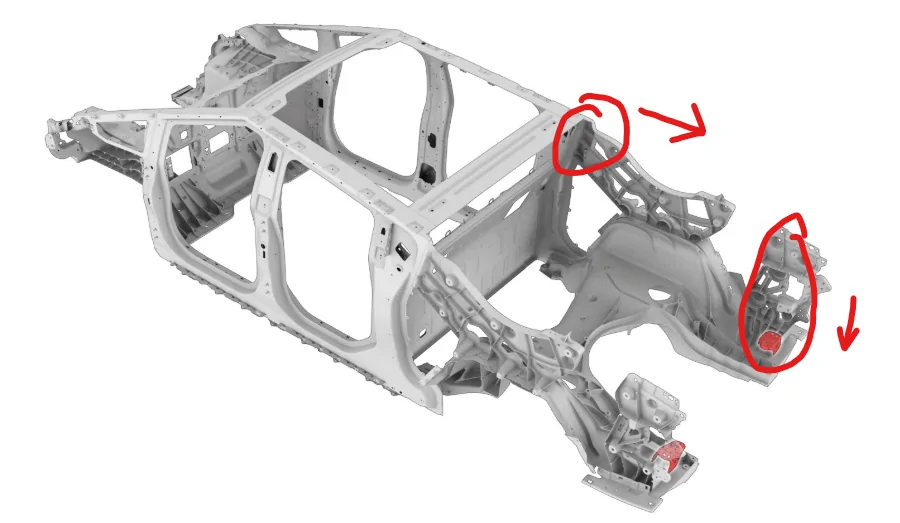
Interestingly, this is part of the crash structure in the giga-casting. The ribs at the end are designed to break off during a crash, as highlighted below. From the collision repair manual, it looks like both front and rear castings are designed this way so a partial casting can be riveted back together.
Tesla Cybertruck Cybertruck Trailer Hitch/Casting Failure @10,400 lbs *VERTICAL LOAD* 1741822367983-jh


Here are the approved structural adhesives - any of which can be used during repair:
DuPont BETAMATE 2098 Crash Durable Structural Adhesive
Parker LORD Fusor 2098 Crash Durable Structural Adhesive (Slow)
3M Impact Resistant Structural Adhesive

I asked grok to estimate the strength using those exact adhesives and rivets and it mentions:
"My estimate aligns with automotive standards where joints withstand crash forces exceeding 10,000–20,000 lb"

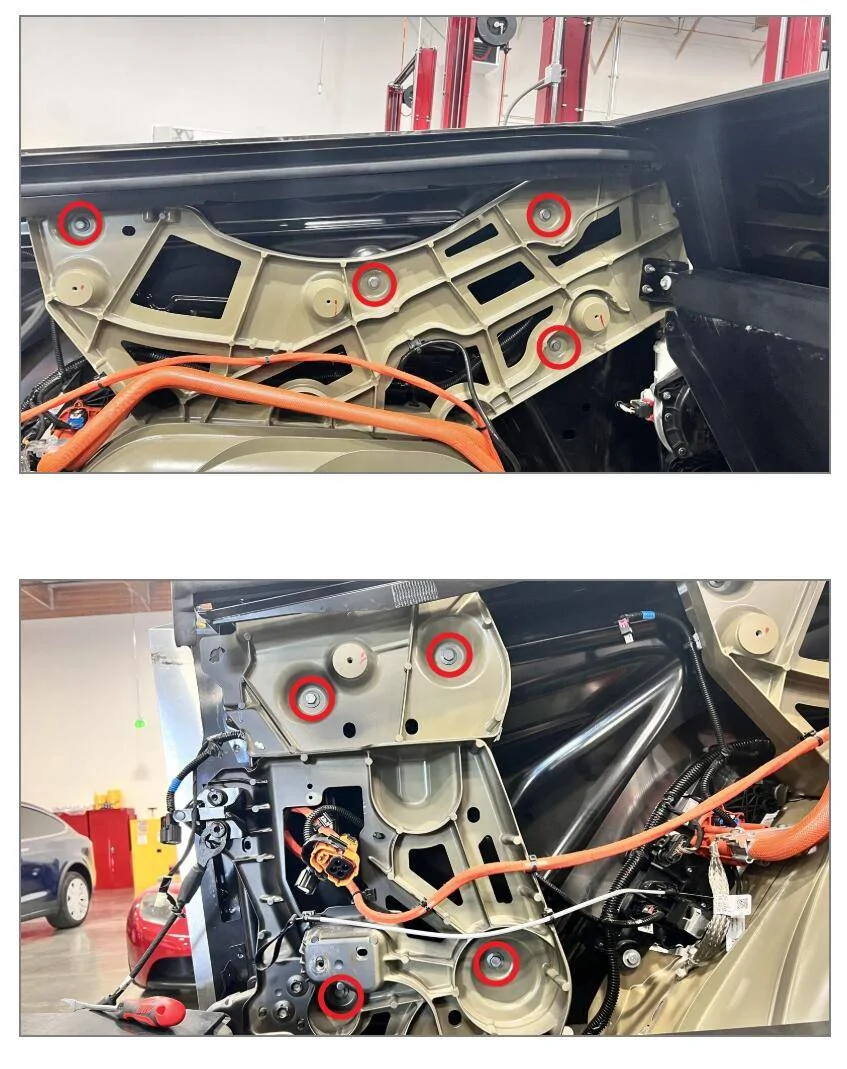
This demonstrates exoskeleton design for the bottom casting to pull away from the towers. Those towers are secured with 4 bolts to the stainless steel side panel which is secured to 4 bolts on the mast assembly.
Tesla Cybertruck Cybertruck Trailer Hitch/Casting Failure @10,400 lbs *VERTICAL LOAD* 1741825919547-c


The stainless panel was supporting the 11k lbs of force.
Tesla Cybertruck Cybertruck Trailer Hitch/Casting Failure @10,400 lbs *VERTICAL LOAD* 1741826074482-2v


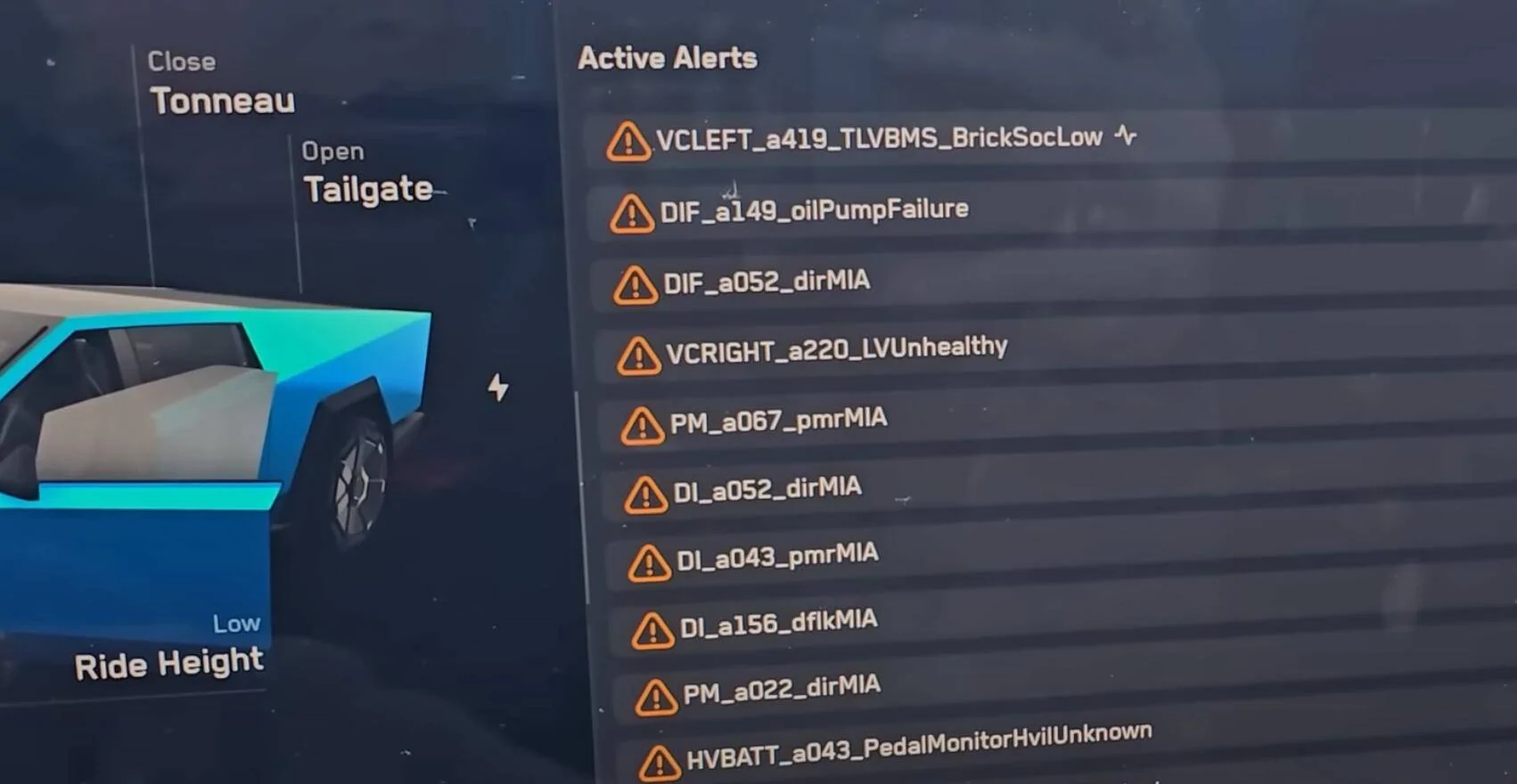
JerryRigEverything's wouldn't go into drive, and had a high voltage BMS alert showing one of the battery bricks had a low state of charge. This means downward forces on the front and rear simultaneously caused the battery pack to bow and flex like breaking a candy bar. Because we see an actual brick alert and the BMB didn't just go MIA, I'm thinking actual cells were being split from the brick bonding wires like pulling grapes. This implies some cool things - both the stainless exoskeleton and structural battery pack are real.
Tesla Cybertruck Cybertruck Trailer Hitch/Casting Failure @10,400 lbs *VERTICAL LOAD* 1741824120243-d


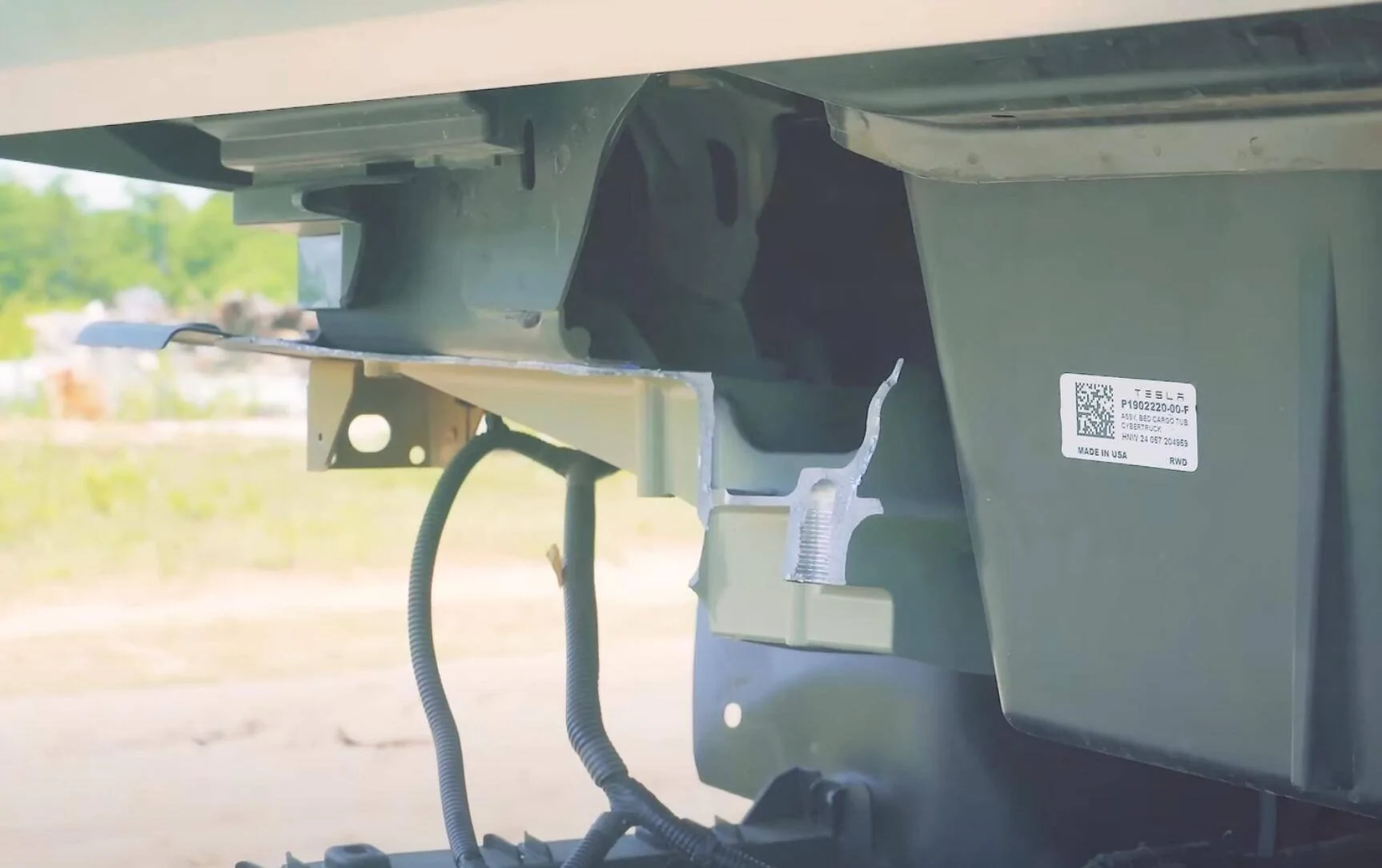
WhistlinDiesel's had an entirely different point of failure - it appeared to crack at the bolt holes where the hitch is secured to the rear casting. The bolts acted as a lever to pry the casting apart. Again, this happened at a seem on the rear frame rail's crash structure. These tests show the truck is breaking apart where intended during an extreme crash.
Tesla Cybertruck Cybertruck Trailer Hitch/Casting Failure @10,400 lbs *VERTICAL LOAD* 1741823896781-yo
Sponsored


Top