Sponsored

mongo

Well-known member
Joined
May 27, 2024
Threads
5
Messages
4,522
Reaction score
5,502
Location
SE Michigan
Vehicles
Cyberbeast
Country flag

mongo

Well-known member
Joined
May 27, 2024
Threads
5
Messages
4,522
Reaction score
5,502
Location
SE Michigan
Vehicles
Cyberbeast
Country flag
I heard aluminum is difficult to weld though... and the weld point will not have the same strength as the rest of the forged material?
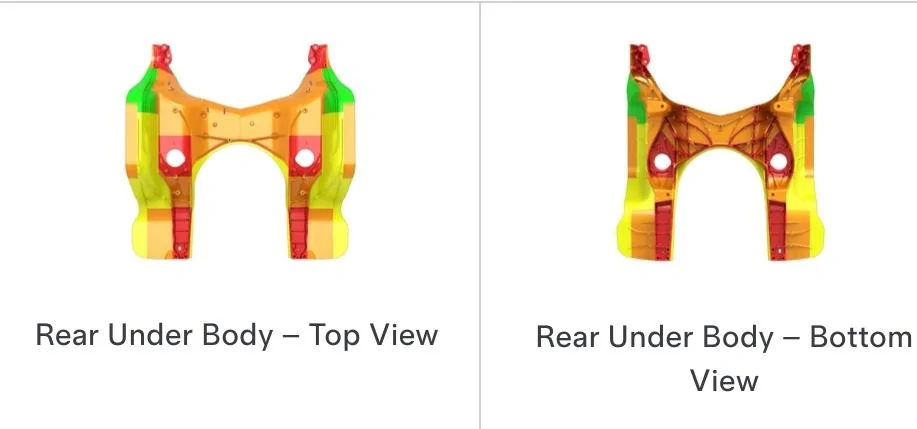
It's cast, not forged, but you are correct that it changes the material properties. That's part of why Tesla has a guide on what repairs can be done where:
Tesla Cybertruck New WhistlinDiesel: Cybertruck vs. F-150 Frame & Hitch Video SmartSelect_20240823_110530_Firefox

https://service.tesla.com/docs/Cybe...UID-A839FDF1-F60E-44E5-ADFB-5B7A220C945C.html

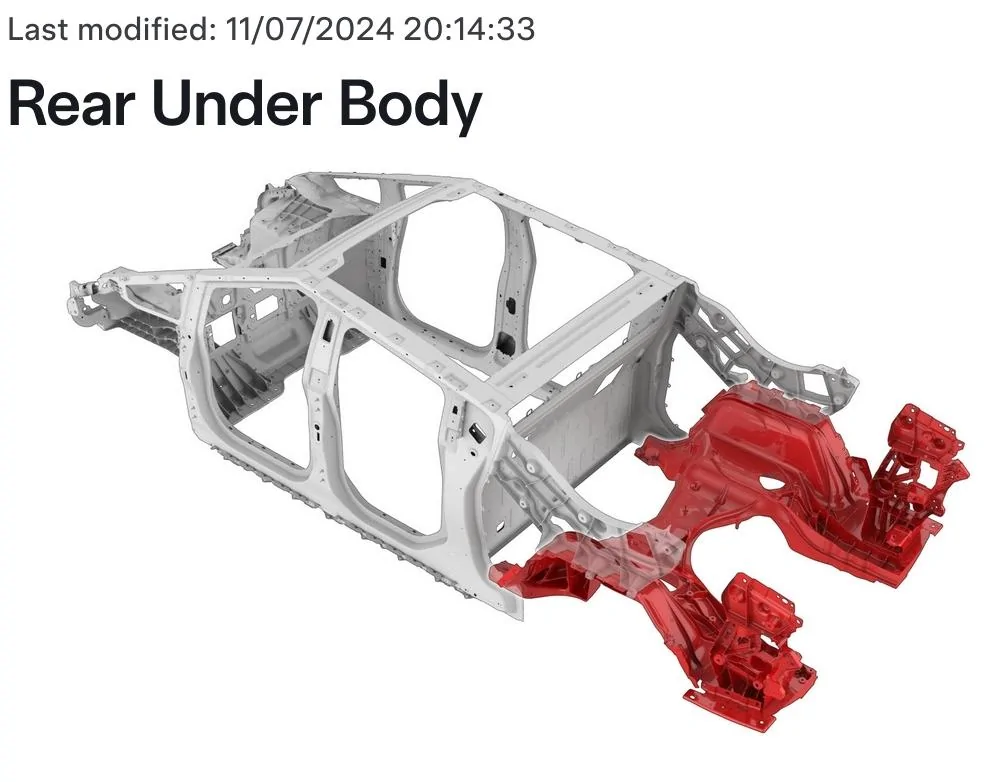
And they have a procedure to swap the whole rear under body (rear frame only procedure is incomplete)
Tesla Cybertruck New WhistlinDiesel: Cybertruck vs. F-150 Frame & Hitch Video SmartSelect_20240823_110345_Firefox

https://service.tesla.com/docs/Cybe...UID-B0B31EF5-A87A-4AAD-AC35-B4B268807556.html
 

CosmicOwl

Member
Joined
Nov 15, 2023
Threads
1
Messages
11
Reaction score
43
Location
USA
Vehicles
Chevy Colorado
Country flag
I really enjoying watching WD's videos, they are hilarious. I also think Tesla makes amazing, ground-breaking products that also may have flaws that will be improved over time. This is Tesla's first attempt at a truck and I am very hopeful they will make a revised CT that is even better.

Every material has strengths and weaknesses. Aluminum is great for getting high stiffness and reasonable corrosion resistance at low cost. The Cybertruck is designed to be stiff (unlike all the other pickups) which means that in an impact situation (like dropping on concrete or yanking a heavy load with a stiff chain) the forces on the frame can become very large. People calculating 100 klbf and higher on the concrete drop just isn't possible with a flexible legacy pickup frame because during the impact the truck deflects a lot. The CT on the other hand is stiff so it can get really high loads like that. The stiffness is good for everything else though (consistent handling, lack of distortion when loaded, etc).

Aluminum itself has low ductility and no infinite fatigue life. This means it is intrinsically less forgiving to unusual loading situations where it will break instead of bend. Cast aluminum (<5% ductility) is significantly worse than wrought or forged aluminum (~12% ductility) and both are worse than reasonable strength steels (20-30%). I also bet the giga-casting material is worse than cast aluminum (a lot more constraints on the material design which always means a loss in other properties). I should mention that many vehicles have aluminum frames, even more use aluminum a-arms and even more have aluminum wheels all of which do take a lot of varied loading. Forged is used in most high performance cases.

If you want something to take a lot of abuse, you should make it out of a strong, high ductility material like steel, stainless steel or my favorite inconel. I hate rust (and rusty steel frames snap when you look at them) so I would only use the latter two absent other constraints. One constraint here is cost, inconel is prohibitively expensive for this application and stainless steel would require a different manufacturing strategy. Titanium is in the middle but also doesn't have great ductility.

Even if you did use stainless steel for the frame, if you make it stiff, it is still going to be vulnerable to damage from shock loading. Also, it is much harder to make a stiff spaceframe from a dense material like stainless because all the local sections need to be thin which means they are vulnerable to crush and buckling damage. Aluminum is so light that can generally just make sections really thick which makes them pretty good against damage since you can lose a lot of material and still work.

Then you have the constraint of absorbing crash energy. I also have read the giga-castings are highly constrained on local section thickness.

I think if it were me, I would make the frame stainless however it seems unlikely Tesla is going to do that. It seems more probable that they might make a section from the hitch to the main frame that is stainless. It seems most probable that they will refine the casting process to reduce the standard deviation on ductility and reduce the number of flaws as well as and add material (easy to do by removing material from the dies) in problem areas.

So overall I wouldn't second guess Tesla's strategy except for the fact that the truck costs so much which kind of negates the whole argument for a giga-cast assembly structure. Personally I am waiting for a revision of the truck because as Elon says "requirements are always wrong" and so all the FS CT owners as well as people like WD are helping Tesla refine the requirements and make a better product. I bought a 24 M3P instead so I can drive my cheap gas pickup less.


Cactusrick

Well-known member
First Name
Richard
Joined
Aug 10, 2020
Threads
3
Messages
278
Reaction score
350
Location
AZ
Vehicles
CyberBeast, MYLR, EXT, 380SL
Occupation
retired invest
Country flag
issue is if you ever get rear ended dont think of ever towing with your Cybertruck after. Either a write off or unsafe to tow.
Exactly... Also the brief video of the trailer coming off the hitch or we are to believe a 6 inch hole caused it to break mm.. While he didn't know the specifics of the video or real. I've had a trailer come off wrong size ball or not clapped on.
 

mongo

Well-known member
Joined
May 27, 2024
Threads
5
Messages
4,522
Reaction score
5,502
Location
SE Michigan
Vehicles
Cyberbeast
Country flag

firsttruck

Well-known member
Joined
Sep 25, 2020
Threads
205
Messages
2,761
Reaction score
4,441
Location
mx
Vehicles
none
Country flag
Agreed. Even wheels I wouldn't use cast aluminum, has to be forged.
There are dozens if not hundreds of aluminum alloys.

Unpressurized casting is different than high-pressure injection die-casting (IRDA aluminum gigacasting).

Two independent industrial engineering and product bench-marking companies, Munro & Assoc and Caresoft, have torn down Tesla's Model Y aluminum gigacasting and found the technology valid. Sandy Munro for sure has bought Cybertruck for personal use and others at his company have personally bought or intent to buy Cybertrucks. Munro & Assoc and Caresoft would know if aluminum gigacasting technology and the die-casting design was NOT appropriate for pickup trucks.
 

M0unt41nm4n

Well-known member
Joined
Jan 23, 2024
Threads
20
Messages
1,236
Reaction score
2,136
Location
Durango, CO and Moab, UT
Vehicles
23 Ford F350 Plat, 22 F150 Plat, 20 Jeep Gladiator, CT-AWD
Country flag
The bottom line is steel has more strength than aluminum. That’s ok… it’s physics. From a company that manufactures both:

https://endura-steel.com/aluminum-vs-steel-strength-weight-and-applications-compared/

And I quote:

  • Tensile Strength: Steel is the clear winner regarding tensile strength. The tensile strength of standard structural steel can range from 400 MPA to 500 MPA (58,000 to 72,500 psi), while aluminum’s is typically around 90 MPA (13,000 psi). This means steel can withstand significantly greater tension before failure than aluminum.
  • Compressive Strength: Similar to tensile strength, steel outperforms aluminum in terms of compressive strength as well. Steel structures can bear loads without significant deformation or failure at a much higher level than Aluminum structures.
  • Yield Strength: Again, Steel holds the higher ground in this category. Steel yield strength is typically around 250 MPA (36,000 psi) for structural grades, while Aluminum yield strength tends to be approximately 40 MPA (5,800 psi).
The automotive industry is moving toward aluminum for many reasons… weight, cost, etc. In fact, both my Fords have steel frames, but aluminum bodies.

In fact, the link above says:

  • Automotive: Despite steel’s superior strength, the automotive industry has recently shifted towards Aluminum. Aluminum’s strength-to-weight ratio makes it a more efficient choice for vehicles, reducing weight and thus improving fuel efficiency.
This is totally ok. The CT was not made to truly compete with the other pickups at this time. It may in the future.


cyberos

Well-known member
Joined
Jul 9, 2024
Threads
23
Messages
216
Reaction score
439
Location
Austin, TX
Vehicles
RX 350h, Cybertruck AWD
Occupation
Generative AI
Country flag
It's cast, not forged, but you are correct that it changes the material properties. That's part of why Tesla has a guide on what repairs can be done where:
SmartSelect_20240823_110530_Firefox.webp

https://service.tesla.com/docs/Cybe...UID-A839FDF1-F60E-44E5-ADFB-5B7A220C945C.html

And they have a procedure to swap the whole rear under body (rear frame only procedure is incomplete)
SmartSelect_20240823_110345_Firefox.webp

https://service.tesla.com/docs/Cybe...UID-B0B31EF5-A87A-4AAD-AC35-B4B268807556.html
Thanks @mongo ! Learned something new today

My next question is the wtf broke?

From your images the rear under body does not have an aluminum cross beam at the rear. In Dieselgate part 1, it looks like the rear hitch snapped off half of a rear aluminum cross beam

Apologies that I don't have a screen capture or a frame-by-frame video analysis

In Dieselgate part 2, dude says that Tesla couldn't repair the snapped aluminum section... but in your diagram they actually could (if they had a spare whole rear underbody casting)?
 

nevetsyad

Well-known member
First Name
Steven
Joined
Mar 7, 2024
Threads
1
Messages
138
Reaction score
307
Location
Alexandria va
Vehicles
Model 3, Y, X, Cybertruck
Occupation
Retired
Country flag
We don't know it snapped. They said it hit a bump. Coulda just popped off the hitch. Also he didn't seem to drop it as far.

That all said, id like to see Tesla's response.
That's my thought - improperly connected, bounced off, smashed into the back of the truck after that.
Sponsored


Top