
GhostAndSkater
Well-known member

Yes it is, it's gravimetric energy density, there is also Wh/l, volumetric energy densitylol, no. Wh/kg is not a measurement of density.
Both terms are used in the battery industry for a long time
Sponsored
Yes it is, it's gravimetric energy density, there is also Wh/l, volumetric energy densitylol, no. Wh/kg is not a measurement of density.

Out of curiosity, work your figures please for a, say, 115kWh pack500+ mile packs are going to be ~194 kWh. Mobile charger is 7.6kW and home charger is 11.5kWh.
To home charge 80% (10%-90%) would be about 13.5 hours and 20.4 hours respectively.
To home charge 100% (0%-100%) would be about 16.9 hours and 25.5 hours respectively.
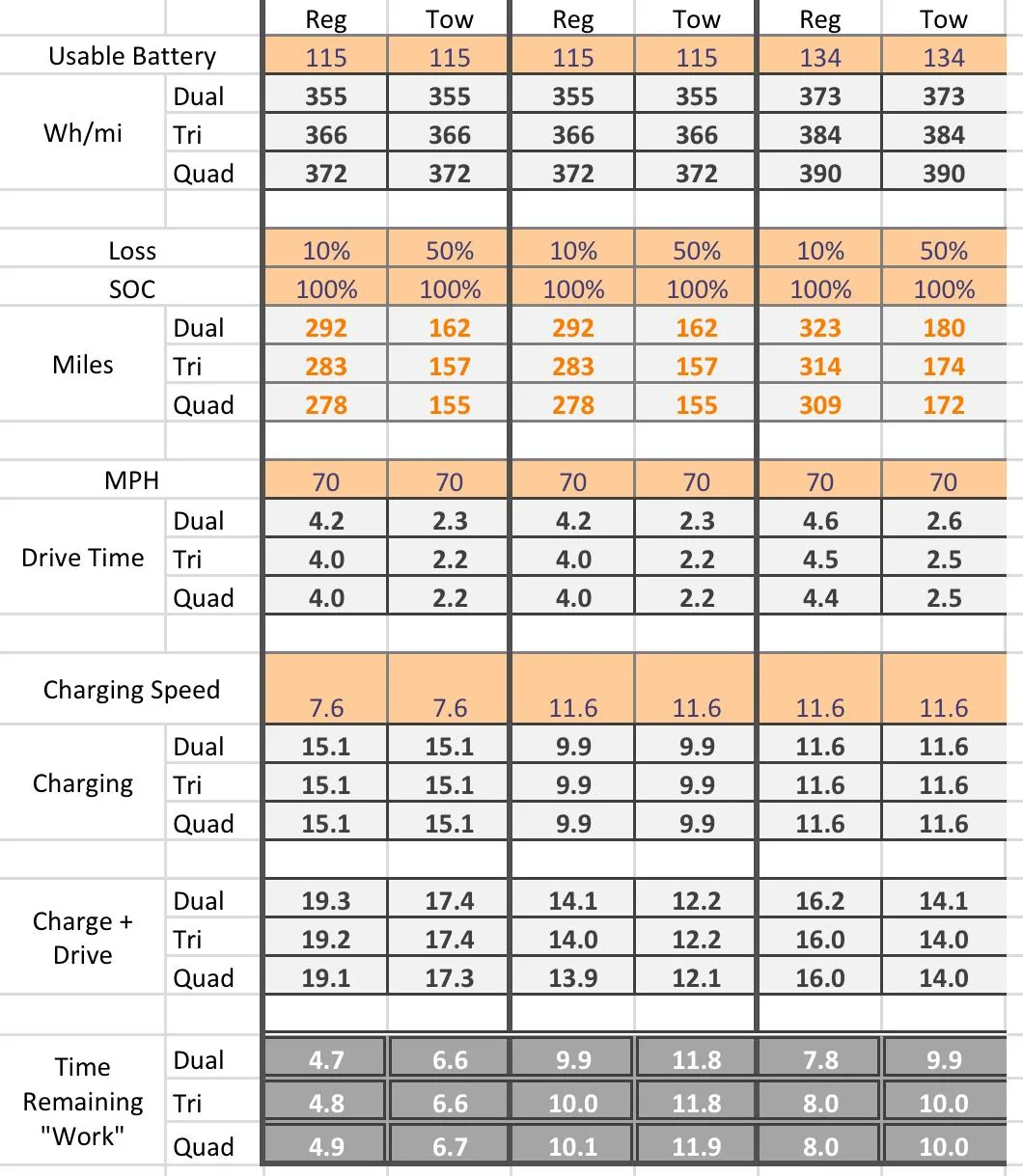
If we think of this as a daily needed range cycle by charging at home with a home charger (11.5kW), 370 miles (dual) 359 miles (tri) or about 134kWh battery is the max you could use daily without supercharging.
Assumptions
Tri motor EPA Rated 359 miles with 134kWh = 373Wh/mi
Example Day (highway commute)
134kWh / 11.5kW = 11.6 hours of charging
assuming 10% loss at highway speed ~70mph = 4.6 hours of driving
11.6 hours + 4.6 hours = 16.2 hours
That would leave you with 7.8 hours to "work".
Example Day (highway towing)
134kWh / 11.5kW = 11.6 hours of charging
assuming 50% loss at highway speed ~70mph while towing = 2.5 hours of driving
11.6 hours + 2.5 hours = 14.1 hours
That would leave you with 9.9 hours to "work".
We would need to see a faster home charging solution to justify going over 134kWh (based on these assumptions) unless you use a supercharger which the 500 miles was suppose to prevent in the first place.

A highway commute of 4.6 hours DAILY??? Very few people have commutes that long. Just thinking about friends and neighbors, most are between 30 mins and 1 hour each way. That’s 1-2 hours daily. Which by your numbers (thank you for those) should be less than 5.5hours of charging. My sister-in-law drives all day for a living as a medical testing rep, and she drives 3 hours a day on some days, mostly in the city. She says she doesn’t make money in the car, so she tries to string as many appointments together as possible. That’s still doable while you sleep without any trouble.500+ mile packs are going to be ~194 kWh. Mobile charger is 7.6kW and home charger is 11.5kWh.
To home charge 80% (10%-90%) would be about 13.5 hours and 20.4 hours respectively.
To home charge 100% (0%-100%) would be about 16.9 hours and 25.5 hours respectively.
If we think of this as a daily needed range cycle by charging at home with a home charger (11.5kW), 370 miles (dual) 359 miles (tri) or about 134kWh battery is the max you could use daily without supercharging.
Assumptions
Tri motor EPA Rated 359 miles with 134kWh = 373Wh/mi
Example Day (highway commute)
134kWh / 11.5kW = 11.6 hours of charging
assuming 10% loss at highway speed ~70mph = 4.6 hours of driving
11.6 hours + 4.6 hours = 16.2 hours
That would leave you with 7.8 hours to "work".
Example Day (highway towing)
134kWh / 11.5kW = 11.6 hours of charging
assuming 50% loss at highway speed ~70mph while towing = 2.5 hours of driving
11.6 hours + 2.5 hours = 14.1 hours
That would leave you with 9.9 hours to "work".
We would need to see a faster home charging solution to justify going over 134kWh (based on these assumptions) unless you use a supercharger which the 500 miles was suppose to prevent in the first place.



You don't drive just for your commute though. I don't commute at all, but on the weekend I drive extensively.Less than five percent of american commutes are an hour or more long.
The average commute in the US is 41 miles there and back. But that doesn't mean half drive more: it means that 1% drive hundreds of miles.
-Crissa
Someone wouldn't drive the max every day. I want the 500 miles to reach more remote locations, and for winter. Our SR M3 can do 95% of our driving, especially in summer. There are some places it can't reach, more places it can't reach easily without long detours to slow chargers, and it struggles to reach non-remote places in extreme cold (about 5-10 days a year). That's ok because we also have a gas car, but I don't want to keep the gas car.500+ mile packs are going to be ~194 kWh. Mobile charger is 7.6kW and home charger is 11.5kWh.
To home charge 80% (10%-90%) would be about 13.5 hours and 20.4 hours respectively.
To home charge 100% (0%-100%) would be about 16.9 hours and 25.5 hours respectively.
If we think of this as a daily needed range cycle by charging at home with a home charger (11.5kW), 370 miles (dual) 359 miles (tri) or about 134kWh battery is the max you could use daily without supercharging.
Assumptions
Tri motor EPA Rated 359 miles with 134kWh = 373Wh/mi
Example Day (highway commute)
134kWh / 11.5kW = 11.6 hours of charging
assuming 10% loss at highway speed ~70mph = 4.6 hours of driving
11.6 hours + 4.6 hours = 16.2 hours
That would leave you with 7.8 hours to "work".
Example Day (highway towing)
134kWh / 11.5kW = 11.6 hours of charging
assuming 50% loss at highway speed ~70mph while towing = 2.5 hours of driving
11.6 hours + 2.5 hours = 14.1 hours
That would leave you with 9.9 hours to "work".
We would need to see a faster home charging solution to justify going over 134kWh (based on these assumptions) unless you use a supercharger which the 500 miles was suppose to prevent in the first place.
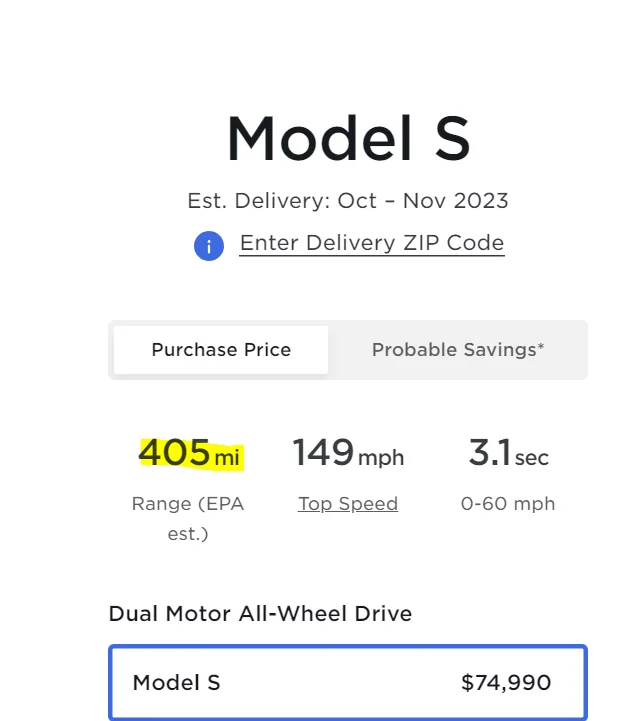
UM....I am skeptical that it will have 500 miles range, because of physics and current battery tech for 4680s.
Tesla doesn't have any vehicles that have 400 miles or more of range currently. How are they jumping up to 500 miles of range, with a bigger, heavier vehicle, using the current 4680s?
(The only way to get to 500 mile range would be to put in a massive massive battery which I don't think Elon supports)
I believe these numbers are based on the current 350V system, but there have been discussions at Tesla about using a 1000V setup for the CT. This would mean the battery pack would likely consist of approximately 230 sets of lithium batteries connected in parallel. The shift to 1000V would allow more battery groups to charge simultaneously, potentially improving the charging process. Moreover, moving to 1000V is expected to enhance overall efficiency by reducing the amperage required for the same power output. This, in turn, could help minimize heat loss during high acceleration.500+ mile packs are going to be ~194 kWh. Mobile charger is 7.6kW and home charger is 11.5kWh.
To home charge 80% (10%-90%) would be about 13.5 hours and 20.4 hours respectively.
To home charge 100% (0%-100%) would be about 16.9 hours and 25.5 hours respectively.
If we think of this as a daily needed range cycle by charging at home with a home charger (11.5kW), 370 miles (dual) 359 miles (tri) or about 134kWh battery is the max you could use daily without supercharging.
Assumptions
Tri motor EPA Rated 359 miles with 134kWh = 373Wh/mi
Example Day (highway commute)
134kWh / 11.5kW = 11.6 hours of charging
assuming 10% loss at highway speed ~70mph = 4.6 hours of driving
11.6 hours + 4.6 hours = 16.2 hours
That would leave you with 7.8 hours to "work".
Example Day (highway towing)
134kWh / 11.5kW = 11.6 hours of charging
assuming 50% loss at highway speed ~70mph while towing = 2.5 hours of driving
11.6 hours + 2.5 hours = 14.1 hours
That would leave you with 9.9 hours to "work".
We would need to see a faster home charging solution to justify going over 134kWh (based on these assumptions) unless you use a supercharger which the 500 miles was suppose to prevent in the first place.
But then it's got all week to save up charge. Or I can add a stop to get more juice, just like someone stops for gas. Except, you don't have to stand around and wait for it to fill up.You don't drive just for your commute though. I don't commute at all, but on the weekend I drive extensively.
Except chargers aren’t everywhere. As I said above, a SR M3 has proven great for 95% of the driving my family does. That 5% though…But then it's got all week to save up charge. Or I can add a stop to get more juice, just like someone stops for gas. Except, you don't have to stand around and wait for it to fill up.
-Crissa
Are you saying we are definitely getting a 500 mile range Cybertruck?UM....

Out of curiosity, work your figures please for a, say, 115kWh pack

I am certain of it. I wasn’t talking about them but about people that take a long distance trip every year, especially in the winter, or occasionally tow something. Also, it was Tesla’s stated intention to disrupt the truck market - not the soccer mom mArket. I know that there is an overlap but the specs still need to hit the truck sweet spot. Anyway, with 40% of early reservation holders wanting a 500-mile spec (me included), I am certain that there are many different arguments for that requirement and not just one.most soccer parent truck owners would be fine with these specs.


