
Sponsored

Protondecay123

Well-known member
First Name
Jim
Joined
Sep 1, 2023
Threads
4
Messages
160
Reaction score
157
Location
Texas
Vehicles
Cyberbeast FS
Country flag
I had PowerShare installed by a non-Tesla Vendor. The commissioning got a little tricky but my system works awesome. My HVAC and Hot Water are gas, so we can stay toasty for 3-4 days. Haven’t had an outage for more than 18 hours so far. Used 20 kWh.
Sponsored

 

dimitri

Member
First Name
Dimitri
Joined
Dec 27, 2025
Threads
0
Messages
8
Reaction score
16
Location
richboro pa
Vehicles
2025 cybertruck
Occupation
self employed
Country flag
Good job. Congratulations. Smart people are always winning a battle. I’m in the middle of the process to install the powershare system. Stuck with gateway installation and wire connection. Tesla certified electric morons asking around 3000$ for the same thing that my electric guy said he needs 2 hours and 400-500$ plus cost of the 1 foot of cable. Waiting for smart decision from tesla to let it go and forget about tesla certification for electricians.
 

dimitri

Member
First Name
Dimitri
Joined
Dec 27, 2025
Threads
0
Messages
8
Reaction score
16
Location
richboro pa
Vehicles
2025 cybertruck
Occupation
self employed
Country flag
I had PowerShare installed by a non-Tesla Vendor. The commissioning got a little tricky but my system works awesome. My HVAC and Hot Water are gas, so we can stay toasty for 3-4 days. Haven’t had an outage for more than 18 hours so far. Used 20 kWh.
And tesla approved and v2h working? How it’s working? I m stuck with gateway installation. Too much money asked
 

CyberTrk

Well-known member
Joined
Nov 16, 2019
Threads
9
Messages
200
Reaction score
235
Location
Cyberspace
Vehicles
サイバートラック
Country flag
@no%X#XMVk65v#cq thank you for your detailed and informative posting.

Your sub-panel required an overwhelming amount of work but is really the way to go to ensure a good load management.


Note: Using your CT as a backup generator is very similar to an off-grid solar system, with the advantage of using high voltage batteries.

Not having a Gateway is more straightforward , at the expense of not having an automatic switching and Grid back feeding, which are not criticals.


Note: I also installed a power management similar to your installation, but I build an automatic transfer switch.

This automatic transfer switch allows me to use by default my backup system to power my home, and otherwise the Grid when my batteries are empty.

I use solar panels to recharge my batteries, so if I have some excess of solar energy, instead of feeding back the Grid, I charge an EV or heat and store some hot water.
 
OP
OP
no%X#XMVk65v#cq

no%X#XMVk65v#cq

Well-known member
First Name
J
Joined
Sep 11, 2024
Threads
8
Messages
273
Reaction score
627
Location
USA
Vehicles
CT FS AWD
@no%X#XMVk65v#cq thank you for your detailed and informative posting.

Your sub-panel required an overwhelming amount of work but is really the way to go to ensure a good load management.


Note: Using your CT as a backup generator is very similar to an off-grid solar system, with the advantage of using high voltage batteries.

Not having a Gateway is more straightforward , at the expense of not having an automatic switching and Grid back feeding, which are not criticals.


Note: I also installed a power management similar to your installation, but I build an automatic transfer switch.

This automatic transfer switch allows me to use by default my backup system to power my home, and otherwise the Grid when my batteries are empty.

I use solar panels to recharge my batteries, so if I have some excess of solar energy, instead of feeding back the Grid, I charge an EV or heat and store some hot water.
Ya most of the applications for that type of transfer switch that I found were for solar rigs.

Sounds like you have a sweet setup! Im kind of hooked and might venture into a solar setup since I'm already partially equipped.


easytravelman

Well-known member
Joined
Sep 28, 2023
Threads
4
Messages
78
Reaction score
61
Location
Oakland, CA
Vehicles
2016 Model X P90D signature
Occupation
Hard money lender. real estate and crypto investor
Country flag
Disclosure: I am not an electrician or qualified to advise on doing this kind of work. This is just what I did.

Recent extreme weather has prodded me to finally deal with how to get the enormous battery pack already in my garage to power my house. First off, even though I have a Foundation Series with the Powershare credit, Powershare was just never an option for me for a number of reasons:

  1. Tesla has no installers in my area. Or at least they didn't when I got my truck, haven't checked since. But I've had a powerwall ordered since before I made my Cybertruck reservation, and the status still just says they will contact me when they have installers in my area.
  2. Tesla won't sell me the Powershare setup without an installer.
  3. I wouldn't pay thousands of dollars to have it installed anyway.
  4. The system seems finicky and clunky... relies on an app and a lot of software to work.
  5. I don't charge the truck at my house anyway. I charge it at an outbuilding with a separate electrical service, because I'm out of room in my house panel.
Luckily, this truck comes with a pretty hefty plug in the bed. 240v and 50 amp architecture providing 40 actual amps. Powershare only supplies 8 more amps. To that I say whoopty-do (or la-dee-fricken-da if you prefer)! Now to find a way to jack in to the house. I settled on a manual transfer switch over the easier-to-install panel interlock after weighing the options.

Interlock pros:
  1. Simpler, easier to install, cheaper
  2. Powers the entire panel
Interlock cons:
  1. They seem...janky? A tacked on puzzle of a device that can easily be defeated by simply removing the cover.
  2. You must throw the main, so it's uncertain when the power returns to the line
  3. When power returns you must disconnect power, then reconnect to the main, so all devices will power off
Manual transfer switch pros:
  1. Does not require any space in the main panel
  2. No need to throw the main, or any breakers, ever
  3. Circuits powered by generator can be run at the same time as circuits powered by line
  4. Switching from generator back to line is seamless, devices stay on
Manual transfer switch cons:
  1. You must choose which circuits you wish to power by generator and those choices are fixed. Maximum 10 poles total is the largest option I found
  2. Cost
For me really the deciding factor was being out of room in my main panel and not wanting to turn this small project into a large one by upgrading. But for the other reasons stated, I'm glad I went that direction anyway.

Now what about neutral-bonding? If you ask around the responses for how important this issue is range from you-will-instantly-die to no-biggie. What's even more frustrating is there just is no info about neutral-bonding from Tesla's side. We don't know. Any test you conduct might have false readings based on the logic of the truck's systems. I've searched and come up with no definitive answer as to whether to treat the onboard power on the Cybertruck as a neutral-bonded generator, or a floating-neutral generator. For home powering, you want floating, because the neutral is already bonded at the panel. Having two neutral bonds can cause voltage to ride on the ground. I fretted about this quite a bit. But then I got curious and grabbed a multimeter and just started testing stuff around the property. Turns out that one outbuilding and half of another has some voltage returning on ground, and it has been that way for over a decade without me missing even one night's sleep over it. I tried to correct it... but decided to just scratch my head and walk away after everything I tried failed. Likewise I am comforted by the knowledge that most generator owners have no clue about this concern at all and just send it right out of the box, and since the only deaths I hear about are from people running them indoors, I just decided not to worry about it.

What we do know from other forum members who have already tried this by back-feeding with an interlock is, neutral-bonded or not, it works. This is not the case with the F150 Lightning onboard plugs. To get those to work, you must cheat by leaving a ground off or the truck trips. Cybertruck does not. Why is this? Who knows. Is the Cybertruck plug not GFCI protected? Doubt it. Is it neutral-floating? Doubt that too as it's far more dangerous to run power tools or whatever from a neutral-floating generator than to power a house from a neutral-bonded one. Does Cybertruck have some logic that switches back and forth as needed? Not likely, since they sell the entire Powershare Gateway system for this exact purpose. Is there something special about the grounding of the vehicle or inverter architecture that makes this a non-issue? Perhaps the stainless steel construction makes the flux dispersal... Anyway, I jacked into the house and I have no voltage on ground in branch circuits.

You can also (for added cost and complexity) get a neutral-switching manual transfer switch if you're certain that your generator is neutral-ground bonded. But are we certain of that? We are not.

These are the products I used, all available on Amazon:

A510C Pro/Tran2 50-Amp 10-Circuit 2 Manual Transfer Switch

50 Amp Generator Cord 10FT and Power Inlet Box Waterproof Combo Kit, NEMA 14-50P to SS2-50R Generator Extension Cord with NEMA SS2-50P Generator Inlet, ETL Listed

Parkworld RV/EV 50A Extension Cord, NEMA 14-50 Extension Cord, NEMA 14-50P to 14-50R Straight Plug for Generator (1.5FT)

I already had some 6/3 wire on hand to run between the two products. I just installed the inlet in the garage, since our generators create no fumes. The short cord works perfect for me. I like that it came with the extension adapter on the truck end because it is tight getting that thing plugged in with how close to the outlet is to the bottom of the bed. I wish Tesla would have made that easier to access, but the extender makes it just a little more maneuverable. I can't see how you'd plug it in without leaving the tailgate open, but I guess that's ok, just makes it tight in a garage. Also, it's a little concerning how much play there is on that panel that houses the outlets on the truck. It's not heavy-duty at all, kind of the same way the NACS port gives when the plug is stretched.

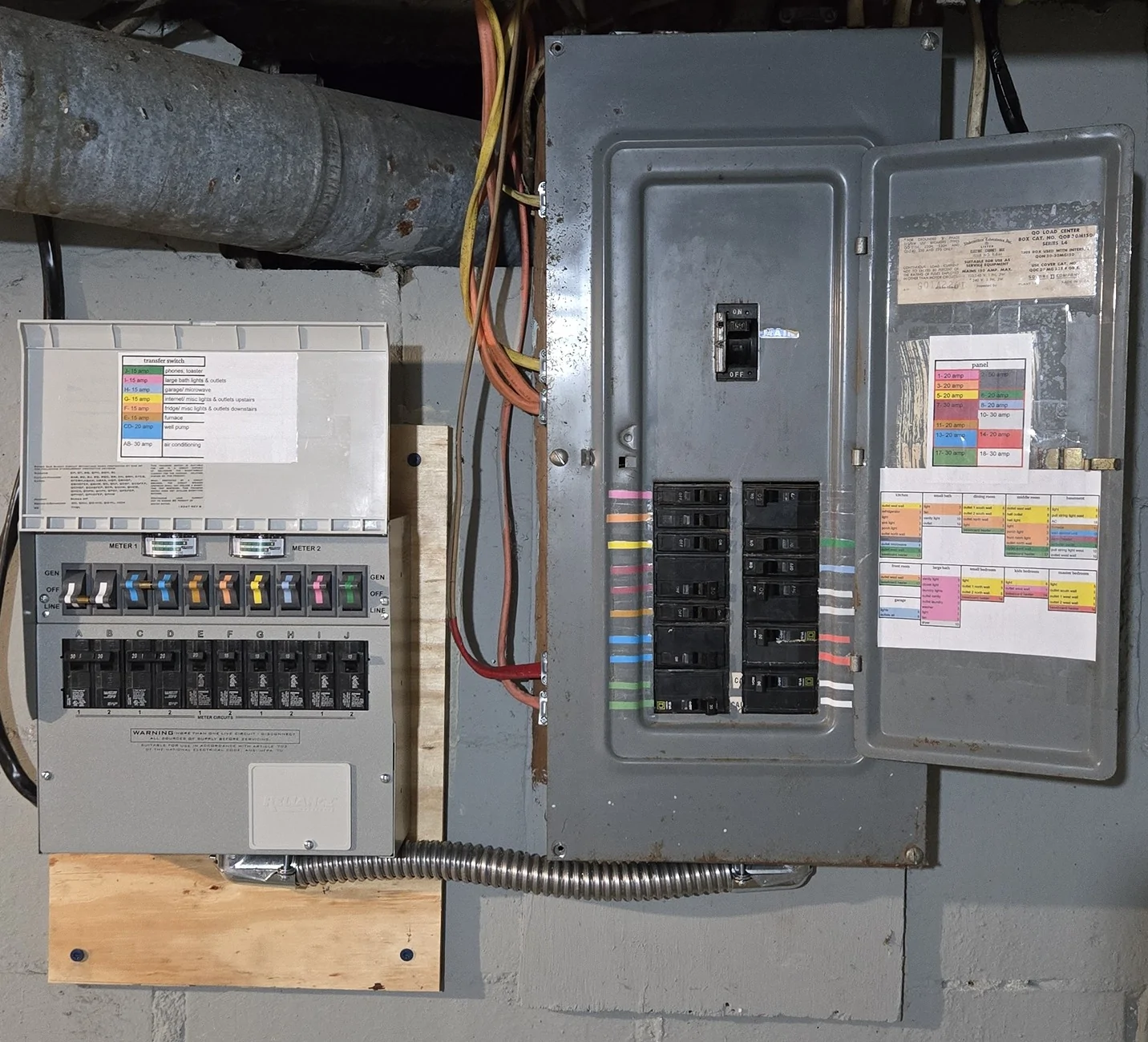
So next I had to choose which circuits to include. I decided the most important were well pump, furnace, fridge, and then the rest. I had to make a choice between water heater and air conditioning, as there was only one 30 amp 2 pole slot available. I chose A/C because water tanks keep water hot for an insane amount of time, but the house will get hot real fast in the summer without A/C. I ended up with room for nearly all the lights and outlets in the house as well. The only things excluded from my setup are: water heater, oven/stove, clothes dryer, and baseboard heaters (not vital to my HVAC system).

I made it a point to leave the truck in it's spot the night before my test day, so it was about 12 degrees and not conditioned when I used the app to power on the outlets. No problem there. I ran everything off the truck yesterday from 9:30 to 5:30. Temps never got out of the teens and my house is old so the furnace was running a ton. I used 5% of the battery. No one believes me. This is a massive battery by home battery backup standards!

Overall I'm very pleased how it turned out, and I believe this is an underrated feature of the truck. Here's a picture of my setup. I maybe went a little overboard with the color-coding, but it was such a guessing game prior to this that I wanted it as organized as humanly possible.


20260208_135511.webp
First let me say that is beautiful project. If you did this off the cuff with no electrical background I would say your in a special category of people. the type that when the big catastrophe your name would be called to get on the ship ;-). If it sounds like I am envious is because I am. I have the same truck been putting off doing anything amidst all sort of blackouts up in the Sierra foothills of CA. The only thing that I rationalize is when the lights stay out for a little to long I drive back 2.5 hrs to the Bay Area home ;-( and wait for the lights to come back on. Soon action will be taken. Thanks for the story and pictures
 

Effonefiddy Lightning

Well-known member
First Name
Alfred
Joined
Oct 24, 2024
Threads
0
Messages
171
Reaction score
137
Location
California
Vehicles
23 F150 Lightning SR Antimatter Blue /2023 Model Y
Occupation
Retired
Country flag
Disclosure: I am not an electrician or qualified to advise on doing this kind of work. This is just what I did.

Recent extreme weather has prodded me to finally deal with how to get the enormous battery pack already in my garage to power my house. First off, even though I have a Foundation Series with the Powershare credit, Powershare was just never an option for me for a number of reasons:

  1. Tesla has no installers in my area. Or at least they didn't when I got my truck, haven't checked since. But I've had a powerwall ordered since before I made my Cybertruck reservation, and the status still just says they will contact me when they have installers in my area.
  2. Tesla won't sell me the Powershare setup without an installer.
  3. I wouldn't pay thousands of dollars to have it installed anyway.
  4. The system seems finicky and clunky... relies on an app and a lot of software to work.
  5. I don't charge the truck at my house anyway. I charge it at an outbuilding with a separate electrical service, because I'm out of room in my house panel.
Luckily, this truck comes with a pretty hefty plug in the bed. 240v and 50 amp architecture providing 40 actual amps. Powershare only supplies 8 more amps. To that I say whoopty-do (or la-dee-fricken-da if you prefer)! Now to find a way to jack in to the house. I settled on a manual transfer switch over the easier-to-install panel interlock after weighing the options.

Interlock pros:
  1. Simpler, easier to install, cheaper
  2. Powers the entire panel
Interlock cons:
  1. They seem...janky? A tacked on puzzle of a device that can easily be defeated by simply removing the cover.
  2. You must throw the main, so it's uncertain when the power returns to the line
  3. When power returns you must disconnect power, then reconnect to the main, so all devices will power off
Manual transfer switch pros:
  1. Does not require any space in the main panel
  2. No need to throw the main, or any breakers, ever
  3. Circuits powered by generator can be run at the same time as circuits powered by line
  4. Switching from generator back to line is seamless, devices stay on
Manual transfer switch cons:
  1. You must choose which circuits you wish to power by generator and those choices are fixed. Maximum 10 poles total is the largest option I found
  2. Cost
For me really the deciding factor was being out of room in my main panel and not wanting to turn this small project into a large one by upgrading. But for the other reasons stated, I'm glad I went that direction anyway.

Now what about neutral-bonding? If you ask around the responses for how important this issue is range from you-will-instantly-die to no-biggie. What's even more frustrating is there just is no info about neutral-bonding from Tesla's side. We don't know. Any test you conduct might have false readings based on the logic of the truck's systems. I've searched and come up with no definitive answer as to whether to treat the onboard power on the Cybertruck as a neutral-bonded generator, or a floating-neutral generator. For home powering, you want floating, because the neutral is already bonded at the panel. Having two neutral bonds can cause voltage to ride on the ground. I fretted about this quite a bit. But then I got curious and grabbed a multimeter and just started testing stuff around the property. Turns out that one outbuilding and half of another has some voltage returning on ground, and it has been that way for over a decade without me missing even one night's sleep over it. I tried to correct it... but decided to just scratch my head and walk away after everything I tried failed. Likewise I am comforted by the knowledge that most generator owners have no clue about this concern at all and just send it right out of the box, and since the only deaths I hear about are from people running them indoors, I just decided not to worry about it.

What we do know from other forum members who have already tried this by back-feeding with an interlock is, neutral-bonded or not, it works. This is not the case with the F150 Lightning onboard plugs. To get those to work, you must cheat by leaving a ground off or the truck trips. Cybertruck does not. Why is this? Who knows. Is the Cybertruck plug not GFCI protected? Doubt it. Is it neutral-floating? Doubt that too as it's far more dangerous to run power tools or whatever from a neutral-floating generator than to power a house from a neutral-bonded one. Does Cybertruck have some logic that switches back and forth as needed? Not likely, since they sell the entire Powershare Gateway system for this exact purpose. Is there something special about the grounding of the vehicle or inverter architecture that makes this a non-issue? Perhaps the stainless steel construction makes the flux dispersal... Anyway, I jacked into the house and I have no voltage on ground in branch circuits.

You can also (for added cost and complexity) get a neutral-switching manual transfer switch if you're certain that your generator is neutral-ground bonded. But are we certain of that? We are not.

These are the products I used, all available on Amazon:

A510C Pro/Tran2 50-Amp 10-Circuit 2 Manual Transfer Switch

50 Amp Generator Cord 10FT and Power Inlet Box Waterproof Combo Kit, NEMA 14-50P to SS2-50R Generator Extension Cord with NEMA SS2-50P Generator Inlet, ETL Listed

Parkworld RV/EV 50A Extension Cord, NEMA 14-50 Extension Cord, NEMA 14-50P to 14-50R Straight Plug for Generator (1.5FT)

I already had some 6/3 wire on hand to run between the two products. I just installed the inlet in the garage, since our generators create no fumes. The short cord works perfect for me. I like that it came with the extension adapter on the truck end because it is tight getting that thing plugged in with how close to the outlet is to the bottom of the bed. I wish Tesla would have made that easier to access, but the extender makes it just a little more maneuverable. I can't see how you'd plug it in without leaving the tailgate open, but I guess that's ok, just makes it tight in a garage. Also, it's a little concerning how much play there is on that panel that houses the outlets on the truck. It's not heavy-duty at all, kind of the same way the NACS port gives when the plug is stretched.

So next I had to choose which circuits to include. I decided the most important were well pump, furnace, fridge, and then the rest. I had to make a choice between water heater and air conditioning, as there was only one 30 amp 2 pole slot available. I chose A/C because water tanks keep water hot for an insane amount of time, but the house will get hot real fast in the summer without A/C. I ended up with room for nearly all the lights and outlets in the house as well. The only things excluded from my setup are: water heater, oven/stove, clothes dryer, and baseboard heaters (not vital to my HVAC system).

I made it a point to leave the truck in it's spot the night before my test day, so it was about 12 degrees and not conditioned when I used the app to power on the outlets. No problem there. I ran everything off the truck yesterday from 9:30 to 5:30. Temps never got out of the teens and my house is old so the furnace was running a ton. I used 5% of the battery. No one believes me. This is a massive battery by home battery backup standards!

Overall I'm very pleased how it turned out, and I believe this is an underrated feature of the truck. Here's a picture of my setup. I maybe went a little overboard with the color-coding, but it was such a guessing game prior to this that I wanted it as organized as humanly possible.


20260208_135511.webp
So let me know if I have this correct. Your neutral bonded CT feeds power to the floating ground transfer panel and then to your house which has a neutral grounded panel and the flow of electricity from the new floating ground panel tricks the truck into thinking its just feeding a floating ground system? Excuse my question, I suck at electrical stuff.
 
OP
OP
no%X#XMVk65v#cq

no%X#XMVk65v#cq

Well-known member
First Name
J
Joined
Sep 11, 2024
Threads
8
Messages
273
Reaction score
627
Location
USA
Vehicles
CT FS AWD
First let me say that is beautiful project. If you did this off the cuff with no electrical background I would say your in a special category of people. the type that when the big catastrophe your name would be called to get on the ship ;-). If it sounds like I am envious is because I am. I have the same truck been putting off doing anything amidst all sort of blackouts up in the Sierra foothills of CA. The only thing that I rationalize is when the lights stay out for a little to long I drive back 2.5 hrs to the Bay Area home ;-( and wait for the lights to come back on. Soon action will be taken. Thanks for the story and pictures
Thanks. I've done a bit more work with electrical than most, but I'm no expert. Im just careful, do a lot of research and asking around, and aren't intimidated to get in there.
 
OP
OP
no%X#XMVk65v#cq

no%X#XMVk65v#cq

Well-known member
First Name
J
Joined
Sep 11, 2024
Threads
8
Messages
273
Reaction score
627
Location
USA
Vehicles
CT FS AWD
So let me know if I have this correct. Your neutral bonded CT feeds power to the floating ground transfer panel and then to your house which has a neutral grounded panel and the flow of electricity from the new floating ground panel tricks the truck into thinking its just feeding a floating ground system? Excuse my question, I suck at electrical stuff.
I don't think so. The transfer panel isn't really floating, as it has neutral and ground wires that attach directly to the bus on the main panel. It doesn't have an additional neutral ground bond, but it is bonded in the exact same place that the main panel is. Flipping the switch to transfer from line to generator doesn't sever that connection.

It's something on the truck's end that makes it work.
 

Ed243

Well-known member
First Name
Ed
Joined
Jun 28, 2025
Threads
6
Messages
84
Reaction score
90
Location
AZ
Vehicles
2025 Cybertruck AWD
Country flag
For an EcoFlow generator, if the output ground and neutral are bonded when you plug in the AC to charge the unit, it will blow the inverter. I don't know if this would apply to the cybertruck or not but you may want to make sure you unplug the output to your house before charging in case the neutral and ground are bonded even though the transfer switch or circuit breaker is open. I don't know why anyone would keep it connected but just thought I'd toss it out there.
 
Last edited:


OP
OP
no%X#XMVk65v#cq

no%X#XMVk65v#cq

Well-known member
First Name
J
Joined
Sep 11, 2024
Threads
8
Messages
273
Reaction score
627
Location
USA
Vehicles
CT FS AWD
For an EcoFlow generator, if the output ground and neutral are bonded when you plug in the AC to charge the unit, it will blow the inverter. I don't know if this would apply to the cybertruck or not but you may want to make sure you unplug the output to your house before charging in case the neutral and ground are bonded even though the transfer switch or circuit breaker is open. I don't know why anyone would keep it connected but just thought I'd toss it out there.
Good looking out, thanks!

You can't use the outlets and AC charge at the same time with cybertruck. I wonder if this is why!
 

Ed243

Well-known member
First Name
Ed
Joined
Jun 28, 2025
Threads
6
Messages
84
Reaction score
90
Location
AZ
Vehicles
2025 Cybertruck AWD
Country flag
Good looking out, thanks!

You can't use the outlets and AC charge at the same time with cybertruck. I wonder if this is why!
I wouldn't want to test it in my CT by leaving one of those cheap neutral-ground bonding plugs in the outlet while charging. Could cost $$$$$.
 

CyberTexas

Well-known member
Joined
Feb 28, 2025
Threads
19
Messages
365
Reaction score
551
Location
Great state of TEXAS
Vehicles
FS CB White Decor Cyber Wheels
Occupation
Physician
Country flag
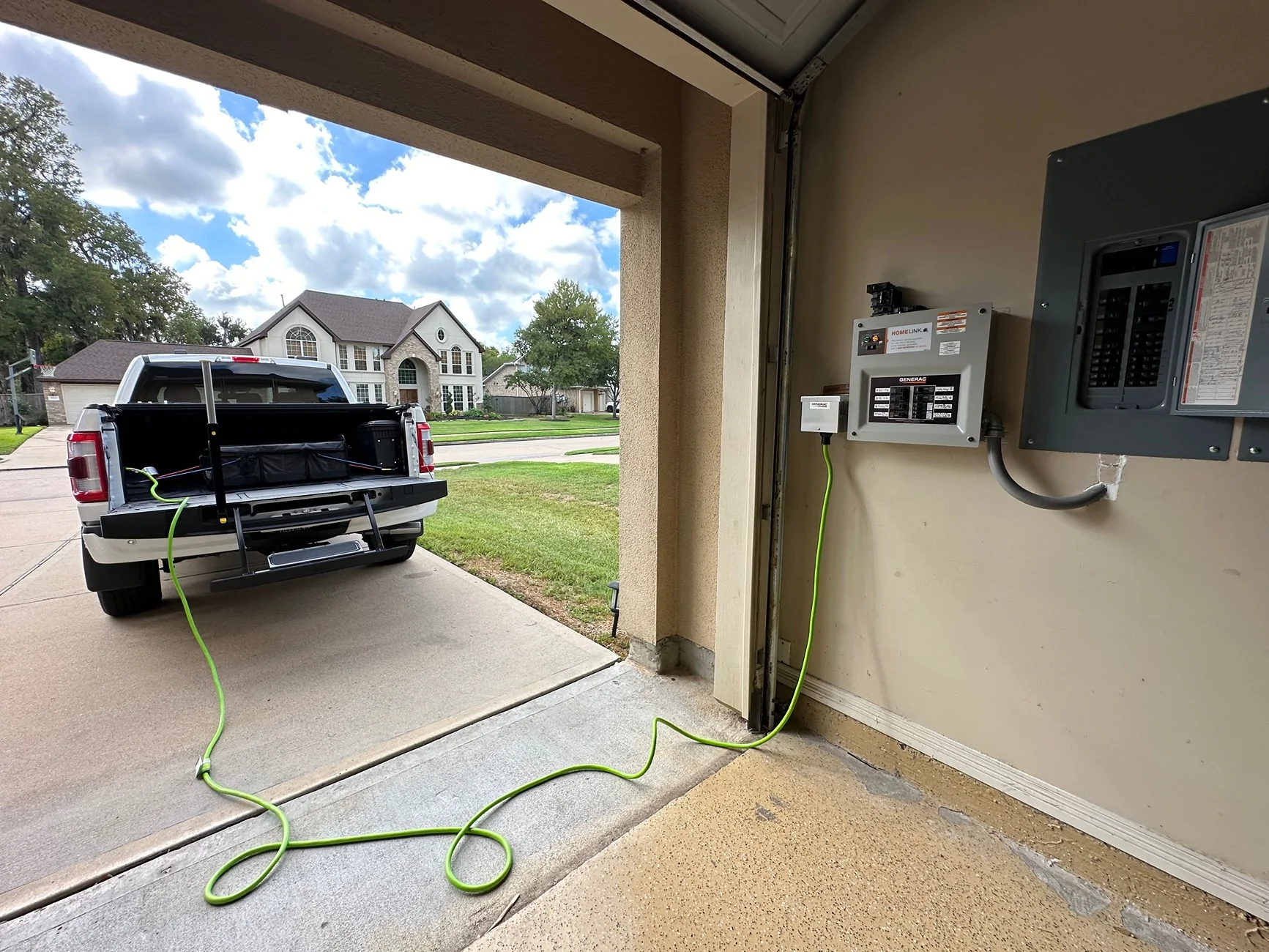
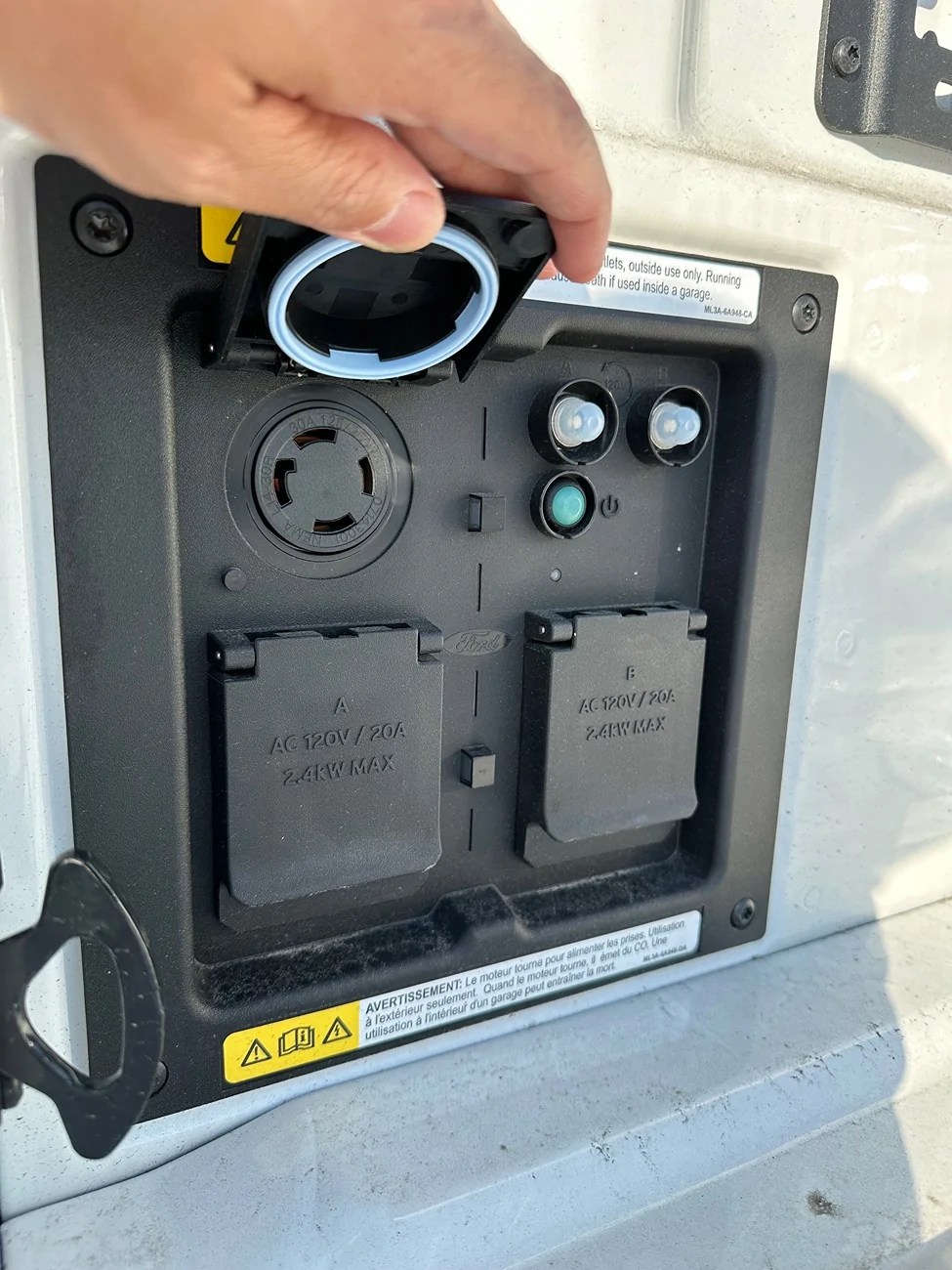
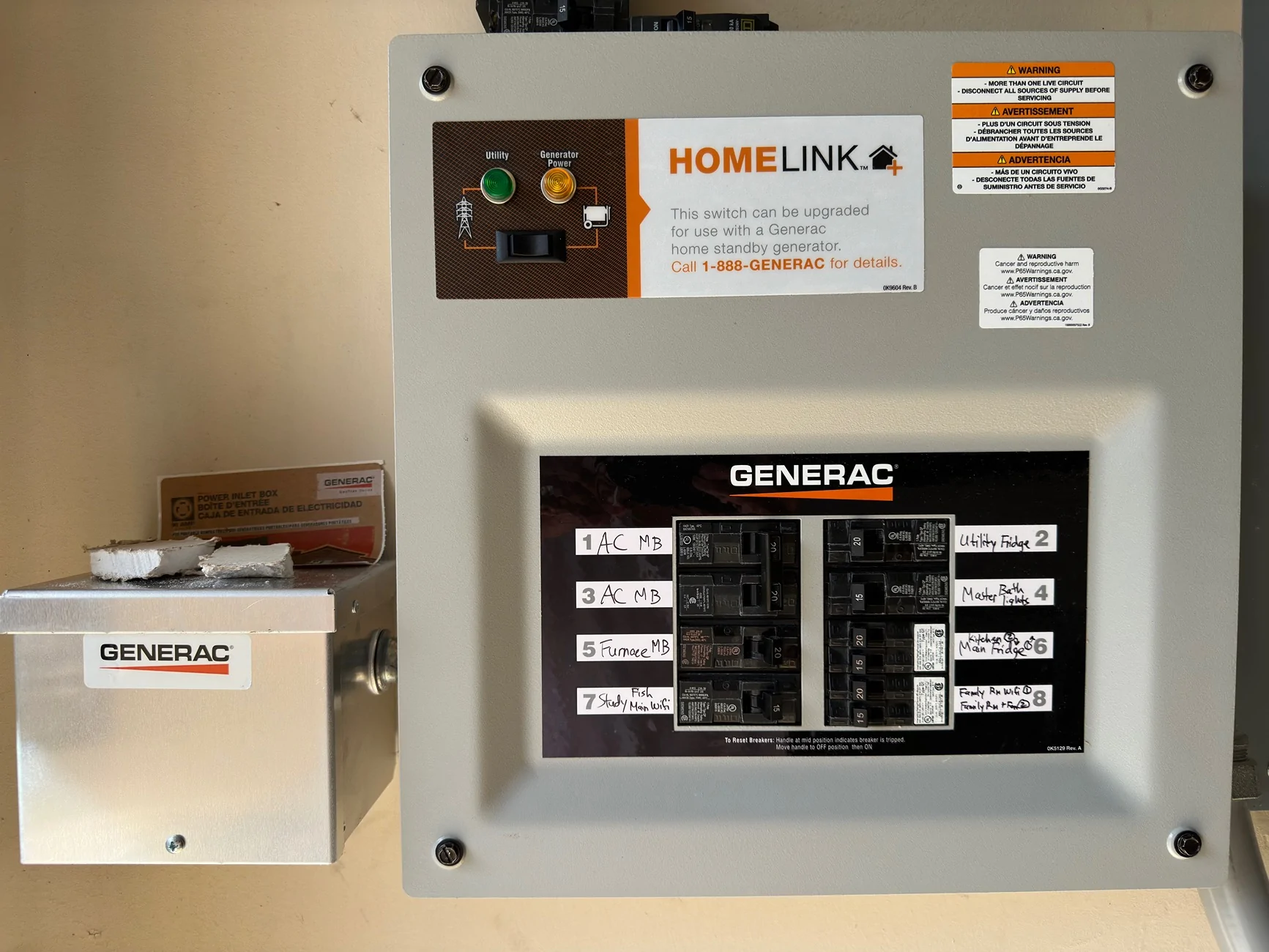
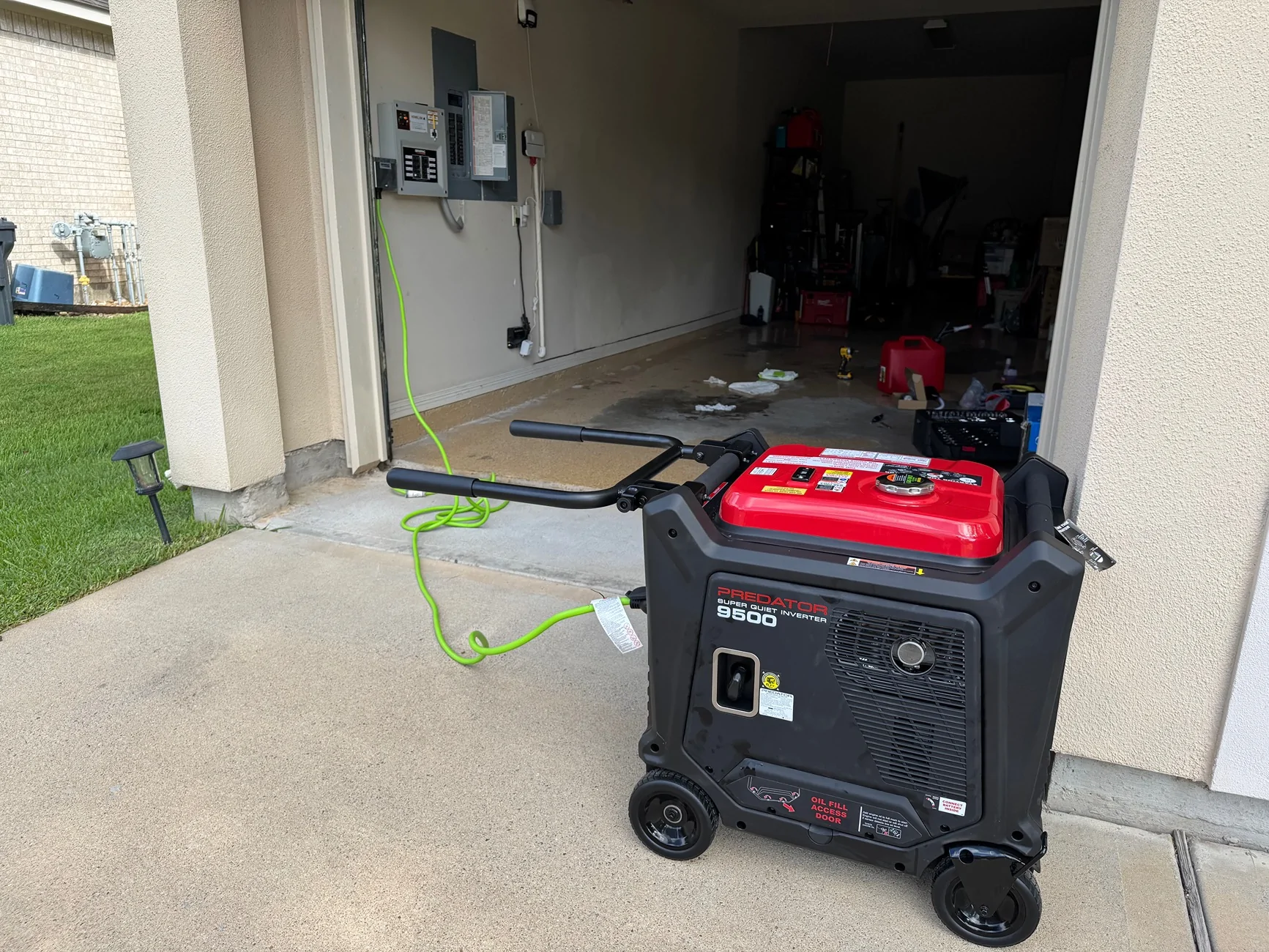
This is my setup...I did this because I have a Ford F150 Powerboost that has 7.2kW generator.

But now, I can use it with my CT as well. I also gave an independent generator.

Tesla Cybertruck My home power backup without Powershare solution/ neutral-ground bonding/ transfer switch options/cold temps IMG_7289


Tesla Cybertruck My home power backup without Powershare solution/ neutral-ground bonding/ transfer switch options/cold temps IMG_6733


Tesla Cybertruck My home power backup without Powershare solution/ neutral-ground bonding/ transfer switch options/cold temps IMG_7285


Tesla Cybertruck My home power backup without Powershare solution/ neutral-ground bonding/ transfer switch options/cold temps IMG_0777
 
OP
OP
no%X#XMVk65v#cq

no%X#XMVk65v#cq

Well-known member
First Name
J
Joined
Sep 11, 2024
Threads
8
Messages
273
Reaction score
627
Location
USA
Vehicles
CT FS AWD
This is my setup...I did this because I have a Ford F150 Powerboost that has 7.2kW generator.

But now, I can use it with my CT as well. I also gave an independent generator.

IMG_7289.webp


IMG_6733.webp


IMG_7285.webp


IMG_0777.webp
Nice! I think that Generac unit switches neutral, right?


Top