
Sponsored

Another Hit Piece on Cybertruck

JBee

Well-known member
First Name
JB
Joined
Nov 22, 2019
Threads
18
Messages
4,913
Reaction score
6,362
Location
Australia
Vehicles
Cybertruck
Occupation
. Professional Hobbyist
Country flag
Larger distribution lines, HVDC or superconducting are not the solution to brownouts.

The primary cause for brownouts is insufficient capacity due to faulty planning and load predictions.

This is caused by peak load being weather dependent, as weather dictates energy demand. Weather forecasts and seasonal predictions are not allowing enough headroom for climate peaks, and subsequent living area climate control energy use etc, that are occurring more often than previously, and as such predictive generation and infrastructure planning cannot meet demand as it occurs. You need to build extra capacity beforehand just to meet a once or twice a year event. Hardly a viable enterprise.

Generation and network infrastructure take years (decades?) to plan and install, and currently nearly all networks are already running over rated capacity and cannot be installed fast enough. This will get worse. That is even if somebody would bother investing into it, seeing that networks are failing to make a ROI at all in many countries in many areas as generation becomes more distributed and sparodic due to embedded renewables.

The only way to make the necessary peak capability of a network viable is to pay to install an grossly oversized network (3-4x size) that only rarely gets used. Generators, retailers and even customers do not want to pay for this as it has little benefit to them.

The network problem is peak load, and there's ways of getting rid of that without upgrading networks at all, even without any extra infrastructure by using EV vehicle to grid V2G.
Sponsored

 
Last edited:

Jhodgesatmb

Well-known member
First Name
Jack
Joined
Dec 1, 2019
Threads
89
Messages
6,487
Reaction score
9,025
Location
San Francisco Bay area
Website
www.arbor-studios.com
Vehicles
Tesla Cybertruck FS AWD, Tesla Model Y LR
Occupation
Retired AI researcher
Country flag
Larger distribution lines, HVDC or superconducting are not the solution to brownouts.

The primary cause for brownouts is insufficient capacity due to faulty planning and load predictions.

This is caused by peak load being weather dependent, as weather dictates energy demand. Weather forecasts and seasonal predictions are not allowing enough headroom for climate peaks, and subsequent living area climate control etc, that are occurring more often than previously, and as such predictive generation and infrastructure planning cannot meet demand as it occurs. You need to build extra capacity beforehand just to meet a once or twice a year event. Hardly a viable enterprise.

Generation and network infrastructure take years (decades?) to plan and install, and currently nearly all networks are already running over rated capacity and cannot be installed fast enough. This will get worse. That is even if somebody would bother investing into it, seeing that networks are failing to make a ROI at all in many countries in many areas as generation becomes more distributed and sparodic due to embedded renewables.

The only way to make the necessary peak capability of a network viable is to pay to install an grossly oversized network (3-4x size) that only rarely gets used. Generators, retailers and even customers do not want to pay for this as it has little benefit to them.

The network problem is peak load, and there's ways of getting rid of that without upgrading networks at all, even without any extra infrastructure by using EV vehicle to grid V2G.
So one thing that you are suggesting is that to protect ourselves, and if we can afford to do it, we should go off grid for power and water, because we cannot count on the powers that be to do it?
 

JBee

Well-known member
First Name
JB
Joined
Nov 22, 2019
Threads
18
Messages
4,913
Reaction score
6,362
Location
Australia
Vehicles
Cybertruck
Occupation
. Professional Hobbyist
Country flag
So one thing that you are suggesting is that to protect ourselves, and if we can afford to do it, we should go off grid for power and water, because we cannot count on the powers that be to do it?
You can go off grid, and ultimately its probably the best way forwards from a efficiency and sustainability standpoint, but V2G and proper capacity scheduling coupled with distribution grid embedded RE generation would allow the existing network to have enough capacity, even in micro grid scenarios, without upgrading the network at all.

Provided enough energy is available for that part of the grid on a weekly basis it would work, as EV's, even with charging, could buffer the rest, if at least 10% of EV vehicles remained plugged into the grid whilst parked. Just solar generation will only work in lower latitudes, but mixed RE could work elsewhere without fossil use.

(PS the "powers that be" in this case are our own wallets)
 
Last edited:

Jhodgesatmb

Well-known member
First Name
Jack
Joined
Dec 1, 2019
Threads
89
Messages
6,487
Reaction score
9,025
Location
San Francisco Bay area
Website
www.arbor-studios.com
Vehicles
Tesla Cybertruck FS AWD, Tesla Model Y LR
Occupation
Retired AI researcher
Country flag
You can go off grid, and ultimately its probably the best way forwards from a efficiency and sustainability standpoint, but V2G and proper capacity scheduling coupled with distribution grid embedded RE generation would allow the existing network to have enough capacity, even in micro grid scenarios, without upgrading the network at all.

Provided enough energy is available for that part of the grid on a weekly basis it would work, as EV's, even with charging, could buffer the rest, if at least 10% of EV vehicles remained plugged into the grid whilst parked. Just solar generation will only work in lower latitudes, but mixed RE could work elsewhere without fossil use.

(PS the "powers that be" in this case is our own wallets)
I disagree. I am always willing to contribute to the greater good, so my wallet is open as long as everyone else will do the same… and there’s the rub.

I like the idea of micro grids and will V2G but we need batteries that can be charged and discharged a lot more than the current batteries will allow.
 

JBee

Well-known member
First Name
JB
Joined
Nov 22, 2019
Threads
18
Messages
4,913
Reaction score
6,362
Location
Australia
Vehicles
Cybertruck
Occupation
. Professional Hobbyist
Country flag
I disagree. I am always willing to contribute to the greater good, so my wallet is open as long as everyone else will do the same… and there’s the rub.

I like the idea of micro grids and will V2G but we need batteries that can be charged and discharged a lot more than the current batteries will allow.
If you want to maximize the effectiveness of your wallet to increase sustainability then don't use it at all. :cool:

The problem is externalities, that your money pays for without you being able to control it. That money flows through externalities to non-renewable and unsustainable development if you want it to or not. Money lubricates the flow of goods and services, all goods and services, and you can't mandate, with your own wallet at least, what goods and services that money can be spent on, let alone how tax is wasted for fossil subsidies etc.

Example: you pay a linesman from your wallet to install networks using ICE powered earthmoving machinery and cranes, because renewable powered electric versions of that do not exist. Think of how any Tesla gigafactory is built, using what machines, what materials and what form of energy they predominately use.

Many, many things only exist because fossils are a cheaper energy source that can subsidies the cost of renewables. Without fossils they would cost many times more to make work. The same goes for affordability, with many RE workers not being able to afford a sustainable lifestyle and can only afford the cheap fossils instead to survive.

See if you can find a RE that doesn't leverage fossils to make energy, let alone for distribution or storage. There are but a few.

To be clear I'm not pro-fossil in any way, but I'm not under any illusion of how RE works and is made, I've been in the RE industry for decades, so have seen first hand the pro's and cons.

One of the biggest banes of sustainable economic reform is the prevalence of a "retail market" system for goods and services, where large corporate bodies monopolize the distribution of products and services, without adding much, if any, value at all. There are solutions on the horizon to counter this with many manufacturers opting to sell from the manufacturing floor instead. Tesla is doing this, and Amazon is helping distributed manufacturing to leverage their distribution network, to achieve the same even at small scale.

The same methodologies should be used for power distribution, being mindful of what other opportunities exist in making them even more sustainable. Tesla already sell two products that can make this work, their cars and Powerwall. They just have to open up to V2G to open the floodgates to affordable storage with a OTA update. (Which I'm expecting at some point, a bit like the recent announcement that Starlink will provide cell coverage to most off the shelf mobiles now)

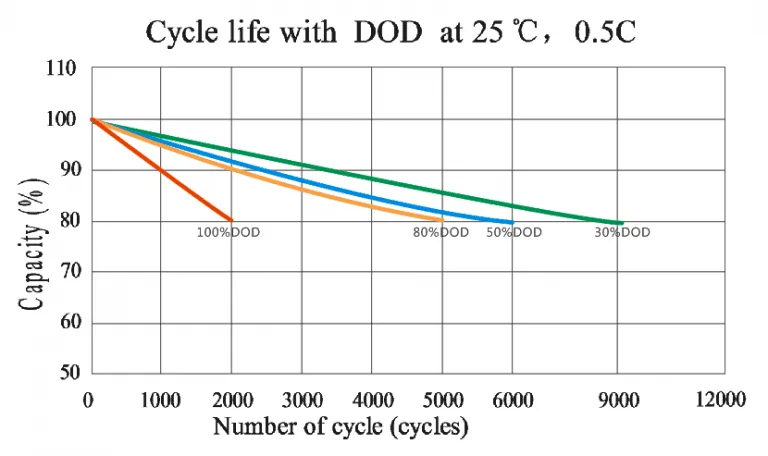
On the subject of battery cycling, you need to take the cycle numbers in context with depth of discharge. Like on this graph for example, a 30% DOD triples the cycles the battery can do.

Tesla Cybertruck Another Hit Piece on Cybertruck 1662353119405


9000 cycles is 25 years at 1 cycle a day. So with enough EV's that are plugged that discharge 10% once per day it will likely not have a noticeable impact on battery performance over the vehicle life. Your driving habits of fast charging on a supercharger from low DOD, or accelerating etc, will likely be more damaging than V2G will ever be. Cycle life is simply no issue if you can keep the DOD in the 30% range. This also means the EV has 60% of range for unscheduled use by the owner at any time. So a win win from a cycling perspective.

From a technical perspective most aspects of V2G work already with existing technology, even your household grid connection is compatible if you limit grid export to match the DOD and best peak discharge rates of the EV battery. The house load becomes irrelevant, in that it would be supplied by the EV whilst exporting to the grid, which in turn give the network more capacity to provide to others without V2G. Further household/business solar generation would not impact network stability ether, in that the EV battery could both absorb extra solar capacity for use by the house, or later for providing peak grid load without overloading the grid, leading to network curtailment of solar and therefore less available RE on the network.
 
Last edited:


Ramojarocho

Member
First Name
Omar
Joined
Aug 3, 2020
Threads
2
Messages
22
Reaction score
27
Location
USA
Vehicles
Cybertruck 09 C300 4matic, 98 Chevy 1500
Occupation
Automotive Industry Muth Mirror Systems
Country flag
And the Lordstown... Do they even have a staff? They said maybe this year but we've seen nothing in the way of new demos from them in more than a year.

-Crissa
Once the CT production starts ramping up, it’s game over! Tesla has what it takes to mass produce. Yes, there will be competition but nothing close to Tesla Speed??
 

charliemagpie

Well-known member
First Name
Charlie
Joined
Jul 6, 2021
Threads
48
Messages
2,982
Reaction score
5,369
Location
Australia
Vehicles
CybrBEAST
Occupation
retired
Country flag
It was father's day yesterday here in Au. My Son and Daughter and her husband came over.

The boys have been scoffing at the CT since I placed my order.
And quote 'your not going to talk about the CT are you dad !''

Of course I did.

I pulled up the 'connecting the dots vid of a week or so ago where he was talking about CT tech. Braking,4WS etc.

The clip with the tonneau cover opening was met with stunned silence.

I also showed some pic.. The 'alien' wrap raised some eyebrows.

Anyway... They didn't say it, but I know they went from total skeptics just ready to wave off the CT as an ugly thing they are not interested in at all, to just maybe it's not as bad as they thought.

I think there will be a barrier, but it will be short lived as these types realize the product is everything they dream about.

Yep.. full production at 250,000+ per year will win over a lot of people once they see it.

If my kids are any indication... win them over and add them to the 1.5 million Tesla fanboys and the market is HUGE.
 

firsttruck

Well-known member
Joined
Sep 25, 2020
Threads
205
Messages
2,761
Reaction score
4,441
Location
mx
Vehicles
none
Country flag
And the Lordstown... Do they even have a staff? They said maybe this year but we've seen nothing in the way of new demos from them in more than a year.

-Crissa
Several months ago Lordstown completed sale of the Lordstown U.S. factory to Foxconn (huge Chinese based and international manufacturer) so supposedly Foxconn will make the trucks for Lordstown Motors.

Lordstown Motors and Foxconn Close Asset Purchase Agreement and Enter into JV Agreement for MIH Based EV Development Go Back
May 11, 2022
https://investor.lordstownmotors.co...d-foxconn-close-asset-purchase-agreement-and/


Foxconn manufactures products for some of the worlds leading products from Apple (iPhone), Dell, HP , Sony, Google, Amazon, Cisco, Nintendo and many other brands. In addition to consumer electronics, Foxconn also makes medical devices, and industrial products. Foxconn announced in Oct 2020 that it aims to provide components or services to around 10% of the world's electric vehicles between 2025 and 2027.

Hon Hai Precision Industry Co., Ltd. (TWSE: 2317), trading as Hon Hai Technology Group in China and Taiwan, or Foxconn internationally, is a Taiwanese multinational electronics contract manufacturer with its headquarters in Tucheng, New Taipei City, Taiwan, established in 1974. In 2021, the Group's was ranked 22nd in the 2021 Fortune Global 500. It is the world's largest technology manufacturer and service provider. While headquartered in Taiwan, the company is the largest private employer in the People's Republic of China and one of the largest employers worldwide.
https://en.wikipedia.org/wiki/Foxconn

Foxconn
International operations
China, Brazil, Hungary, Slovakia, Czech Republic, India, Japan, Malaysia, Mexico, South Korea, United States


Foxconn wastes no time announcing Fisker PEAR will be built at newly acquired Lordstown plant
By Scooter Doll
May. 12th 2022
https://electrek.co/2022/05/12/foxc...l-be-built-at-newly-acquired-lordstown-plant/


Foxconn to make self-driving electric tractor for startup Monarch Tractor at same Ohio factory as EVs from Lordstown, Fisker
By Stephen Edelstein
August 16, 2022
https://www.greencarreports.com/new...lectric-tractor-ohio-factory-lordstown-fisker
 
Last edited:

Jhodgesatmb

Well-known member
First Name
Jack
Joined
Dec 1, 2019
Threads
89
Messages
6,487
Reaction score
9,025
Location
San Francisco Bay area
Website
www.arbor-studios.com
Vehicles
Tesla Cybertruck FS AWD, Tesla Model Y LR
Occupation
Retired AI researcher
Country flag
If you want to maximize the effectiveness of your wallet to increase sustainability then don't use it at all. :cool:

The problem is externalities, that your money pays for without you being able to control it. That money flows through externalities to non-renewable and unsustainable development if you want it to or not. Money lubricates the flow of goods and services, all goods and services, and you can't mandate, with your own wallet at least, what goods and services that money can be spent on, let alone how tax is wasted for fossil subsidies etc.

Example: you pay a linesman from your wallet to install networks using ICE powered earthmoving machinery and cranes, because renewable powered electric versions of that do not exist. Think of how any Tesla gigafactory is built, using what machines, what materials and what form of energy they predominately use.

Many, many things only exist because fossils are a cheaper energy source that can subsidies the cost of renewables. Without fossils they would cost many times more to make work. The same goes for affordability, with many RE workers not being able to afford a sustainable lifestyle and can only afford the cheap fossils instead to survive.

See if you can find a RE that doesn't leverage fossils to make energy, let alone for distribution or storage. There are but a few.

To be clear I'm not pro-fossil in any way, but I'm not under any illusion of how RE works and is made, I've been in the RE industry for decades, so have seen first hand the pro's and cons.

One of the biggest banes of sustainable economic reform is the prevalence of a "retail market" system for goods and services, where large corporate bodies monopolize the distribution of products and services, without adding much, if any, value at all. There are solutions on the horizon to counter this with many manufacturers opting to sell from the manufacturing floor instead. Tesla is doing this, and Amazon is helping distributed manufacturing to leverage their distribution network, to achieve the same even at small scale.

The same methodologies should be used for power distribution, being mindful of what other opportunities exist in making them even more sustainable. Tesla already sell two products that can make this work, their cars and Powerwall. They just have to open up to V2G to open the floodgates to affordable storage with a OTA update. (Which I'm expecting at some point, a bit like the recent announcement that Starlink will provide cell coverage to most off the shelf mobiles now)

On the subject of battery cycling, you need to take the cycle numbers in context with depth of discharge. Like on this graph for example, a 30% DOD triples the cycles the battery can do.

1662353119405.png


9000 cycles is 25 years at 1 cycle a day. So with enough EV's that are plugged that discharge 10% once per day it will likely not have a noticeable impact on battery performance over the vehicle life. Your driving habits of fast charging on a supercharger from low DOD, or accelerating etc, will likely be more damaging than V2G will ever be. Cycle life is simply no issue if you can keep the DOD in the 30% range. This also means the EV has 60% of range for unscheduled use by the owner at any time. So a win win from a cycling perspective.

From a technical perspective most aspects of V2G work already with existing technology, even your household grid connection is compatible if you limit grid export to match the DOD and best peak discharge rates of the EV battery. The house load becomes irrelevant, in that it would be supplied by the EV whilst exporting to the grid, which in turn give the network more capacity to provide to others without V2G. Further household/business solar generation would not impact network stability ether, in that the EV battery could both absorb extra solar capacity for use by the house, or later for providing peak grid load without overloading the grid, leading to network curtailment of solar and therefore less available RE on the network.
Although there can be no disagreement with you on the specifics, there is a slow but steady progression of heavy machinery into electrification. This past year, for example, the all-electric Bobcat T7X was introduced. I have heard of, but not seen, other electric earth movers. I believe that we have no choice but to expand on this trend. As for the grid, I know that Obama was trying to revamp it but it is a slow-moving project. I hope, for the sake of humanity, that we don't drop the ball. I knew that battery cycle life was around 2,000 cycles at 100% but I didn't know that if you reduce the percentage of charging that you increase the number of cycles of lifetime so dramatically. Thank you for that graph (of course, I would feel better if Tesla had actual figures to show how their battery longevity fits this graph).
 

ldjessee

Well-known member
First Name
Lloyd
Joined
Apr 22, 2020
Threads
14
Messages
1,148
Reaction score
1,361
Location
Indiana, USA
Vehicles
Nissan Leaf, MYLR, Kaw 1700 Vaquero
Occupation
Business Intelligence Manager & Analyst
Country flag
I believe that all currently know low pressure superconductors require being chilled to something like -157f. There is one that superconductors at 57 f but it is under tremendous pressure (13 GPa). I think there really isn't a way to cover the cost of a superconducting transmission line with current tech.
That is what I thought, until I had an MRI and looked into the superconductor used there (warmer than nitrogen temp).

Making Liquid nitrogen is not that hard, nor is keeping things that cold, especially if well insulated.

And if it is done like the superconducting wire for MRIs, it will be a superconducting filament embedded (or surrounded by) copper.

And I was only thinking of a single trunk that went east to west.

Maybe it would not be possible, but they can cool the superconductors for the partical colliders and maglev train that go for miles, so again, this would not be something completely unheard of.

And, maybe it would not be profitable, but moving electricity is much easier than moving say Aluminum to a smelter (or other such material that takes a lot of energy to process).


JBee

Well-known member
First Name
JB
Joined
Nov 22, 2019
Threads
18
Messages
4,913
Reaction score
6,362
Location
Australia
Vehicles
Cybertruck
Occupation
. Professional Hobbyist
Country flag
Although there can be no disagreement with you on the specifics, there is a slow but steady progression of heavy machinery into electrification. This past year, for example, the all-electric Bobcat T7X was introduced. I have heard of, but not seen, other electric earth movers. I believe that we have no choice but to expand on this trend. As for the grid, I know that Obama was trying to revamp it but it is a slow-moving project. I hope, for the sake of humanity, that we don't drop the ball. I knew that battery cycle life was around 2,000 cycles at 100% but I didn't know that if you reduce the percentage of charging that you increase the number of cycles of lifetime so dramatically. Thank you for that graph (of course, I would feel better if Tesla had actual figures to show how their battery longevity fits this graph).
Well to be fair many of the large excavators are line draggers and are electric powered over a cable they drag behind them, hence the name. There are also electric dump trucks etc, in Switzerland theres a mine on a mountain that uses them to generate power back into the grid, by regen braking with a full load down the hill and driving up empty. But somewhat ironically line draggers operate in coal mines from coal power, so its not really used for renewable power as such, even though coal was made from solar energy at some point long ago. ? Predominantly though mining and transportation (inc. shipping) is still fossil powered.

I agree with the sentiment that we should develop a sustainable future while we still have the ability to do so, especially given at some point, not to far away, our working class will diminish into old age pension given our perilous birthrate. How we go about it is of course the million dollar question, but as a believer in sustainability, mimicking natures millennial wisdom, resource cycling and systems is key to establishing a sustainable ecology for mankind. Decentralisation, distribution and diversity are key to making a resilient, reliable and redundant set of systems to power the technology we use to sustain our lives within the natural environment.

Unlike animals that have adapted to their environment by having fur, claws or weird eating habits etc, humans have "developed" big noggins that change and use the environment around them to meet their needs instead. This fundamental difference and the ability to create artificial tools we can operate with opposable thumbs that can leverage our abilities into the "supernatural" (look at how many 1000's tons a line dragger can dig a day with just one operator) means that we now just recently have acquired the abilities and systems to "change the world".

How we change it, and what systems we use to affect that change, will determine if we will survive as a species or not.
 

Dids

Well-known member
First Name
Les
Joined
Dec 21, 2019
Threads
10
Messages
1,792
Reaction score
3,820
Location
Massachusetts
Vehicles
04 Tacoma, 23 Cybertruck
Occupation
Self
Country flag
That is what I thought, until I had an MRI and looked into the superconductor used there (warmer than nitrogen temp).

Making Liquid nitrogen is not that hard, nor is keeping things that cold, especially if well insulated.

And if it is done like the superconducting wire for MRIs, it will be a superconducting filament embedded (or surrounded by) copper.

And I was only thinking of a single trunk that went east to west.

Maybe it would not be possible, but they can cool the superconductors for the partical colliders and maglev train that go for miles, so again, this would not be something completely unheard of.

And, maybe it would not be profitable, but moving electricity is much easier than moving say Aluminum to a smelter (or other such material that takes a lot of energy to process).
True they have superconductors way above liquid nitrogen -320f boil point. But liquid nitrogen is not inherently cold it is the evaporation that carries the heat. So you are proposing a highly insulated pipe of liquid nitrogen that leaks along it's length sufficient to keep a superconducting @-174f. I do think it's much easier to chill a coil of wire than it is to chill a length streached across a continent.
I do believe the same is true in maglev trains. The superconducting portions are on the train and the track magnets are just normal electro magnets.
On an aside I once rode the train in Shanghai. It is not a smooth or enjoyable ride. The air buffeting was very jerky. What was great was passing by the opposing train and experiencing the double sonic boom. I think both trains were in the 500kph range so I guess was enough to exceed speed of sound
 

JBee

Well-known member
First Name
JB
Joined
Nov 22, 2019
Threads
18
Messages
4,913
Reaction score
6,362
Location
Australia
Vehicles
Cybertruck
Occupation
. Professional Hobbyist
Country flag
That is what I thought, until I had an MRI and looked into the superconductor used there (warmer than nitrogen temp).

Making Liquid nitrogen is not that hard, nor is keeping things that cold, especially if well insulated.

And if it is done like the superconducting wire for MRIs, it will be a superconducting filament embedded (or surrounded by) copper.

And I was only thinking of a single trunk that went east to west.

Maybe it would not be possible, but they can cool the superconductors for the partical colliders and maglev train that go for miles, so again, this would not be something completely unheard of.

And, maybe it would not be profitable, but moving electricity is much easier than moving say Aluminum to a smelter (or other such material that takes a lot of energy to process).
Hey igjessee, not sure if you followed any of my posts here, but what exactly is the intention of installing a super conducting line accross the country, even if it was viable technically?

The reason I ask this is that rolling brownouts in California are not going to be resolved by supplying extra external generation from interstate to a single point on the Cal grid, because the whole grid there itself is incapable of supplying enough power to demanded load. Further, it would be faster and much cheaper to simply add peaking plants or leverage storage, which would also allow more RE penetratation.

BTW maglev trains only use superconductors on the train itself and not in the rail network they run on. So very limited in use so far, and hyper loop would be better than maglev overall for consumption as it gets rid of aerodynamic drag as well. So maybe a superconducting hyperloop in a boring tunnel that also transfers power? ?
 

JBee

Well-known member
First Name
JB
Joined
Nov 22, 2019
Threads
18
Messages
4,913
Reaction score
6,362
Location
Australia
Vehicles
Cybertruck
Occupation
. Professional Hobbyist
Country flag
True they have superconductors way above liquid nitrogen -320f boil point. But liquid nitrogen is not inherently cold it is the evaporation that carries the heat. So you are proposing a highly insulated pipe of liquid nitrogen that leaks along it's length sufficient to keep a superconducting @-174f. I do think it's much easier to chill a coil of wire than it is to chill a length streached across a continent.
I do believe the same is true in maglev trains. The superconducting portions are on the train and the track magnets are just normal electro magnets.
On an aside I once rode the train in Shanghai. It is not a smooth or enjoyable ride. The air buffeting was very jerky. What was great was passing by the opposing train and experiencing the double sonic boom. I think both trains were in the 500kph range so I guess was enough to exceed speed of soundI
Lol great minds and all. Simul-post. ?
 

ldjessee

Well-known member
First Name
Lloyd
Joined
Apr 22, 2020
Threads
14
Messages
1,148
Reaction score
1,361
Location
Indiana, USA
Vehicles
Nissan Leaf, MYLR, Kaw 1700 Vaquero
Occupation
Business Intelligence Manager & Analyst
Country flag
Hey igjessee, not sure if you followed any of my posts here, but what exactly is the intention of installing a super conducting line accross the country, even if it was viable technically?

The reason I ask this is that rolling brownouts in California are not going to be resolved by supplying extra external generation from interstate to a single point on the Cal grid, because the whole grid there itself is incapable of supplying enough power to demanded load. Further, it would be faster and much cheaper to simply add peaking plants or leverage storage, which would also allow more RE penetratation.

BTW maglev trains only use superconductors on the train itself and not in the rail network they run on. So very limited in use so far, and hyper loop would be better than maglev overall for consumption as it gets rid of aerodynamic drag as well. So maybe a superconducting hyperloop in a boring tunnel that also transfers power? ?
Why I proposed a superconducting trunk is that power use is very time dependent and while it might be hotter in one part of the country, it is not always hotter everywhere in the country, so being able to shift power demand and supply and using batteries to also help time shift, it could be very possible to provide extra power to a regional/sub grid for other areas/grids. Like taking power from the plains states with lots of wind potential to other locations. There are times where even here in Indiana (northern part of the state) with wind turbines are idle or not producing power because there is not enough demand sometimes... the trunk would help shift that power to other states, to industrial areas, etc.

As for Maglev trains, fine, if the superconducting bit is on the train, but for super colliders, it is still miles of tunnels, superconductor, and such.

We (the USA) is so far behind in rail technology, that even just having a decently high speed train would be better than anything else we have (decently high speed being over 100mph). Yes, if you have a trunk bringing along power, then using it to help energize maglev hyperloop should work...

Are not maglev trains powered externally?
Sponsored


Top