
Sponsored

No Exoskeleton

JBee

Well-known member
First Name
JB
Joined
Nov 22, 2019
Threads
18
Messages
4,913
Reaction score
6,362
Location
Australia
Vehicles
Cybertruck
Occupation
. Professional Hobbyist
Country flag
I think the closest the CT gets to a stressed skin is me pulling my hair out trying to describe how there's not many parts of it that are a load carrying exoskeleton! :p

But on a more serious note the structural battery pack is a lot closer to a stressed skin element than the exoskeleton type fender. The trick why it works for an airliner though is that the stressed skins are in a tube shape, that are capable of transferring loads over a large area, without creating load hot spots that need reinforcement. The CT square box shape is less than optimal for that in comparison.

But the biggest difference to an aircraft is that the CT won't be designed to incorporate as much deflection as an aircraft has (that is to say t won't bend as much), and of course won't have fuel laden wings. The wheels are the only place the loads are carried, and the CT will want to be stiff to keep it agile for on road handling.

on CT Suspension

There is another factor to consider when it comes to the CT air suspension, that will also affect the CT structural design. That is that unlike common steel springs, air suspension can be "cross-linked". This can be done mechanically or electronically.

This means you can have one side front and rear airspring linked together by a hose connection, and the other side too by its own connection, you end up with a system where the front wheel compression pushes the rear wheel up to compensate, and the rear the front when the bump passes underneath. In cornering because both airsprings are compressed on the outside of the vehicle it will also have less body roll in corners. This is similar to a local manufacture that make the Kinetic Suspension for Toyota, that uses a hydraulic roll bar.

The reason this becomes important for the structure (and traction offroad too) is that in nearly all normal driving conditions the load on each spring can remain the same, regardless of the wheel articulation position. That means unlike a steel spring, the more tighlty compressed spring does not have the most load, and the most traction, rather all wheels can have the same amount of load at the same time and equal traction because of it.

This works up until the CT suspension travel is maxed out, and the airspring can no longer compensate for articulation.

Now being able to monitor load on each airspring also allows for the traction control system to predict available traction, which means better motivation in difficult terrain. Obviously, being and active air suspension there's a heap of other features that could be mentioned here, but for the structure the primary benefit is that torsional loads could be greatly reduced in all driving conditions, until the airsprings hit their stops. This along with the rear F1 style pushrod suspension, would mean the torsion loads would be near zero, because the rear assembly and pushrod geometry essentially make the CT a tripod for suspension load, which does not have a longitudinal torsional element.
Sponsored
 

Deleted member 17810

Guest
so you are disagreeing that the skin is carrying twist forces?

The suspension load talk all exists outside of the front/rear castings. Putting loads onto them, which are then transferred at least partially into the skin.

The april fools video doesn't have suspension inside
 

JBee

Well-known member
First Name
JB
Joined
Nov 22, 2019
Threads
18
Messages
4,913
Reaction score
6,362
Location
Australia
Vehicles
Cybertruck
Occupation
. Professional Hobbyist
Country flag
so you are disagreeing that the skin is carrying twist forces?

The suspension load talk all exists outside of the front/rear castings. Putting loads onto them, which are then transferred at least partially into the skin.

The april fools video doesn't have suspension inside
I'm not sure what you mean with April fools video.

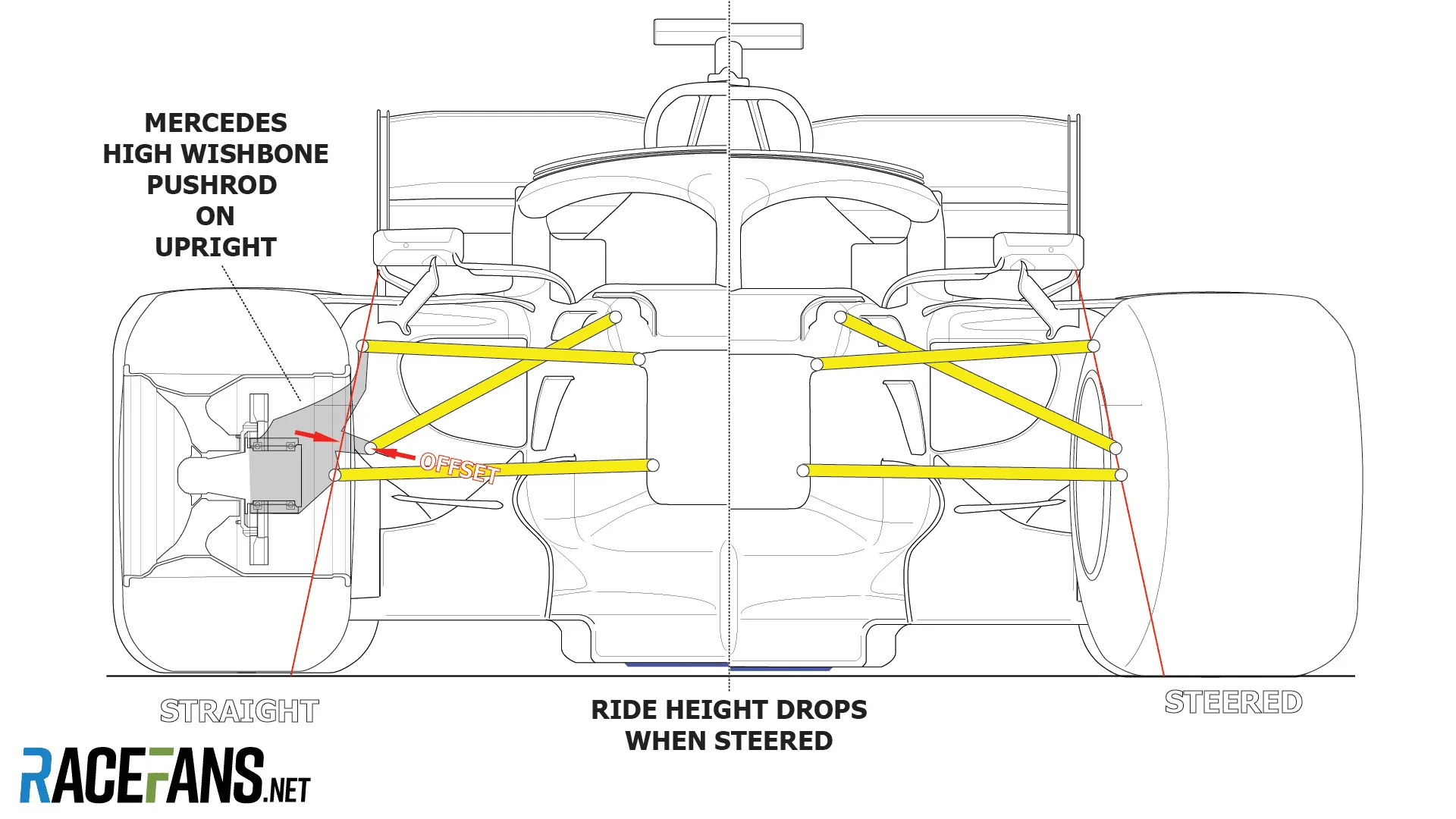
The CT has never had any visible rear suspension airspring risers. There is also no spce for them next to the wheel as this will encroach on the bed width. Tde F150L has the springs under the bed, but none of the CT underbody shots have revealed the airspring so far, and the only thing that is visible there is a pushrod system like a F1 car:

Tesla Cybertruck No Exoskeleton 1683217806800


As is self evident from the above diagram, the only suspension forces acting on the frame are going through that little square box section in the middle. If used on the rear of the CT it is geometrically the equivalent of one point in relation to the width of the vehicle, hence the tripod analogy above. In the CT I imagine that that box section is made up of the rear motor assembly and the rear cast, but importantly no loads go vertically straight up into the overhead wheel arch or cast sides because there is no suspension airspring riser there to transfer the loads up.

In the front there is, but the load goes straight up into the cabin truss frame that terminates on top of the airsring for that reason.
 

Deleted member 17810

Guest
the april fools vido is where the suspension screen. caps came from.


All those forces are seemingly tied into the outside of the front/rear casting.

irregardless of where they meet the casting it's considered an external force.

So we go back to what you are assuming.

In the CT I imagine that that box section is made up of the rear motor assembly and the rear cast, but importantly no loads go vertically straight up into the overhead wheel arch or cast sides because there is no suspension airspring riser there to transfer the loads up.
IF the casting at the junction point is strong enough the load gets moved to the sail I beams and then to the skin and the skin to the cabin body through the overlap.
 

CyberShawnTruck

New member
First Name
Shawn
Joined
Aug 23, 2022
Threads
0
Messages
4
Reaction score
5
Location
Edmonton
Vehicles
Model 3 Long Range ; Subaru Crosstrek
Country flag
Having stiffened 3mm SS panels will carry load and add stiffness to the structure. Load Bearing may be what is up for interpretation. Bending, stamping or creasing the panels will make them very stiff. They will transfer load thru the attach points and thru the surface. Is it an exoskeleton like an insect? No, it will be structural and load bearing. I hope we get more info and I am sure Monroe will give us the definitive answer to all of this.

I would 100 percent agree, load bearing and structural. Is there room for Tesla to play with the term “Exoskeleton”, maybe. As in its structural. A Model Y steel panels are mostly skin, they aren’t structure. Here it may have internal structure as well, but it‘s clear since even Cory is comparing it to a ridgeline that the exterior panels add strength and rigidity to the truck. Now I am not a structural engineer, but I do tend to thing Cory overly simplified his definition of exoskeleton here.


Ogre

Well-known member
First Name
Dennis
Joined
Jul 3, 2021
Threads
166
Messages
10,735
Reaction score
27,050
Location
Ogregon
Vehicles
Model Y
Country flag
I would 100 percent agree, load bearing and structural. Is there room for Tesla to play with the term “Exoskeleton”, maybe. As in its structural. A Model Y steel panels are mostly skin, they aren’t structure. Here it may have internal structure as well, but it‘s clear since even Cory is comparing it to a ridgeline that the exterior panels add strength and rigidity to the truck. Now I am not a structural engineer, but I do tend to thing Cory overly simplified his definition of exoskeleton here.
Way I look at it, if you can remove something from a component and everything else still works exactly the same, it’s not structural. If removing it means the rest of the piece falls apart or won’t work, it’s structural. Model Y and most cars you can remove the skin and the door still works fine. Looking at the patents on the Cybertruck, it seems pretty clear the stainless outside is required for the door to function. It is structural.

I’ll leave it to the pedants to hash out whether it’s a “TRUE and HOLY Exoskeleton”. But it’s very likely the door panels at least are part of what makes the Cybertruck function the way it does.

I suspect at least the lower part of the rear quarter panel and the front quarter panel are similarly more than just surface treatment. Those bits its a lot less clear on though.
 

JBee

Well-known member
First Name
JB
Joined
Nov 22, 2019
Threads
18
Messages
4,913
Reaction score
6,362
Location
Australia
Vehicles
Cybertruck
Occupation
. Professional Hobbyist
Country flag
Way I look at it, if you can remove something from a component and everything else still works exactly the same, it’s not structural. If removing it means the rest of the piece falls apart or won’t work, it’s structural. Model Y and most cars you can remove the skin and the door still works fine. Looking at the patents on the Cybertruck, it seems pretty clear the stainless outside is required for the door to function. It is structural.

I’ll leave it to the pedants to hash out whether it’s a “TRUE and HOLY Exoskeleton”. But it’s very likely the door panels at least are part of what makes the Cybertruck function the way it does.

I suspect at least the lower part of the rear quarter panel and the front quarter panel are similarly more than just surface treatment. Those bits its a lot less clear on though.
Exactly. The patent still applies to the door SS skins being structural as a "exoskeleton", but the doors are movable and removable and the core structure of the CT supports the door hinges and latch, not the other way around. The contention really is just limited to the fenders, IF the label applies only to the stainless steel skin.

The distinction to be made here is that there are two distinct "load conditions" that require a different subset of overlaying features. One is the structure in normal operation as a vehicle where all loads terminate into the ground via the wheels, the other is upon impact where the structure itself intentionally fails because it is there to reduce or decelerate impact energy.

The important part to recognise is simply that it's not really an either or choice, each element has it's strengths and weaknesses, and there is no single design philosophy that can cover the full range of design requirements and features. It is a hybrid of those design choices, with the best elements chosen for each component within the allowable design constraints. On a complex machine there is very seldomly a one size fits all approach to effective engineering.
 

Ogre

Well-known member
First Name
Dennis
Joined
Jul 3, 2021
Threads
166
Messages
10,735
Reaction score
27,050
Location
Ogregon
Vehicles
Model Y
Country flag
Exactly. The patent still applies to the door SS skins being structural as a "exoskeleton", but the doors are movable and removable and the core structure of the CT supports the door hinges and latch, not the other way around. The contention really is just limited to the fenders, IF the label applies only to the stainless steel skin.

The distinction to be made here is that there are two distinct "load conditions" that require a different subset of overlaying features. One is the structure in normal operation as a vehicle where all loads terminate into the ground via the wheels, the other is upon impact where the structure itself intentionally fails because it is there to reduce or decelerate impact energy.

The important part to recognise is simply that it's not really an either or choice, each element has it's strengths and weaknesses, and there is no single design philosophy that can cover the full range of design requirements and features. It is a hybrid of those design choices, with the best elements chosen for each component within the allowable design constraints. On a complex machine there is very seldomly a one size fits all approach to effective engineering.
Doors have always been non-structural to the main car… otherwise it’s kind of hard to open them.

Is the lower part of the rear quarterpanel structural? What about the front quarter panel?

This is the part where I stop giving a shit what it’s called. What I care about is integrity, weight, and efficiency. I’m pretty sure Tesla has a good handle on that stuff.
 

cvalue13

Well-known member
Joined
Aug 17, 2022
Threads
74
Messages
7,153
Reaction score
13,769
Location
Austin, TX
Vehicles
F150L
Occupation
Fun-employed
Country flag
The distinction to be made here is that there are two distinct "load conditions" that require a different subset of overlaying features. One is the structure in normal operation as a vehicle where all loads terminate into the ground via the wheels, the other is upon impact where the structure itself intentionally fails because it is there to reduce or decelerate impact energy.
There is a third, outlined extensively (with diagrams) in the patent:

The carrying of the “load” of the vehicles components, typically attached instead to interior framing. This third type of “load condition” is different from the two you focus on above.

Specifically, regarding the doors in the patent but referenced as applying to other comportments of the vehicle:

“The present [patent] disclosure relates to vehicles. More specifically, the present disclosure relates to exoskeleton exterior vehicle panels that are mounted to a vehicle frame and provide crash resistance properties and may be load bearing.” “Conventional vehicles, for example automotive vehicles, generally have doors that are made from paneling assemblies that include an exterior panel, an inner panel and multiple stamped reinforcements welded to the inner panel that are then hemmed to the exterior panel. Within the paneling assemblies, such as door assemblies, an anti-intrusion bar may be includes that is generally a thick, durable, steel or aluminum bar to help protect passengers from side or rear impacts, such as by another vehicle. Because conventional exterior panels that make up conventional panel assemblies do not have much strength, the anti-intrusion bar is included to provide the crash protection… The method includes providing a monolithic metal sheet, wherein … attaching at least one components directly to the monolithic metal sheet to form an exterior panel, and attaching the exterior panel to an exterior portion of a vehicle body, wherein additional support structures are not added to the exterior panel“Embodiments of the present disclosure relate to vehicle architectures designed such that the exterior panels of the vehicle also contribute to the vehicle's structural performance. Such exterior paneling of a vehicle may be referred to as an "exoskeleton." … Some embodiments of the present disclose do away with anti-intrusion bars, and instead use a durable unitary exterior panel (e.g. door panel) to provide impact protection. Thus, the exoskeleton design described herein eliminates the inner door structure and protection system, and uses only a unitary outer exterior panel. In this design, the hinges and latches for opening and closing the door, as well as door component such as windows and motors mount directly to the exterior panel. This approach may be applied to side door, roof, hood, fender, and trunk (or liftgate) assemblies of the vehicle. The exoskeleton approach may result in significant reduction in manufacturing footprint and costs.” “embodiments of the present disclosure relate to an exoskeleton construction, where the outer structural reinforcement(s) are made from a single structural panel that provide the same load advantages as the more complex conventional structure, but also serve the cosmetic functions of the customer facing areas of the vehicle.
  • U.S. patent application number 16/953036 title Vehicle With Exoskeleton, applicant TESLA, INC., filed 2021-05-27


So, here is what I believe is uncontroversial:

  • the “side door, roof, hood, fender, and trunk (or liftgate) assemblies of the vehicle all perform crash protection “function”
  • they also perform the sort of “load bearing” function of being the “structure” upon which components (eg rolling windows and window motors) as well as the cosmetic features (eg infer door panels and trim) are attached

These above functions are distinct from conventional structures that instead hang the skin, components, and cosmetic features instead upon an internals.

It may be that only this much was what Tesla ever had in mind regarding the functional extent of its “exoskeleton.” And only this much is consistent with everything Tesla has said about the ‘exoskeleton’ of the CT to date.

In which case it was everyone else who were mistaken by interpreting Tesla to have meant more then this much.

What remains unknown - and more controversial - is the extent to which this exoskeleton performs any additional type or extent of “functional” strength of the vehicle’s operational loads (eg resisting torsion, sheer, etc., forces upon the vehicle as a whole). It’s only this limited sense to which Cory from Monro, or @JBee references.

And in @JBee’s case, he’s long maintained that this third type of structure would not be a feature of the CT. Whereas Cory and Monro generally have assumed it would be - but not with much support from Tesla’s comments.
 
Last edited:

JBee

Well-known member
First Name
JB
Joined
Nov 22, 2019
Threads
18
Messages
4,913
Reaction score
6,362
Location
Australia
Vehicles
Cybertruck
Occupation
. Professional Hobbyist
Country flag
There is a third, outlined extensively (with diagrams) in the patent:

The carrying of the “load” of the vehicles components, typically attached instead to interior framing. This third type of “load condition” is different from the two you focus on above.

Specifically, regarding the doors in the patent but referenced as applying to other comportments of the vehicle:

“The present [patent] disclosure relates to vehicles. More specifically, the present disclosure relates to exoskeleton exterior vehicle panels that are mounted to a vehicle frame and provide crash resistance properties and may be load bearing.” “Conventional vehicles, for example automotive vehicles, generally have doors that are made from paneling assemblies that include an exterior panel, an inner panel and multiple stamped reinforcements welded to the inner panel that are then hemmed to the exterior panel. Within the paneling assemblies, such as door assemblies, an anti-intrusion bar may be includes that is generally a thick, durable, steel or aluminum bar to help protect passengers from side or rear impacts, such as by another vehicle. Because conventional exterior panels that make up conventional panel assemblies do not have much strength, the anti-intrusion bar is included to provide the crash protection… The method includes providing a monolithic metal sheet, wherein … attaching at least one components directly to the monolithic metal sheet to form an exterior panel, and attaching the exterior panel to an exterior portion of a vehicle body, wherein additional support structures are not added to the exterior panel“Embodiments of the present disclosure relate to vehicle architectures designed such that the exterior panels of the vehicle also contribute to the vehicle's structural performance. Such exterior paneling of a vehicle may be referred to as an "exoskeleton." … Some embodiments of the present disclose do away with anti-intrusion bars, and instead use a durable unitary exterior panel (e.g. door panel) to provide impact protection. Thus, the exoskeleton design described herein eliminates the inner door structure and protection system, and uses only a unitary outer exterior panel. In this design, the hinges and latches for opening and closing the door, as well as door component such as windows and motors mount directly to the exterior panel. This approach may be applied to side door, roof, hood, fender, and trunk (or liftgate) assemblies of the vehicle. The exoskeleton approach may result in significant reduction in manufacturing footprint and costs.” “embodiments of the present disclosure relate to an exoskeleton construction, where the outer structural reinforcement(s) are made from a single structural panel that provide the same load advantages as the more complex conventional structure, but also serve the cosmetic functions of the customer facing areas of the vehicle.
  • U.S. patent application number 16/953036 title Vehicle With Exoskeleton, applicant TESLA, INC., filed 2021-05-27


So, here is what I believe is uncontroversial:

  • the “side door, roof, hood, fender, and trunk (or liftgate) assemblies of the vehicle all perform crash protection “function”
  • they also perform the sort of “load bearing” function of being the “structure” upon which components (eg rolling windows and window motors) as well as the cosmetic features (eg infer door panels and trim) are attached

These above functions are distinct from conventional structures that instead hang the skin, components, and cosmetic features instead upon an internals.

It may be that only this much was what Tesla ever had in mind regarding the functional extent of its “exoskeleton.” And only this much is consistent with everything Tesla has said about the ‘exoskeleton’ of the CT to date.

In which case it was everyone else who were mistaken by interpreting Tesla to have meant more then this much.

What remains unknown - and more controversial - is the extent to which this exoskeleton performs any additional type or extent of “functional” strength of the vehicle’s operational loads (eg resisting torsion, sheer, etc., forces upon the vehicle as a whole). It’s only this limited sense to which Cory from Monro, or @JBee references.

And in @JBee’s case, he’s long maintained that this third type of structure would not be a feature of the CT. Whereas Cory and Monro generally have assumed it would be - but not with much support from Tesla’s comments.
I suppose by definition even a exoskeleton has to carry it's own weight, so in this case carrying the door components, like windows and interior cladding of the doors with storage, cupholders and armrests, was really always going to be carried by the exoskeleton of the the doors. I had always assumed the door latches and hinges where attached to the thick SS sheet, as also the missing intrusion bar requirement. I'm not sure if it's a third type as such, or still really the operational load type, in that the functionallity of the door design needs to be supported by the door skin for the elements to work, just like the mass of the vehicle is supported by the springs, bushes, pins, cast, motorhousing etc but don't have a specific mention themselves. Either way, it is important to identify how the doors work, and how they are different to conventional design.

The reason why this seems to work is because of the folds in the door skin, and a fairly substantial sill under the window. But after having a closer look at the pre-production prototype video again, I noticed that the doors still seem to have some painted internal structure attached to the skin, and more importantly the location of the seals is not on the SS skin sheet, but rather on the internal elments of the door instead. So I do wonder how much structure is still provided by the internal parts of the door if they are being used to seal it against the cabin frame. It's also hard to tell where the hinges are attached to and how.


cvalue13

Well-known member
Joined
Aug 17, 2022
Threads
74
Messages
7,153
Reaction score
13,769
Location
Austin, TX
Vehicles
F150L
Occupation
Fun-employed
Country flag
I can't believe this stupid-ass argument is still going for 7 pages...

Given there's no requirement to read it, I cant imagine being all of uninterested, still reading it, and then thinking the joke's on someone else
Sponsored


Top