
Sponsored

Jhodgesatmb

Well-known member
First Name
Jack
Joined
Dec 1, 2019
Threads
90
Messages
6,512
Reaction score
9,056
Location
San Francisco Bay area
Website
www.arbor-studios.com
Vehicles
Tesla Cybertruck FS AWD, Tesla Model Y LR
Occupation
Retired AI researcher
Country flag
it’s easy for folks to talk past one-another here

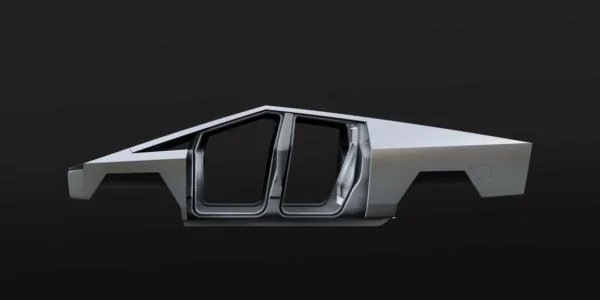
one has to remember that after 2019 unveil one prevailing view was that Elon’s comments meant that the CT would be a unified stainless exoskeleton proper such as this:

1EEB6298-CC79-425D-BACD-9F7151C48CAC.jpeg


Only later did it become clear there would be eg castings involved, upon which independent segments and panels of SS would be hung/attached

I want to be super clear about the intent of my comments:

I don’t care one way or the other, as I’m certain the final CT design after 3+ years of R&D will be better than whatever the “idea” was in 2019

My comments here were intended only to say, in effect, “people being verbally aggressive to dress-down others for their particular view of what ‘exoskeleton’ means as a matter of engineering are being pompous asses that embarrass themselves by thinking *they* have any clue what it means, either”

Again, after the 2019 unveil even Sandy Monroe thought the design would be one thing, and then he changed his view after learning of the castings, structural pack, aluminum cab framing, etc.

he has indicated that he simultaneously thinks it can still fairly be called exoskeleton-like, but not in the same manner and degree as he originally thought

so when people express a similar equivocation of the term “exoskeleton” - people should ask questions about intent, not aggressively declare “ELON IS AN INFALLIBLE GOD WHOSE WORD IS IMMUTABLE AND BOND, AND EVEN WHEN N STAGE AT A MARKETING EVENT HIS WORDS EXEMPLIFY ENGINEERING EXACTITUDE ONLY, AND ALL OTHERS ARE SUB-HUMANS NOT FIT TO EVEN LICK HIS BOOTS MUCH LESS INQUIR AFTER THE MEANING OF HIS SUPREME WORD”
Sadly, your own statement invalidates the rest of your statement. The picture you showed had no doors so there could never have been a single, monolithic skin. Second, we always knew that the hood would be separate. Third, we knew from the get go that the Cybertruck would use Giga castings as they already were when the Cybertruck was announced. What we didn’t know then, but could have surmised since all cars do it, is that there would be inner pie es such as stampings since the 3mm stainless cannot be formed. In my own notes I counted up how man stampings would likely make up the Cybertruck. What no one knew (nor do we still) is how many pieces will comprise the skin. That one idea doesn’t change whether it is an exoskeleton as all creatures that have an exoskeleton have segmented body sections. It seems to me that the argument made against the exoskeleton is more a wish to argue than anything meaningful. Why do you-all care what the skin is called. Call it a super-duper unibody if that pleases you but it will be stronger and stiffer than any unibody the world has ever seen.
Sponsored


JBee

Well-known member
First Name
JB
Joined
Nov 22, 2019
Threads
18
Messages
4,913
Reaction score
6,362
Location
Australia
Vehicles
Cybertruck
Occupation
. Professional Hobbyist
Country flag
The outer panels (fenders etc.) on modern cars are decorative, and for aero. You can remove them all with no effect on stiffness or loading.

The Cybertruck panels will provide stiffness, at the very least. That makes them a structural component, and the term "exoskeleton" will apply, even if only minimally.

If the external panels provide no structure, then they are a heavy 3mm range-sucking waste.
Exactly, the skin will add some rigidity but isn't the source of most of it, just like Monroe points out in cvalues post. Note there are two distinct load paths as I explained on another thread, one being impact loads in a crash, the other operational loads that go to the wheels.

How much they contribute will be determined by how they are attached to the casts and cabin, and how any load is transferred through the outside skin of the truck. Note in particular that all the openings are hinged, and the rest of the frame is intentionally designed to ensure doors can be opened after impact for safety reasons, so won't be subjected to primary operational loads, rather only for side impact. It's also very hard to transfer loads through three points, being two hings and a lock, and still have a door that opens properly without getting jammed into the door frame.

Either way it is held together by the inside, not by the outside, even if you just consider it being mostly by the hollow cabin frame with structural pack and casts. All normal operational loads are through the casts and cabin.

I made a table up using my CAD drawing surface areas of the skin to calculate each parts SS mass:

Stainless EstimatesMass kg/sqmsqmmasslb
SS 3mm
24​
279.2​
616.4​
SS 2mm
16​
11.634​
186.1​
410.9​
Frunk (w Grill)
2​
48.0​
106.0​
Tailgate
1.26​
30.2​
66.8​
Total ends
3.26​
78.2​
172.7​
Front door
1.02​
24.5​
54.0​
Rear Door
1.103​
26.5​
58.4​
Front fender
0.37​
8.9​
19.6​
Rear Fender
1.532​
36.8​
81.2​
Cabin Frame
0.162​
3.9​
8.6​
Total 2x Sides
8.374​
201.0​
443.7​
Total Opening SS
7.506​
180.1​
397.7​
Total Fixed SS
4.128​
99.1​
218.7​

As for SS mass, that's around 24kg/sqm for 3mm, 16kg/sqm for 2mm, with the total of each version listed at the top. At 3mm that's around 280kg/616lbs for the whole vehicle, which in of itself is not as substantial as most think, in comparable to say a rear motor assembly with suspension, or interior fit out of the cabin with seats and carpet etc. There's about 80kg/170lbs of glass on the CT at 5mm thick.

But there is about 180kg/400lbs in opening doors on the CT including tailgate and frunk lid. But here the doors provide most of the "door structure" as well, and doesn't need much in the way of internal reinforcement, so it gets better use of the structural properties of the material. The rest of the skin material, which is only around 100kg/220lbs and is attached as fender panels etc.

However, the openings don't contribute to the vehicle body rigidity, except for providing ingress protection in a impact by being compressed against the cast or cabin, and by supporting their function as a door. The important detail here is simply to remember that the openings by their very nature cannot support the vehicle mass structurally, and it accounts for nearly twice the amount of skin covered area of the vehicle. As such the internal cabin and casts holds the opening parts together on the vehicle, not the other way around.

Now if we have sail openings (which we might not) this will apply to those opening skin panels as well, leaving just the front fenders that could be attached in a frame structurally beneficial way.

So given that most parts flap in the wind as an opening, where exactly does the "exoskeleton" skin contribute directly to the unibody chassis rigidity? Just the front fender and maybe the rear fender? I fully recognise that the openings themselves are being supported by their individual skins, which actually leads to weight and manufacturing benefits for the doors etc, but I cannot understand how anyone can correctly claim that the few physically attached skins "support the whole vehicle, from the outside in".

At some point reality needs to be attached to the logic used.
 
Last edited:

JBee

Well-known member
First Name
JB
Joined
Nov 22, 2019
Threads
18
Messages
4,913
Reaction score
6,362
Location
Australia
Vehicles
Cybertruck
Occupation
. Professional Hobbyist
Country flag
Sadly, your own statement invalidates the rest of your statement. The picture you showed had no doors so there could never have been a single, monolithic skin. Second, we always knew that the hood would be separate. Third, we knew from the get go that the Cybertruck would use Giga castings as they already were when the Cybertruck was announced. What we didn’t know then, but could have surmised since all cars do it, is that there would be inner pie es such as stampings since the 3mm stainless cannot be formed. In my own notes I counted up how man stampings would likely make up the Cybertruck. What no one knew (nor do we still) is how many pieces will comprise the skin. That one idea doesn’t change whether it is an exoskeleton as all creatures that have an exoskeleton have segmented body sections. It seems to me that the argument made against the exoskeleton is more a wish to argue than anything meaningful. Why do you-all care what the skin is called. Call it a super-duper unibody if that pleases you but it will be stronger and stiffer than any unibody the world has ever seen.
I get that you think that the argument is about semantics. I can assure you it is not.

As pointed out in my post above the critical element here is that we can visually see that most of the skin opens up and therefore does NOT contribute to the vehicle chassis structure in any substantial way. We can see which parts of the skin is attached to the body or not, it is not a mystery which skin can contribute to the vehicle structure and how.

However, in saying that, all the openings serve their function as a result of having a structural skin.
So you could possibly claim that the flappy opening bits are "structurally exoskeleton", but you definitely can't claim that the skin gives the body of the vehicle it's structural rigidity. There's a big difference between the two arguments.
 

cvalue13

Well-known member
Joined
Aug 17, 2022
Threads
74
Messages
7,153
Reaction score
13,769
Location
Austin, TX
Vehicles
F150L
Occupation
Fun-employed
Country flag
Sadly, your own statement invalidates the rest of your statement. The picture you showed had no doors so there could never have been a single, monolithic skin. Second, we always knew that the hood would be separate. Third, we knew from the get go that the Cybertruck would use Giga castings as they already were when the Cybertruck was announced. What we didn’t know then, but could have surmised since all cars do it, is that there would be inner pie es such as stampings since the 3mm stainless cannot be formed. In my own notes I counted up how man stampings would likely make up the Cybertruck. What no one knew (nor do we still) is how many pieces will comprise the skin. That one idea doesn’t change whether it is an exoskeleton as all creatures that have an exoskeleton have segmented body sections. It seems to me that the argument made against the exoskeleton is more a wish to argue than anything meaningful. Why do you-all care what the skin is called. Call it a super-duper unibody if that pleases you but it will be stronger and stiffer than any unibody the world has ever seen.
if you’re replying to my post merely as a jumping off point, then fine

mif you’re replying to me substantively - then I’ve been unclear: I don’t care about this topic

only care that anyone think it’s a topic worth belittling others over


Crissa

Well-known member
First Name
Crissa
Joined
Jul 8, 2020
Threads
138
Messages
19,571
Reaction score
31,477
Location
Santa Cruz
Vehicles
2014 Zero S, 2013 Mazda 3
Country flag
I guess we are never going to drop this then :-(

By the way, I do not see how lever fulcrums have a bearing (pun intended) on load paths. Fulcrums are only involved in changing direction or magnitude of force, while load paths are about tension and compression.
Fulcrums are a branching point for load paths. Think a teeter-totter. Some load goes down it, some goes up the other side.

-Crissa
 

JBee

Well-known member
First Name
JB
Joined
Nov 22, 2019
Threads
18
Messages
4,913
Reaction score
6,362
Location
Australia
Vehicles
Cybertruck
Occupation
. Professional Hobbyist
Country flag

Jhodgesatmb

Well-known member
First Name
Jack
Joined
Dec 1, 2019
Threads
90
Messages
6,512
Reaction score
9,056
Location
San Francisco Bay area
Website
www.arbor-studios.com
Vehicles
Tesla Cybertruck FS AWD, Tesla Model Y LR
Occupation
Retired AI researcher
Country flag
Fulcrums are a branching point for load paths. Think a teeter-totter. Some load goes down it, some goes up the other side.

-Crissa
Acknowledged, but I was really responding to the idea, as I read it, that without a fulcrum there could be no load path, when tension and compression load paths are most likely ones not involving fulcrums. But I haven’t done an analysis of how many fulcrums there might be nor what percentage of the load they might contribute to.
 
Last edited:

JBee

Well-known member
First Name
JB
Joined
Nov 22, 2019
Threads
18
Messages
4,913
Reaction score
6,362
Location
Australia
Vehicles
Cybertruck
Occupation
. Professional Hobbyist
Country flag
Acknowledged, but I was really responding to the idea, as I read it, that without a fulcrum there could be no load path, when tension and compression load paths are most likely ones not involving fulcrums. But I haven’t done an analysis of how many fulcrums there might be nor what percentage of the load they might contribute to.
My text was to demonstrate that, for there to be a load there must also be something that resists that load. For example when doing FEA in Inventor you first have to setup constraints to restrain the degrees of movement an object has before you can apply a force on it. For example, if you would have a lever, you would use a pin constraint to only allow the lever to rotate in one axis around the fulcrum. You would then place a force on one side and the opposite side of the lever would result in a load. There are different types of constraints that you can use, including fixed and sliding ones.

You would use the same pin constraint on s suspension arm on the vehicle and wheel hub side, and that would result in a load calculation on the spring, over the suspension lever arm that it has to carry it. Likewise, if you want to place a force anywhere on the vehicle, you need to constrain it against that force, otherwise no load can occur. If you think of a model in the vacuum of space, if you apply a force on it, it would simply move out of the way because it's degrees of freedom are not constrained. Likewise, inertia, or wheel traction, constrains the vehicle and therefore the applied force produces a load on the frame. Airflow also produces a force, but it is not as significant for the body of the vehicle at normal highway speeds, unless you are driving in Germany on the autobahn.
 

Crissa

Well-known member
First Name
Crissa
Joined
Jul 8, 2020
Threads
138
Messages
19,571
Reaction score
31,477
Location
Santa Cruz
Vehicles
2014 Zero S, 2013 Mazda 3
Country flag
Acknowledged, but I was really responding to the idea, as I read it, that without a fulcrum there could be no load path, when tension and compression load paths are most likely ones not involving fulcrums. But I haven’t done an analysis of how many fulcrums there might be nor what percentage of the load they might contribute to.
A bent piece of metal has a load path, and each turn can be calculated as a fulcrum... But, the words don't particularly matter here, since the function is basically the same. But yeah, it gets complex quickly. Even thickness starts playing a role, as the opposing faces have different points.

-Crissa


HaulingAss

Well-known member
Joined
Oct 3, 2020
Threads
28
Messages
10,426
Reaction score
20,966
Location
Western Washington, USA
Vehicles
Cybertruck DM, 2010 F-150, 2018 Performance Model 3, 2024 Performance Model 3
Country flag
This is one of those times I am glad that people share their thoughts and prayers and I can choose to think and pray differently. Your idea makes sense but I still want the 500+ mile trim to come out first. I agree that drivetrain efficiency is important, and I have a feeling that Tesla will find ways to reduce the weight which would also affect range.

Oh, I also want the 500+ mile trim Cybertruck to be the release version. But my opinion that it probably won't be, is not about what I want, it's about what I see as most likely. I think the 500-mile version will most likely be in late 2024-2025. That's not going to stop me from buying the release version and waiting for the 500-mile version.
 

Jhodgesatmb

Well-known member
First Name
Jack
Joined
Dec 1, 2019
Threads
90
Messages
6,512
Reaction score
9,056
Location
San Francisco Bay area
Website
www.arbor-studios.com
Vehicles
Tesla Cybertruck FS AWD, Tesla Model Y LR
Occupation
Retired AI researcher
Country flag
Oh, I also want the 500+ mile trim Cybertruck to be the release version. But my opinion that it probably won't be, is not about what I want, it's about what I see as most likely. I think the 500-mile version will most likely be in late 2024-2025. That's not going to stop me from buying the release version and waiting for the 500-mile version.
There are arguments for and against. If Tesla is having a problem with battery quality or quantity then the 300-mile range trim makes sense. If Tesla believes that their intention to disrupt the pickup market (and the working people that need a truck that can carry cargo or pull a loaded trailer) will be achieved with a 300-mile truck then that will be the first trim. My belief is that Tesla won’t start producing the Cybertruck until they are certain they can produce batteries with the requisite performance, efficiency, yield, and quantity because otherwise they will suffer an embarrassment that will dwarf their other intention. In addition, I do not believe the kind of disruption Tesla has repeatedly spoken of as being their motivation for producing the Cybertruck will be possible with a 300-mile range trim. You cannot have the feature set Tesla has advertised and not expect it to be put to the test; cargo capacity, towing, off roaming, handling, performance … and if it is found lacking, in any dimension, and given the 4-year lead time after the announcement, Tesla will suffer an embarrassment it may not recover from, at least in the working truck community. These are my reasons for believing that the first trim will be their flagship; that they will prove their mettle with that trim and then the other trims will have the trust and will be ordered with the knowledge that the buyer is accepting a trade off. You cannot expect them to believe they are trading off if they haven’t already had their trust gained in the first place. Right or wrong in my logic I still have my own selfish wishes.
 

HaulingAss

Well-known member
Joined
Oct 3, 2020
Threads
28
Messages
10,426
Reaction score
20,966
Location
Western Washington, USA
Vehicles
Cybertruck DM, 2010 F-150, 2018 Performance Model 3, 2024 Performance Model 3
Country flag
There are arguments for and against. If Tesla is having a problem with battery quality or quantity then the 300-mile range trim makes sense. If Tesla believes that their intention to disrupt the pickup market (and the working people that need a truck that can carry cargo or pull a loaded trailer) will be achieved with a 300-mile truck then that will be the first trim. My belief is that Tesla won’t start producing the Cybertruck until they are certain they can produce batteries with the requisite performance, efficiency, yield, and quantity because otherwise they will suffer an embarrassment that will dwarf their other intention. In addition, I do not believe the kind of disruption Tesla has repeatedly spoken of as being their motivation for producing the Cybertruck will be possible with a 300-mile range trim. You cannot have the feature set Tesla has advertised and not expect it to be put to the test; cargo capacity, towing, off roaming, handling, performance … and if it is found lacking, in any dimension, and given the 4-year lead time after the announcement, Tesla will suffer an embarrassment it may not recover from, at least in the working truck community. These are my reasons for believing that the first trim will be their flagship; that they will prove their mettle with that trim and then the other trims will have the trust and will be ordered with the knowledge that the buyer is accepting a trade off. You cannot expect them to believe they are trading off if they haven’t already had their trust gained in the first place. Right or wrong in my logic I still have my own selfish wishes.
I hope the release version is 500+ miles but there would be no reason to be embarrassed releasing a 400-mile version that is affordable first, with a target date for the 500-mile version the following year. No other EV truck has a 400-mile range and the Cybertruck will be loaded with superior technology that will put the rest to shame, not Tesla.

I hope Tesla surprises me but I'll be perfectly happy driving around in a 400-mile version until the 500+ mile version is ready. Owning a couple of 300 mile LR Model 3's for 5 years, my wife and I know just how far 300 miles is, and how fast they charge at Superchargers (faster than we can do a decent rest break).
 

Jhodgesatmb

Well-known member
First Name
Jack
Joined
Dec 1, 2019
Threads
90
Messages
6,512
Reaction score
9,056
Location
San Francisco Bay area
Website
www.arbor-studios.com
Vehicles
Tesla Cybertruck FS AWD, Tesla Model Y LR
Occupation
Retired AI researcher
Country flag
I hope the release version is 500+ miles but there would be no reason to be embarrassed releasing a 400-mile version that is affordable first, with a target date for the 500-mile version the following year. No other EV truck has a 400-mile range and the Cybertruck will be loaded with superior technology that will put the rest to shame, not Tesla.

I hope Tesla surprises me but I'll be perfectly happy driving around in a 400-mile version until the 500+ mile version is ready. Owning a couple of 300 mile LR Model 3's for 5 years, my wife and I know just how far 300 miles is, and how fast they charge at Superchargers (faster than we can do a decent rest break).
I suppose a true 400-mile range (not some 60% BS value of 240 miles in warm weather), if it includes some cargo and towing capacity, would be something to consider, but to my recollection Tesla never said anything about a 400-mile trim. Did I miss that announcement?

the problem with comparing an M3 or MY (or any Tesla sedan) to the Cybertruck is that they are used differently. The truck will be used hard by people that don’t pamper their vehicles and every spec has to hold up. I do not think that Tesla will be anything but proud but they won’t get it with a 300-mile truck that only gets 180 miles per charge on a regular basis.
Sponsored


Top