Sponsored

Yes 'Exoskeleton'?

OP
OP
cvalue13

cvalue13

Well-known member
Joined
Aug 17, 2022
Threads
74
Messages
7,153
Reaction score
13,769
Location
Austin, TX
Vehicles
F150L
Occupation
Fun-employed
Country flag
Mate, I've been doing nothing other than trying to demonstrate "why" a load path can't go through the skin.
Mate, I’ve been doing nothing but tell you I don’t think a load path goes through the skin in the way you’re insinuating.

You don’t have to be an engineer to understand that.

While I’m convinced we’ll get nowhere, I’ll anyway one last time, in a way that even non-engineers can understand:
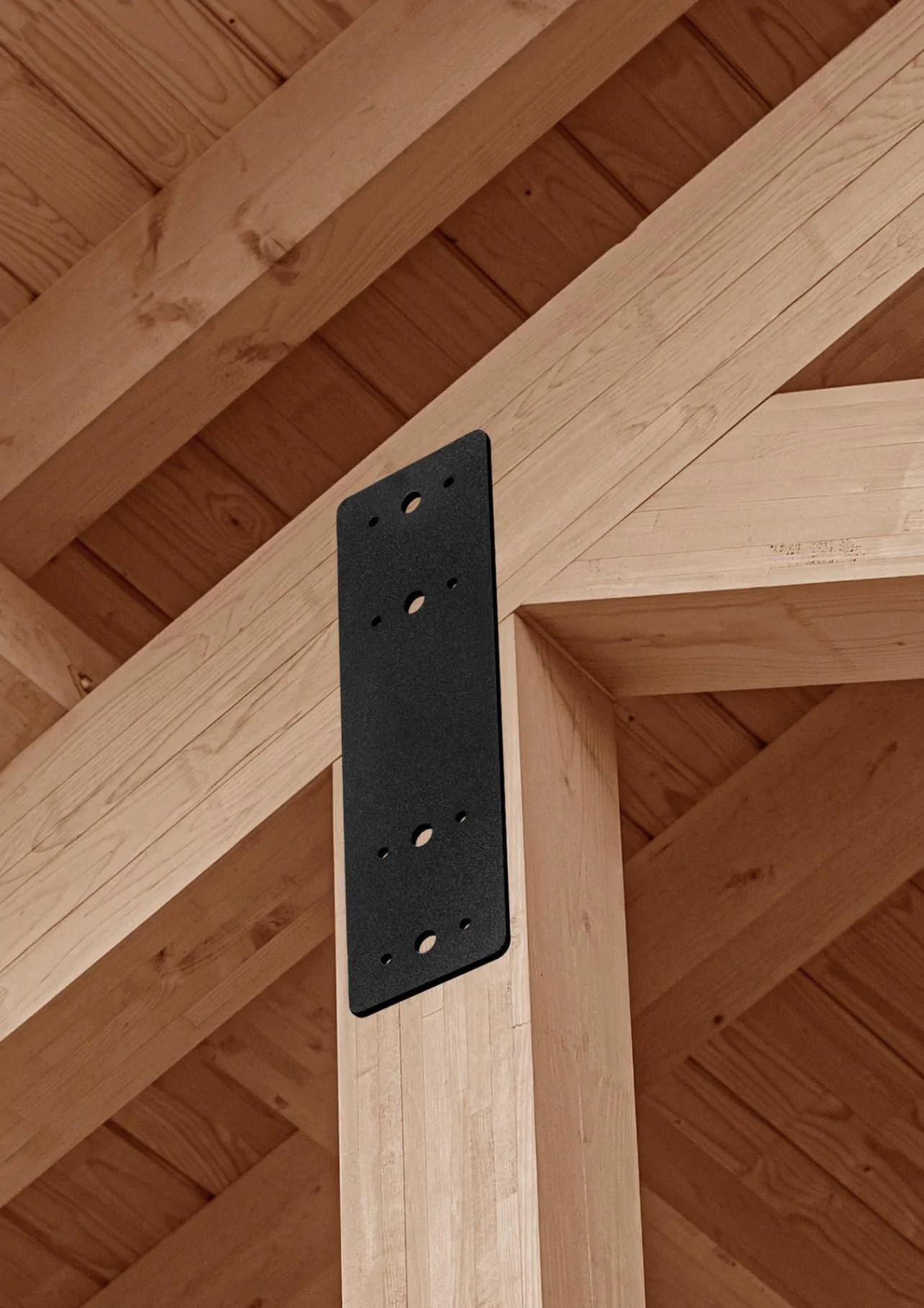

Tesla Cybertruck Yes 'Exoskeleton'? 042F2898-7BD0-41E7-BE30-8862F08D7F70


You seem to just keep repeating, “wood is capable of holding up the roof; that is what the builders did.”

But you don’t what the builders did. And the builders keep saying “we used an exoskeleton.”

To that, in this CT scenario, you’re among the folks who keeps repeating the same false dichotomy: an exoskeleton is necessarily on the outside, not the inside.

But structures can have BOTH an endoskeleton and exoskeleton. See: turtles

Let me show you the endoskeleton of a turtle, and hear the false dichotomy that the skeleton is proof the animal that is built around it has no exoskeleton.

But having an endoskeleton or exoskeleton is not mutually exclusive. Basically? Just like that beam and brace photographed above.
Sponsored

 
Last edited:

JBee

Well-known member
First Name
JB
Joined
Nov 22, 2019
Threads
18
Messages
4,913
Reaction score
6,362
Location
Australia
Vehicles
Cybertruck
Occupation
. Professional Hobbyist
Country flag
I'm not sure now what exactly it is that you want me to confirm that you said is right?

I never claimed it was just exoskeleton or endoskeleton ever. I have always just questioned what it is in reality without the name calling, based on how it works structurally. It's a hybrid - a knight in armour, with both endo and exo and everything inbetween. It actually needs its own name IMHO.

Mate, I’ve been doing nothing but tell you I don’t think a load path goes through the skin in the way you’re insinuating.
So how does the load go through it then? I'm genuinely asking for clarity, because with that bit of information I would know how the fenders can in any way contribute to the structure being discussed.


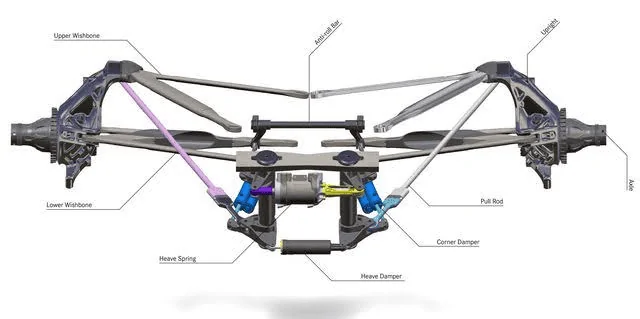
BTW whilst driving today I was thinking again about this conversation, and in particular the loads going to the airspring risers. I then thought, wait a minute the rear suspension doesn't have vertical airsprings in the back at all, instead it has a push rod suspension like a Formula 1. Something like this:

Tesla Cybertruck Yes 'Exoskeleton'? 1682834804549


That means that even less load is going through the outside supports and fenders of the rear cast, and rather it goes through the center of the frame via the pushrods, and close to where the rear suspension mounts next to the rear motor casings.

Together with how the front springs are supported by the cabin truss frame, the rear nearly turns into a single point for loads, because the pushrods act on the middle of the vehicle frame not the outside. A tripod has no torsional loads, meaning the rear payload won't even effect it negatively. Brilliant actually...I can't beleive I missed the combination of those features previously.
 
OP
OP
cvalue13

cvalue13

Well-known member
Joined
Aug 17, 2022
Threads
74
Messages
7,153
Reaction score
13,769
Location
Austin, TX
Vehicles
F150L
Occupation
Fun-employed
Country flag
So how does the load go through it then? I'm genuinely asking for clarity, because with that bit of information I would know how the fenders can in any way contribute to the structure being discussed.
earlier, you say that between the casting and cab would be bolts that take a load. M

if “welded” across the joint, this skin is also a “bolt” taking load.

not only tension, but also bend, torsion, etc.
 

JBee

Well-known member
First Name
JB
Joined
Nov 22, 2019
Threads
18
Messages
4,913
Reaction score
6,362
Location
Australia
Vehicles
Cybertruck
Occupation
. Professional Hobbyist
Country flag
earlier, you say that between the casting and cab would be bolts that take a load. M

if “welded” across the joint, this skin is also a “bolt” taking load.

not only tension, but also bend, torsion, etc.
The purpose of my description was to demonstrate that the weldments/bolt connections can very easily be configured in such a way that they are not the weakest points.

But in saying that, it's unlikely they would solely rely on a bolted connection between the cabin and casts, I'm sure they would key the structures together with some geometry (like a timber dove joint etc) or with adhesives, to avoid all the loads being on the bolt itself that can loosen or fatigue if it can move.

You can also use different attachment methods on the same connection point. So you could use the contact plate surface area for compression, the bolt for tension and a adhesive accross the interface area for torsion and sheer. It pretty common not to rely on one method on vehicles with significant dynamic loads that tends to loosen stuff if not done right.


John K

Well-known member
First Name
John
Joined
Jan 2, 2020
Threads
41
Messages
2,802
Reaction score
5,776
Location
Los Angeles
Vehicles
Volt, CT reserve day 2
Country flag
Mate, I’ve been doing nothing but tell you I don’t think a load path goes through the skin in the way you’re insinuating.

You don’t have to be an engineer to understand that.

While I’m convinced we’ll get nowhere, I’ll anyway one last time, in a way that even non-engineers can understand:


042F2898-7BD0-41E7-BE30-8862F08D7F70.jpeg


You seem to just keep repeating, “wood is capable of holding up the roof; that is what the builders did.”

But you don’t what the builders did. And the builders keep saying “we used an exoskeleton.”

To that, in this CT scenario, you’re among the folks who keeps repeating the same false dichotomy: an exoskeleton is necessarily on the outside, not the inside.

But structures can have BOTH an endoskeleton and exoskeleton. See: turtles

Let me show you the endoskeleton of a turtle, and hear the false dichotomy that the skeleton is proof the animal that is built around it has no exoskeleton.

But having an endoskeleton or exoskeleton is not mutually exclusive. Basically? Just like that beam and brace photographed above.
Tangent question: how is that plate attached?
 

JBee

Well-known member
First Name
JB
Joined
Nov 22, 2019
Threads
18
Messages
4,913
Reaction score
6,362
Location
Australia
Vehicles
Cybertruck
Occupation
. Professional Hobbyist
Country flag
OP
OP
cvalue13

cvalue13

Well-known member
Joined
Aug 17, 2022
Threads
74
Messages
7,153
Reaction score
13,769
Location
Austin, TX
Vehicles
F150L
Occupation
Fun-employed
Country flag
You can also use different attachment methods on the same connection point. So you could use the contact plate surface area for compression, the bolt for tension and a adhesive accross the interface area for torsion and sheer. It pretty common not to rely on one method on vehicles with significant dynamic loads that tends to loosen stuff if not done right.
Finally, you’ve made my point.

Those different methods you describe - the contact plates, bolts, and adhesives - once fixed to the vehicle, all become a part of the structure of the vehicle. Taking on forces, loads, etc. That’s what they’re for. They are planned into the structure.

And just the same, if one method of adhering that Tesla uses is the SS exterior plates themselves, they too will become part of the structure of the vehicle, taking on forces, loads, etc.

In which scenario, Tesla would be able to fairly call such a panel, a part of an exoskeleton.

That is all and the extent of the question attempting to answer in the OP post:

Q: having seen what appears to be a traditional looking underbody, under what possible scenario could Tesla still be able to defend a view that the SS panels are an ‘exoskeleton.’


ANSWER:
the doors, hood, tailgate, and glass are all clearly an exoskeleton each, but of the cargo safety variety. That alone may be a disappointing outcome if it’s all Tesla means.

But if in addition to that, the 4 quarterpanel’s (and skids?) are also used to meaningfully adhere the frame together, as part of the engineering model’s approach to achieving desired operational structure of the frame, then the 4 quarterpanels would be fairly defended by Tesla as performing operational structure, as this structure exists on the outside of the vehicle.

In which case, despite having seen what appears to be a traditional looking underbody, Tesla could with a straight face defend a view that the CT has a meaningful exoskeleton: every portion of the exterior of the CT would be performing either operational or cargo protective structural function. And, this view would be consistent with anything Tesla has said about the exoskeleton.

That may leave disappointed some folks thinking the CT would be an all-SS monocoque monolith, absent of any traditional frame components.

But to be fair to Tesla, they never once said that is what they meant by exoskeleton
 
OP
OP
cvalue13

cvalue13

Well-known member
Joined
Aug 17, 2022
Threads
74
Messages
7,153
Reaction score
13,769
Location
Austin, TX
Vehicles
F150L
Occupation
Fun-employed
Country flag
Tangent question: how is that plate attached?
Yeah, it’s one of those advertising photographs where there’s a stock a picture of the beans, upon which the transpose various options of braces, they sell
 

Dids

Well-known member
First Name
Les
Joined
Dec 21, 2019
Threads
10
Messages
1,792
Reaction score
3,820
Location
Massachusetts
Vehicles
04 Tacoma, 23 Cybertruck
Occupation
Self
Country flag
All that said:

• if Cory’s assumptions that the SS panels are hung just as on the Model Y are correct, then I’d tend to side with him about the CT not having operational structure from the panels (though the doors, hood, and tailgate are each independent, self-contained exoskeletons themselves)

• no matter how strong the panels may be, the CT is only as capable as it’s weakest link; as Cory discusses, heavy haulers tend to have solid axels - esp in rear - for a reason (rather than independent suspension), and tend to have mechanical (rather than air) suspension.

• finally, on another view, even if the panels add operational structure, it’s possible they do so only to make up for the shortcomings of the “endoskeleton” - that is, if the casting/frame joints and structure aren’t terribly capable alone, the panels could be working not so much to ‘amplify’ capability, but instead just to achieve acceptable performance

Afterall, there are 1/2 ton trucks that, if optioned correctly, can achieve materially the same operational capabilities as the CT’s claimed specs. Viewed that way, the strengthening panels wouldn’t be using the exoskeleton to offer previously unknown capability, so much as to allow the Model Y-like construction techniques the boost needed to compete in the first place. Less of a revolution in capabilities, and more of an alternative method to achieve the ~same outcomes.

Less being “actually tough” and instead being “also tough.”

On that view, the novel approach to construction boils down more to the advantages of manufacturing costs for Tesla, and scratch/dent (bullet?) resistance for customers. Not for nothing, as those are good outcomes.

But it would take the sheen off the marketed angle of the exoskeleton. Especially for people who really use their trucks, as opposed to urban posers (like me) - as the “real” truck guys tend to not care as much about scratches/dents (and are doing the shooting first).
Yes heavy haulers have solid axels. The also have springs and shocks and rear differential. The reason CT could match those heavy haulers with independent suspension is active computer control of that suspension. Active torque control and active individual brake control. These active elements should outperform the solid axel and make heavy haul possible.


OP
OP
cvalue13

cvalue13

Well-known member
Joined
Aug 17, 2022
Threads
74
Messages
7,153
Reaction score
13,769
Location
Austin, TX
Vehicles
F150L
Occupation
Fun-employed
Country flag
Yes heavy haulers have solid axels. The also have springs and shocks and rear differential. The reason CT could match those heavy haulers with independent suspension is active computer control of that suspension. Active torque control and active individual brake control. These active elements should outperform the solid axel and make heavy haul possible.
I never meant to suggest Tesla couldn’t achieve it in a 1/2 ton to 3/4 ton capacity.

That’s not a heavy hauler. You don’t really see heavy haulers without solid axels/suspension etc - see eg Tesla Semi, down to say class 5-6

Instead was saying only that, from a payload/hauling perspective, however robust the CT frame, any of that robustness is essentially meaningless to the extent it exceeds the capabilities of the suspension.

And that in the case of the CT, it’ll be interesting to see how they address that - not that they can’t address it. All the more since the CT will be playing double duty as both a hauler and being offroad capable - typically two suspension setups that don’t play well together.

If it instead the CT had solid axels/suspension, it wouldn’t be interesting, it would be obvious - they’d just throw eg bigger axels and springs under there.
 

JBee

Well-known member
First Name
JB
Joined
Nov 22, 2019
Threads
18
Messages
4,913
Reaction score
6,362
Location
Australia
Vehicles
Cybertruck
Occupation
. Professional Hobbyist
Country flag
Finally, you’ve made my point.

Those different methods you describe - the contact plates, bolts, and adhesives - once fixed to the vehicle, all become a part of the structure of the vehicle. Taking on forces, loads, etc. That’s what they’re for. They are planned into the structure.

And just the same, if one method of adhering that Tesla uses is the SS exterior plates themselves, they too will become part of the structure of the vehicle, taking on forces, loads, etc.

In which scenario, Tesla would be able to fairly call such a panel, a part of an exoskeleton.

That is all and the extent of the question attempting to answer in the OP post:

Q: having seen what appears to be a traditional looking underbody, under what possible scenario could Tesla still be able to defend a view that the SS panels are an ‘exoskeleton.’


ANSWER:
the doors, hood, tailgate, and glass are all clearly an exoskeleton each, but of the cargo safety variety. That alone may be a disappointing outcome if it’s all Tesla means.

But if in addition to that, the 4 quarterpanel’s (and skids?) are also used to meaningfully adhere the frame together, as part of the engineering model’s approach to achieving desired operational structure of the frame, then the 4 quarterpanels would be fairly defended by Tesla as performing operational structure, as this structure exists on the outside of the vehicle.

In which case, despite having seen what appears to be a traditional looking underbody, Tesla could with a straight face defend a view that the CT has a meaningful exoskeleton: every portion of the exterior of the CT would be performing either operational or cargo protective structural function. And, this view would be consistent with anything Tesla has said about the exoskeleton.

That may leave disappointed some folks thinking the CT would be an all-SS monocoque monolith, absent of any traditional frame components.

But to be fair to Tesla, they never once said that is what they meant by exoskeleton
You can make that arguement sure, so long you don't say that in its current configuration there is a tangible load path that actually puts a operational load on the fender, doors etc apart from in a crash.

I think I might know where the confusion lies between us:

You are talking about IF the fender/ quarterpanel CAN carry a load, by its own material strength and by having a rigid connection to the rest of the CT.

To that I say yes 100% it most definitely "could". No doubt whatsoever. (What!! You are shocked I'm sure!)

But my point is it DOES NOT have ANY LOAD it can carry from that location on the CT. Hence there is no load path.

This is also the reason why I "know" the fender doesn't do any load carrying, because there is simply no load there. It's like the extra 5ft of beam I used on my lever example. So if there's "no load" there why make it so it could carry it?

That fender might as well be floating around loose in a trailer being towed by a Lightning truck. ?

The structural operational load primarily exists between the airsprings and also by a lesser extent through the suspension components where they attach to the cast/motor casing.

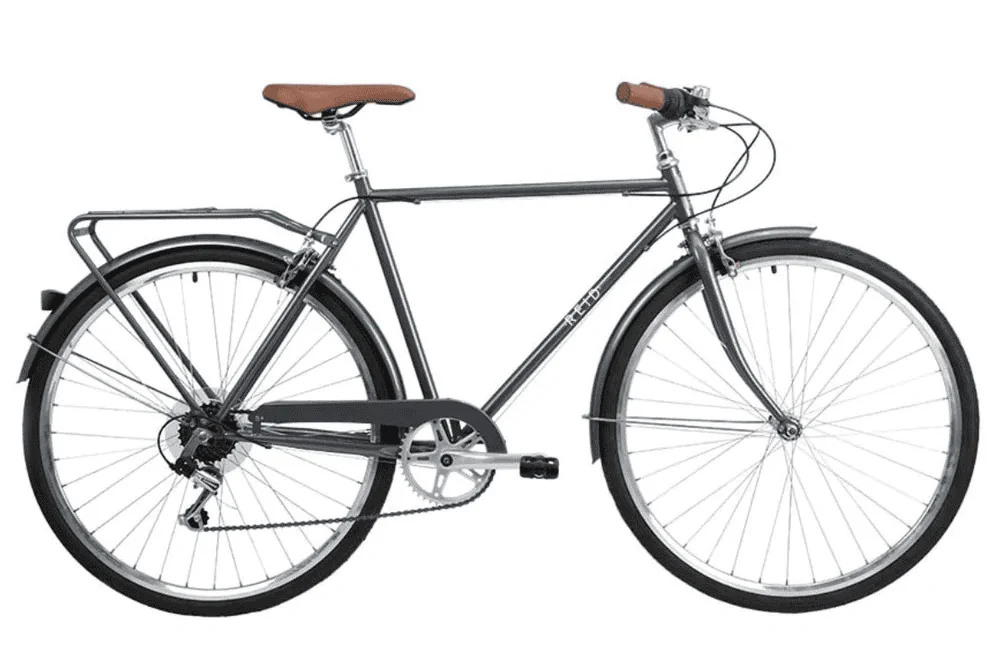
Let's do another example:

Tesla Cybertruck Yes 'Exoskeleton'? 1682871983963


Do the fenders on this bike carry any load on the bike, except their own weight?

They create an extra load on the front and rear forks, but they support nothing themselves, except for themselves. All bike loads, being the rider or bike mass, pass through front and rear axle through the visible frame tube to the seat, handle bars and pedals. I don't even need to draw lines here for the load paths, because the bike frame shows the load paths itself, because that is all a bike is.

But now if I sit on the fender it would get a load to carry, at that point I would want it to be seriously reinforced to carry my mass.

So let me rephrase my load path question for you:

Which load is there that a fender can carry on the CT?

Hence the body in white, like a knight, carries the armour, and not the other way around.

That is why my "knight in armour" is a closer analogy than "exoskeleton" by itself.

Btw as I said before, I completely agree that Tesla never specified what exoskeleton was, but lots of people made the wrong assertions about what they thought it was. Originally even me, until we found out it still had casts.
 
Last edited:
OP
OP
cvalue13

cvalue13

Well-known member
Joined
Aug 17, 2022
Threads
74
Messages
7,153
Reaction score
13,769
Location
Austin, TX
Vehicles
F150L
Occupation
Fun-employed
Country flag
Internal structure and exoskeleton are not mutually exclusive.
right. But I don’t think that fact goes far enough. more to the point, an endoskeleton and exoskeleton also not mutually exclusive.

Because the confusion and critique here is not that exoskeletons lack internal structure. It’s that we’ve seen a picture of an endoskeleton.

From there, people make a false dichotomy in saying essentially that any vehicle with an endoskeleton by definition cannot also have an exoskeleton. No such definitional exclusion exists, except in people’s preconceived notions.

That said, on the other hand, having seen an endoskeleton it raises questions. For example, one would not call the Model Y sheet metal an exoskeleton. Not even a ‘weak’ exoskeleton. It’s sheet metal performs neither operational nor cargo safety functions.

And if like Model Y the CT merely hung the SS sheets on its endoskeleton, that too would not be an exoskeleton. It would just be a Model Y with thicker skin.

We know for certain the CT doors, hood, and tailgate are not constructed like a Model Y. They are each an exoskeleton unit, from a cargo safety functionality (as described in the quotes patent in the deck above).

So the remaining uncertainty is how or whether any CT panels perform any operational structure, unlike the Model Y, or preconceived notions of the possibility being excluded by the presence of an endoskeleton.

Nobody knows yet. We only know Tesla, who designed the car, sure seems to have suggested the CT skin is an exoskeleton in MORE than just the cargo safety sense.

So my entire OP was merely trying to sketch a possible scenario that could still make sense of Tesla’s assertions, despite the questions raised by the presence of an endoskeleton.

And in response to that OP hypothetical, so far the only counter-points raised - so far as I can tell - reduce down to effectively re-asserting the false dichotomy that the presence of an endoskeleton excludes the possibility of any defensible sense of the CT having an exoskeleton beyond the cargo safety function.

Being a false dichotomy, I think the OP hypothetical remains a viable, possible, way in which Tesla could construct the CT - despite the presence of an endoskeleton - in such a way as to describe it as having an exoskeleton that also performs operational function.
 
OP
OP
cvalue13

cvalue13

Well-known member
Joined
Aug 17, 2022
Threads
74
Messages
7,153
Reaction score
13,769
Location
Austin, TX
Vehicles
F150L
Occupation
Fun-employed
Country flag
You can make that arguement sure, so long you don't say that in its current configuration there is a tangible load path that actually puts a operational load on the fender, doors etc apart from in a crash.

I think I might know where the confusion lies between us:

You are talking about IF the fender/ quarterpanel CAN carry a load, by its own material strength and by having a rigid connection to the rest of the CT.

To that I say yes 100% it most definitely "could". No doubt whatsoever. (What!! You are shocked I'm sure!)

But my point is it DOES NOT have ANY LOAD it can carry from that location on the CT. Hence there is no load path.

This is also the reason why I "know" the fender doesn't do any load carrying, because there is simply no load there. It's like the extra 5ft of beam I used on my lever example. So if there's "no load" there why make it so it could carry it?

That fender might as well be floating around loose in a trailer being towed by a Lightning truck. ?

The structural operational load primarily exists between the airsprings and also by a lesser extent through the suspension components where they attach to the cast/motor casing.

Let's do another example:

Tesla Cybertruck Yes 'Exoskeleton'? {filename}


Do the fenders on this bike carry any load on the bike, except their own weight?

They create an extra load on the front and rear forks, but they support nothing themselves, except for themselves. All bike loads, being the rider or bike mass, pass through front and rear axle through the visible frame tube to the seat, handle bars and pedals. I don't even need to draw lines here for the load paths, because the bike frame shows the load paths itself, because that is all a bike is.

But now if I sit on the fender it would get a load to carry, at that point I would want it to be seriously reinforced to carry my mass.

So let me rephrase my load path question for you:

Which load is there that a fender can carry on the CT?

Hence the body in white, like a knight, carries the armour, and not the other way around.

That is why my "knight in armour" is a closer analogy than "exoskeleton" by itself.

Btw as I said before, I completely agree that Tesla never specified what exoskeleton was, but lots of people made the wrong assertions about what they thought it was. Originally even me, until we found out it still had casts.
no man. You are not getting it. And I know it’s not because you can’t, but instead, because you have been blinded by a dogma.

Your assertions are internally, inconsistent, and so, false. Leaves to sorting out where the falsity arises.

on one hand, you lecture that the frame components of attachment, be it, bolts, adhesive, etc., variously perform operational structure in terms of sheer forces, torsional forces, loadbearing forces, etc.

on the other hand, you go on to say that 3 mm stainless steel brackets used as frame components of attachment, cannot perform operational structure in terms of sheer forces, torsional forces, loadbearing forces, etc.

those two assertions cannot be held simultaneously.

and the only reason you can’t get that right now, is the blindness from your dogma.

You need to forget the panels are on the outside, and move on.

you need to instead imagine the frame you can see. And then imagine before they finish that frame, they take a 2 inch wide strip of stainless steel, and weld it across the joints of all the externally facing seems of the frame.

you now have a vision of the final internal endoskeleton frame the Tesla has constructed. And even with in your dogma, you would look at those mending brackets of welded stainless steel, just like the bolts and adhesive, and say that those are a part of the frame that bear various operational forces.

And at that point even within your dogma, we would be in 100% agreement.

Where we depart, is that your dogma makes you believe that if those 2 inch wide stainless steel mending brackets that are welded to the frame, happenstance extend in 2 feet in either direction, that somehow magically, they are no longer operationally functional.

That misstep is fundamentally the source of your simultaneously held and inconsistent views.
Sponsored

 
Last edited:


Top