CYBRSMTH
Well-known member

No single motor, no quad motor. You’ve got a standard range dual motor and a performance tri motor.Wait no quad motor???????!?!?!?! /s
Sponsored
No single motor, no quad motor. You’ve got a standard range dual motor and a performance tri motor.Wait no quad motor???????!?!?!?! /s


I can see how that can be a factor.500 was the dream that I’ve held on to since I made my reservation on launch night but in all honesty I can make 350-400 work so as long as we’re in that ballpark I’m still a buyer. Any lower than that and I have to seriously start considering an R1T with a Max Pack (410) or sticking with ICE for the next go around.
I know every use case is different but I, along with many others in the Front Range of CO, need around 300 real-world, winter miles in the mountains for our recurrent weekend warrior pursuits.
 ) is not always such a range hit as it seems to be at first, especially compared to a ICE. My experience driving up to Yosemite was such that even though it "looked" bad on paper with only 15% at the top end, by the time we got back down to a charger we actually had more in battery down the bottom than we left with at the top, after driving about 60miles. This is because electric vehicles, if they are not driven fast down hill, which just wastes energy due to aerodynamic losses, are capable of both rolling a good distance using the energy "stored in climbing the hill" and also the ability to regen brake to maintain slower speeds around corners etc, instead of using conventional thermal brakes that just convert kinetic energy into heat.
there are two ratcheting arms of the creditThe CyberTruck should be fully made in the US with US sourced batteries. It will qualify for the full tax credit.
While I’ve never personally owned one (an EV), I have become quite the student of them in anticipation of ownership. Fortunately we do have two ideally placed superchargers in Salida and Silverthorne that covers most routes to and from the Front Range. Destination charging would be ideal but I’d need between 120Mi to 250Mi of real world mileage for that to be effective with most trips in the 120-160Mi (one-way) range. Lastly, these trips are nearly weekly so renting would not be a viable solution.I can see how that can be a factor.
Have you already had some experience with driving EV's in the winter and mountains?
There's a couple of things that might be helpful to know and do when you're running in the winter time that can avoid the cold weather range loss.
First up range loss due to mountains or hilly terrain (yes Colorado included, we have property there
If you can keep from going fast, and lots of stop and go, this can often equate to only 10-20% range loss because of terrain, which is also in the realms of using hypermiling techniques to compensate for.
The second part is that you can also precondition the vehicle before you start out on a trip on a cold day, this bring the pack temperature up as well, before you leave home, meaning that the battery doesn't have to use precious capacity to heat the battery whilst driving. The battery also has some thermal mass, meaning that it can store heat energy for a while too, so the only energy that needs to be used from the battery for heating the pack, is the amount of temperature lost to outside. This obviously helps considerably to reduce range loss because of cold conditions.
The third part is that using hypermiling also reduces charging times, in that because you use less energy, you also have to refill less energy when charging. There is a break even speed when running long range and considering charging times, where the faster you go the slower you get there because of the extra charging stops to replenish the battery. So often with long range EV driving, it's better to go slower and get there in less time.
From experience the best way to do this is to drive slow in the beginning of the trip until you have enough reserves to make the destination and then gradually increase your speed the closer you get to your destination. Doing this reduces the risk of running out early, with the consequence of having to find somewhere to recharge, and gives you a control mechanism that gives more certainty to achieve the desired outcome. All at no cost, other than some more careful planning.
So if you have a trip without any Superchargers (I know the feeling our nearest is 300miles away) and you haven't got enough range to get there in one drive, then obviously this is a problem where destination chargers are just not really useful unless you want to make a stop there and wait for the CT's massive battery to charge. But maybe the alternative here is to rent a ICE/LR EV vehicle for a trip like that, if they are infrequent, and enjoy the CT for everything else.

No worries.While I’ve never personally owned one (an EV), I have become quite the student of them in anticipation of ownership. Fortunately we do have two ideally placed superchargers in Salida and Silverthorne that covers most routes to and from the Front Range. Destination charging would be ideal but I’d need between 120Mi to 250Mi of real world mileage for that to be effective with most trips in the 120-160Mi (one-way) range. Lastly, these trips are nearly weekly so renting would not be a viable solution.
Hey!The Cybertruck WILL have 500+ mile range....
By the time I get it, IF I am still alive
I have not, thanks for sharing. I think destination charging would probably be the play if I stick with my CT plans and the range comes in on the lower side. Most of the resorts have ChargePoint (or similar chargers) in the lots or within walking distance so it can charge while I/we shred. Whether they are operational and/or available will be a separate battle lol . . .No worries.
So I think you should be fine with a 350mile range CT to do 250miles to the next SC, especially if you keep your foot off the gas a bit and the weather plays nice. Snow, raing and wind are also factors on long range. It's actually possible to double the range of an EV by going slow, but that depends on if the traffic and road lets you do that.
BTW have you tried https://abetterrouteplanner.com/ to do some route planning? Might help give you an idea of what to expect with the CT that is already modeled. You can change the consumption figures in settings to get a worse case.


I've read your conjecture, lots of logic. I only take issue with you saying certain things are fact without any source of confirmation.You think *I’m* insulting *you* here?
Ive several times, for a couple of months now, stated my conjecture regarding Tesla’s *reasons* for this outcome.
on this, and many other levels, you’ve just not been paying attention
They could source most of the battery materials from here if they wanted. I think they might be.there are two ratcheting arms of the credit
one is assembled in N America - check
the other is 40% of the value of critical minerals sourced from the United States or a country with which it has a free trade agreement - I don’t think anyone here has any idea where the 4680 critical minerals will come from
but if the CT will qualify in 2024, we should see the DOE/IRS explicitly add the CT to their list of qualifying vehicles - currently Tesla doesn’t have any 2024 vehicles submitted/showing on the list (other OEMs do)
maybe Tesla is waiting to file their 2024 certs when they can add the CT (doing so sooner than Nov 30, would let the cat out of the bag on MSRP and trima)
Going slower to reduce charge times so you can arrive at your destination sooner is only valid on routes without normal Supercharger density (or in some non-Tesla EV's with very slow charging).The third part is that using hypermiling also reduces charging times, in that because you use less energy, you also have to refill less energy when charging. There is a break even speed when running long range and considering charging times, where the faster you go the slower you get there because of the extra charging stops to replenish the battery. So often with long range EV driving, it's better to go slower and get there in less time.
COS too. No problems getting around out here. They keep adding chargers tooWhereabouts are you based? I’m coming out of COS rather than the Denver area so it usually tacks on an extra 50+- miles each way. My house to Loveland Ski Area (closest) is about 120Mi (one-way) and Monarch is 160Mi (one-way). Taos and Wolf Creek are the upper limits on my day trip distances and they stand about 250Mi (one-way). A lot of ski areas are adding EV chargers but they are almost always occupied or out of commission based on my observations.
I won’t be towing or adding any rack equipment so I won’t have to worry about that kind of extraneous range loss either.
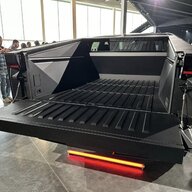
Shit is going to be awkward if the 500 range is revealed at launch.I've read your conjecture, lots of logic. I only take issue with you saying certain things are fact without any source of confirmation.