
Sponsored

Yes 'Exoskeleton'?

JBee

Well-known member
First Name
JB
Joined
Nov 22, 2019
Threads
18
Messages
4,913
Reaction score
6,362
Location
Australia
Vehicles
Cybertruck
Occupation
. Professional Hobbyist
Country flag
Where we depart, is that your dogma makes you believe that if those 2 inch wide stainless steel mending brackets that are welded to the frame, happenstance extend in 2 feet in either direction, that somehow magically, they are no longer operationally functional.
I'm sure you meant to say 1/8" or 3mm thick Stainless plate?

Sorry my friend but you are simply wrong. The location of any load bearing structure must be within the load path not "outside" it, I couldn't give two hoots about if it's a fender or fits my dogma, that's just the plain physics of it.

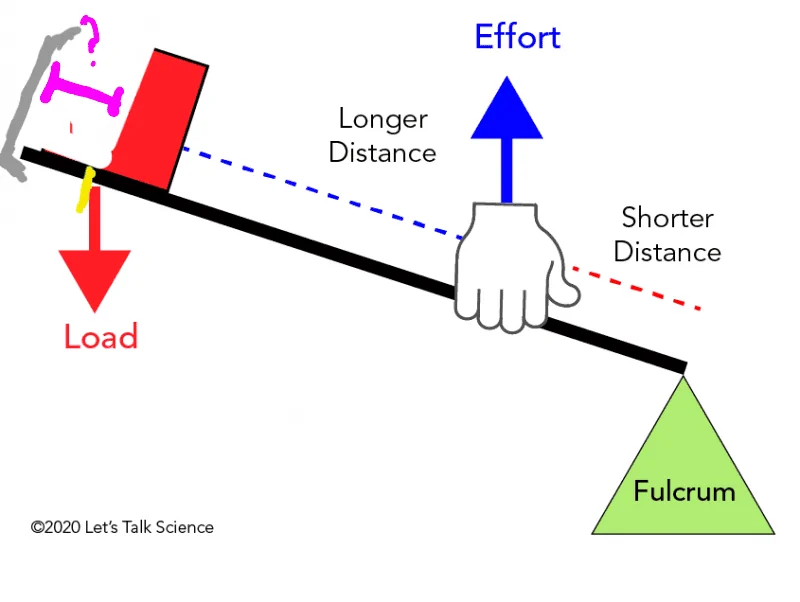
Look at this diagram (don't mind the quality of the sketch on my phone)
Tesla Cybertruck Yes 'Exoskeleton'? third_class_lever_0


In the above the fender is attached to left and the outside of the lever arm in grey. The load is the red block, the load path is the blue and red dotted line.

The pink line is what you are claiming is a part of the load path in your pages of description. The yellow line is your rigid connection point of the fender to the CT body and is left wanting to prove your pseudo arguement above.

Tell me Sir Newton, where on that diagram does the load in the diagram get supported by the fender structure and how is it on or near the land path to do so??

It's outside of the path, not on the path, not even near the path, and most certainly displaced from the path.

Just like your argument that I have some immediate need to prove, over pages of discussion, that a single fender needs to be outside, and is the kingpin to my "exoskeleton" argument.

Talk about the pot calling the kettle black.
Sponsored

 

Jhodgesatmb

Well-known member
First Name
Jack
Joined
Dec 1, 2019
Threads
89
Messages
6,487
Reaction score
9,025
Location
San Francisco Bay area
Website
www.arbor-studios.com
Vehicles
Tesla Cybertruck FS AWD, Tesla Model Y LR
Occupation
Retired AI researcher
Country flag
A thought experiment to set this up:

Take the CT "endoskeleton" as we know it based on recent photos. Then consider two different vehicles built around it.

Both have identical suspension robustness.

In the first vehicle, hang upon it conventional sheet metal like the Model Y, fastened to the frame/casting in the same manner as a Model Y. Call this first vehicle the 'Body In White' version of the CT.

In the second vehicle, hang upon it instead 3MM SS, and rather than fastening it conventionally, use a multitude of fasteners, adhesives, brackets, etc., to effectively 'weld' the SS to the internal castings/frame, including across the joints of the casting/frame seams. Call this second vehicle the 'Exoskelton' version of the CT.

Now consider the operational/functional delta between the Body in White CT and the Exoskelton CT.

Cory at Monro appears to be indirectly maintaining that those two vehicles will have identical payload/towing capacities, and identical behaviors when put under identical tortional stress. Doesn't that seem a bit precarious?

From my armchair, I suggest it's possible that Tesla both:
  • manages to make the 'Exoskeleton' CT materially outperform the 'Body in White' CT, and
  • given that material difference in capability, all owing to the outer skin construction, can justifiably claim that the performance of this CT is due to its "exoskeleton"
More on this and the 'other' type of exoskeleton:
If rigidity is important then the 3 mm stainless skin will add significantly to the rigidity over unibody or body on frame designs.
 

Jhodgesatmb

Well-known member
First Name
Jack
Joined
Dec 1, 2019
Threads
89
Messages
6,487
Reaction score
9,025
Location
San Francisco Bay area
Website
www.arbor-studios.com
Vehicles
Tesla Cybertruck FS AWD, Tesla Model Y LR
Occupation
Retired AI researcher
Country flag
no man. You are not getting it. And I know it’s not because you can’t, but instead, because you have been blinded by a dogma.

Your assertions are internally, inconsistent, and so, false. Leaves to sorting out where the falsity arises.

on one hand, you lecture that the frame components of attachment, be it, bolts, adhesive, etc., variously perform operational structure in terms of sheer forces, torsional forces, loadbearing forces, etc.

on the other hand, you go on to say that 3 mm stainless steel brackets used as frame components of attachment, cannot perform operational structure in terms of sheer forces, torsional forces, loadbearing forces, etc.

those two assertions cannot be held simultaneously.

and the only reason you can’t get that right now, is the blindness from your dogma.

You need to forget the panels are on the outside, and move on.

you need to instead imagine the frame you can see. And then imagine before they finish that frame, they take a 2 inch wide strip of stainless steel, and weld it across the joints of all the externally facing seems of the frame.

you now have a vision of the final internal endoskeleton frame the Tesla has constructed. And even with in your dogma, you would look at those mending brackets of welded stainless steel, just like the bolts and adhesive, and say that those are a part of the frame that bear various operational forces.

And at that point even within your dogma, we would be in 100% agreement.

Where we depart, is that your dogma makes you believe that if those 2 inch wide stainless steel mending brackets that are welded to the frame, happenstance extend in 2 feet in either direction, that somehow magically, they are no longer operationally functional.

That misstep is fundamentally the source of your simultaneously held and inconsistent views.
I cannot trust anyone that uses the word “dogma” in these discussions :)
 
OP
OP
cvalue13

cvalue13

Well-known member
Joined
Aug 17, 2022
Threads
74
Messages
7,153
Reaction score
13,769
Location
Austin, TX
Vehicles
F150L
Occupation
Fun-employed
Country flag
I'm sure you meant to say 1/8" or 3mm thick Stainless plate?
no, I didn’t.

I meant a 2” wide strip of 3mm steel. Welded across the joint of the casting/cab joint.

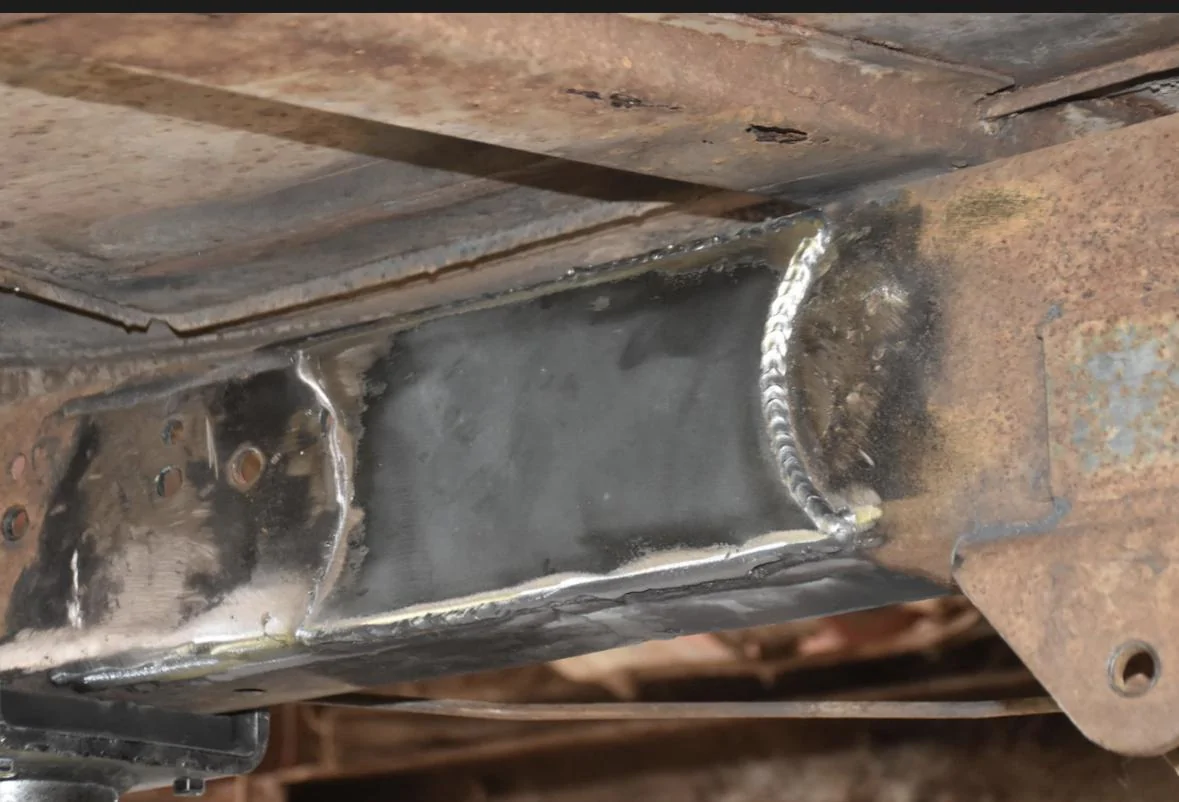
For over-simplified hypothetical purposes, here’s an image of the cab/rear casting joint, for which two pieces of 2” wide (x 3mm thick) SS have been “welded” across the joint, as a planned portion of the process of attaching the cab to the rear casting, and in leu of some other additive fasteners.

Tesla Cybertruck Yes 'Exoskeleton'? 6CEDD85E-2121-49A9-B3E0-873AD52A223F


Those above pieces of steel - as you’ve already indicated is true of any other bolt/adhesive used as such an attachment between the structures - will be load bearing with regard to forces of shear, torsion, bending, and tension, at the joint.

Since by the first line of your post it was clear you weren’t following, I didn’t read on
 
OP
OP
cvalue13

cvalue13

Well-known member
Joined
Aug 17, 2022
Threads
74
Messages
7,153
Reaction score
13,769
Location
Austin, TX
Vehicles
F150L
Occupation
Fun-employed
Country flag
I cannot trust anyone that uses the word “dogma” in these discussions :)
If I click my heels and say it three times, will you disappear? :)

(Was checking to see if putting an emoji at the end made it any less of an ass*ole thing to inject … didn’t)


OP
OP
cvalue13

cvalue13

Well-known member
Joined
Aug 17, 2022
Threads
74
Messages
7,153
Reaction score
13,769
Location
Austin, TX
Vehicles
F150L
Occupation
Fun-employed
Country flag
If rigidity is important then the 3 mm stainless skin will add significantly to the rigidity over unibody or body on frame designs.
Under what assumptions?

Because if you merely attach the panels to the frame in a conventional manner, I don’t see how.

OP was at bottom suggesting it’s possible that some unconventional manner of attaching the panels to the frame, across joints in particular, could add meaningful structure.

and so possibly make any sense of Tesla showing what otherwise appears to be a conventional body-in-white frame while still intending the CT to be billed as having an exoskeleton (other than in a mere cargo safety sense).
 

JBee

Well-known member
First Name
JB
Joined
Nov 22, 2019
Threads
18
Messages
4,913
Reaction score
6,362
Location
Australia
Vehicles
Cybertruck
Occupation
. Professional Hobbyist
Country flag
no, I didn’t.

I meant a 2” wide strip of 3mm steel. Welded across the joint of the casting/cab joint.

For over-simplified hypothetical purposes, here’s an image of the cab/rear casting joint, for which two pieces of 2” wide (x 3mm thick) SS have been “welded” across the joint, as a planned portion of the process of attaching the cab to the rear casting, and in leu of some other additive fasteners.

6CEDD85E-2121-49A9-B3E0-873AD52A223F.jpeg


Those above pieces of steel - as you’ve already indicated is true of any other bolt/adhesive used as such an attachment between the structures - will be load bearing with regard to forces of shear, torsion, bending, and tension, at the joint.

Since by the first line of your post it was clear you weren’t following, I didn’t read on
Please read the rest of it because it's the actual response to the rest of your claim.

Also please give me an indication of if you understand, purely from a physics point of view, why in that diagram a fender mounted on the outside of the lever arm and the load cannot support it.
 
OP
OP
cvalue13

cvalue13

Well-known member
Joined
Aug 17, 2022
Threads
74
Messages
7,153
Reaction score
13,769
Location
Austin, TX
Vehicles
F150L
Occupation
Fun-employed
Country flag
Also please give me an indication of if you understand, purely from a physics point of view, why in that diagram a fender mounted on the outside of the lever arm and the load cannot support it.
Your diagram isn’t addressing the relevant question put to you.

Precisely because you included that pink bit.

All still an indication that you’re either not understanding or unconsciously avoiding the question actually being asked.
 

ninja6r

Well-known member
First Name
Ninja6r
Joined
Dec 17, 2022
Threads
2
Messages
234
Reaction score
697
Location
Washington
Vehicles
model 3, nissan leaf
Occupation
pass
Country flag
You guys should get together sometime and hang out. Then, after you've hashed this all out, create a post summarizing it. This way the rest of us don't have to read the constant back and forth y'all get into so often?
 

JBee

Well-known member
First Name
JB
Joined
Nov 22, 2019
Threads
18
Messages
4,913
Reaction score
6,362
Location
Australia
Vehicles
Cybertruck
Occupation
. Professional Hobbyist
Country flag
So what is the question, or what is wrong with the pink line, that shows the missing load path component?


JBee

Well-known member
First Name
JB
Joined
Nov 22, 2019
Threads
18
Messages
4,913
Reaction score
6,362
Location
Australia
Vehicles
Cybertruck
Occupation
. Professional Hobbyist
Country flag
You guys should get together sometime and hang out. Then, after you've hashed this all out, create a post summarizing it. This way the rest of us don't have to read the constant back and forth y'all get into so often?
Sorry, but yeah we do sound like a married couple some times, each urging the other on to be better...by pointing out eachothers flaws.

The sign of a good relationship is that we are still talking to eachother I suppose. ?

But even better would be a third perspective to help read between the lines.

Who wants to be a physics "counsellor"? :ROFLMAO:
 
OP
OP
cvalue13

cvalue13

Well-known member
Joined
Aug 17, 2022
Threads
74
Messages
7,153
Reaction score
13,769
Location
Austin, TX
Vehicles
F150L
Occupation
Fun-employed
Country flag
So what is the question,
I’ll just skip to phrasing it as an assertion:

you could use the contact plate surface area for compression, the bolt for tension and a adhesive accross the interface area for torsion and sheer.
with half your breath you’re saying the obvious: these forces are borne by bolts and adhesives at joints

with the rest of your breath you’re saying that those same forces cannot be borne by a welded metal bracket across that same joint.

it’s bizzare

metal mending brackets are used to repair or increase strength of 4X4 frames all the time

Tesla Cybertruck Yes 'Exoskeleton'? 049B24D0-63E1-4710-AB50-52837A2193CA
 

firsttruck

Well-known member
Joined
Sep 25, 2020
Threads
205
Messages
2,761
Reaction score
4,441
Location
mx
Vehicles
none
Country flag
You guys should get together sometime and hang out. Then, after you've hashed this all out, create a post summarizing it. This way the rest of us don't have to read the constant back and forth y'all get into so often?
Wow, what institution are you in that you are required to read any of this or are you forced to read this thread from a Clockwork Orange alternate universe? :rolleyes:
 
OP
OP
cvalue13

cvalue13

Well-known member
Joined
Aug 17, 2022
Threads
74
Messages
7,153
Reaction score
13,769
Location
Austin, TX
Vehicles
F150L
Occupation
Fun-employed
Country flag
Wow, what institution are you in that you are required to read any of this or are you forced to read this thread from a Clockwork Orange alternate universe? :rolleyes:
To be fair, it’s for a while here it’s become a train wreck I can’t seem to look away from, either.
 
OP
OP
cvalue13

cvalue13

Well-known member
Joined
Aug 17, 2022
Threads
74
Messages
7,153
Reaction score
13,769
Location
Austin, TX
Vehicles
F150L
Occupation
Fun-employed
Country flag
To get somewhat back on track:

It’s maybe helpful to expand upon what the CT structure is not.

That is, based on what little Tesla said at unveil (and on its website), many thought the CT would have what I’ll call a “purists exoskeleton.” This purist exoskeleton view of Tesla’s comments wasn’t a misinterpretation by only non-engineers. Even informed engineers in the industry understood Tesla to be describing a purist exoskeleton. According to Sandy Munro, describing in 2019 his interpretarion (my emphasis):
“… What the exoskeleton does is to get rid of the requirements for internal longitudinals, stiffening ribs, and things like that because the structural skin would be doing all the work. What you are really doing is getting rid of roof bows, door surrounds, and things like that. They may still need an extra structure for where the hinges are. At the end of the day, you’re looking at a product that will still be self-supporting.”​

To give an example to this purist exoskeleton view, Monro gave analogous vehicle:

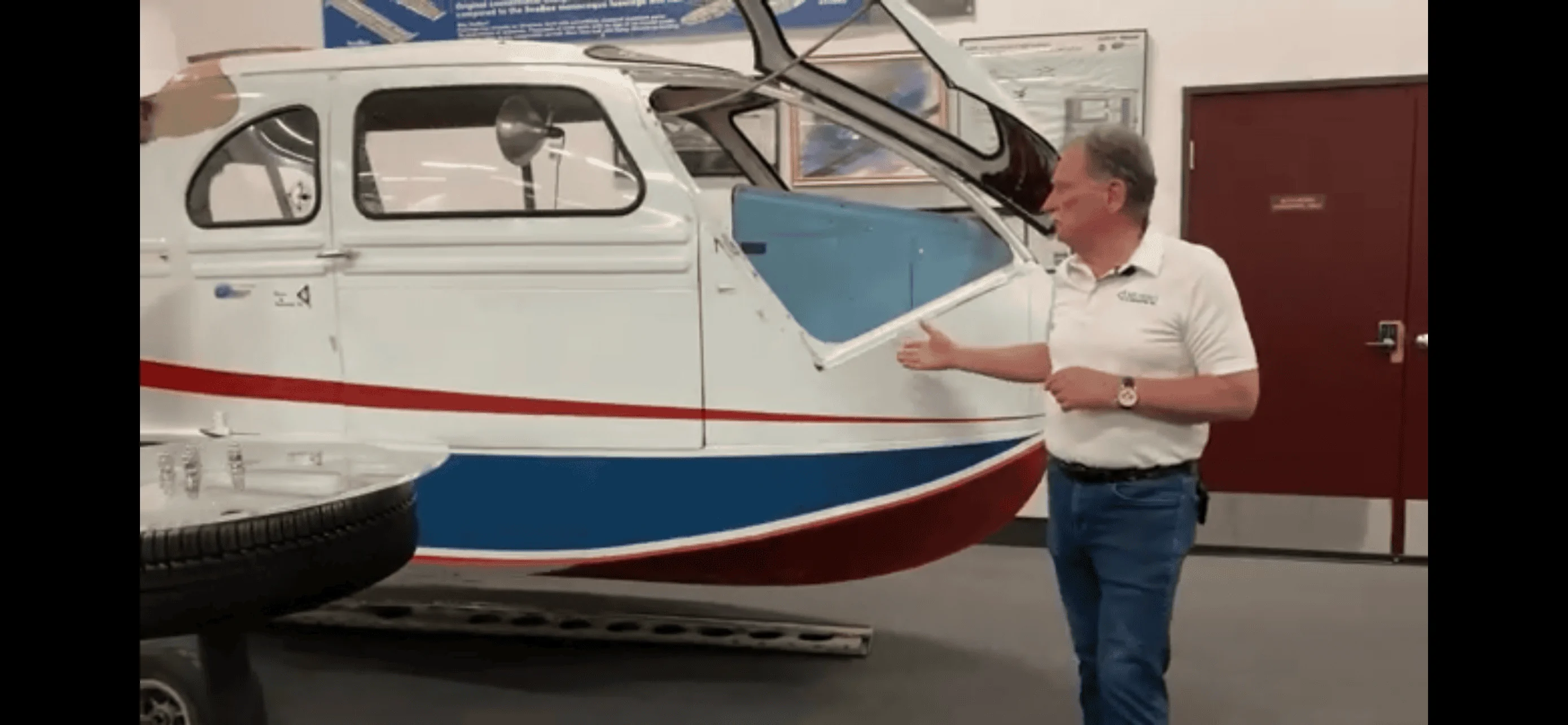
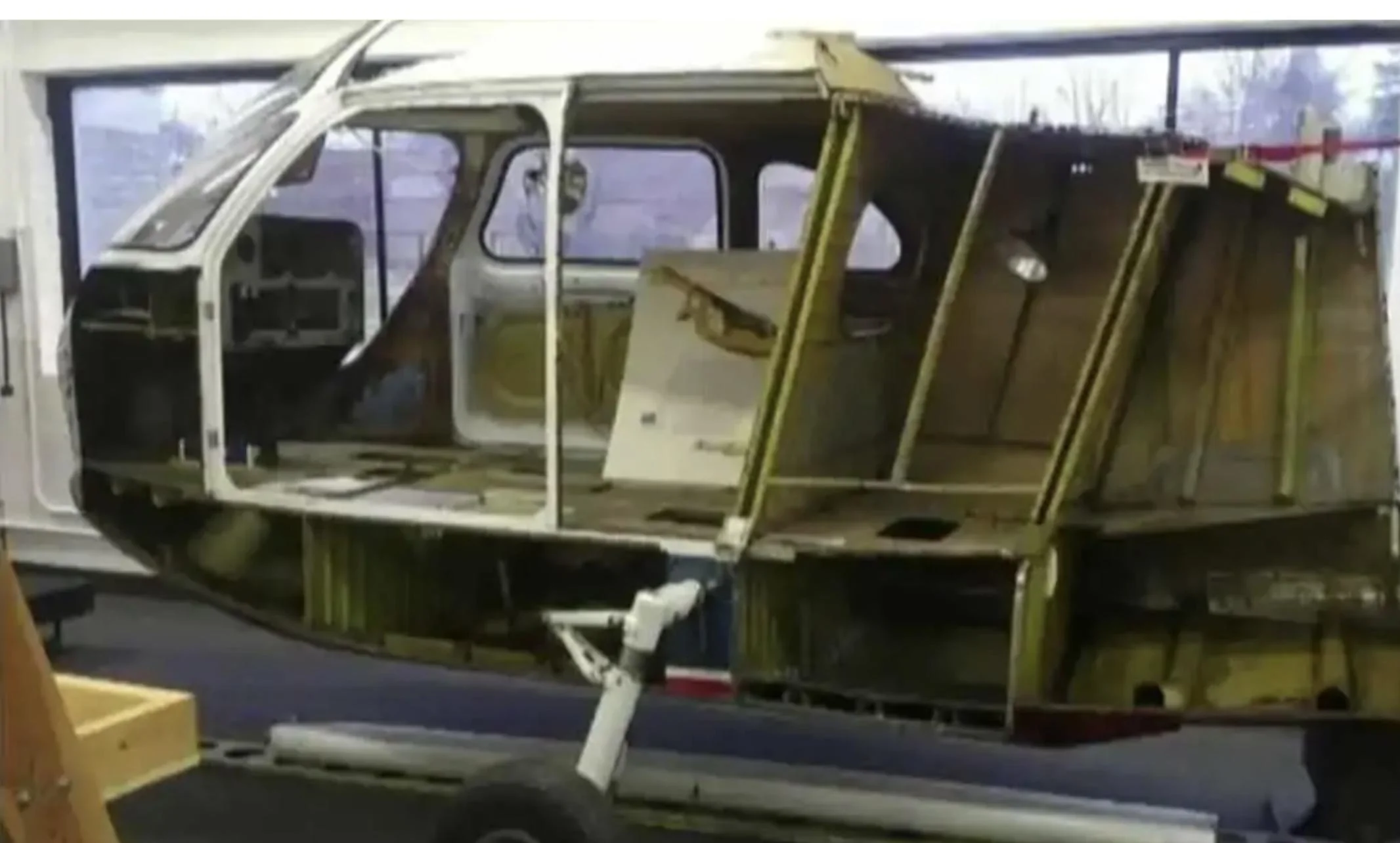
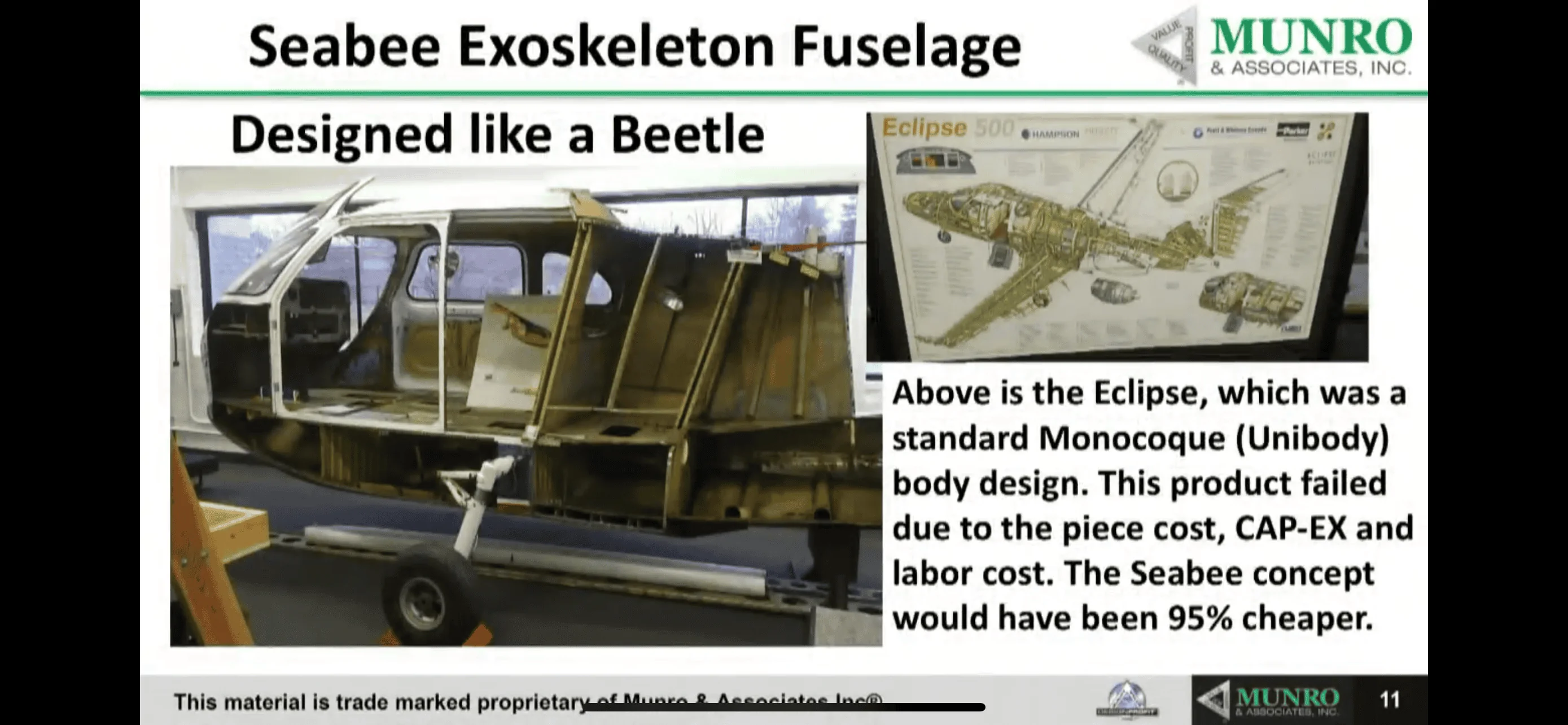
“[An] exoskeleton: so, the SeaBea [airplane] outside … is truly like a bug. It’s like a beetle. It’s got a hard shell. And you get inside and your safe. And the shell basically absorbs everything. So when [Tesla] came out with the 3mm … that’s pretty heavy duty stuff…. At the end of the day, that outside skeleton, at an 1/8th of an inch thick, that’s going to be everything. I don’t need any ribs. I don’t need much of anything. That’s going to do the job….”​


Tesla Cybertruck Yes 'Exoskeleton'? B2DEE649-80BE-4BA3-8889-9BA2550B2B58
Tesla Cybertruck Yes 'Exoskeleton'? 2E9094E2-6B62-46D5-99B1-1ECD75CD8872
“The SeaBee is very, very, interesting to us because the Republic corporation produced this SeaBee with 1/10th of the labor of a normal, general aviation aircraft… And the way they did it was by moving away from normal stick-build for an aircraft and going to an exoskeleton, similar to what Elon Musk is talking about when he brings up wanting to have the CyberTruck as a different type of a product.”

Monro set out the SeaBee as exemplary of a purist exoskeleton, and Monro’s mental model of his interpretation of what Tesla had described as the CyberTruck’s exoskeleton.

It’s worth noting that the SeaBee wasn’t completely devoid of internal structures, but to pinpoint both the limited extent and purpose of those internals:
“If we look inside [the SeaBee], we can see that the inside looks relatively clean, and we can see that the skin is basically the structural member. There are a few ribs, and longitudinals, but at the end of the day most of this is taken up by the skin which is relatively thick”​

Looking at these minimal internals referenced by Monro, it shows that they are largely of two varieties: structures for ~ergonomics (eg to create a floor structure for occupants, or for ), and braces that are themselves creating struts between and bonded to the ‘skin’ on the opposing side of the structure.

Tesla Cybertruck Yes 'Exoskeleton'? D73475B2-DC83-49D3-A043-32D238B284CB


In all, the SeaBee and Monro’s related comments do a comprehensive if layman-friendly job of exemplifying the “purist exoskeleton” interpretation of Tesla’s comments regarding the intended construction of the CyberTruck.

Tesla’s comments were interpreted this way not only vehivle engineering experts like Monro, but also lay-public. Then commentary by experts like Monro such as the above further solidified the expectations of lay-public regarding Tesla’s comments.

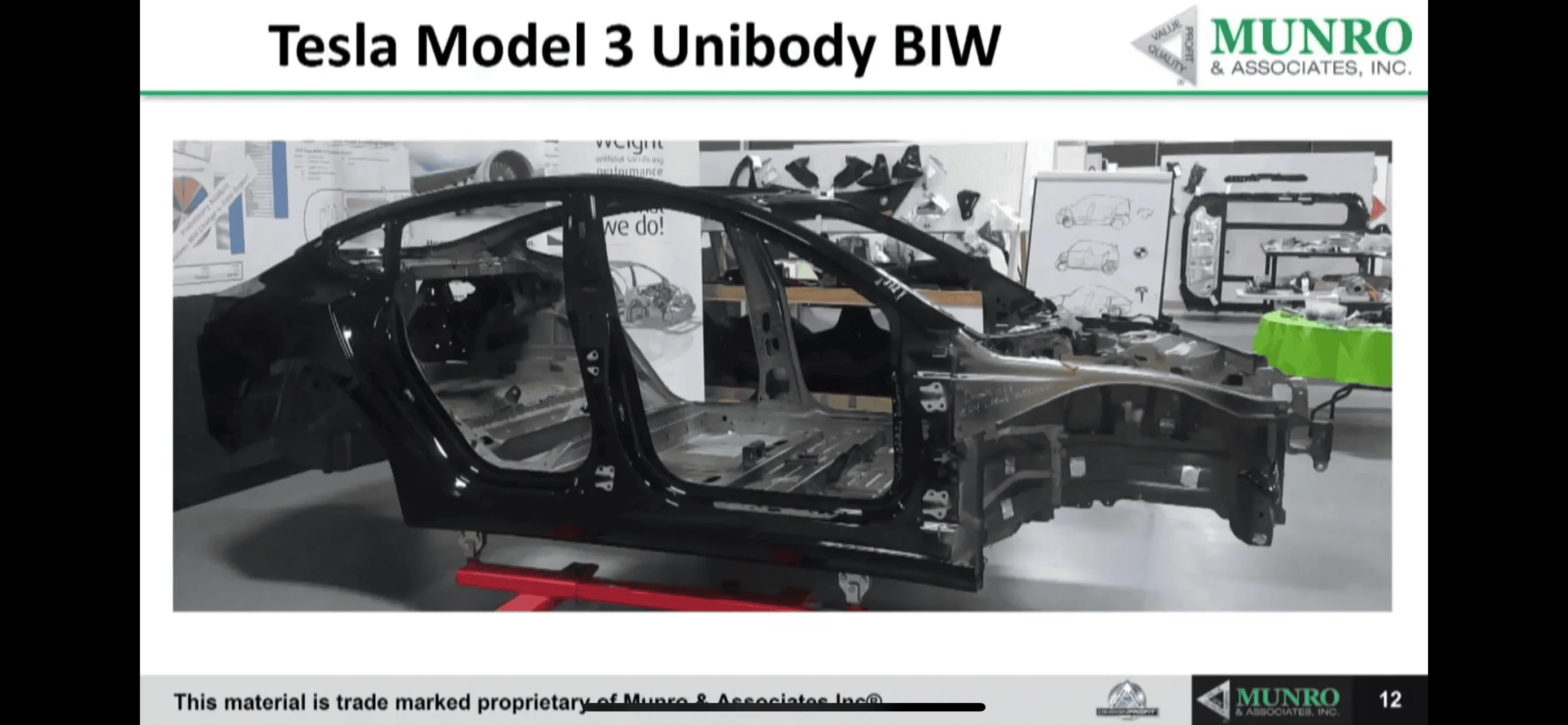
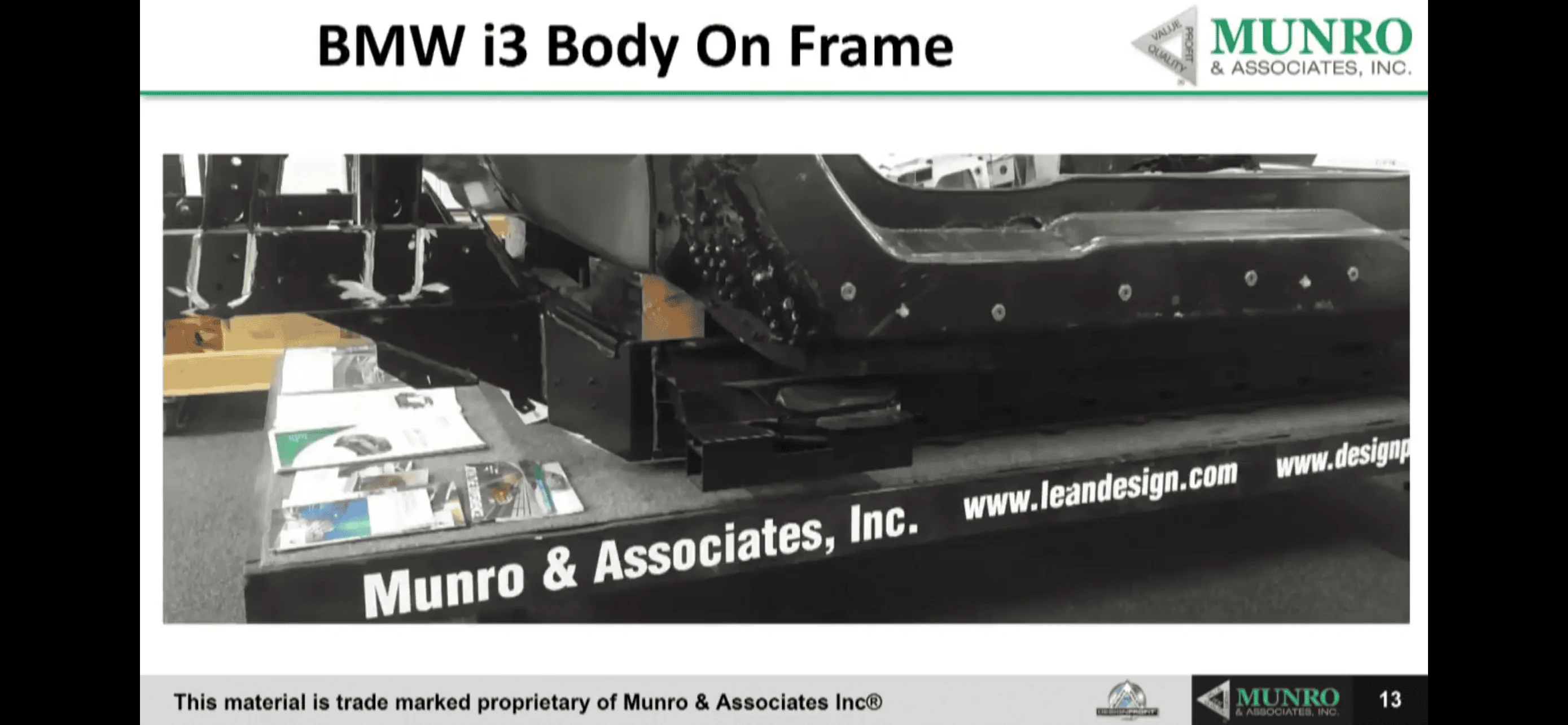
Not ending there, Monro elsewhere went on to then compare and contrast the SeeBee and CyberTruck purist exoskeleton to examples of unibody construction (Model 3) and body-on-frame (BMW i3):

Tesla Cybertruck Yes 'Exoskeleton'? 3304AA6F-3AA4-4A5D-924D-CFE034E30B67

Tesla Cybertruck Yes 'Exoskeleton'? A74E5D70-980E-4B6F-A1F0-A58F182B85C0


Tesla Cybertruck Yes 'Exoskeleton'? DD8584DE-F982-4B24-B407-1F80DC130C05

Tesla Cybertruck Yes 'Exoskeleton'? E14B52A3-9C2F-4CF2-B98B-2473FC5862EB


All-in-all, the “purist exoskeleton” view of what to expect, and these sorts of contrasts with the above sorts of alternatives, fully set the expectations of a purist exoskeleton would look like, as well as what it would not look like.

Cutting forward to today, and several years of these expectations solidifying, gives the context to what the “purist exoskeleton” camp means when they say any version of “based on that Q1 earnings call photo of the frame, the CT is no longer a [purist] exoskeleton.”

To that extent, they are completely correct that the CT is not a purist exoskeleton, of the sort historically described by Monro and others.

But it’s worth emphasizing that Tesla has not to my knowledge ever described the CT to be such a purist exoskeleton. So purists are baseless to the extent that when they say the CT is not a purist exoskeleton they also insinuate that it is a reflection on Tesla or Tesla’s plans having changed.

That the CT is not a purist exoskeleton, is not fair critique of Tesla, as they’ve never weighed in with details. Stating that the CT is not a purist exoskeleton is only fair commentary upon people’s interpretations - such as Monro - which interpretation turns out to be incorrect.

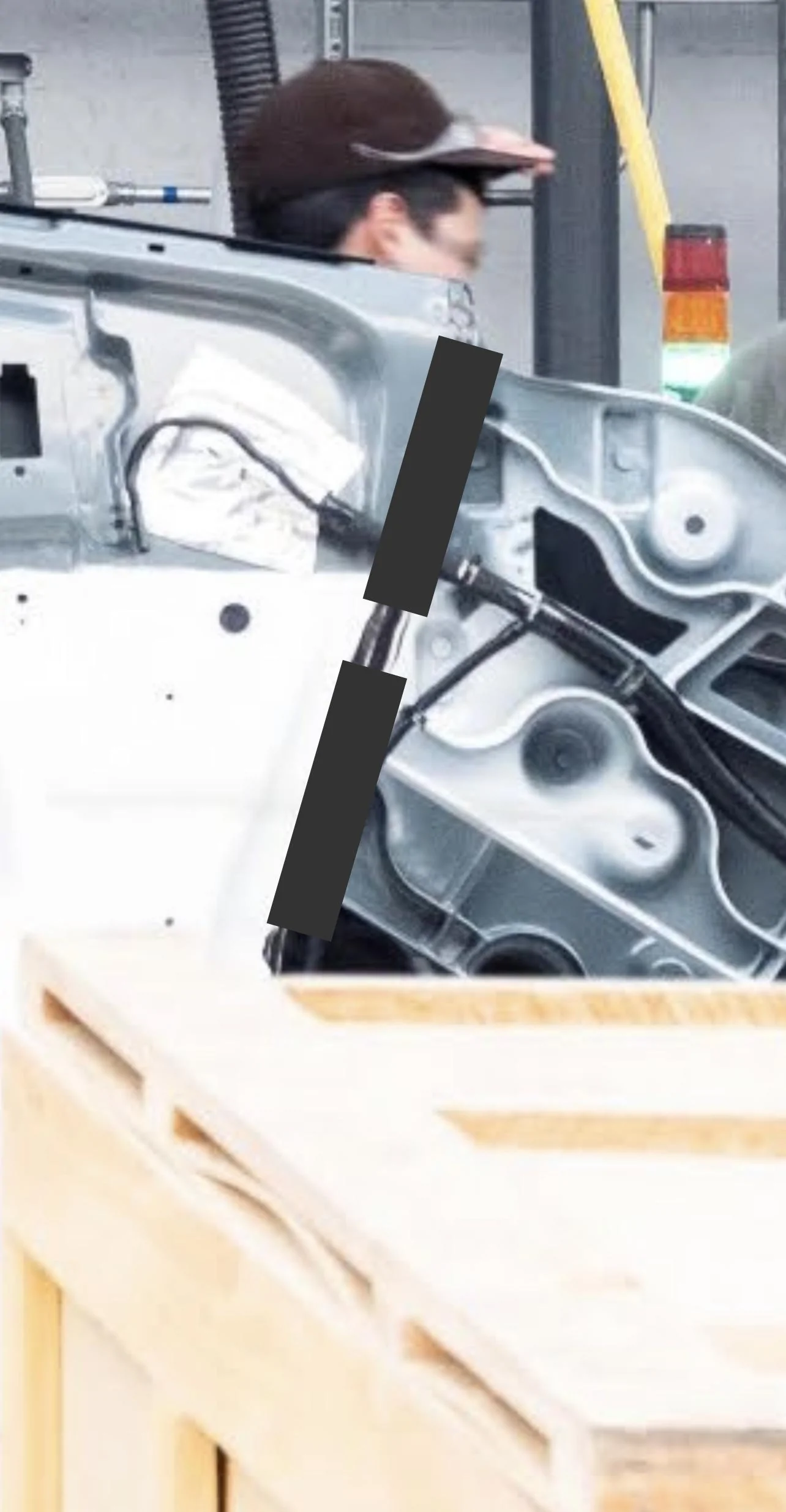
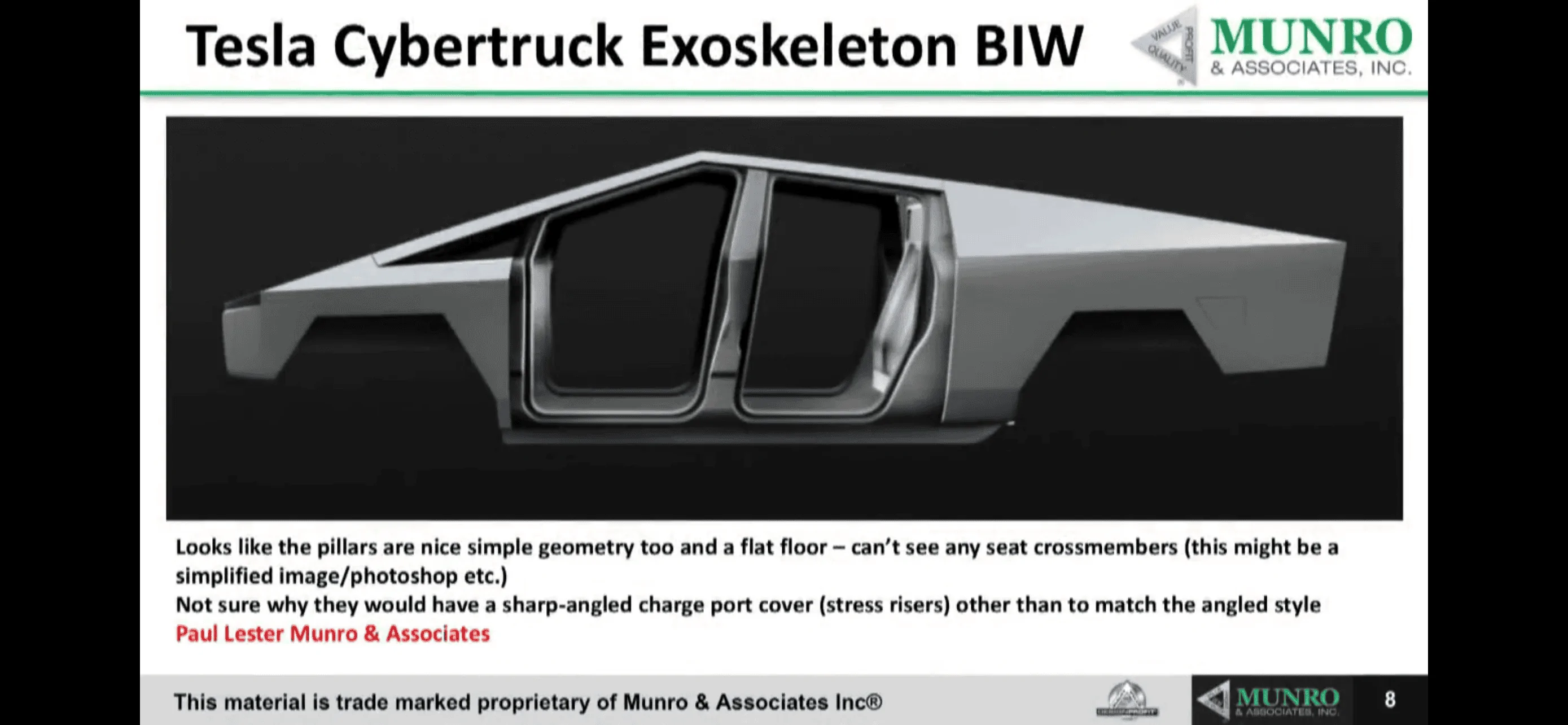
That it’s not a purist exoskeleton does still leave the now highlighted question of: how f it’s not a purist exoskeleton, then what is it? How is it not just a body on frame or unibody, given the appearance of that Q1 frame photo?

It’s a great question. And the answer is not obvious. Now having seen that photo, the vehicle engineering experts are themselves now exclaiming it is not only not a purist exoskeleton, but affirmatively declaring it a body in white or body on frame. Sandy Monro has said the CT now appears to be built like a BMW i3 (a body on frame). Cory says it’s a body in white like “a big ole Model Y.”

So they say not only is it not a purist exoskeleton, it’s not any sort of exoskeleton at all. This is in effect all for the some reasons as @JBee’s insistence here. It’s not just an insistence based on seeing the photo, but in understanding the physics of it all, and declaring that with what we’ve now seen the physics do not support the CT construction to be any sort of an exoskeleton - outside of providing occupant safety and durability from dents.

And I share that view, until more information is known. Despite insinuations in this thread, I have enough understanding of the physics involved to immediately grasp the point of view of Monro, @JBee and others.

But I’m also apparently more curious?

Because this leaves a glaring issue for Tesla. If all the experts say we’ve been duped, then how does Tesla next talk about the CT construction with a straight face? I’m curious, even if only in theory, if there is any means by which Tesla could use this frame in the CT and by some means still manage to have a defensible argument that the CT is still a meaningful exoskeleton (even if not a purist exoskeleton).

And so from that curiosity, merely as an in-theory exercise for whatever possible needle-threading may still be done, I arrived at one view explained in the OP.

It’s not explaining how I know it will be done, because I don’t. But similarly, experts declaring that it can’t possibly be done, at bottom, also do not yet know.

Because they’re experts, it would be much more fun if rather than declaring the obvious, they would if only for mental exercise spend some attention on dreaming up what might be unobvious.

Put differently:

Stop thinking that the interesting question is “is this an exoskeleton as I conceive of it” - the answer to that is obvious to anyone paying attention, expert or layman.

Start instead thinking of the (for the moment) only interesting question: how possibly could Tesla defend this, do they have any tricks up their sleeve?

The answer may be “no,” I’m fine with that.

But if there is an answer, and Tesla does have a trick up it’s sleeve, it seems obvious to me where that trick must be deployed: in how, and where, the SS panels are attached to the frame. Otherwise, if attached tot eh frame in the same or similar manner as either a Model Y or a BMW i3, then this isn’t a meaningful structural exoskeleton (outside the nominal sense of cargo protection and dent resistance).

To me it seems, any trick up Tesla’s sleeve to with a straight face continue to describe this construction as a meaningful exoskeleton will have to involve some manner of attaching the ‘skin’ so that it performs some operational structure for the vehicle.

Cory at Monro, and @JBee, all appear to be assuming - perhaps reasonably - that there is no other method of attachment that can accomplish this.

That may well be right, and based on what we know to date it seems the outcome worth betting on, with some odds in favor.

But again, if only for the mental exercise or to focus on what seems the only (at present) interesting point, is the thought experiment: knowing what we know of the frame, and panels, is there any method and location of attachment of the latter to the former that may provide operational structure to the CT?

Seems possible, to me. Bolts and adhesive that are traditionally used to fuse the frame segments at joints, bare operational structure in the frame design. 3mm stainless panels are capable of being “welded” (in effect) across these same seams, in leu of or in addition to such conventional attachments like bolts and adhesive.

How that is impossible to be done, certainly has not been addressed in this thread.
Sponsored

 
Last edited:


Top